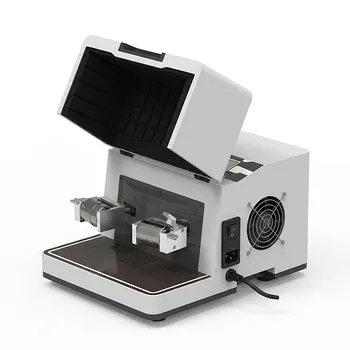
What role does a planetary ball mill play in the preparation of 0.95BaTiO3-delta-0.05SrFeO3-delta? Achieve Homogeneity.
Updated 4 months ago
The planetary ball mill serves as the essential mechanical activation stage that ensures microscopic homogeneity and high reactivity in the powder mixture. By utilizing high-frequency rotation and high-energy impact forces, the mill deeply mixes $BaTiO_{3-\delta}$ and $SrFeO_{3-\delta}$ powders in an anhydrous ethanol medium. This process physically crushes the particles to increase their surface area, creating the ideal kinetic environment for the subsequent solid-state reaction at $1050^\circ\text{C}$.
Core Takeaway: The planetary ball mill transforms a coarse mixture of precursors into a refined, uniform, and high-energy powder. This mechanical processing is critical for reducing diffusion distances and ensuring the formation of a pure-phase perovskite solid solution during high-temperature sintering.
Enhancing Reaction Kinetics Through Particle Refinement
Physical Crushing and Surface Area Expansion
The primary function of the mill is the physical reduction of particle size through high-energy collisions between the grinding media and the raw materials. By crushing $BaTiO_{3-\delta}$ and $SrFeO_{3-\delta}$ into finer particles, the mill significantly increases the total surface area available for interaction. This expanded surface area provides more contact points between the two components, which is the primary driver for a successful solid-state reaction.
Reducing Atomic Diffusion Distances
Solid-state reactions rely on the movement of atoms across grain boundaries, a process governed by diffusion. The ball mill reduces the size of individual grains, which effectively shortens the distance atoms must travel to integrate into a new crystal lattice. This "mechanical activation" allows the chemical transformation to occur more fully and often at lower temperatures than would be possible with hand-mixed powders.
Achieving Microscopic Chemical Homogeneity
High-Energy Mixing in Liquid Media
The use of high-frequency rotation creates a combination of impact and shear forces that disperse the components more effectively than standard stirring. Performing this process in anhydrous ethanol prevents unwanted hydration while facilitating a more uniform suspension of the $0.95BaTiO_{3-\delta}$ and $0.05SrFeO_{3-\delta}$ particles. This ensures that the two distinct phases are distributed evenly at the microscopic level before heat is applied.
Ensuring Stoichiometric Precision and Phase Purity
For complex solid solutions like $0.95BaTiO_{3-\delta}-0.05SrFeO_{3-\delta}$, even minor local variations in concentration can lead to the formation of undesirable secondary phases. The planetary ball mill ensures that the chemical components reach a high degree of microscopic uniformity. This uniformity is the foundation for achieving a precise stoichiometric ratio and a pure perovskite structure during the $1050^\circ\text{C}$ sintering process.
Understanding the Trade-offs and Pitfalls
Material Contamination from Grinding Media
While high-energy milling is effective, it involves significant wear and tear on the grinding jars and balls. This can introduce small amounts of impurities (such as alumina or zirconia) into the ceramic powder, which may alter the final electrical or magnetic properties. Selecting media with high wear resistance or a composition compatible with the target ceramic is vital for maintaining purity.
Thermal Effects and Particle Agglomeration
The intense mechanical energy generated during long-duration milling can cause the powder temperature to rise significantly. If the temperature is not controlled, particles may begin to agglomerate or stick together, which counteracts the goal of refinement. Proper milling intervals and the use of a liquid medium like ethanol help dissipate this heat and maintain a fine, flowable powder.
Applying Milling Parameters to Your Goal
To achieve the best results for your specific $0.95BaTiO_{3-\delta}-0.05SrFeO_{3-\delta}$ preparation, consider your primary objective:
- If your primary focus is maximum phase purity: Prioritize longer milling times at moderate speeds to ensure atomic-level homogenization without excessive media wear.
- If your primary focus is lowering sintering temperature: Utilize higher rotation frequencies to maximize mechanical activation and surface energy, which facilitates faster reaction kinetics.
- If your primary focus is minimizing contamination: Use high-density, wear-resistant media (like Yttria-stabilized Zirconia) and limit the milling duration to the minimum required for uniform mixing.
By precisely controlling the mechanical energy of the planetary ball mill, you establish the fundamental conditions necessary for a complete and uniform solid-state synthesis.
Summary Table:
| Key Function | Impact on Material | Benefit to Solid-State Reaction |
|---|---|---|
| Particle Refinement | Drastic increase in surface area | Faster reaction kinetics and more contact points |
| Mechanical Activation | Shortened atomic diffusion distances | Enables complete phase formation at lower temperatures |
| Microscopic Mixing | Uniform chemical distribution | High stoichiometric precision and phase purity |
| Liquid Media Milling | Heat dissipation and suspension | Prevents hydration and ensures flowable, fine powder |
Elevate Your Material Synthesis with Professional Lab Solutions
Achieving the perfect perovskite structure requires precision from the very first mixing step. At [Brand Name], we provide complete laboratory sample preparation solutions for material science, specializing in high-performance powder processing and compaction equipment.
Whether you are synthesizing advanced ceramics like 0.95BaTiO3-δ-0.05SrFeO3-δ or developing new composites, our extensive line includes:
- Advanced Milling: Planetary ball mills, jet mills, and cryogenic grinders for ultimate particle refinement.
- Precision Pressing: A full spectrum of hydraulic presses, including Cold/Warm Isostatic Presses (CIP/WIP), vacuum hot presses, and XRF pellet presses.
- Sizing & Mixing: Sieve shakers, powder mixers, and defoaming mixers to ensure consistency.
Ready to optimize your lab's efficiency and ensure superior phase purity? Contact us today to discuss your specific application and find the right equipment for your research goals!
References
- E. K. Abdel-Khalek, N.S. Abd El-Aal. The enhancement of the optical, magnetic, and ferroelectric properties of BaTiO3-δ by doping with SrFeO3-δ. DOI: 10.1007/s00339-025-08398-x
Mentioned Products
- Vertical Semi Circular Planetary Ball Mill for Laboratory Precision Grinding
- High Energy Planetary Ball Mill for Nano Scale Grinding and Mechanical Alloying
- Heavy Duty Horizontal Planetary Ball Mill for Efficient Industrial Grinding and Sample Preparation
- Vertical Production Planetary Ball Mill for High Throughput Powder Processing
- 360° Rotating Omnidirectional Laboratory Planetary Ball Mill for Homogeneous Ultra-Fine Grinding and Mixing
People Also Ask
- What role does a planetary ball mill play in the synthesis of Li6PS5Cl (LPSCl)? Unlock High Ionic Conductivity
- Why is a planetary ball mill essential for SiBCN-rGO wet-spinning? Achieve Superior Dispersion and Spinnability
- Why is an intermittent grinding process required for perovskites in a planetary ball mill? Ensure Stability & Purity
- Why is a planetary ball mill required for PET micronization? Ensure Accurate Chemical Analysis of Reprocessed PET
- How does mechanized planetary ball milling compare to manual agate grinding? Optimize sulfide standard material precision.

Tech Team · PowderPreparation
Last updated on Jun 03, 2026
Related Products
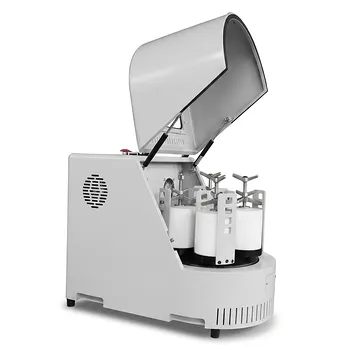
Vertical Semi Circular Planetary Ball Mill for Laboratory Precision Grinding

High Energy Planetary Ball Mill for Nano Scale Grinding and Mechanical Alloying
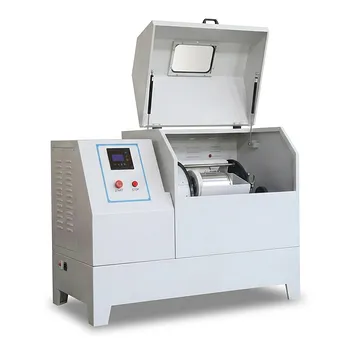
Heavy Duty Horizontal Planetary Ball Mill for Efficient Industrial Grinding and Sample Preparation
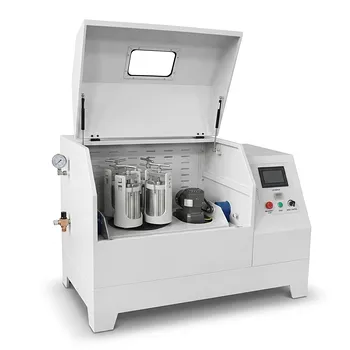
Vertical Production Planetary Ball Mill for High Throughput Powder Processing
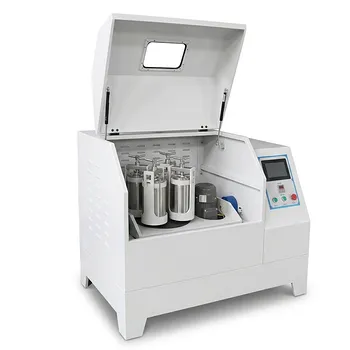
360° Rotating Omnidirectional Laboratory Planetary Ball Mill for Homogeneous Ultra-Fine Grinding and Mixing

Vertical Square Planetary Ball Mill for Laboratory Sample Preparation and Nanoscale Grinding

Miniature Planetary Ball Mill with Vacuum Grinding and High Efficiency for Laboratory Sample Preparation
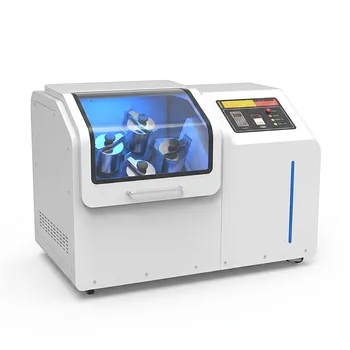
High Energy Omnidirectional Planetary Ball Mill 16L

High Energy Laboratory Planetary Ball Mill for Nano Grinding and Material Science Sample Preparation
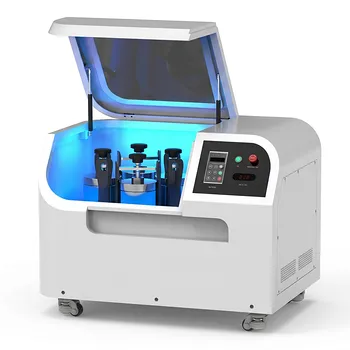
Planetary Ball Mill 12L
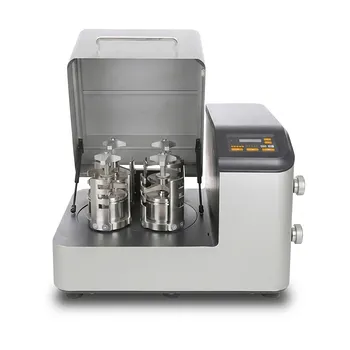
High Energy Planetary Ball Mill for Nano Scale Grinding and Colloidal Mixing in Material Science Research
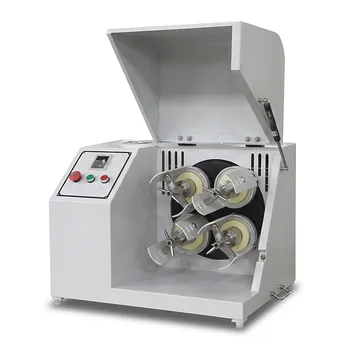
Horizontal Light Duty Planetary Ball Mill for Laboratory Sample Preparation
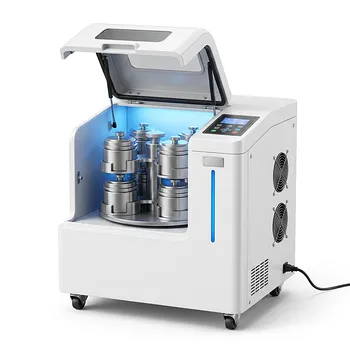
High Energy Omnidirectional Planetary Ball Mill 20L
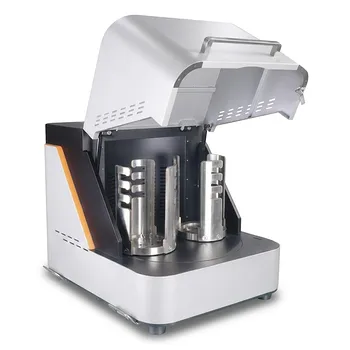
High Energy Laboratory Planetary Ball Mill for Nano Grinding and Colloidal Mixing of Hard and Brittle Materials

8L Planetary Ball Mill for Laboratory Grinding and Sample Preparation
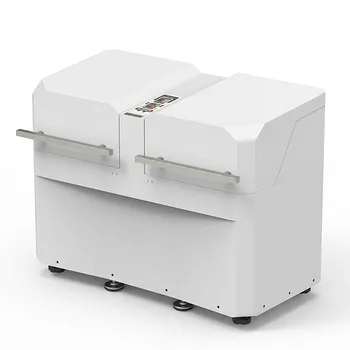
Dual Station Planetary Ball Mill 24L
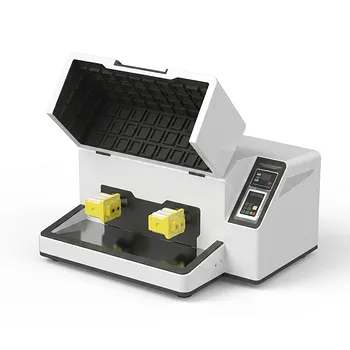
Multi-Platform Nanoscale High-Energy Vibratory Ball Mill

Nano High Energy Vibratory Ball Mill for Laboratory Sample Preparation
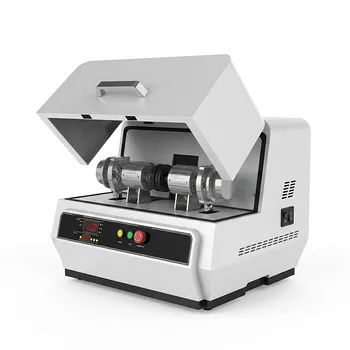
Dual Jar High Energy Vibratory Ball Mill