What role does a laboratory hydraulic press play in the forming of Ce-TZP/Al2O3 green bodies? Maximize Density & Strength
Updated 4 months ago
The laboratory hydraulic press is the critical instrument for transforming loose Ce-TZP/Al2O3 composite powders into a structurally sound "green body" through precise uniaxial compaction. By applying a controlled load—typically around 100 MPa—the press forces powder particles to rearrange and bond within a precision mold. This foundational step eliminates trapped air and establishes the high green body density required to prevent warping or cracking during the subsequent high-temperature sintering phase.
Core Takeaway: The hydraulic press acts as the bridge between raw powder and a viable ceramic component by using high-precision pressure to create mechanical interlocking between particles. This process ensures the geometric stability and uniform internal density necessary for the final ceramic to reach its full mechanical potential.
Mechanisms of Powder Compaction
Particle Rearrangement and Void Elimination
A hydraulic press applies a significant axial load (often measured in MPa or bar) to overcome the internal friction of the Ce-TZP/Al2O3 powder.
As the pressure increases, loose particles are forced to slide and rotate, filling the microscopic gaps and expelling trapped air.
This reduction in porosity is essential, as remaining air pockets can become sites for structural failure or "bloating" during the sintering process.
Mechanical Interlocking and Interlacing
Under high-precision pressure, the powder particles undergo localized deformation and mechanical interlocking.
This interlacing creates a cohesive solid—the green body—which possesses enough handling strength to be moved from the mold to a furnace without crumbling.
Maintaining the pressure for a specific duration, such as 30 seconds, ensures that these mechanical bonds are fully established and stable.
Impact on Sintering and Final Properties
Enhancing Green Body Density
The hydraulic press provides the initial relative density required for successful atomic migration during sintering.
A higher green body density directly correlates to a more efficient densification process, allowing the ceramic to reach its theoretical maximum strength.
Precise control over this density minimizes large pores, which significantly improves the breakdown strength and hardness of the final sintered Ce-TZP/Al2O3 component.
Ensuring Dimensional Stability
Uniform pressure distribution ensures that the green body has a consistent internal structure.
This consistency is vital for preventing uneven shrinkage and deformation when the material is subjected to the extreme temperatures of a sintering furnace.
By pre-setting the material's initial density and shape, the press allows for predictable dimensional outcomes in the final product.
Understanding the Technical Trade-offs
Uniaxial Pressure Gradients
Because a laboratory hydraulic press applies pressure from a single direction (uniaxial), friction between the powder and the mold walls can create density gradients.
This means the density at the center of a thick pellet may be slightly lower than at the edges, potentially leading to minor warping if not managed.
To mitigate this, researchers often use the hydraulic press as a "pre-form" step before moving the sample to a cold isostatic press (CIP) for more uniform secondary densification.
Risk of Over-Compaction and Cracking
Applying excessive pressure beyond the material's limit can cause "spring-back" effects when the load is released.
This sudden expansion can result in delamination or micro-cracking within the green body, which may only become visible after sintering.
Finding the optimal balance—usually between 50 MPa and 100 MPa for most alumina-based composites—is critical for maintaining structural integrity.
How to Optimize Your Forming Process
Selecting the Right Approach for Your Goal
To achieve the best results with a laboratory hydraulic press, consider the following recommendations based on your specific requirements:
- If your primary focus is Maximum Density: Use the hydraulic press to apply a high uniaxial load (100 MPa) followed by secondary processing in a cold isostatic press.
- If your primary focus is Dimensional Precision: Ensure the use of precision-ground stainless steel molds and maintain the load for at least 30 seconds to allow for particle relaxation.
- If your primary focus is Handling Strength: Incorporate a small percentage of organic binder into the powder mix to enhance the mechanical bonding created by the press.
By mastering the precise application of uniaxial force, you provide the essential physical foundation for high-performance ceramic engineering.
Summary Table:
| Process Stage | Mechanism | Impact on Final Ceramic |
|---|---|---|
| Compaction | 100 MPa Uniaxial Load | High relative green density and pore reduction |
| Interlocking | Particle Deformation | High handling strength and structural integrity |
| Air Removal | Void Elimination | Prevents bloating and cracking during sintering |
| Stabilization | Particle Rearrangement | Consistent shrinkage and dimensional precision |
Elevate Your Material Research with Precision Forming Solutions
Achieve superior structural integrity for your ceramic components with our professional-grade laboratory equipment. We provide complete laboratory sample preparation solutions tailored for material science, specializing in high-performance powder processing and compaction.
From initial preparation to final forming, our extensive product line includes:
- Powder Processing: Crushers (jaw/roll), liquid nitrogen cryogenic grinders, and advanced mills (planetary ball, jet, sand, disc, rotor).
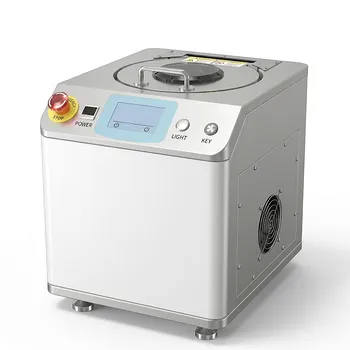
- Sizing & Mixing: Sieve shakers (vibratory/air-jet), powder mixers, and defoaming mixers.
- Advanced Compaction: A full spectrum of hydraulic presses, including Cold/Warm Isostatic Presses (CIP/WIP), standard lab presses, XRF pellet presses, and vacuum hot presses.
Ready to optimize your Ce-TZP/Al2O3 production and ensure predictable, high-strength outcomes? Contact our technical experts today to find the perfect equipment configuration for your lab!
References
- Camila Catalano Gall, Eduardo de Sousa Lima. Effect of Y2O3-addition on the crystallographic and mechanical properties of the Ce-TZP/Al2O3 composite. DOI: 10.1590/0366-69132024703923517
Mentioned Products
- 实验室旋转式压片机 多冲模单压式自动连续压片
- Enhanced 9 Punch Rotary Tablet Press for Powder Compaction
- Manual Tablet Press with Dual Scale Pressure Gauge for Pharmaceutical Food Chemical Laboratory Sample Preparation
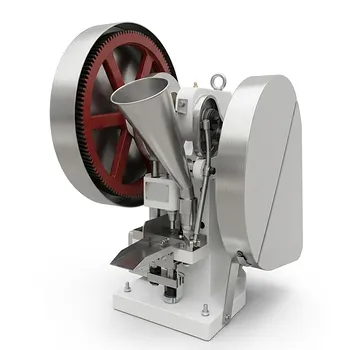
- 6-Ton Small Single-Punch Tablet Press — Laboratory Powder & Granule Tableting Equipment / Tablet Forming Machine
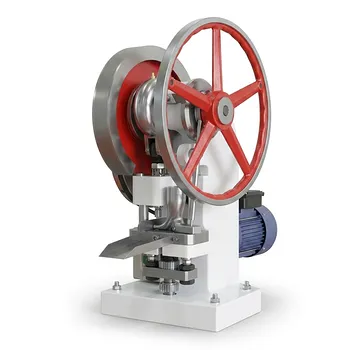
- 5 Ton Single Punch Tablet Press Laboratory Small Batch Production
People Also Ask
- What is the role of a laboratory uniaxial hydraulic press in the preparation of alumina ceramic samples? Key Benefits
- What are the advantages of double-action pressing equipment? Master Uniform Density in High-Aspect-Ratio Ceramics
- What is the function of a laboratory hydraulic forming press in CRSS rubber prep? Ensure Superior Material Integrity
- How does a laboratory hydraulic press ensure the quality of high-entropy cathode H-SOFC single cells? Optimize Performance
- What is the function of an industrial uniaxial hydraulic press for red clay TiO2 substrates? Achieve Precision Density

Tech Team · PowderPreparation
Last updated on Jun 03, 2026
Related Products
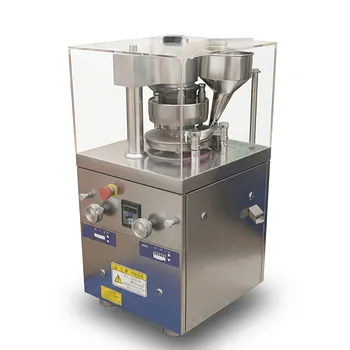
实验室旋转式压片机 多冲模单压式自动连续压片
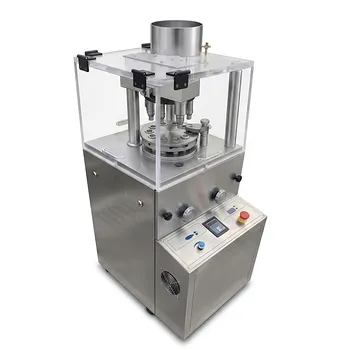
Enhanced 9 Punch Rotary Tablet Press for Powder Compaction
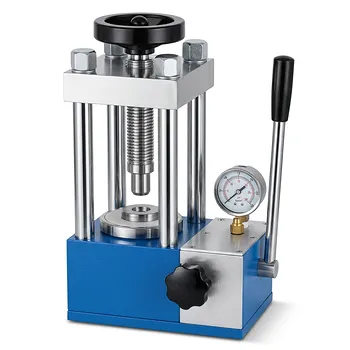
Manual Tablet Press with Dual Scale Pressure Gauge for Pharmaceutical Food Chemical Laboratory Sample Preparation
6-Ton Small Single-Punch Tablet Press — Laboratory Powder & Granule Tableting Equipment / Tablet Forming Machine
5 Ton Single Punch Tablet Press Laboratory Small Batch Production
6 Ton Variable Frequency Single Punch Tablet Press
High Efficiency Vacuum Planetary Centrifugal Mixer and Defoaming Machine for Industrial Material Research and Precise Laboratory Powder Dispersion
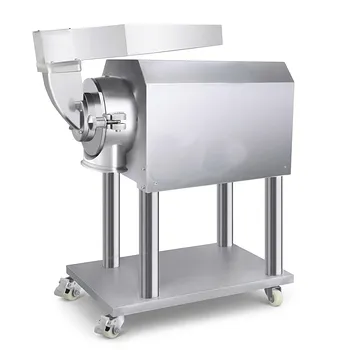
High Speed Small Laboratory Crusher for Dry Material Sample Preparation
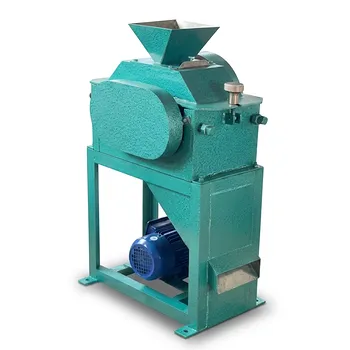
Laboratory Double Roll Crusher for Medium Hardness Materials Coal Ore Sample Preparation
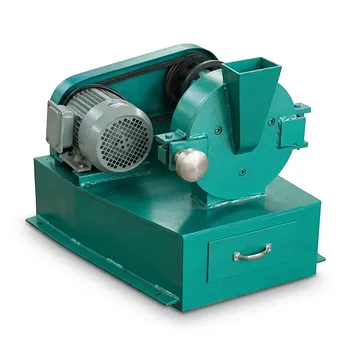
Medium Hardness Material Disc Pulverizer for Coal Ore Sample Preparation
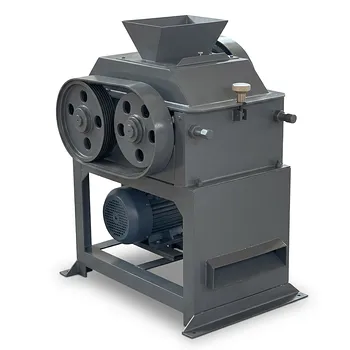
Sealed Laboratory Double Roll Crusher for Coal, Mineral, Ore Sample Preparation
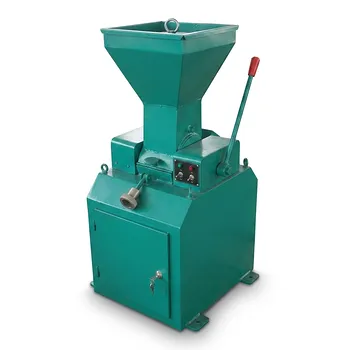
Laboratory Sealed Hammer Crusher for Coal and Mineral Sample Preparation
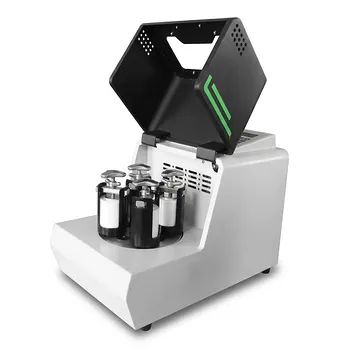
Miniature Planetary Ball Mill with Vacuum Grinding and High Efficiency for Laboratory Sample Preparation
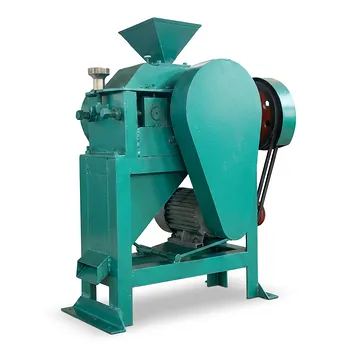
Laboratory Sealed Double Roll Crusher for Coal Ore Rock and Medium Hardness Materials Sample Preparation