What are the advantages of double-action pressing equipment? Master Uniform Density in High-Aspect-Ratio Ceramics
Updated 5 months ago
Double-action pressing is the superior method for high-aspect-ratio ceramics because it minimizes pressure attenuation caused by mold wall friction. By applying force synchronously from both the top and bottom, the equipment ensures that pressure is transmitted effectively toward the center of the part. This results in a symmetrical density distribution and significantly higher structural integrity than single-action methods can provide.
Double-action pressing eliminates the steep density gradients inherent in tall components by compressing powder from both ends simultaneously. This process ensures the "neutral zone" at the center of the part reaches the required density, preventing structural failure and deformation during subsequent processing stages.
Overcoming Friction in High-Aspect-Ratio Components
The Challenge of Pressure Attenuation
In ceramic manufacturing, friction between the powder and the mold walls causes pressure to dissipate as it moves away from the punch. In high-aspect-ratio (tall or columnar) parts, this pressure attenuation is severe, leaving the furthest sections of the powder under-compacted.
Shortening the Transmission Path
Double-action pressing solves this by effectively halving the distance the pressure must travel through the powder. Because both the top and bottom punches move toward each other, the pressure transmission path is shortened, ensuring the middle section of the component receives adequate force.
Creating a Symmetrical Density Profile
Unlike single-action pressing, which produces a "top-heavy" density profile, double-action equipment creates a symmetrical distribution. This balance is critical for maintaining the dimensional accuracy and mechanical properties of the ceramic green body.
Impact on Sintering and Final Strength
Minimizing Internal Micro-Defects
Uniform particle arrangement achieved through dual-direction pressing effectively minimizes internal micro-defects. By reducing the density gradient, the component is less likely to develop the internal stresses that lead to micro-cracks during the compaction phase.
Preventing Deformation During Sintering
Ceramic components shrink significantly during the high-temperature sintering process. If the green body has an uneven density, it will experience non-uniform shrinkage, which causes warping, bowing, or catastrophic cracking in the kiln.
Strengthening the Neutral Zone
The "neutral zone" is the area in the center of the compact where pressure from both ends meets. Double-action pressing ensures this zone reaches a higher overall density, which enhances the final structural strength of the entire ceramic component.
Understanding the Trade-offs
Equipment Complexity and Maintenance
Double-action presses are inherently more complex than single-action systems because they require synchronized movement of two independent punch assemblies. This complexity generally leads to higher initial capital expenditure and more intensive maintenance schedules to ensure precision.
Synchronization Requirements
The primary risk in double-action pressing is a lack of perfect synchronization between the top and bottom punches. If one punch moves faster or applies more force than the other, the "neutral zone" will shift away from the center, reintroducing density imbalances and potential weak points.
Making the Right Choice for Your Goal
When deciding between pressing methods, the geometry and final performance requirements of your ceramic component should dictate your choice.
- If your primary focus is thin, flat components: Single-action pressing is often sufficient and more cost-effective, as the friction losses over short distances are negligible.
- If your primary focus is tall, columnar, or high-aspect-ratio parts: Double-action pressing is essential to ensure uniform density and prevent structural failure during sintering.
- If your primary focus is maximum mechanical strength and reliability: Double-action pressing provides the most consistent particle arrangement, which is critical for high-performance engineering ceramics.
Utilizing double-action pressing is a strategic investment in quality that ensures your high-aspect-ratio components survive the rigors of sintering and meet strict structural specifications.
Summary Table:
| Feature | Single-Action Pressing | Double-Action Pressing |
|---|---|---|
| Pressure Transmission | Single direction; long path | Dual direction; path halved |
| Density Profile | Asymmetrical (top-heavy) | Symmetrical (uniform) |
| Wall Friction Impact | Significant pressure attenuation | Minimized via dual movement |
| Sintering Result | High risk of warping/cracking | Superior dimensional stability |
| Ideal Application | Thin, flat components | Tall, columnar, or complex parts |
| Neutral Zone | Bottom of the component | Center of the component |
Elevate Your Material Integrity with Professional Compaction Solutions
Are you struggling with density gradients or structural failures in your high-aspect-ratio ceramic components? [Your Brand Name] provides complete laboratory sample preparation solutions tailored for material science.
We specialize in advanced powder processing and compaction equipment designed to eliminate micro-defects and ensure uniform results. Our extensive range includes:
- Hydraulic Presses: Standard lab presses, Double-action configurations, XRF pellet presses, and Hot presses.
- Isostatic Pressing: Cold/Warm Isostatic Presses (CIP/WIP) for maximum density uniformity.
- Powder Processing: Planetary ball mills, jet mills, and high-shear mixers for optimal particle preparation.
- Thermal Processing: Vacuum hot presses for specialized sintering requirements.
Don't let non-uniform shrinkage compromise your research or production. Contact our technical experts today to find the ideal pressing solution that ensures your components meet the strictest structural specifications.
References
- S. Stupkiewicz, Davide Bigoni. Elastoplastic coupling to model cold ceramic powder compaction. DOI: 10.1016/j.jeurceramsoc.2013.11.017
Mentioned Products
- 实验室旋转式压片机 多冲模单压式自动连续压片
- Manual Tablet Press with Dual Scale Pressure Gauge for Pharmaceutical Food Chemical Laboratory Sample Preparation
- 6-Ton Small Single-Punch Tablet Press — Laboratory Powder & Granule Tableting Equipment / Tablet Forming Machine
- Heightened Customized Laboratory Double Roll Crusher for Coal Ore Rock Crushing
- Enhanced 9 Punch Rotary Tablet Press for Powder Compaction
People Also Ask
- What is the role of a laboratory uniaxial hydraulic press in the preparation of alumina ceramic samples? Key Benefits
- What is the function of a laboratory hydraulic forming press in CRSS rubber prep? Ensure Superior Material Integrity
- What role does a laboratory hydraulic press play in the forming of Ce-TZP/Al2O3 green bodies? Maximize Density & Strength
- How does a laboratory hydraulic press ensure the quality of high-entropy cathode H-SOFC single cells? Optimize Performance
- What is the function of an industrial uniaxial hydraulic press for red clay TiO2 substrates? Achieve Precision Density

Tech Team · PowderPreparation
Last updated on May 14, 2026
Related Products
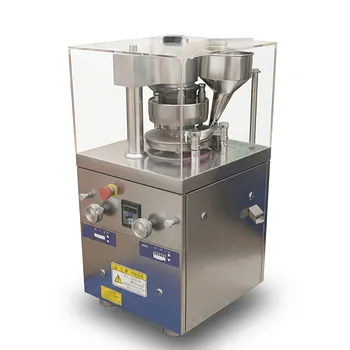
实验室旋转式压片机 多冲模单压式自动连续压片
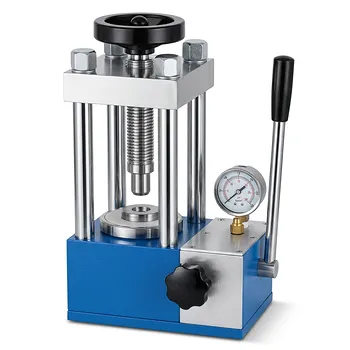
Manual Tablet Press with Dual Scale Pressure Gauge for Pharmaceutical Food Chemical Laboratory Sample Preparation
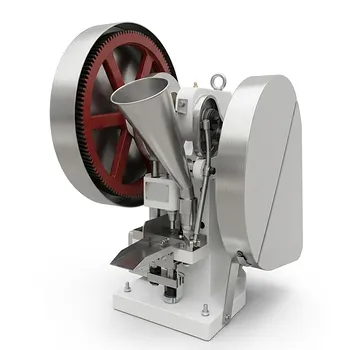
6-Ton Small Single-Punch Tablet Press — Laboratory Powder & Granule Tableting Equipment / Tablet Forming Machine
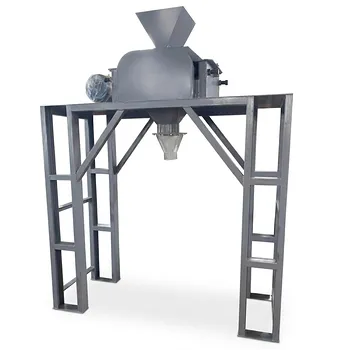
Heightened Customized Laboratory Double Roll Crusher for Coal Ore Rock Crushing
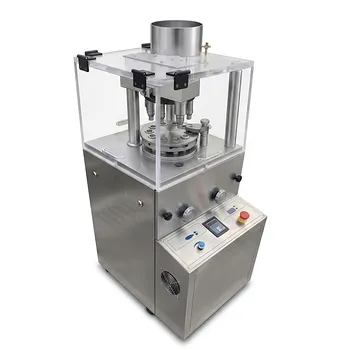
Enhanced 9 Punch Rotary Tablet Press for Powder Compaction
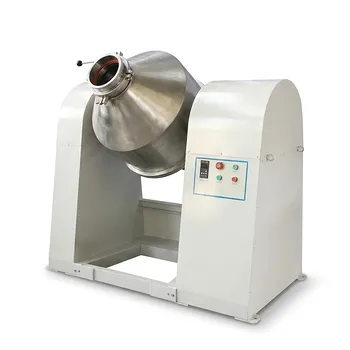
Industrial Double Cone Mixer for Powder Blending and Homogeneous Mixing
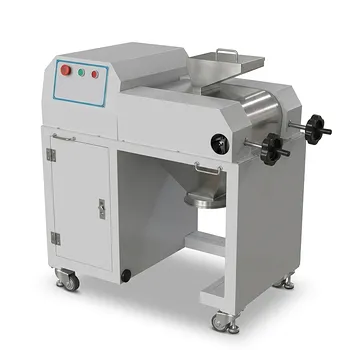
Laboratory Double Roller Crusher for Mining Construction Chemical Sample Preparation
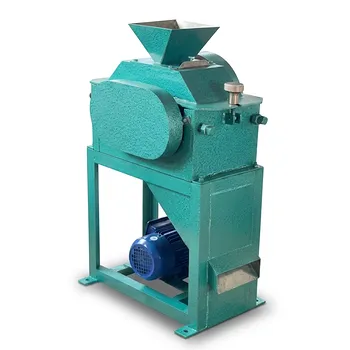
Laboratory Double Roll Crusher for Medium Hardness Materials Coal Ore Sample Preparation
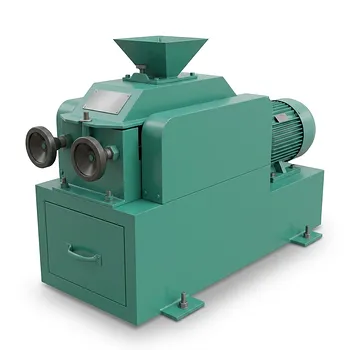
Horizontal Double Roll Crusher for Medium Fine Crushing of Coal Limestone and Ores
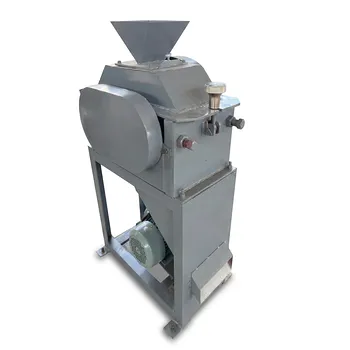
Sealed Double Roll Crusher for Laboratory Coal and Ore Sample Preparation
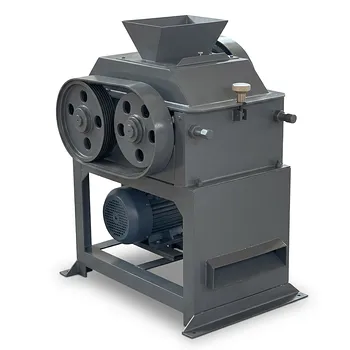
Sealed Laboratory Double Roll Crusher for Coal, Mineral, Ore Sample Preparation
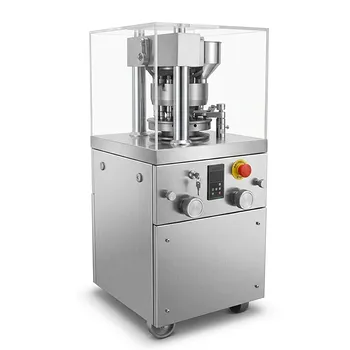
Ordinary Type Rotary Tablet Press for Pharmaceutical Chemical Food Electronic Industries
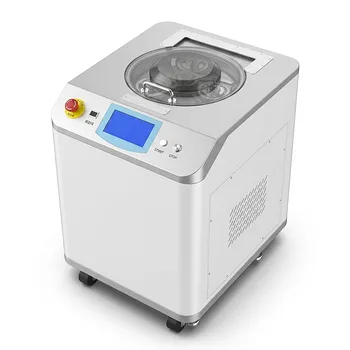
Dual Cup Vacuum Centrifugal Mixer Planetary Paste Defoaming Machine Industrial Material Processor
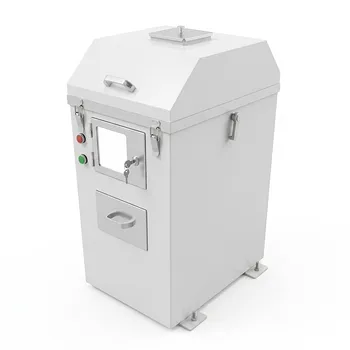
Sealed Double Roll Crusher for Laboratory Sample Preparation of Medium Hardness Materials
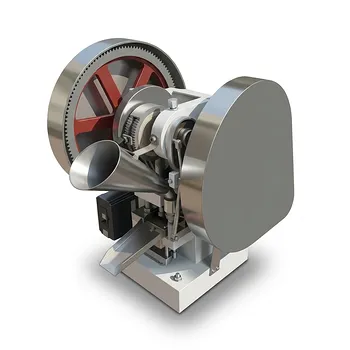
6 Ton Variable Frequency Single Punch Tablet Press
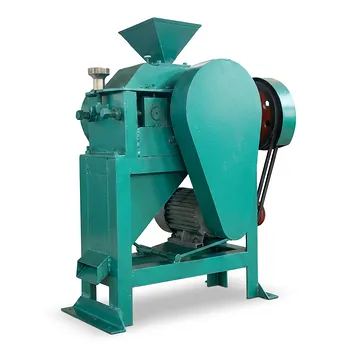
Laboratory Sealed Double Roll Crusher for Coal Ore Rock and Medium Hardness Materials Sample Preparation
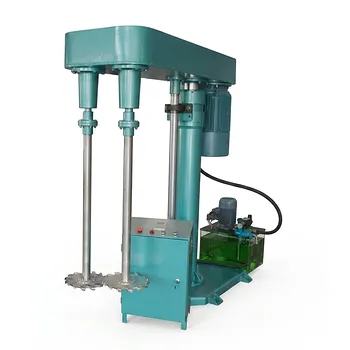
Hydraulic Double Shaft Disperser for High Viscosity Liquid Mixing and Dispersion