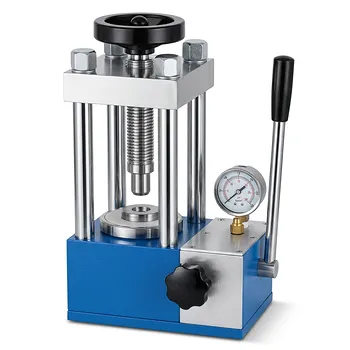
How does a laboratory hydraulic press ensure the quality of high-entropy cathode H-SOFC single cells? Optimize Performance
Updated 5 months ago
Uniform axial pressure is the cornerstone of high-performance H-SOFC fabrication. A laboratory hydraulic press ensures the quality of high-entropy cathode single cells by providing controlled compaction that densifies powder particles, eliminates internal voids, and minimizes density gradients. This precise mechanical processing creates a robust "green body" capable of surviving high-temperature sintering and extreme operational conditions without cracking or delaminating.
Core Takeaway: The laboratory hydraulic press transforms loose ceramic and metallic powders into a cohesive structural unit, optimizing particle-to-particle contact and interlaminar adhesion to ensure both mechanical integrity and efficient electrochemical performance.
Achieving Structural Integrity through Densification
Eliminating Internal Voids and Defects
The primary role of the hydraulic press is to apply constant, high-tonnage pressure (often around 1.5 tons) to remove air and eliminate internal voids within the powder. By forcing particles into a tightly packed rearrangement, the press prevents the formation of "soft spots" that could lead to structural failure under stress.
Minimizing Density Gradients
Precise axial pressure control ensures that the density of the cathode and electrolyte layers remains uniform across the entire surface. This uniformity is critical for preventing warping or deformation during the subsequent 1400°C sintering process, where uneven density would cause differential shrinkage.
Reducing Interlaminar Stress
In multi-layer H-SOFC structures, the press reduces stress between the high-entropy cathode and the proton-conducting electrolyte. By providing a stable, unidirectional load, it secures the interface and prevents delamination or cracking during long-term thermal cycling or redox transitions.
Optimizing Electrochemical and Thermal Performance
Enhancing Electronic Contact Networks
The hydraulic press compresses active material particles, such as high-entropy oxides and conductive binders, into a dense electronic transmission network. This physical compaction improves the electronic contact between particles, which is essential for reducing ohmic resistance and supporting high-rate discharge.
Ensuring Gas Isolation and Safety
Through high-pressure molding, the electrolyte and cathode layers achieve the extreme density required to effectively isolate fuel and oxidizing gases. This prevents gas cross-over and short circuits, ensuring the fuel cell maintains high voltage and safety during operation at 700°C.
Improving Adhesion to Current Collectors
The pressing process enhances the mechanical interlocking between the electrode material and the current collector. This improved adhesion ensures that the electronic pathways remain intact even as the materials expand and contract during high-temperature testing.
Understanding the Trade-offs and Pitfalls
The Risk of Over-Compaction
While high density is often desirable, excessive pressure can reduce the porosity of the cathode to a level that inhibits gas diffusion. If the cathode is too dense, oxygen cannot reach the triple-phase boundaries efficiently, which significantly degrades the cell's electrochemical performance.
Pressure Distribution Inconsistency
If a laboratory press is not properly calibrated or if the mold is misaligned, it can create pressure gradients. These gradients lead to localized areas of high and low density, which are the primary birthplaces of micro-cracks during the sintering phase.
Mechanical Strength vs. Thickness
Thicker "green bodies" produced by pressing provide better mechanical handling strength but can increase the internal resistance of the cell. Finding the balance between a thin, high-performance layer and a structurally sound pellet is a central challenge in H-SOFC fabrication.
How to Apply This to Your Project
Recommendations for Fabrication Goals
- If your primary focus is mechanical durability: Utilize higher axial pressures (1.5–2.0 tons) and specialized vacuum molds to eliminate all internal air pockets and maximize particle interlocking.
- If your primary focus is electrochemical activity: Calibrate your pressing force to achieve a specific green density that allows for the retention of controlled porosity after sintering, ensuring gas access to active sites.
- If your primary focus is accurate characterization: Use standardized, high-precision molds to produce pellets with perfectly smooth surfaces, which prevents measurement deviations during surface area and KDF modeling.
A laboratory hydraulic press is not merely a compaction tool, but a precision instrument that dictates the structural and electronic destiny of the H-SOFC single cell.
Summary Table:
| Pressing Function | Impact on H-SOFC Quality | Primary Benefit |
|---|---|---|
| Controlled Axial Pressure | Eliminates internal voids and air pockets | Prevents structural failure and "soft spots" |
| High-Tonnage Compaction | Increases particle-to-particle contact | Reduces ohmic resistance and improves discharge |
| Uniform Load Distribution | Minimizes density gradients across layers | Prevents warping and cracking during 1400°C sintering |
| Precision Molding | Ensures interface adhesion & gas isolation | Prevents gas cross-over and interlaminar delamination |
Elevate Your Material Research with Precision Compaction
Achieving the perfect balance of densification and porosity in high-entropy cathode H-SOFCs requires more than just pressure—it requires precision. At our company, we provide complete laboratory sample preparation solutions tailored for material science, specializing in high-performance powder processing and compaction equipment.
Our extensive product range is designed to support your entire workflow:
- Advanced Compaction: A full spectrum of hydraulic presses including Cold/Warm Isostatic Presses (CIP/WIP), standard lab presses, XRF pellet presses, and vacuum hot presses for superior structural integrity.
- Powder Processing: High-efficiency crushers (jaw/roll), liquid nitrogen cryogenic grinders, and diverse mills (planetary ball, jet, sand, disc, and rotor).
- Material Refinement: Sieve shakers (vibratory/air-jet) and advanced powder or defoaming mixers to ensure sample homogeneity.
Whether you are a researcher aiming for high-rate discharge or a distributor seeking reliable, certified equipment for your clients, we offer the expertise and OEM/ODM support to drive your success.
Ready to optimize your H-SOFC fabrication? Contact our experts today for a customized solution!
References
- Hailu Dai, Lei Bi. High‐Entropy Cathodes for Proton‐Conducting Solid Oxide Fuel Cells: A Promising Yet Uncharted Frontier. DOI: 10.1002/sus2.70054
Mentioned Products
- 实验室旋转式压片机 多冲模单压式自动连续压片
- 6-Ton Small Single-Punch Tablet Press — Laboratory Powder & Granule Tableting Equipment / Tablet Forming Machine
- 5 Ton Single Punch Tablet Press Laboratory Small Batch Production
- 6 Ton Variable Frequency Single Punch Tablet Press
- Manual Tablet Press with Dual Scale Pressure Gauge for Pharmaceutical Food Chemical Laboratory Sample Preparation
People Also Ask
- What is the role of a laboratory uniaxial hydraulic press in the preparation of alumina ceramic samples? Key Benefits
- What are the advantages of double-action pressing equipment? Master Uniform Density in High-Aspect-Ratio Ceramics
- What is the function of a laboratory hydraulic forming press in CRSS rubber prep? Ensure Superior Material Integrity
- What role does a laboratory hydraulic press play in the forming of Ce-TZP/Al2O3 green bodies? Maximize Density & Strength
- What is the function of an industrial uniaxial hydraulic press for red clay TiO2 substrates? Achieve Precision Density

Tech Team · PowderPreparation
Last updated on May 14, 2026
Related Products
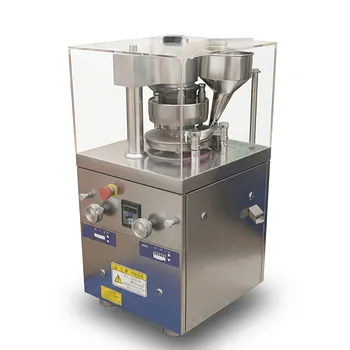
实验室旋转式压片机 多冲模单压式自动连续压片
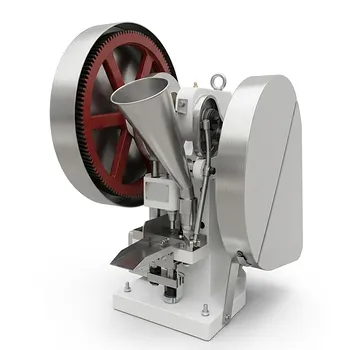
6-Ton Small Single-Punch Tablet Press — Laboratory Powder & Granule Tableting Equipment / Tablet Forming Machine
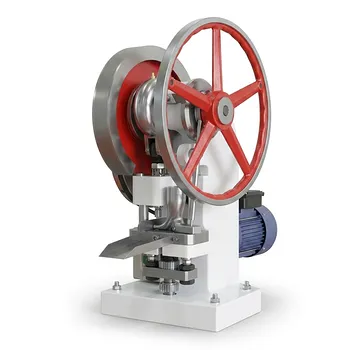
5 Ton Single Punch Tablet Press Laboratory Small Batch Production
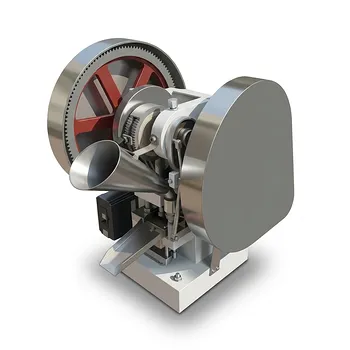
6 Ton Variable Frequency Single Punch Tablet Press