What role does a high-energy sand mill or ball mill play in the preparation of flake-shaped iron nitride? Process Guide
Updated 5 months ago
The primary role of a high-energy sand or ball mill is to morphologically transform spherical iron powder into a flake-like shape while simultaneously "activating" the material for chemical reaction. This mechanical process thins the iron particles to nanoscale dimensions in one axis and introduces structural defects that significantly lower the energy barrier for the subsequent nitriding process.
Core Takeaway: High-energy milling acts as a dual-purpose preparation stage that provides the necessary geometry (high aspect ratio flakes) and the required chemical reactivity (via mechanical activation) to successfully produce high-quality iron nitride.
Morphological Transformation: Creating the Flake Structure
From Spherical to Flake Geometry
The milling process uses high-frequency mechanical impact and shear forces to deform standard spherical carbonyl iron powder. As the grinding media collide with the particles, the iron undergoes intense plastic deformation, flattening the spheres into thin, high-aspect-ratio flakes.
Achieving Nanoscale Thickness
While the lateral dimensions of the flakes may remain relatively large, the milling process reduces the thickness of the particles to the nanoscale. This creates a high specific surface area, which is essential for uniform exposure to nitrogen sources in later stages.
Consistency and Uniformity
High-energy mills ensure that the mechanical energy is distributed evenly throughout the batch. This results in a consistent flake thickness and size distribution, which is critical for the predictable performance of the final iron nitride product.
Mechanical Activation and Microstructural Engineering
Introduction of Lattice Defects
The violent collisions within the mill introduce significant microstructural defects, such as dislocations and stacking faults, into the iron crystal lattice. These defects represent stored energy within the material, making the iron atoms more "restless" and ready to react.
Grain Refinement
Milling subjects the iron to repeated fracturing and cold welding, which refines the internal grain size from the micrometer level down to the nanometer level. Smaller grains mean a higher density of grain boundaries, which act as high-speed pathways for atom diffusion.
Increasing Chemical Reactivity
By increasing the defect density and the specific surface area, the milling process performs mechanical activation. This activation reduces the temperature and time required for the iron to absorb nitrogen, facilitating a more efficient nitriding treatment.
Understanding the Trade-offs and Pitfalls
Contamination Risk
The high-energy nature of these mills can cause wear on the grinding media (balls or beads) and the internal lining of the chamber. This can introduce impurities into the iron powder, which may negatively impact the magnetic or structural properties of the final iron nitride.
Over-Milling and Cold Welding
Excessive milling time can lead to a phenomenon where the flakes begin to cold weld back together, forming large, irregular aggregates. This reverses the benefits of thinning and reduces the effective surface area available for nitriding.
Thermal Management
The mechanical energy of the mill is largely converted into heat, which can cause unwanted oxidation of the iron powder if not properly managed. Most high-energy milling processes for iron nitride require inert atmospheres or liquid cooling to prevent the powder from degrading.
How to Apply This to Your Process
Recommendations for Material Optimization
- If your primary focus is maximum chemical reactivity: Prioritize higher energy settings and longer milling times to maximize lattice defects and grain refinement.
- If your primary focus is precise flake geometry: Utilize a sand mill with specific lubricants or surfactants to promote flattening while discouraging fracturing and cold welding.
- If your primary focus is material purity: Select grinding media (such as zirconia or hardened steel) that match the chemistry of your final product to minimize the impact of wear debris.
High-energy milling is the critical bridge that transforms raw iron powder into a specialized precursor capable of becoming high-performance flake-shaped iron nitride.
Summary Table:
| Key Role | Mechanical Action | Impact on Material |
|---|---|---|
| Morphological Change | Intense plastic deformation | Converts spherical particles into high-aspect-ratio flakes. |
| Mechanical Activation | Introduction of lattice defects | Lowers the energy barrier for subsequent nitriding reactions. |
| Grain Refinement | Repeated fracturing and cold welding | Creates nanometer-level grains for faster atom diffusion. |
| Surface Engineering | High-frequency mechanical shear | Increases specific surface area for uniform nitrogen exposure. |
Elevate Your Material Synthesis with Professional Lab Solutions
Are you looking to achieve precise particle morphology and superior chemical reactivity in your research? At our specialized engineering facility, we provide complete laboratory sample preparation solutions for material science, specializing in high-performance powder processing and compaction equipment.
Our extensive product lines include:
- Advanced Milling: Planetary ball mills, jet mills, sand/bead mills, disc mills, and rotor mills.
- Crushing & Sizing: Jaw/roll crushers and vibratory/air-jet sieve shakers.
- Compaction Excellence: A full spectrum of hydraulic presses, including Cold/Warm Isostatic Presses (CIP/WIP), standard lab presses, and vacuum hot presses.
- Mixing Solutions: Powder mixers and vacuum defoaming mixers for uniform dispersion.
Whether you are preparing flake-shaped iron nitride or developing next-generation ceramics, our equipment ensures the consistency, purity, and control your lab requires. Contact our experts today to find the perfect solution for your specific application!
References
- Sicheng Zhai, Qun Wang. Controlled Synthesis, Microstructure Evolution, and Soft Magnetic Properties of Flaky Iron Nitride. DOI: 10.3390/magnetochemistry12010003
Mentioned Products
- High Energy Planetary Ball Mill for Nano Scale Grinding and Mechanical Alloying
- Single Tank High Energy Vibratory Ball Mill for Laboratory Grinding and Mixing
- Vertical Production Planetary Ball Mill for High Throughput Powder Processing
- High Energy Omnidirectional Planetary Ball Mill 20L
- Vertical Square Planetary Ball Mill for Laboratory Sample Preparation and Nanoscale Grinding
People Also Ask
- Why is a high-energy planetary ball mill used for nano-milling As4Se3? Achieve Expert Structural Transformation
- What role do high-energy planetary ball mills play in FDM composite filament preparation? Optimize Material Performance
- What is the role of a high-energy planetary ball mill in the exfoliation of modified WSe2? Achieve Nano-Precision
- What is the function of a planetary ball mill in glass-ceramic sintering? Optimize Reactivity and Uniformity
- What is the role of a high-energy planetary ball mill in the preparation of high-performance nano-ceramics? Key Guide

Tech Team · PowderPreparation
Last updated on May 14, 2026
Related Products

High Energy Planetary Ball Mill for Nano Scale Grinding and Mechanical Alloying
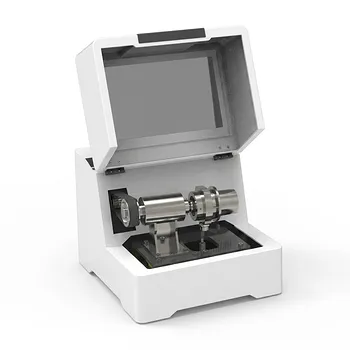
Single Tank High Energy Vibratory Ball Mill for Laboratory Grinding and Mixing

Vertical Production Planetary Ball Mill for High Throughput Powder Processing

High Energy Omnidirectional Planetary Ball Mill 20L

Vertical Square Planetary Ball Mill for Laboratory Sample Preparation and Nanoscale Grinding

High Energy Laboratory Planetary Ball Mill for Nano Grinding and Material Science Sample Preparation

High Energy Omnidirectional Planetary Ball Mill 16L

8L Planetary Ball Mill for Laboratory Grinding and Sample Preparation

High Energy Laboratory Planetary Ball Mill for Nano Grinding and Colloidal Mixing of Hard and Brittle Materials

Nano High Energy Vibratory Ball Mill with Heating and Temperature Control

Dual Jar High Energy Vibratory Ball Mill

Nano High Energy Vibratory Ball Mill for Laboratory Sample Preparation

Multi-Platform Nanoscale High-Energy Vibratory Ball Mill

Heating Temperature Controlled High Energy Vibratory Ball Mill
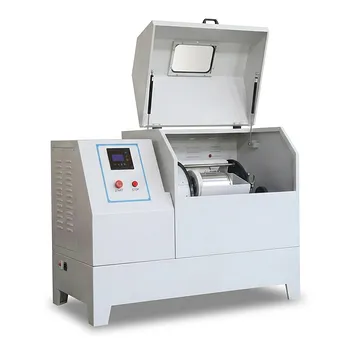
Heavy Duty Horizontal Planetary Ball Mill for Efficient Industrial Grinding and Sample Preparation
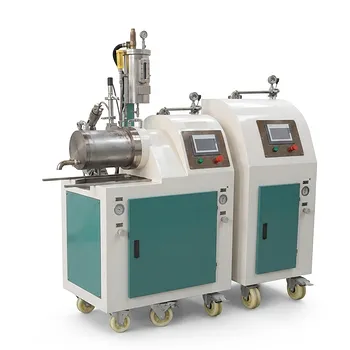
Mass Production Nano Sand Mill for Industrial Nanomaterial Grinding and Dispersion
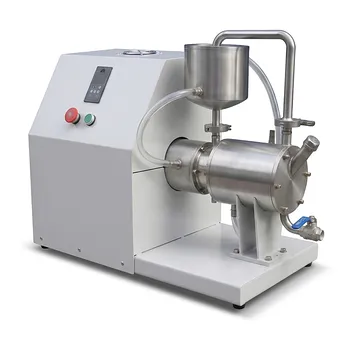
Laboratory Small Horizontal Sand Mill for Nano Materials Wet Grinding

High Speed Laboratory Grinder Efficient Stainless Steel Powder Pulverizer Universal Material Science Mill for Sample Preparation

360° Rotating Omnidirectional Laboratory Planetary Ball Mill for Homogeneous Ultra-Fine Grinding and Mixing