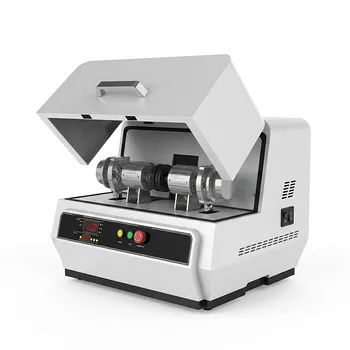
What role does a ball mill play in the preparation of ceramic composite materials from natural stone waste? Boost Reactivity.
Updated 3 months ago
The ball mill is the engine of chemical reactivity. In the preparation of ceramic composites from natural stone waste, it serves two indispensable functions: reducing granite and marble waste into fine powders and ensuring a perfectly uniform distribution of chemical precursors. This microscopic precision is what allows inert stone waste to transform into high-performance ceramic phases during heat treatment.
By combining mechanical refinement with intensive homogenization, the ball mill converts raw stone waste into a reactive precursor. This process ensures that calcium, silicon, and aluminum oxides are in constant proximity, which is the fundamental requirement for synthesizing target phases like gehlenite and wollastonite.
Achieving Chemical Reactivity through Refinement
Particle Size Reduction of Stone Waste
Natural stone waste, such as granite and recrystallized marble, is physically dense and chemically stable in its raw form. The ball mill uses high-energy impact and attrition to break these materials down into extremely fine powders.
This reduction is necessary to create a foundation of raw materials with an ideal particle size distribution. Without this refinement, the material would lack the surface area required for effective thermal processing.
Increasing Surface Area for Reaction
Smaller particles possess a significantly higher surface-area-to-volume ratio. This increased surface area enhances the reaction activity of the powders, allowing them to participate in chemical changes more readily.
In the context of stone waste, higher surface activity accelerates the kinetics of the manufacturing process. It ensures that the energy applied during subsequent sintering is used for phase transformation rather than just overcoming physical barriers.
Homogenization and Solid-State Kinetics
Uniform Distribution of Chemical Components
A ceramic composite is only as strong as its most poorly mixed section. The ball mill ensures that calcium oxide (CaO), silicon dioxide (SiO2), and aluminum oxide (Al2O3) are distributed uniformly at the microscopic level.
This highly uniform mixing prevents the formation of localized "pockets" of unreacted material. It guarantees that every cubic millimeter of the composite has the correct chemical stoichiometry to form the intended ceramic structure.
Facilitating Phase Transformation
The ultimate goal of using stone waste is to produce target ceramic phases like gehlenite and wollastonite. These phases are created through solid-state reactions, where atoms migrate between adjacent particles at high temperatures.
Because the ball mill places different chemical components in direct, intimate contact, these atoms have a shorter distance to travel. This proximity is a critical prerequisite for forming a pure phase structure and a uniform core-shell microstructure.
Understanding the Trade-offs
Energy Consumption vs. Refinement
Extended grinding at specific speeds is required to reach the necessary level of homogeneity. However, energy input increases exponentially as particle sizes move into the sub-micron range.
Engineers must balance the duration of milling with the desired reactivity. Over-milling can lead to agglomeration, where fine particles begin to stick together again, effectively reversing the benefits of the refinement.
Media Wear and Contamination
The mechanical action of the grinding media (balls) against the stone waste causes gradual wear of the media itself. This can introduce impurities from the grinding balls or the mill lining into the ceramic mixture.
Selecting grinding media suited to the specific hardness of granite and marble is vital. If the media is too soft, the resulting ceramic composite may suffer from degraded mechanical properties due to contamination.
How to Apply This to Your Project
To maximize the efficiency of a ball mill when processing natural stone waste, your strategy should align with your specific material requirements and performance goals.
- If your primary focus is Phase Purity: Use a planetary ball mill for extended durations at high speeds to ensure total microscopic homogenization of CaO and SiO2.
- If your primary focus is Mechanical Strength: Prioritize particle size distribution by adjusting milling energy to avoid sub-micron agglomeration that can create structural defects.
- If your primary focus is Cost Efficiency: Optimize the grinding media selection based on the specific hardness of your stone waste to reduce wear and minimize milling time.
The ball mill essentially transforms heterogeneous waste into a predictable, high-purity chemical feedstock for advanced ceramic synthesis.
Summary Table:
| Process Function | Key Mechanism | Impact on Ceramic Composite |
|---|---|---|
| Particle Refinement | High-energy impact & attrition | Increases surface area and reaction kinetics |
| Homogenization | Microscopic blending of oxides | Prevents unreacted pockets; ensures stoichiometry |
| Phase Synthesis | Atomic proximity | Facilitates formation of Gehlenite and Wollastonite |
| Mechanical Activation | Structural refinement | Enables low-energy solid-state reactions |
Transform Waste into High-Performance Ceramics with Expert Solutions
Ready to optimize your ceramic synthesis and material refinement? At [Brand Name], we provide complete laboratory sample preparation solutions tailored for material science. Whether you are processing granite waste or advanced technical ceramics, our equipment ensures the precision your research demands.
Our extensive product line includes:
- Size Reduction: High-energy planetary ball mills, jet mills, and jaw/roll crushers for perfect particle distribution.
- Classification: Vibratory and air-jet sieve shakers for precise quality control.
- Mixing: Powder and vacuum defoaming mixers for total homogenization.
- Compaction: A full spectrum of hydraulic presses, including Cold/Warm Isostatic Presses (CIP/WIP), vacuum hot presses, and XRF pellet presses.
Unlock the full potential of your materials—Contact our technical team today for a customized equipment consultation!
References
- Gökhan Erol, Devrim PEKDEMİR. Granit ve rekristalize kireçtaşı doğal taş atıklarından elde edilen kompozit malzemenin ısıl dönüşümünün incelenmesi. DOI: 10.19111/bulletinofmre.1081187
Mentioned Products
- Heavy Duty Horizontal Planetary Ball Mill for Efficient Industrial Grinding and Sample Preparation
- Vertical Semi Circular Planetary Ball Mill for Laboratory Precision Grinding
- Vertical Square Planetary Ball Mill for Laboratory Sample Preparation and Nanoscale Grinding
- High Energy Planetary Ball Mill for Nano Scale Grinding and Mechanical Alloying
- Vertical Production Planetary Ball Mill for High Throughput Powder Processing
People Also Ask
- Why grind lime-pozzolan specimens for TG/DTA for 3 mins? Master sample prep for high-precision thermal analysis.
- What is the role of a planetary ball mill in the mechanical activation of ZTA powder? Boost Sintering Performance
- How does a planetary ball mill contribute to the homogenization of trace elements? Achieve Sub-Micron Uniformity
- What is the function of a planetary ball mill in wollastonite ceramic prep? Achieve Molecular Homogenization & Reactivity
- What is the primary function of a planetary ball mill in the treatment of Halloysite-Rich Soils? Boost Mineral Activity

Tech Team · PowderPreparation
Last updated on Jun 03, 2026
Related Products
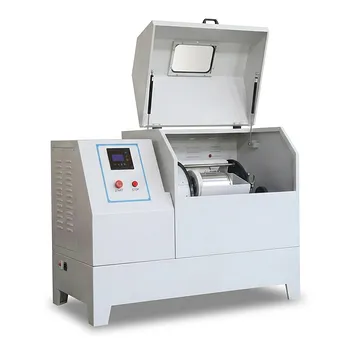
Heavy Duty Horizontal Planetary Ball Mill for Efficient Industrial Grinding and Sample Preparation
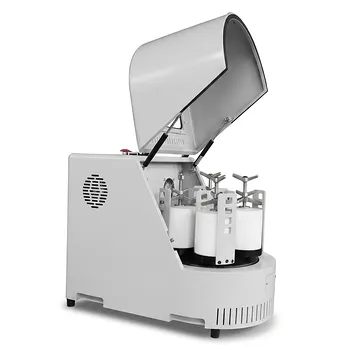
Vertical Semi Circular Planetary Ball Mill for Laboratory Precision Grinding
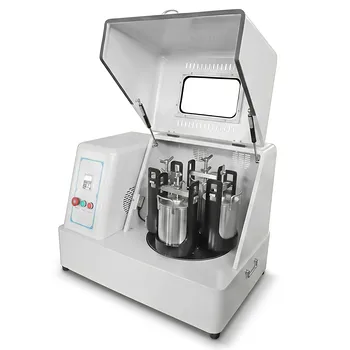
Vertical Square Planetary Ball Mill for Laboratory Sample Preparation and Nanoscale Grinding

High Energy Planetary Ball Mill for Nano Scale Grinding and Mechanical Alloying
Vertical Production Planetary Ball Mill for High Throughput Powder Processing
Single Tank High Energy Vibratory Ball Mill for Laboratory Grinding and Mixing
High Energy Planetary Ball Mill for Nano Scale Grinding and Colloidal Mixing in Material Science Research
High Energy Laboratory Planetary Ball Mill for Nano Grinding and Material Science Sample Preparation
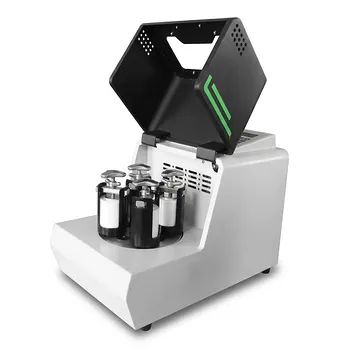
Miniature Planetary Ball Mill with Vacuum Grinding and High Efficiency for Laboratory Sample Preparation
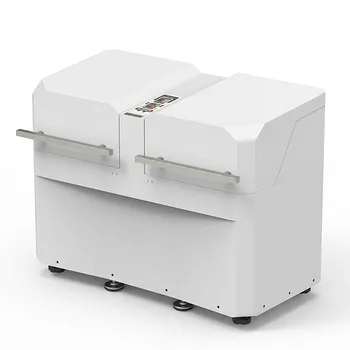
Dual Station Planetary Ball Mill 24L
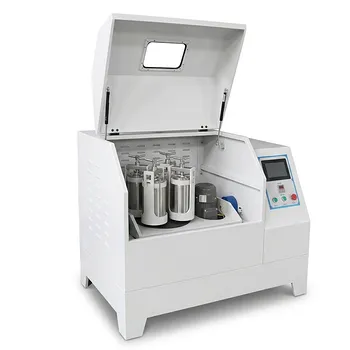
360° Rotating Omnidirectional Laboratory Planetary Ball Mill for Homogeneous Ultra-Fine Grinding and Mixing
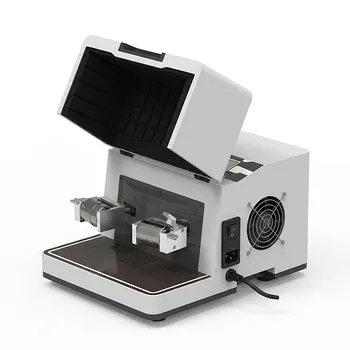
High Energy Hybrid Vibratory Ball Mill for Grinding Mixing and Cell Disruption
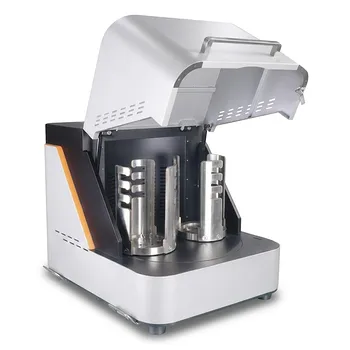
High Energy Laboratory Planetary Ball Mill for Nano Grinding and Colloidal Mixing of Hard and Brittle Materials
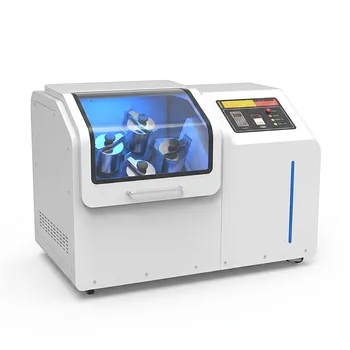
High Energy Omnidirectional Planetary Ball Mill 16L
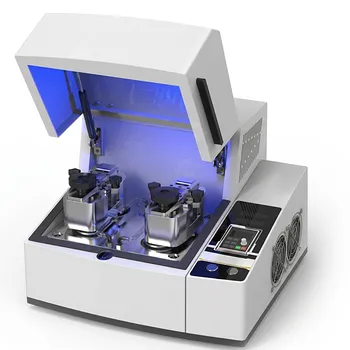
Laboratory Nano High Energy Ball Mill Ultrafine Grinding Mechanical Alloying
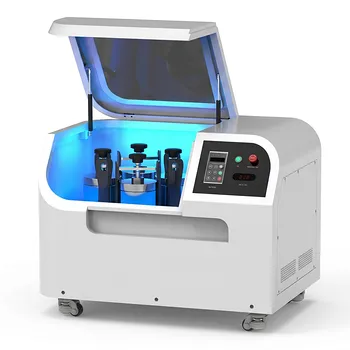
Planetary Ball Mill 12L

High Throughput Micro Ball Mill for Cryogenic Grinding and Laboratory Cell Disruption
8L Planetary Ball Mill for Laboratory Grinding and Sample Preparation
Nanoscale High-Energy Vibratory Ball Mill for Laboratory Sample Preparation, Mechanochemistry, and Mechanical Alloying