What role do standard test sieves play in biomass seed analysis? Master Particle Distribution for Superior Bio-Energy
Updated 3 months ago
Standard test sieves are the primary tools used to mechanically grade ground biomass seeds into discrete size fractions through physical interception. By utilizing specific mesh apertures, these sieves allow researchers to calculate the mass percentage of material at each size level, creating an accurate profile of particle size distribution (PSD).
Core Takeaway: Standard test sieves provide the empirical foundation for biomass analysis by eliminating material non-uniformity. This precise classification is essential for understanding how specific particle sizes influence downstream processes like bio-oil yield, diffusion efficiency, and pellet quality.
Mechanics of Particle Size Classification
Physical Separation and Grading
Standard test sieves function by physically blocking particles larger than the mesh aperture while allowing smaller particles to pass through. In biomass processing, this allows for the separation of ground seeds into specific ranges, often spanning from 1.0 mm to 6.0 mm.
Quantifying Mass Distribution
By stacking multiple sieves with decreasing aperture sizes, technicians can isolate various sub-fractions of the ground biomass. The material retained on each level is weighed to determine the mass percentage distribution, which is then used to generate particle size distribution curves.
Benchmarking Grinding Performance
Sieving data serves as a critical metric for evaluating the performance of grinding equipment. It allows operators to adjust parameters such as rotation speed and impactor shape based on whether the output meets the required grain size for the intended application.
Impact on Downstream Biomass Applications
Optimizing Chemical and Thermal Conversion
Precise control over particle dimensions is vital for analyzing diffusion efficiency and bio-oil yield. By ensuring a uniform particle size, researchers can eliminate experimental interference and isolate the effects of surface area on heat and mass transfer during conversion.
Enhancing Pelletization and Molding
For biomass used in fuel pellets, sieves help determine the optimal grain size for relaxation density and hardness. Quantitative analysis of specific ranges, such as 0–1.5 mm or 2–3.5 mm, allows producers to maximize the molding rate and the structural integrity of the final product.
Evaluation of Growth Substrates
When biomass seeds or agricultural wastes are used as growth substrates, sieving determines porosity and hydraulic conductivity. The proportion of different particle sizes directly impacts the substrate’s ability to retain water and nutrients for plant development.
Understanding the Trade-offs and Limitations
The Challenge of Particle Shape
Standard sieves classify particles based on their smallest cross-section, which can be problematic for elongated biomass fibers. This means that a long, needle-like particle may pass through a mesh that a spherical particle of the same volume would not, potentially skewing the distribution data.
Sieve Blinding and Material Loss
Fibrous or oily biomass seeds can cause sieve blinding, where particles lodge in the mesh openings and obstruct the flow. If not managed with proper cleaning or vibratory assistance, this leads to inaccurate mass measurements and an underestimation of the fine particle fraction.
Physical Wear and Calibration
High-precision sieves are subject to mechanical wear over time, especially when processing abrasive biomass materials. Regular calibration is required to ensure that aperture dimensions remain within "standard" tolerances, as even minor deviations can compromise the material balance calculations.
How to Apply This to Your Project
Making the Right Choice for Your Goal
- If your primary focus is Bio-oil Production: Use sieves to isolate a narrow range (e.g., 1.0–2.0 mm) to ensure uniform heating and maximize liquid yield during fast pyrolysis.
- If your primary focus is Pellet Manufacturing: Prioritize a multi-stage stack to determine the ratio of fines to coarse particles, as a specific blend is often required for optimal pellet hardness.
- If your primary focus is Equipment Validation: Utilize high-precision test sieves as a benchmark to calibrate secondary analysis methods, such as automated image analysis or laser diffraction.
- If your primary focus is Substrate Engineering: Analyze the distribution of larger fractions (above 2.0 mm) to ensure adequate aeration and drainage within the biomass matrix.
By mastering the use of standard test sieves, you gain the precise control over material uniformity necessary to optimize both the mechanical and chemical potential of biomass seeds.
Summary Table:
| Application Area | Key Role of Sieving | Primary Benefit |
|---|---|---|
| Material Grading | Physical separation by mesh aperture | Accurate mass percentage distribution (PSD) |
| Bio-oil Yield | Narrow range isolation (e.g., 1-2mm) | Uniform heating and maximized liquid yield |
| Pelletizing | Optimizing fine-to-coarse ratios | Enhanced relaxation density and pellet hardness |
| Equipment Validation | Benchmarking grinding performance | Precise calibration of mill rotation and impact |
| Substrate Design | Porosity and aeration control | Improved water and nutrient retention for growth |
Elevate Your Biomass Research with Precision Equipment
Achieving material uniformity is the first step toward high-efficiency thermal conversion and superior pellet quality. We provide complete laboratory sample preparation solutions tailored for material science, specializing in advanced powder processing and compaction equipment.
Our extensive product lines are designed to handle every stage of your workflow:
- Grinding & Crushing: Achieve the perfect grain size with our jaw/roll crushers, liquid nitrogen cryogenic grinders, and high-performance mills (planetary ball, jet, sand/bead, disc, and rotor).
- Precision Classification: Ensure accurate PSD with our vibratory and air-jet sieve shakers, featuring a wide array of standardized test sieves and meshes.
- Advanced Compaction: Optimize pellet structural integrity using our full spectrum of hydraulic presses, including Cold/Warm Isostatic Presses (CIP/WIP), XRF pellet presses, and vacuum hot presses.
Whether you are a researcher aiming for uniform heat transfer or a distributor looking for reliable OEM/ODM support and certified equipment, we bring the expertise to enhance your efficiency.
Ready to optimize your sample preparation? Contact our technical team today to find the perfect solution for your laboratory!
References
- C. B. Ugwuodo, L. C. Ezeocha. Response Surface Modeling of Soursop Rich Seed Pyrolysis for Optimum Bio-oil Production. DOI: 10.63958/azojete/2025/21/2/018
Mentioned Products
- Laboratory Vibratory Test Sieve Shaker for Precision Particle Size Analysis and Powder Grading
- Stainless Steel Laboratory Vibratory Test Sieve Shaker
- Small Laboratory Vibrating Sieve Shaker for Precise Particle Size Analysis
- 三维电磁微量振动筛分仪
- Small Laboratory Vibratory Sieve Shaker for Powder Gradation and Particle Size Analysis
People Also Ask
- What role does a laboratory sieve shaker play in determining PDI? Achieve Precision in Biomass Quality Testing
- What are the functions of sieve shakers for coconut shell powder? Achieve Precise Particle Size & Quality Control.
- What function does a laboratory sieve shaker perform in the PSD analysis of residual soil? Ensure Precise Grading
- What is the role of a laboratory sieve shaker in the preparation of plantain peel adsorbents? Standardize Particle Size
- What is the function of a laboratory vibratory sieve shaker? Enhance Coal Particle Size Distribution (PSD) Analysis

Tech Team · PowderPreparation
Last updated on Jun 03, 2026
Related Products

Laboratory Vibratory Test Sieve Shaker for Precision Particle Size Analysis and Powder Grading
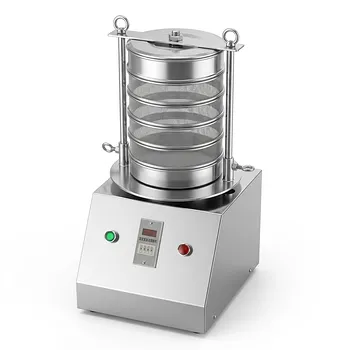
Stainless Steel Laboratory Vibratory Test Sieve Shaker

Small Laboratory Vibrating Sieve Shaker for Precise Particle Size Analysis
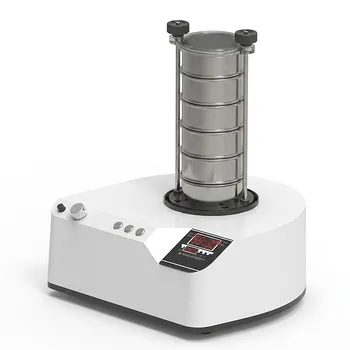
三维电磁微量振动筛分仪

Small Laboratory Vibratory Sieve Shaker for Powder Gradation and Particle Size Analysis
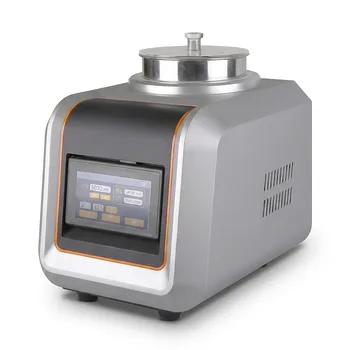
Laboratory Air Jet Sieving Machine for Fine Powder Particle Size Analysis and Deagglomeration
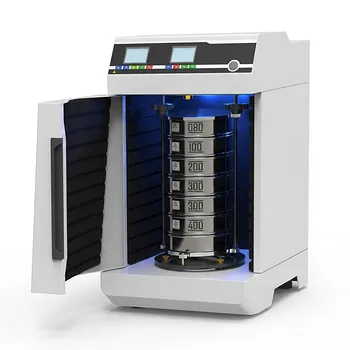
Laboratory Dry and Wet Three Dimensional Vibratory Sieve Shaker for Particle Analysis
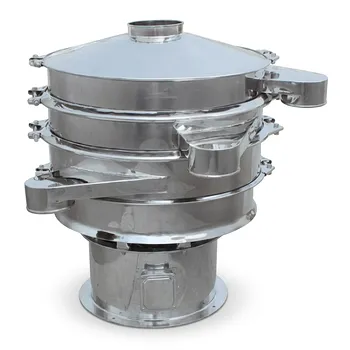
Stainless Steel Rotary Vibrating Sieve High Precision Circular Vibratory Separator Industrial Powder Grading Machine Multi Layer Sifting Equipment
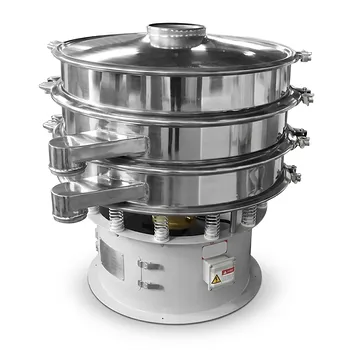
Three Dimensional Rotary Vibrating Sieve
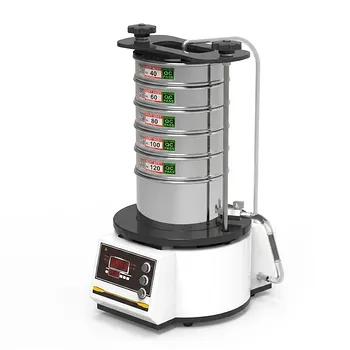
High Frequency Wet Three-Dimensional Vibrating Sieve Shaker for Dry and Wet Particle Size Analysis
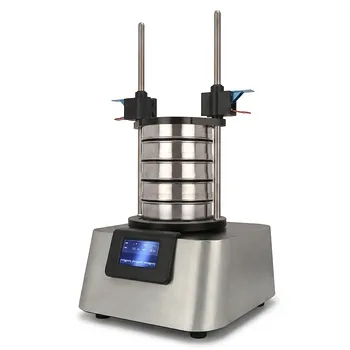
Vibratory Sieve Shaker Electromagnetic 3D Motion Powder Particle Size Analyzer for Dry and Wet Sieving
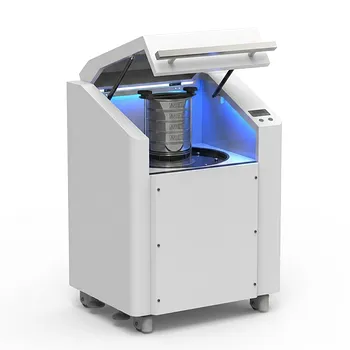
High Frequency Cabinet Type Three-Dimensional Rotary Vibrating Sieve Shaker for Dry Sieving and Particle Classification
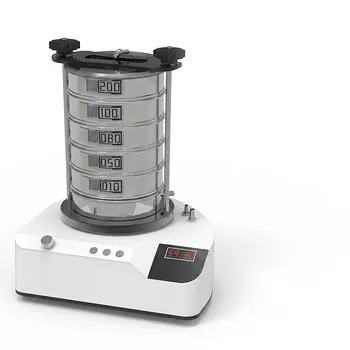
Heavy Duty Dry Three Dimensional Vibratory Sieve Shaker for Particle Separation

Dry Three Dimensional Vibratory Sieve Shaker
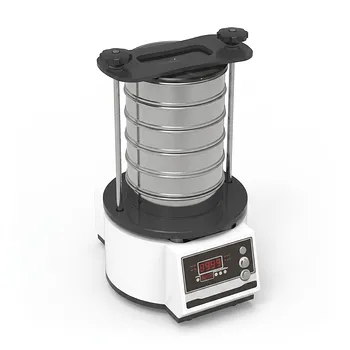
Tapping Oscillating Sieve Shaker for Dry and Wet Particle Size Analysis
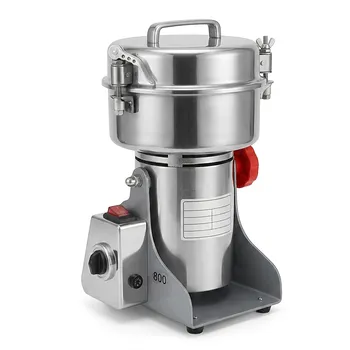
Small High-Speed Laboratory Grinder for Rapid Sample Preparation
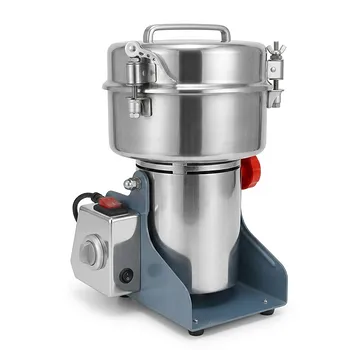
Small High-Speed Grinder for Efficient Laboratory Sample Preparation
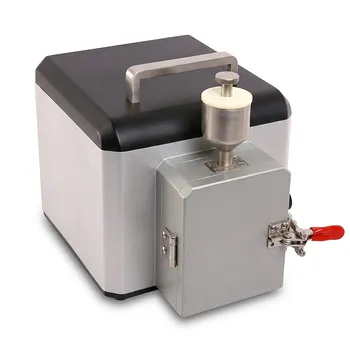
Portable Cutting Mill for Laboratory Sample Preparation and RoHS WEEE Compliance Testing
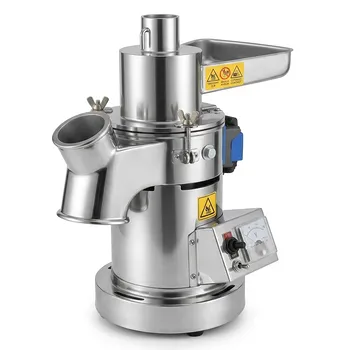
Continuous Feeding Grinder High Efficiency Pulverizer for Lab Sample Preparation