What role do standard laboratory test sieves play in sawdust concrete? Optimize Grading for High Structural Integrity
Updated 4 months ago
Standard laboratory test sieves are the essential gateway for quality control in sawdust concrete production. They perform two critical functions: the removal of large impurities like wood fragments or pebbles and the precise classification of sand and sawdust particle sizes. This physical screening ensures the raw materials meet construction standards, which is a prerequisite for achieving a uniform mixture and high structural integrity.
The core role of test sieves is to transform inconsistent raw waste into standardized aggregates. By controlling the particle size distribution, sieves allow engineers to optimize the concrete's density and compressive strength while eliminating structural weak points.
The Role of Sieves in Material Pretreatment
Eliminating Structural Weak Points
During the initial phase, sieves with apertures such as 10mm and 2mm are used to extract oversized impurities from sawdust and sand. Removing large wood fragments or pebbles is vital because these inconsistencies can create "soft spots" or voids within the concrete matrix.
Standardizing the Raw Material State
By using a sequence of sieves, researchers ensure that the fine aggregates—both the organic sawdust and the mineral sand—possess a uniform texture. This uniformity is necessary for the rheological properties of the wet mix, ensuring it flows and sets correctly without segregation.
Optimizing Mechanical Performance through Grading
Achieving Ideal Packing Density
Proper grading involves arranging sieves in descending order of aperture size to determine the exact particle size distribution. When the sizes are correctly balanced, smaller particles fill the gaps between larger ones, which significantly minimizes the void ratio.
Enhancing Compressive Strength
A well-graded aggregate mix leads to a denser concrete structure, which directly increases the final compressive strength. By strictly controlling the fineness modulus via mesh sizes compliant with standards like ASTM E11 or BS 812, engineers can predict and repeat the performance of eco-friendly batches.
Controlling Pore Structure and Durability
In specialized concrete, such as pervious or sawdust-based blends, precise screening (often down to 0.15mm) is required to maintain a stable pore structure. This control ensures that the material remains durable and resistant to environmental stressors over time.
Understanding the Trade-offs and Pitfalls
The Risk of Over-Screening
While precision is necessary, excessive screening to remove all but a very narrow size range can lead to poor workability. Concrete requires a specific blend of sizes to stay cohesive; a mix that is "too uniform" may require more cement paste to bind, increasing costs.
Material Waste and Yield
In eco-friendly construction, the goal is often to maximize the use of waste sawdust. Aggressive sieving may result in a high volume of "oversized" or "undersized" waste that must be discarded, potentially undermining the sustainability goals of the project.
How to Apply This to Your Project
To successfully integrate sawdust into a concrete mixture, your screening strategy should align with your specific performance requirements.
- If your primary focus is Maximum Structural Strength: Use a full stack of sieves to achieve a continuous grading curve that optimizes packing density and minimizes internal voids.
- If your primary focus is Thermal Insulation: Use larger sieve apertures to retain slightly coarser sawdust particles, which can enhance the material's lightweight and insulative properties.
- If your primary focus is High Workability: Ensure the screening process maintains a sufficient balance of "fines" (particles under 0.15mm) to act as a lubricant within the wet concrete mix.
Precise particle size control is the foundation upon which the reliability and safety of eco-friendly sawdust concrete are built.
Summary Table:
| Process Step | Primary Sieve Function | Impact on Concrete Performance |
|---|---|---|
| Pretreatment | Removing impurities (wood fragments/pebbles) | Eliminates structural weak points and internal voids |
| Grading | Optimizing particle size distribution | Increases packing density and final compressive strength |
| Fines Control | Screening down to 0.15mm (ASTM E11) | Maintains stable pore structure and long-term durability |
| Workability | Balancing fine aggregate ratios | Ensures uniform mix flow and prevents material segregation |
Elevate Your Material Research with Precision Engineering
Achieving the perfect balance of strength and sustainability in sawdust concrete requires rigorous quality control. We provide complete laboratory sample preparation solutions specifically designed for material science and powder processing.
Whether you are grading raw aggregates or preparing fine powders, our extensive product line has you covered:
- Sieve Shakers & Meshes: High-precision vibratory and air-jet sieve shakers compliant with ASTM/BS standards.
- Milling & Grinding: Planetary ball mills, jet mills, and cryogenic grinders for superior particle refinement.
- Compaction Equipment: A full spectrum of hydraulic presses, including Cold/Warm Isostatic Presses (CIP/WIP), hot presses, and XRF pellet presses.
- Mixing Solutions: Professional powder and defoaming mixers for a perfectly homogeneous batch.
Ready to optimize your lab's efficiency and ensure structural reliability? Contact our experts today to discuss your equipment needs!
References
- O.A. Ubachukwu, K.B. Nwokoukwu. Properties of eco-friendly concrete produced by partial replacement of sand with sawdust with emphasis on water-cement ratio. DOI: 10.4314/njt.v41i1.4
Mentioned Products
- Laboratory Vibratory Test Sieve Shaker for Precision Particle Size Analysis and Powder Grading
- Stainless Steel Laboratory Vibratory Test Sieve Shaker
- Small Laboratory Vibrating Sieve Shaker for Precise Particle Size Analysis
- Small Laboratory Vibratory Sieve Shaker for Powder Gradation and Particle Size Analysis
- Laboratory Dry and Wet Three Dimensional Vibratory Sieve Shaker for Particle Analysis
People Also Ask
- What role does a laboratory sieve shaker play in determining PDI? Achieve Precision in Biomass Quality Testing
- What are the functions of sieve shakers for coconut shell powder? Achieve Precise Particle Size & Quality Control.
- What function does a laboratory sieve shaker perform in the PSD analysis of residual soil? Ensure Precise Grading
- What is the role of a laboratory sieve shaker in the preparation of plantain peel adsorbents? Standardize Particle Size
- What is the function of a laboratory vibratory sieve shaker? Enhance Coal Particle Size Distribution (PSD) Analysis

Tech Team · PowderPreparation
Last updated on Jun 03, 2026
Related Products
Laboratory Vibratory Test Sieve Shaker for Precision Particle Size Analysis and Powder Grading
Stainless Steel Laboratory Vibratory Test Sieve Shaker
Small Laboratory Vibrating Sieve Shaker for Precise Particle Size Analysis
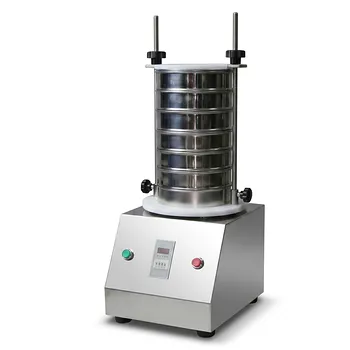
Small Laboratory Vibratory Sieve Shaker for Powder Gradation and Particle Size Analysis
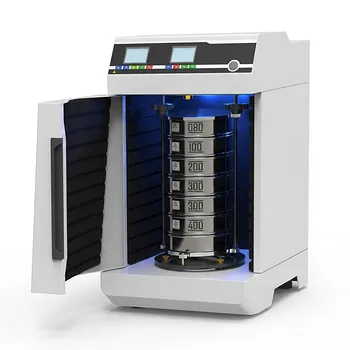
Laboratory Dry and Wet Three Dimensional Vibratory Sieve Shaker for Particle Analysis
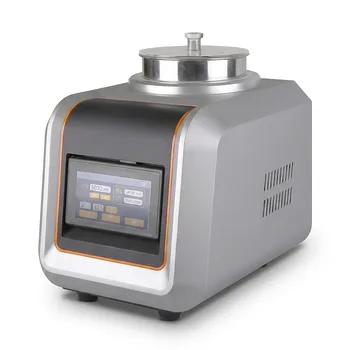
Laboratory Air Jet Sieving Machine for Fine Powder Particle Size Analysis and Deagglomeration
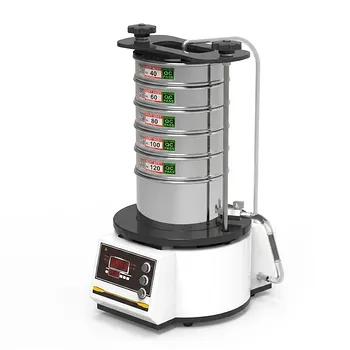
High Frequency Wet Three-Dimensional Vibrating Sieve Shaker for Dry and Wet Particle Size Analysis
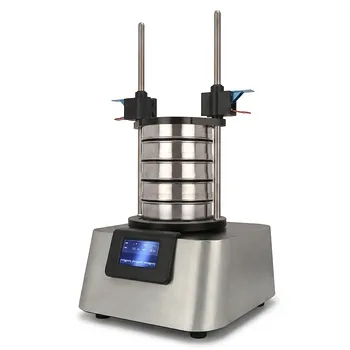
Vibratory Sieve Shaker Electromagnetic 3D Motion Powder Particle Size Analyzer for Dry and Wet Sieving
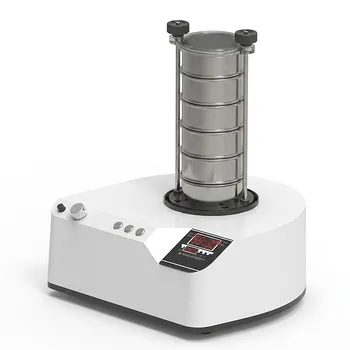
三维电磁微量振动筛分仪
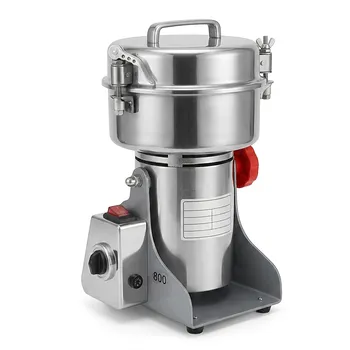
Small High-Speed Laboratory Grinder for Rapid Sample Preparation
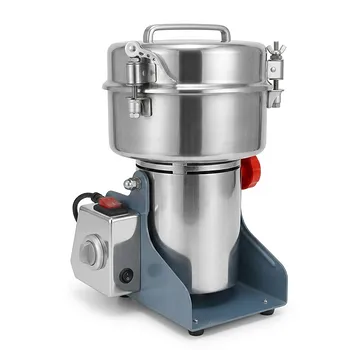
Small High-Speed Grinder for Efficient Laboratory Sample Preparation

Small High Speed Grinder for Laboratory Sample Preparation
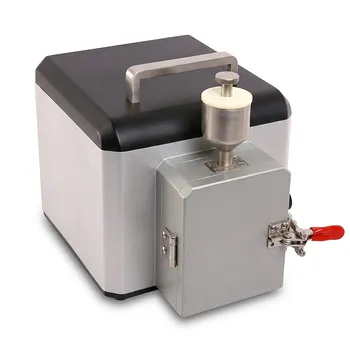
Portable Cutting Mill for Laboratory Sample Preparation and RoHS WEEE Compliance Testing
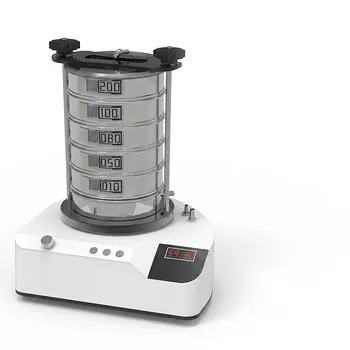
Heavy Duty Dry Three Dimensional Vibratory Sieve Shaker for Particle Separation
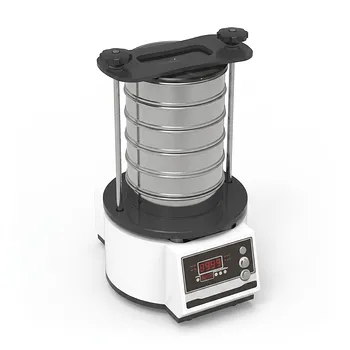
Tapping Oscillating Sieve Shaker for Dry and Wet Particle Size Analysis
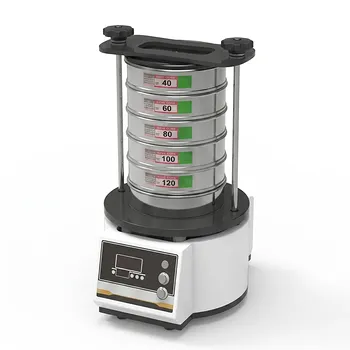
Dry Three Dimensional Vibratory Sieve Shaker
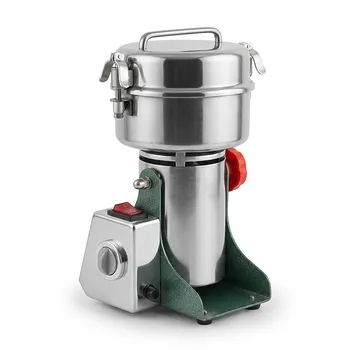
Small High-Speed Swing Grinder for Laboratory Sample Preparation
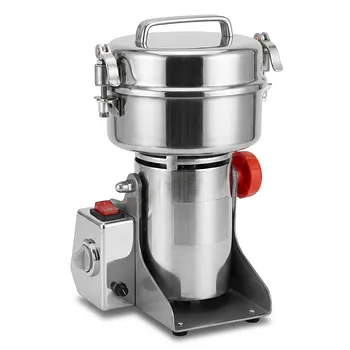
High Speed Laboratory Powder Grinder Small Batch Sample Preparation Mill
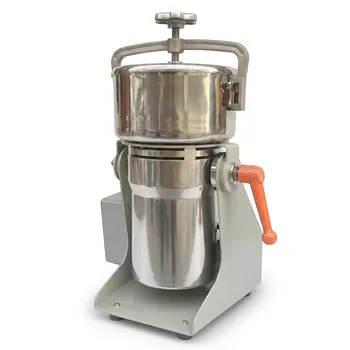
High Speed Laboratory Grinder Efficient Stainless Steel Powder Pulverizer Universal Material Science Mill for Sample Preparation