What role do laboratory vibratory sieve shakers and test sieves play before the molding of Nb-Cu composite powders?
Updated 5 months ago
Vibratory sieve shakers and test sieves serve as the critical "gatekeepers" of powder quality before the molding of Nb-Cu composite powders. These tools physically classify powders after the ball milling and drying stages to eliminate coarse particles and unfragmented aggregates. This process ensures a uniform particle size distribution, which directly optimizes the filling density and flowability required for successful Spark Plasma Sintering (SPS).
The primary role of sieving in Nb-Cu composite preparation is to achieve structural homogeneity by normalizing particle size. By removing oversized aggregates and contaminants, these tools stabilize the powder's behavior during mold filling and heat conduction, preventing defects in the final sintered material.
Achieving Microstructural Homogeneity
Removal of Agglomerates and Grinding Media
Post-milling powders often contain secondary agglomerates or unfragmented clumps that did not break down during the ball milling process. Sieving provides a physical barrier that intercepts these coarse particles, ensuring only fully processed material enters the molding stage.
Beyond powder aggregates, sieving can also remove stray fragments of grinding media that may have broken off during high-energy milling. This prevents metallic or ceramic impurities from creating localized stress points or chemical instabilities within the Nb-Cu matrix.
Establishing Consistent Particle Size Distribution
Precision sieving ensures that the raw materials have a strict upper limit on particle size, often targeting specific micron-level diameters. By normalizing the size of the Nb and Cu particles, you ensure that the two components are distributed evenly throughout the mixture.
This consistency is vital for maintaining the rheological stability of the powder. Without a controlled distribution, the powder may segregate during handling, leading to a final product with inconsistent mechanical or electrical properties.
Optimizing the Molding and Sintering Environment
Enhancing Powder Flowability and Filling Density
For precision molding, powders must flow freely into die cavities to ensure the uniform filling of the mold. A narrow, controlled size distribution reduces internal friction and prevents "bridging," a phenomenon where particles jam and create large, unintended voids.
High filling density is a direct result of effective sieving, as it allows smaller particles to occupy the spaces between larger ones efficiently. This leads to a higher "green density" before the sintering process even begins.
Facilitating Uniform Heat Transfer during SPS
During Spark Plasma Sintering (SPS), uniform contact between particles is essential for consistent electrical and thermal conductivity. Proper sieving ensures a dense, homogeneous powder bed, which promotes predictable heat transfer across the entire sample.
By eliminating large aggregates, you prevent localized overheating or "hot spots" that can occur when current flows through inconsistent contact points. This results in a final Nb-Cu composite with a uniform microstructure and superior density.
Understanding the Trade-offs and Pitfalls
The Risk of Sieve Blinding
Fine metallic powders, particularly those at the micron level, are prone to sieve blinding, where particles become wedged in the mesh openings. This reduces the effective screening area and can lead to inaccurate size classification if the vibratory intensity is not correctly calibrated.
Potential for Cross-Contamination
If test sieves are not meticulously cleaned between batches, there is a high risk of cross-contamination. In Nb-Cu composites, even a small amount of residual material from a previous run can alter the material's conductivity or mechanical performance.
Material Yield vs. Precision
While strict sieving ensures high quality, it can also lead to significant material loss if the milling process was inefficient. Balancing the desired particle size cut-off with the actual output of the milling stage is necessary to maintain cost-effective production.
Making the Right Choice for Your Goal
To maximize the effectiveness of your pre-molding preparation, consider your primary objective for the Nb-Cu composite:
- If your primary focus is Maximum Theoretical Density: Utilize a multi-layer sieve stack to achieve a specific "bimodal" distribution that allows smaller particles to fill the gaps between larger ones.
- If your primary focus is High Electrical Conductivity: Prioritize the removal of all grinding media fragments and secondary agglomerates using a fine mesh (e.g., 325 mesh) to ensure a pure, homogeneous interface between Nb and Cu.
- If your primary focus is Process Scalability: Implement high-amplitude vibratory shakers with anti-blinding attachments to maintain high throughput and consistent powder flow without frequent manual cleaning.
By treating the sieving process as a foundational step rather than a secondary task, you ensure the integrity and performance of the final sintered composite.
Summary Table:
| Stage | Key Role of Sieving | Impact on Final Nb-Cu Composite |
|---|---|---|
| Post-Milling | Removal of agglomerates and media fragments | Prevents localized stress points and chemical impurities. |
| Classification | Normalizing particle size distribution | Ensures microstructural homogeneity and rheological stability. |
| Pre-Molding | Enhancing flowability and filling density | Reduces internal friction and prevents voids (bridging). |
| Sintering (SPS) | Facilitating uniform heat transfer | Prevents "hot spots" and ensures consistent electrical conductivity. |
Elevate Your Material Research with Precision Sample Preparation
Achieving the perfect Nb-Cu composite requires absolute control over particle consistency. At LabPrep Solutions, we provide complete laboratory sample preparation solutions for material science, specializing in advanced powder processing and compaction equipment.
Our extensive product lines are designed to handle every stage of your workflow:
- Size Reduction & Milling: Jaw/roll crushers, planetary ball mills, jet mills, and cryogenic grinders.
- Classification & Quality Control: High-precision vibratory and air-jet sieve shakers with a wide range of test sieves.
- Mixing & Homogenization: Advanced powder mixers and vacuum defoaming mixers.
- Advanced Compaction: A full spectrum of hydraulic presses, including Cold/Warm Isostatic Presses (CIP/WIP), XRF pellet presses, and vacuum hot presses.
Whether you are a researcher aiming for maximum theoretical density or a distributor seeking reliable OEM/ODM support, our equipment ensures the structural integrity and performance of your final sintered materials.
Ready to optimize your powder quality? Contact our technical experts today to find the ideal solution for your laboratory needs.
References
- Hugo Lima, Uílame Umbelino Gomes. Nb-Cu metallic composite: SPS preparation, microstructure and mechanical properties. DOI: 10.2298/sos250225020l
Mentioned Products
- Laboratory Dry and Wet Three Dimensional Vibratory Sieve Shaker for Particle Analysis
- Stainless Steel Laboratory Vibratory Test Sieve Shaker
- Small Laboratory Vibratory Sieve Shaker for Powder Gradation and Particle Size Analysis
- Vibratory Sieve Shaker Electromagnetic 3D Motion Powder Particle Size Analyzer for Dry and Wet Sieving
- Laboratory Vibratory Test Sieve Shaker for Precision Particle Size Analysis and Powder Grading
People Also Ask
- What is the role of laboratory vibratory sieve shakers in waste PUR foam recycling? Optimize Particle Size and Density
- What is the primary function of a laboratory vibratory sieve shaker in the evaluation of sand liquefaction potential?
- What function does a laboratory vibratory sieve shaker serve in the production process of metakaolin? Optimize Reactivity
- Why is a precision laboratory vibratory sieve shaker necessary for particle size control? Optimize Biomass Carbonization
- What is the function of a laboratory vibratory sieve shaker? Enhance Coal Particle Size Distribution (PSD) Analysis

Tech Team · PowderPreparation
Last updated on May 14, 2026
Related Products
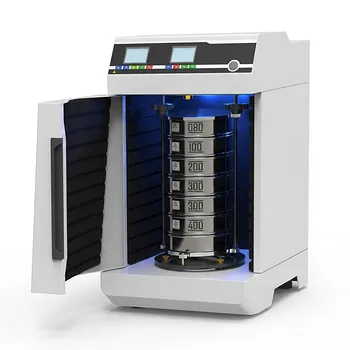
Laboratory Dry and Wet Three Dimensional Vibratory Sieve Shaker for Particle Analysis
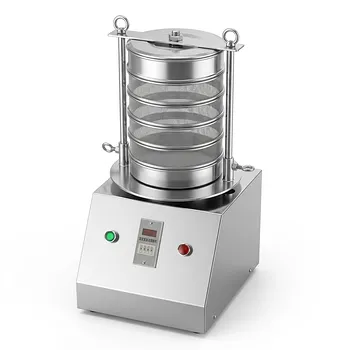
Stainless Steel Laboratory Vibratory Test Sieve Shaker
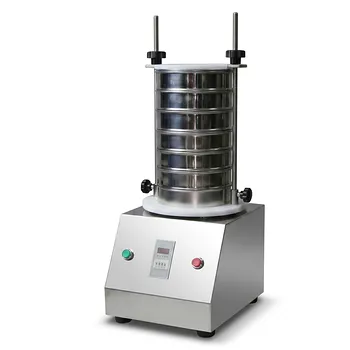
Small Laboratory Vibratory Sieve Shaker for Powder Gradation and Particle Size Analysis
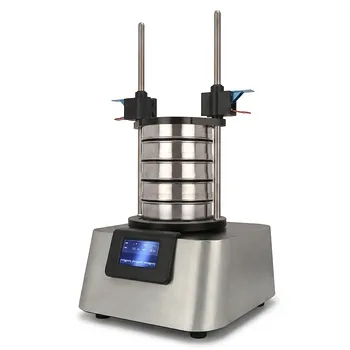
Vibratory Sieve Shaker Electromagnetic 3D Motion Powder Particle Size Analyzer for Dry and Wet Sieving
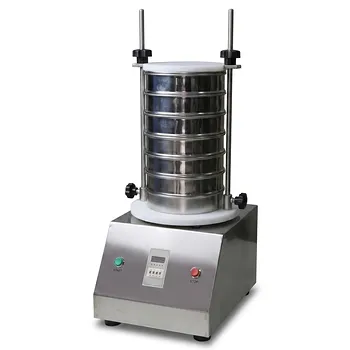
Laboratory Vibratory Test Sieve Shaker for Precision Particle Size Analysis and Powder Grading
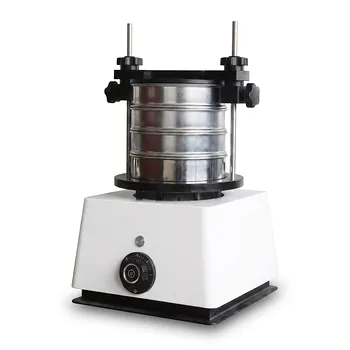
Small Laboratory Vibrating Sieve Shaker for Precise Particle Size Analysis

High Frequency Wet Three-Dimensional Vibrating Sieve Shaker for Dry and Wet Particle Size Analysis
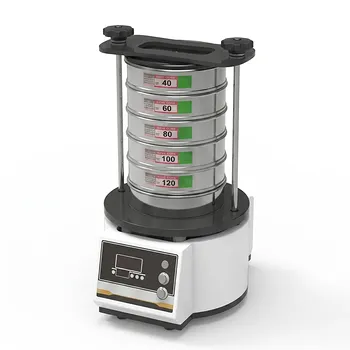
Dry Three Dimensional Vibratory Sieve Shaker

Heavy Duty Dry Three Dimensional Vibratory Sieve Shaker for Particle Separation
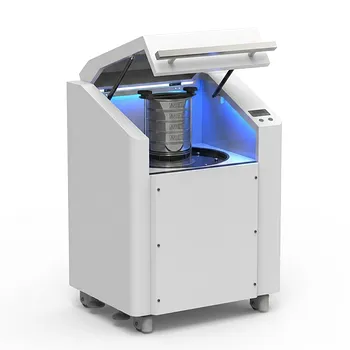
High Frequency Cabinet Type Three-Dimensional Rotary Vibrating Sieve Shaker for Dry Sieving and Particle Classification
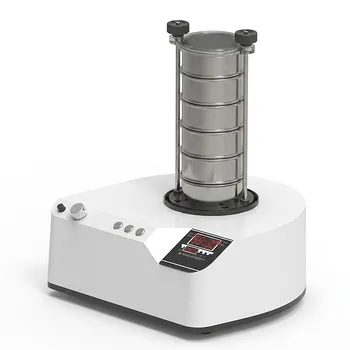
三维电磁微量振动筛分仪
Vibratory Superfine Grinder for Ultra Fine Laboratory Powder Milling

Tapping Oscillating Sieve Shaker for Dry and Wet Particle Size Analysis
Automatic Vibrating Powder Feeder for Laboratory Material Processing Precision Vibratory Hopper Feeder for Granular and Powder Material Handling Industrial Grade Vibrating Tray Feeder for Consistent Material Sample Preparation
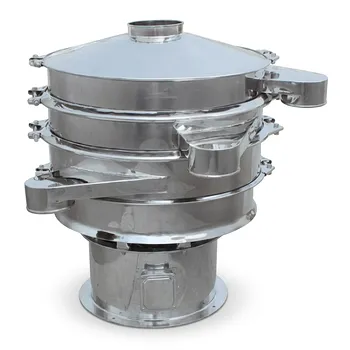
Stainless Steel Rotary Vibrating Sieve High Precision Circular Vibratory Separator Industrial Powder Grading Machine Multi Layer Sifting Equipment
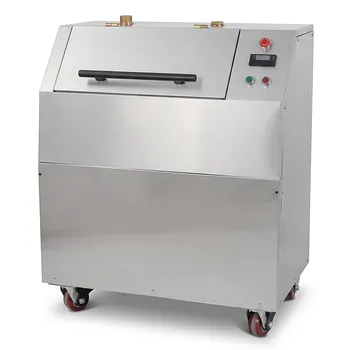
Vibratory Disc Mill for Rapid Fine Grinding and High Throughput Sample Preparation of Hard and Brittle Materials
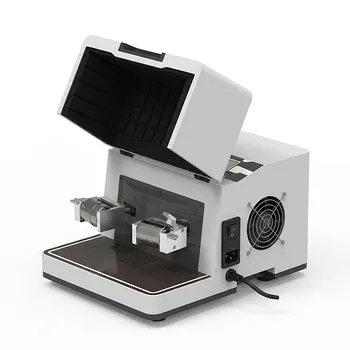
High Energy Hybrid Vibratory Ball Mill for Grinding Mixing and Cell Disruption
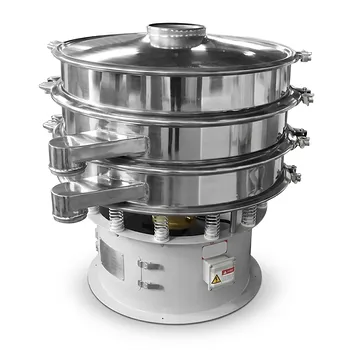
Three Dimensional Rotary Vibrating Sieve
Laboratory Sealed Hammer Blade Crusher Divider for High Hardness Sample Preparation