What role do latex molds play in the Cold Isostatic Pressing (CIP) process for ceramic powders? Key to Uniform Density
Updated 5 months ago
In Cold Isostatic Pressing (CIP), latex molds act as the primary interface for pressure transmission and contamination prevention. These flexible membranes encapsulate ceramic powder, allowing hydraulic pressure to be applied uniformly from all directions while isolating the material from the working fluid. This dual role ensures the resulting green body achieves a high, consistent density without the risk of chemical impurity or structural failure.
Latex molds serve as a high-elasticity barrier that converts external hydraulic energy into uniform isotropic pressure. By sealing the powder from the pressing medium, they enable the creation of high-density ceramic green bodies with minimal internal stress and superior structural integrity.
The Mechanics of Pressure Transmission
Achieving Isotropic Distribution
Unlike traditional dry pressing, which applies axial force, the high elasticity of latex molds allows hydraulic energy to reach every surface of the powder compact. This ensures that pressure is applied uniformly and without loss to the internal particles.
Enhancing Green Body Density
The flexible nature of the mold allows for the rearrangement and close packing of powder particles under precise pressure control. This process achieves a high filling density that is critical for the material’s final mechanical strength.
Eliminating Internal Stress
By applying equal pressure from all directions, the latex mold helps eliminate stress imbalances and density gradients. This prevents the ceramic from deforming or cracking during the subsequent high-temperature sintering process.
Ensuring Material Purity and Integrity
The Sealing Function
Latex molds provide a critical sealing property that isolates the powder from high-pressure working fluids, such as oil or water. This isolation is vital to prevent sample contamination and maintain the structural purity of the green body.
Minimizing Micro-cracks
By facilitating a uniform isotropic pressure (often ranging from 40 MPa to 250 MPa), these molds ensure high-density packing. This level of consistency is essential for reducing micro-cracks and achieving high-performance bulk materials.
Supporting Sintering Stability
The uniform density distribution created by the latex mold ensures dimensional stability. This consistency dictates the shrinkage rate during sintering, allowing the final ceramic to reach a dense structure near its theoretical density.
Understanding the Trade-offs
Dimensional Accuracy vs. Flexibility
While the flexible nature of latex is perfect for uniform pressure, it offers less geometric precision than steel molds. Users must account for the mold's elasticity when designing for specific final dimensions.
Material Fatigue and Durability
Latex is subject to wear and tear over multiple pressing cycles. Exposure to high pressures and certain ceramic powders can eventually degrade the mold, leading to potential leaks or loss of elasticity.
Geometry Limitations
Latex molds are ideal for relatively simple shapes or uniform blocks. Creating highly complex internal geometries can be challenging because the mold may collapse or distort unevenly if not properly supported by a mandrel.
How to Apply This to Your Project
Selecting a Mold Strategy
When integrating latex molds into your ceramic manufacturing or laboratory workflow, consider your primary performance requirements.
- If your primary focus is material purity: Ensure the latex mold is meticulously cleaned and inspected for pinholes to prevent any ingress of hydraulic fluid.
- If your primary focus is structural uniformity: Use a latex mold in a CIP process rather than axial pressing to eliminate the density gradients that cause cracking in large components.
- If your primary focus is dimensional precision: Account for a specific percentage of shrinkage and mold compression, or consider using a rigid internal mandrel inside the flexible mold.
The effective use of latex molds in CIP remains the most reliable method for producing high-strength, defect-free ceramic components.
Summary Table:
| Feature | Role of Latex Molds in CIP | Impact on Final Product |
|---|---|---|
| Pressure Transmission | Converts hydraulic energy into isotropic force | Eliminates internal stress and cracks |
| Material Isolation | Seals powder from hydraulic oil/water | Ensures high chemical purity |
| Flexibility | Allows particle rearrangement and close packing | Achieves high green body density |
| Dimensional Stability | Provides uniform density distribution | Predictable shrinkage during sintering |
| Surface Protection | Acts as a soft interface for delicate powders | Reduces surface defects and micro-cracks |
Achieve Unmatched Material Integrity with Our Advanced CIP Solutions
Are you looking to eliminate density gradients and contamination in your ceramic samples? We provide complete laboratory sample preparation solutions for material science, specializing in precision powder processing and compaction equipment.
Our extensive product lines are designed to meet the rigorous demands of modern research and production:
- Isostatic Pressing: Cold/Warm Isostatic Presses (CIP/WIP) for uniform density.
- Compaction Equipment: Standard lab presses, XRF pellet presses, hot presses, and vacuum hot presses.
- Size Reduction: Crushers (jaw/roll), liquid nitrogen cryogenic grinders, and high-efficiency mills (planetary ball, jet, sand/bead, disc, rotor).
- Sifting & Mixing: Vibratory/air-jet sieve shakers, powder mixers, and defoaming mixers.
Whether you are producing high-strength ceramic components or developing new bulk materials, our equipment ensures superior structural integrity and predictable performance.
Contact our material science experts today to find the perfect solution for your lab!
References
- Arife Yurdakul, Hilmi Yurdakul. Highly tough and hard zirconia-based composites derived from 3Y-TZP and 12ce-tzp powders by co-doping approach. DOI: 10.2298/sos250129012y
Mentioned Products
- 5 Ton Single Punch Tablet Press Laboratory Small Batch Production
- 6 Ton Variable Frequency Single Punch Tablet Press
- 6-Ton Small Single-Punch Tablet Press — Laboratory Powder & Granule Tableting Equipment / Tablet Forming Machine
- Manual Tablet Press with Dual Scale Pressure Gauge for Pharmaceutical Food Chemical Laboratory Sample Preparation
- Small Ceramic Structure Laboratory Sand Mill Nanoscale Grinding Dispersion Equipment Seal-less Screen-less Design
People Also Ask
- What is the function of a laboratory press in assessing the hydrophobic performance of modified vermiculite fillers?
- What is the core function of a laboratory press in the forming of ceramic filter element green bodies? Maximize Density.
- What is the function of a laboratory press in Cr-Ti alloy evaluation? Quantify Fracture Stress & Strength
- Why is vacuum sealing and flexible packaging necessary for Aluminum Titanate powders during CIP? Ensure Peak Density
- Why is a laboratory hydraulic press required for FT-IR KBr pellets? Achieve Precise Sample Clarity for ZrC–SiC Analysis

Tech Team · PowderPreparation
Last updated on May 14, 2026
Related Products
5 Ton Single Punch Tablet Press Laboratory Small Batch Production
6 Ton Variable Frequency Single Punch Tablet Press
6-Ton Small Single-Punch Tablet Press — Laboratory Powder & Granule Tableting Equipment / Tablet Forming Machine
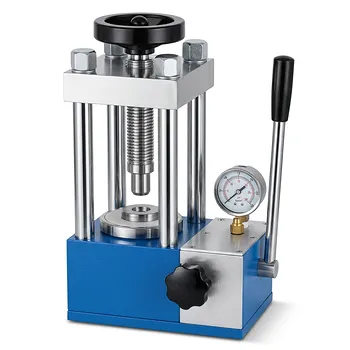
Manual Tablet Press with Dual Scale Pressure Gauge for Pharmaceutical Food Chemical Laboratory Sample Preparation
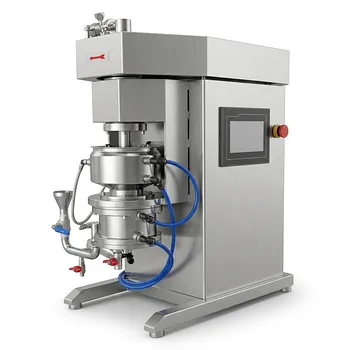
Small Ceramic Structure Laboratory Sand Mill Nanoscale Grinding Dispersion Equipment Seal-less Screen-less Design
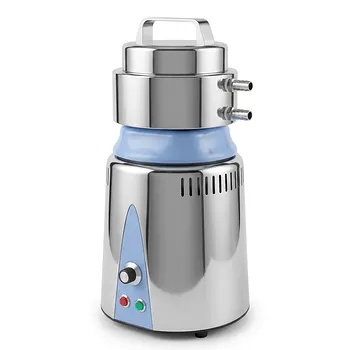
Low Temperature Laboratory Knife Mill Cryogenic Sample Grinder Material Science Powder Processing
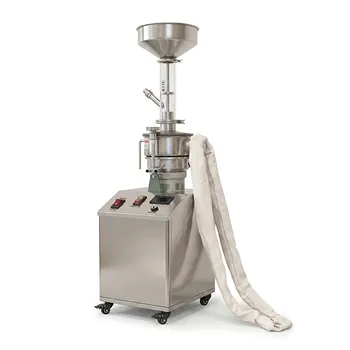
Small Liquid Nitrogen Cryogenic Grinder for Plastic and Heat-Sensitive Material Sample Preparation
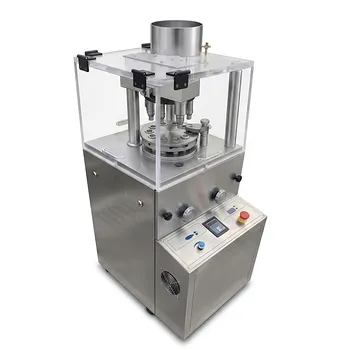
Enhanced 9 Punch Rotary Tablet Press for Powder Compaction
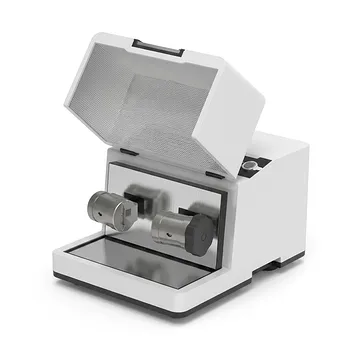
Heating Temperature Controlled High Energy Vibratory Ball Mill
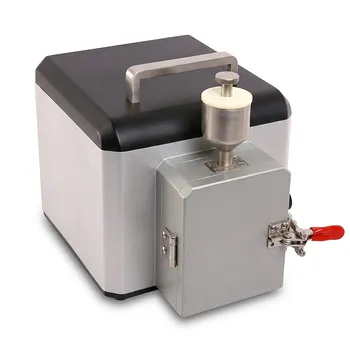
Portable Cutting Mill for Laboratory Sample Preparation and RoHS WEEE Compliance Testing
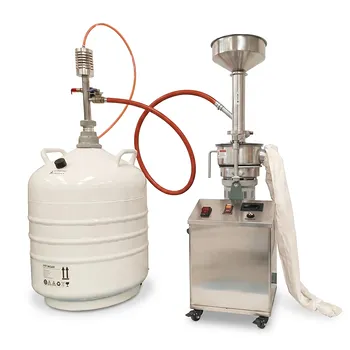
Laboratory Liquid Nitrogen Cryogenic Grinder Polymer Sample Preparation Pulverizer
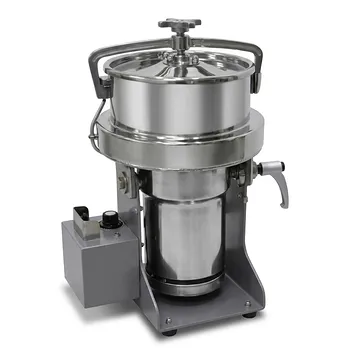
500g Capacity Water Cooled Low Temperature Grinder with Variable Speed and Safety Cover
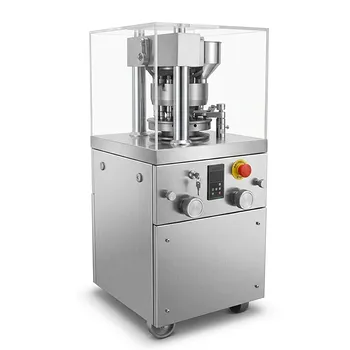
Ordinary Type Rotary Tablet Press for Pharmaceutical Chemical Food Electronic Industries
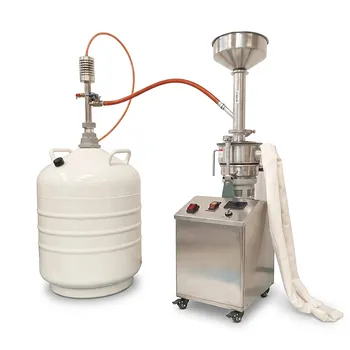
Laboratory Liquid Nitrogen Cryogenic Grinder for Polymer and Elastomer Materials
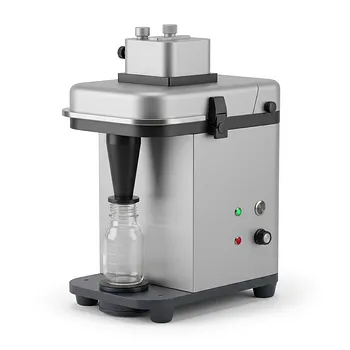
Cyclonic Laboratory Mill for NIR Spectroscopy Sample Preparation Food and Feed Grinding
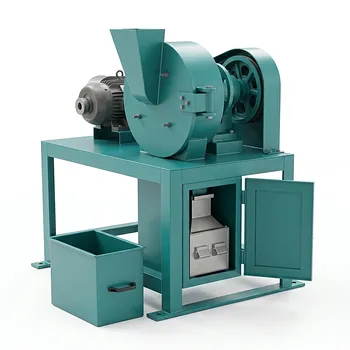
Sealed Disc Pulverizer Customized Model
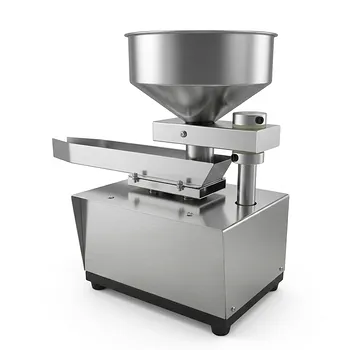
Automatic Vibrating Powder Feeder for Laboratory Material Processing Precision Vibratory Hopper Feeder for Granular and Powder Material Handling Industrial Grade Vibrating Tray Feeder for Consistent Material Sample Preparation
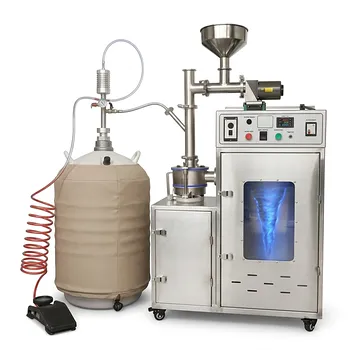
Small Liquid Nitrogen Cryogenic Grinder for Ultrafine Grinding of Heat-Sensitive Materials in Laboratories
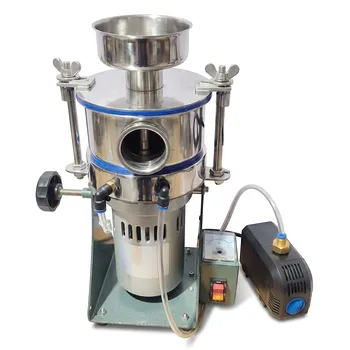
Water Cooled Airflow Ultra Fine Grinder for Low Temperature Material Processing