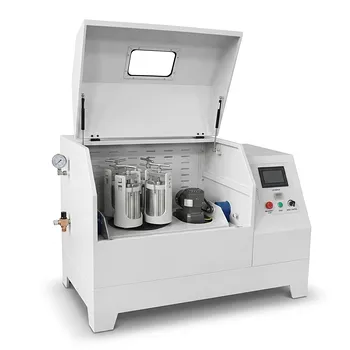
What is the benefit of CIP after uniaxial pressing? Achieve Strontium Titanate Homogeneity and Density
Updated 5 months ago
The integration of Cold Isostatic Pressing (CIP) after uniaxial pressing is a critical step for achieving structural homogeneity in Strontium Titanate green bodies.
While uniaxial pressing provides the initial shape, it inherently creates internal pressure gradients and density variations due to friction. CIP resolves these issues by applying uniform, omnidirectional pressure via a fluid medium to eliminate voids and density non-uniformity, ensuring high relative density and preventing deformation or cracking during the sintering process.
CIP acts as a corrective and enhancing stage that transforms a non-uniform uniaxial compact into a high-density, isotropic green body. By eliminating internal stress and density gradients, it ensures the final Strontium Titanate ceramic maintains its geometric integrity and achieves optimal dielectric properties.
Addressing the Limitations of Uniaxial Pressing
The Problem of Internal Pressure Gradients
Uniaxial pressing relies on top-down force, which often results in uneven pressure distribution due to friction between the powder particles and the die walls.
This creates density gradients where the center or bottom of the green body may be significantly less dense than the regions closest to the punch.
Residual Internal Stresses
Uneven mechanical compaction traps internal stresses within the powder compact during the initial molding phase.
These stresses can manifest as micro-cracks or "spring-back" effects when the body is removed from the die, compromising the structural integrity of the Strontium Titanate.
How Cold Isostatic Pressing (CIP) Enhances Green Bodies
Achieving Isotropic Compaction
CIP utilizes a liquid medium to apply equal pressure from all directions, typically at pressures ranging from 150 MPa to 400 MPa.
This omnidirectional force ensures that every part of the green body reaches a uniform state of compaction, effectively neutralizing the gradients left by the uniaxial press.
Elimination of Voids and Pore Narrowing
The high isotropic pressure forces granulated particles to undergo further dense rearrangement and bonding.
This process significantly narrows pore sizes and eliminates internal voids, leading to a much higher relative density than uniaxial pressing can achieve alone.
Impact on the Sintering Process and Final Properties
Prevention of Sintering Deformation
Green bodies with density gradients shrink unevenly during high-temperature sintering, which leads to warping, bending, or cracking.
By providing a uniform starting density, CIP ensures isotropic shrinkage, maintaining the geometric consistency and "near-net-shape" of the final Strontium Titanate component.
Optimization of Dielectric and Mechanical Performance
For electronic ceramics like Strontium Titanate, high bulk density is critical for achieving a high dielectric constant.
The reduction of microscopic defects and better particle connectivity improves both the mechanical toughness and the electrical performance of the final sintered product.
Understanding the Trade-offs
Process Complexity and Cost
Adding CIP as a secondary step increases total manufacturing time and requires specialized high-pressure equipment.
The green body must also be vacuum-sealed in a flexible mold (such as rubber or plastic) to protect it from the liquid medium, adding labor to the workflow.
Initial Shape Dependency
CIP is a compaction tool rather than a shaping tool; it requires the uniaxial step to provide the initial form.
If the pre-pressed body is too fragile or the flexible mold is poorly fitted, the high isotropic pressure can cause slight surface distortions or "elephant-foot" effects.
Making the Right Choice for Your Goal
Selecting the right pressing sequence depends on the final application requirements for your Strontium Titanate components.
- If your primary focus is geometric precision and minimal warping: Utilize CIP to ensure uniform shrinkage during sintering, which prevents the deformation common in purely uniaxial compacts.
- If your primary focus is maximizing dielectric performance: Prioritize high-pressure CIP to eliminate internal porosity and achieve the highest possible bulk density.
- If your primary focus is high-volume, low-cost production: Evaluate if the performance gains of CIP outweigh the added cycle time and the costs of specialized flexible tooling.
Ultimately, the synergy between uniaxial pre-pressing and CIP provides the structural foundation necessary for manufacturing high-performance, defect-free Strontium Titanate ceramics.
Summary Table:
| Feature | Uniaxial Pressing Only | Uniaxial + CIP (Recommended) |
|---|---|---|
| Pressure Direction | Unidirectional (Top-down) | Omnidirectional (Isotropic) |
| Density Distribution | Gradient / Non-uniform | High Structural Homogeneity |
| Internal Stress | Higher (Risk of micro-cracks) | Effectively Neutralized |
| Sintering Outcome | Risk of Warping/Deformation | Isotropic Shrinkage (Near-Net-Shape) |
| Dielectric Quality | Lower/Inconsistent | Optimized (High Bulk Density) |
Elevate Your Advanced Ceramic Research with KINTEK SOLUTION
Precision in sample preparation is the foundation of breakthrough results. KINTEK SOLUTION provides a complete spectrum of powder processing and compaction equipment tailored for high-performance materials like Strontium Titanate.
From initial material reduction and milling (Planetary Ball, Jet, and Rotor Mills) to advanced compaction using our specialized Cold/Warm Isostatic Presses (CIP/WIP) and high-precision laboratory hydraulic presses, we ensure your green bodies achieve maximum density and structural integrity. Our comprehensive line includes:
- Advanced Compaction: CIP, WIP, XRF Pellet Presses, and Vacuum Hot Presses.
- Sample Preparation: Jaw Crushers, Cryogenic Grinders, and Sieve Shakers.
- Homogenization: Powder Mixers and Defoaming Mixers.
Don't let density gradients or internal voids compromise your sintering outcomes. Contact KINTEK SOLUTION today for expert guidance and specialized equipment to optimize your laboratory workflow and achieve superior material performance.
References
- Jan‐Helmut Preusker, Wolfgang Rheinheimer. Impact of AC and DC Electric Fields on the Microstructure Evolution in Strontium Titanate. DOI: 10.1002/adem.202201848
Mentioned Products
- 5 Ton Single Punch Tablet Press Laboratory Small Batch Production
- 6-Ton Small Single-Punch Tablet Press — Laboratory Powder & Granule Tableting Equipment / Tablet Forming Machine
- 6 Ton Variable Frequency Single Punch Tablet Press
- Laboratory Liquid Nitrogen Cryogenic Grinder Polymer Sample Preparation Pulverizer
- Small Liquid Nitrogen Cryogenic Grinder for Ultrafine Grinding of Heat-Sensitive Materials in Laboratories
People Also Ask
- What is the function of a laboratory press in assessing the hydrophobic performance of modified vermiculite fillers?
- What is the core function of a laboratory press in the forming of ceramic filter element green bodies? Maximize Density.
- What is the function of a laboratory press in Cr-Ti alloy evaluation? Quantify Fracture Stress & Strength
- Why is vacuum sealing and flexible packaging necessary for Aluminum Titanate powders during CIP? Ensure Peak Density
- Why is a laboratory hydraulic press required for FT-IR KBr pellets? Achieve Precise Sample Clarity for ZrC–SiC Analysis

Tech Team · PowderPreparation
Last updated on May 14, 2026
Related Products
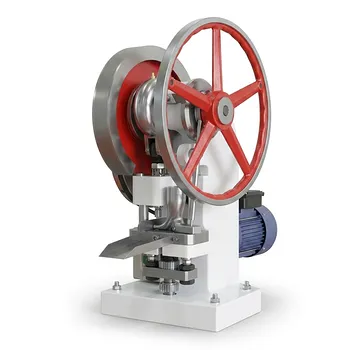
5 Ton Single Punch Tablet Press Laboratory Small Batch Production
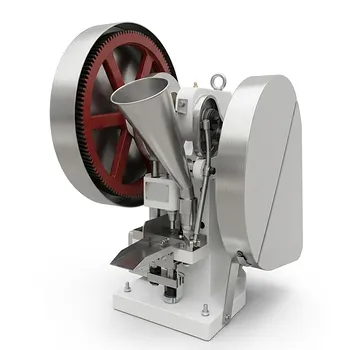
6-Ton Small Single-Punch Tablet Press — Laboratory Powder & Granule Tableting Equipment / Tablet Forming Machine
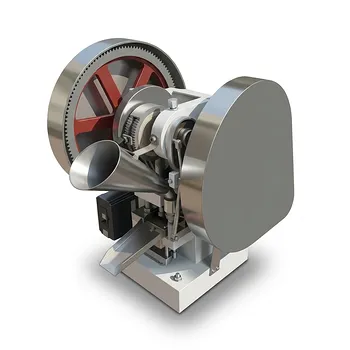
6 Ton Variable Frequency Single Punch Tablet Press
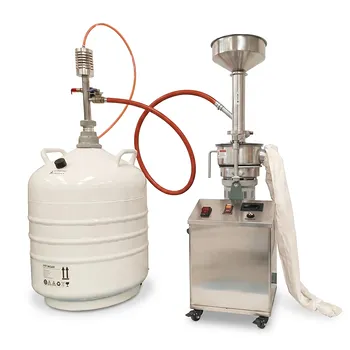
Laboratory Liquid Nitrogen Cryogenic Grinder Polymer Sample Preparation Pulverizer
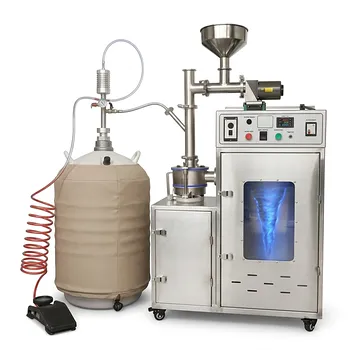
Small Liquid Nitrogen Cryogenic Grinder for Ultrafine Grinding of Heat-Sensitive Materials in Laboratories
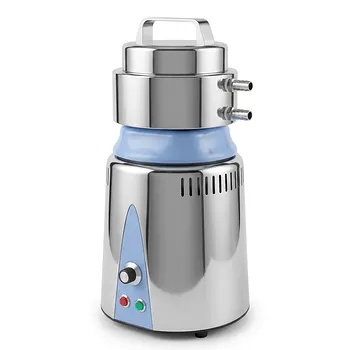
Low Temperature Laboratory Knife Mill Cryogenic Sample Grinder Material Science Powder Processing
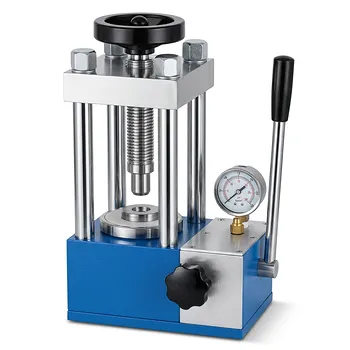
Manual Tablet Press with Dual Scale Pressure Gauge for Pharmaceutical Food Chemical Laboratory Sample Preparation
Heating Temperature Controlled High Energy Vibratory Ball Mill
Small Liquid Nitrogen Cryogenic Grinder for Plastic and Heat-Sensitive Material Sample Preparation
Cyclonic Laboratory Mill for NIR Spectroscopy Sample Preparation Food and Feed Grinding
Vibratory Ultra-Low Temperature Ultrafine Grinder for Cryogenic Powder Processing
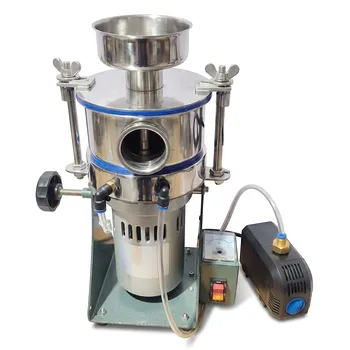
Water Cooled Airflow Ultra Fine Grinder for Low Temperature Material Processing
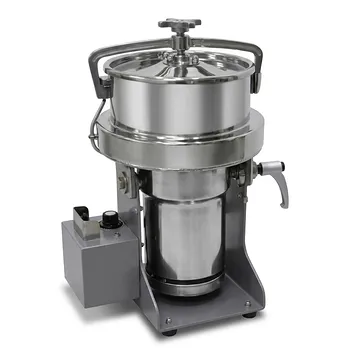
500g Capacity Water Cooled Low Temperature Grinder with Variable Speed and Safety Cover
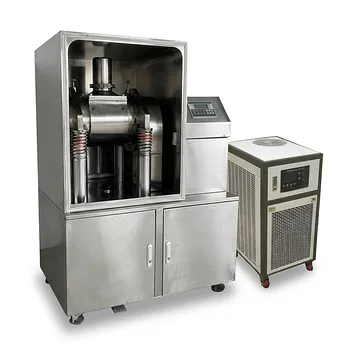
Water Cooled Cryogenic Ultra Fine Cell Wall Breaking Mill
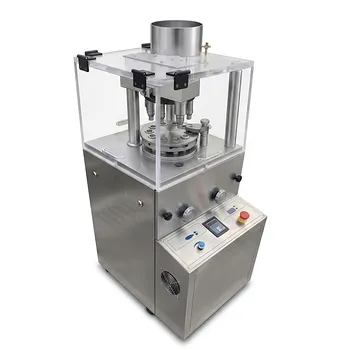
Enhanced 9 Punch Rotary Tablet Press for Powder Compaction
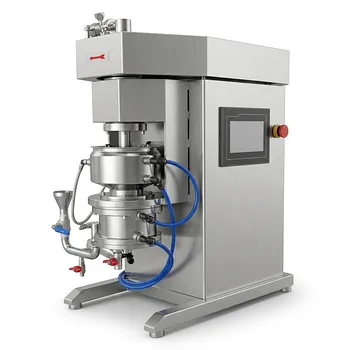
Small Ceramic Structure Laboratory Sand Mill Nanoscale Grinding Dispersion Equipment Seal-less Screen-less Design
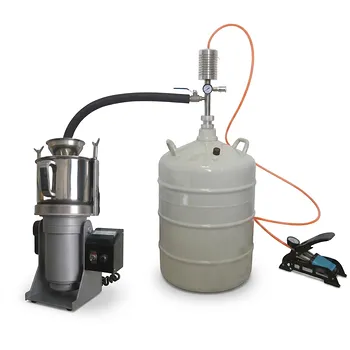
Liquid Nitrogen Cryogenic Grinder for Plastic and Heat-Sensitive Materials
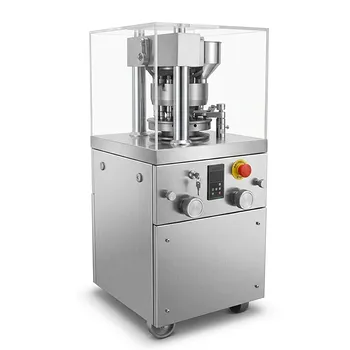
Ordinary Type Rotary Tablet Press for Pharmaceutical Chemical Food Electronic Industries
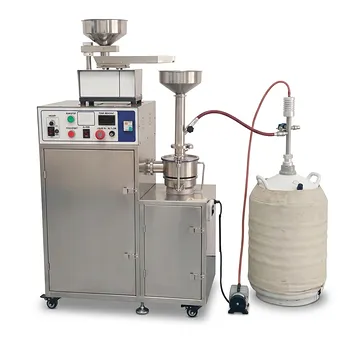
Small Liquid Nitrogen Cryogenic Grinder with Vibratory Feeder for Laboratory Sample Preparation