How do laboratory hydraulic presses and CIP improve Ce-TZP ceramic green bodies? Achieve Superior Material Density
Updated 4 months ago
The combination of laboratory hydraulic presses and Cold Isostatic Pressing (CIP) creates a dual-stage consolidation process that optimizes the density and uniformity of Ce-TZP ceramic green bodies. The hydraulic press provides initial uniaxial shaping and powder rearrangement, while the CIP equipment applies massive, omnidirectional pressure to eliminate internal density gradients and microscopic pores. This integrated approach ensures the green body possesses the structural integrity required to undergo high-temperature sintering without warping, cracking, or non-uniform shrinkage.
Core Takeaway: By transitioning from uniaxial axial pressing to omnidirectional isostatic pressing, manufacturers can eliminate the internal stress gradients that naturally occur during initial shaping. This results in a high-density green body with a tighter particle arrangement, which is the essential foundation for producing mechanically reliable Ce-TZP ceramics.
The Synergistic Role of Two-Stage Pressing
Initial Shaping with the Laboratory Hydraulic Press
The process begins with the laboratory hydraulic press, which uses precision steel molds to apply uniaxial (one-directional) pressure to the ceramic powder. This stage, often operating at pressures around 20 MPa to 100 MPa, forces the powder particles to undergo rearrangement and initial plastic deformation.
This step is critical for defining the preliminary geometric shape of the green body. Without this initial "pre-molding" phase, the loose powder would be difficult to handle and impossible to encapsulate for subsequent processing steps.
Final Consolidation via Cold Isostatic Pressing (CIP)
Once the powder is solidified into a preliminary form, it is subjected to Cold Isostatic Pressing (CIP). Unlike the hydraulic press, CIP uses a liquid medium to apply uniform, omnidirectional pressure—often reaching magnitudes of 200 MPa to 300 MPa.
By applying pressure from all directions simultaneously, CIP compensates for the inherent limitations of axial pressing. It forces particles into an even tighter arrangement, significantly increasing the overall packing density of the green body.
Impact on Microstructure and Sintering Success
Eliminating Density Gradients and Internal Stress
A major challenge in uniaxial pressing is the creation of density gradients caused by friction between the powder and the steel mold walls. These variations in density lead to uneven stress distribution within the material.
CIP effectively eliminates these internal stress gradients. By ensuring the density is consistent throughout the entire volume of the green body, the equipment prevents the material from delaminating or developing "spring-back" effects after the pressure is released.
Enhancing Green Strength and Inhibiting Shrinkage
The high pressures utilized in the dual-stage process maximize the elimination of micro-pores. This results in a green body with significantly higher "green strength," making it robust enough for handling and machining prior to sintering.
Furthermore, a uniform, high-density green body is less prone to non-uniform shrinkage during the 1600 °C sintering process. This precision ensures that the final Cerium-stabilized Tetragonal Zirconia Polycrystal achieves its intended dimensions and high mechanical reliability.
Understanding the Trade-offs
While the combination of hydraulic pressing and CIP offers superior results, it introduces specific complexities to the manufacturing workflow. The primary trade-off is the increase in process time and equipment cost, as CIP requires specialized pressure vessels and a secondary handling stage.
Furthermore, while uniaxial pressing is excellent for simple shapes, it cannot achieve the microstructural homogeneity required for high-performance ceramics on its own. Conversely, relying solely on CIP without a pre-molding hydraulic stage makes it difficult to achieve precise dimensional accuracy, as the flexible molds used in CIP do not provide the same rigid geometry as steel dies.
Making the Right Choice for Your Project
The effectiveness of your consolidation process depends on your final performance requirements and the complexity of the component.
- If your primary focus is maximizing mechanical reliability: You must utilize the dual-stage approach (Hydraulic + CIP) to ensure the total elimination of internal micro-pores and density gradients.
- If your primary focus is dimensional precision for simple shapes: Prioritize the laboratory hydraulic press with precision steel molds, but keep sintering temperatures carefully controlled to mitigate potential density variations.
- If your primary focus is preventing cracks in complex geometries: Ensure the CIP stage reaches at least 200-300 MPa to provide the omnidirectional compaction necessary to stabilize the green body structure.
By meticulously controlling the transition from uniaxial to isostatic pressure, you provide the optimal physical foundation for the subsequent phase transformation and densification of Ce-TZP ceramics.
Summary Table:
| Pressing Stage | Pressure Range | Key Function | Material Impact |
|---|---|---|---|
| Hydraulic Press | 20 – 100 MPa | Initial Shaping | Uniaxial pre-molding and powder rearrangement. |
| CIP Equipment | 200 – 300 MPa | Final Consolidation | Omnidirectional pressure; eliminates internal stress. |
| Combined Result | N/A | Optimized Green Body | Uniform shrinkage and high mechanical reliability. |
Elevate Your Advanced Ceramic Research
Unlock the full potential of your Ce-TZP ceramics with high-precision sample preparation solutions. We provide complete laboratory solutions for material science, specializing in powder processing and compaction equipment designed to eliminate density gradients and ensure structural integrity.
Our extensive equipment lines include:
- Compaction Excellence: A full spectrum of hydraulic presses, including Cold/Warm Isostatic Presses (CIP/WIP), standard lab presses, XRF pellet presses, and vacuum hot presses.
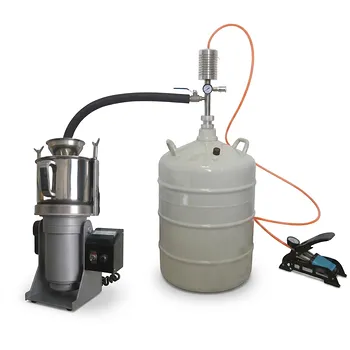
- Powder Processing: Crushers (jaw/roll), liquid nitrogen cryogenic grinders, and various mills (planetary ball, jet, sand, rotor).
- Precision Handling: Sieve shakers, powder mixers, and defoaming mixers to ensure material homogeneity.
Ready to enhance your lab's efficiency and material performance? Contact our experts today to find the perfect solution for your specific application requirements!
References
- Maoyin Li, Fei Zhang. Tough and damage-tolerant monolithic zirconia ceramics with transformation-induced plasticity by grain-boundary segregation. DOI: 10.1016/j.jeurceramsoc.2022.11.069
Mentioned Products
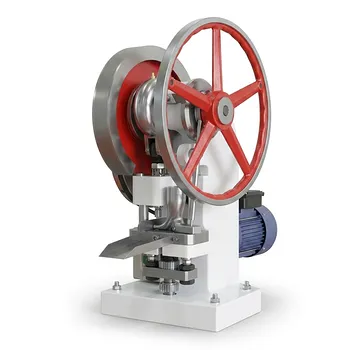
- 5 Ton Single Punch Tablet Press Laboratory Small Batch Production
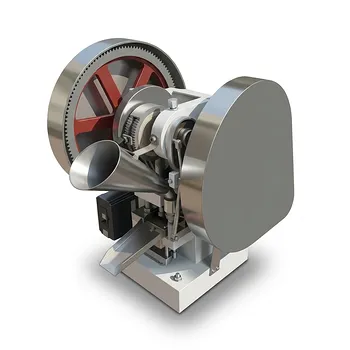
- 6 Ton Variable Frequency Single Punch Tablet Press
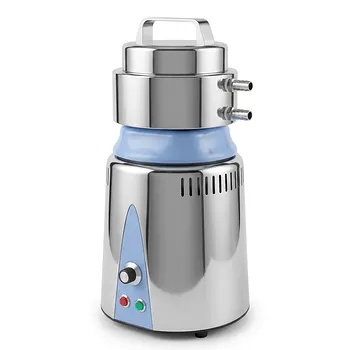
- Low Temperature Laboratory Knife Mill Cryogenic Sample Grinder Material Science Powder Processing
- 6-Ton Small Single-Punch Tablet Press — Laboratory Powder & Granule Tableting Equipment / Tablet Forming Machine
- 500g Capacity Water Cooled Low Temperature Grinder with Variable Speed and Safety Cover
People Also Ask
- What is the function of a laboratory press in assessing the hydrophobic performance of modified vermiculite fillers?
- What is the core function of a laboratory press in the forming of ceramic filter element green bodies? Maximize Density.
- What is the function of a laboratory press in Cr-Ti alloy evaluation? Quantify Fracture Stress & Strength
- Why is vacuum sealing and flexible packaging necessary for Aluminum Titanate powders during CIP? Ensure Peak Density
- Why is a laboratory hydraulic press required for FT-IR KBr pellets? Achieve Precise Sample Clarity for ZrC–SiC Analysis

Tech Team · PowderPreparation
Last updated on May 14, 2026
Related Products
5 Ton Single Punch Tablet Press Laboratory Small Batch Production
6 Ton Variable Frequency Single Punch Tablet Press
Low Temperature Laboratory Knife Mill Cryogenic Sample Grinder Material Science Powder Processing
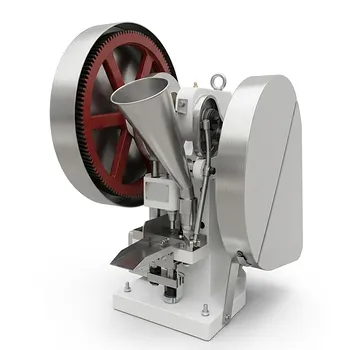
6-Ton Small Single-Punch Tablet Press — Laboratory Powder & Granule Tableting Equipment / Tablet Forming Machine
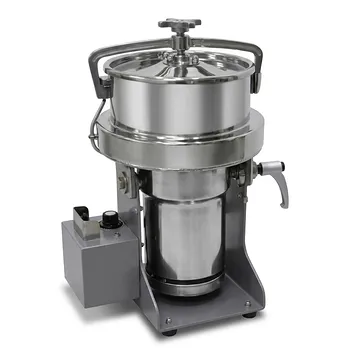
500g Capacity Water Cooled Low Temperature Grinder with Variable Speed and Safety Cover
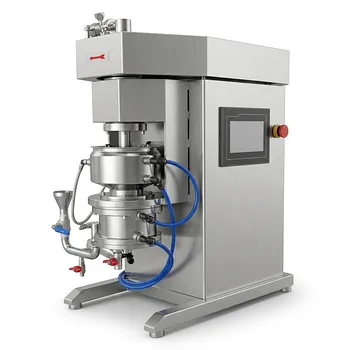
Small Ceramic Structure Laboratory Sand Mill Nanoscale Grinding Dispersion Equipment Seal-less Screen-less Design
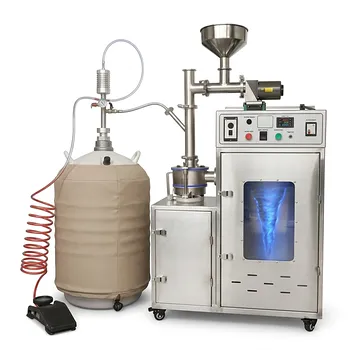
Small Liquid Nitrogen Cryogenic Grinder for Ultrafine Grinding of Heat-Sensitive Materials in Laboratories
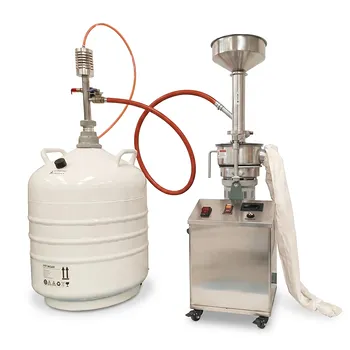
Laboratory Liquid Nitrogen Cryogenic Grinder Polymer Sample Preparation Pulverizer
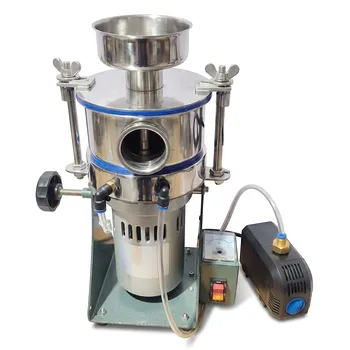
Water Cooled Airflow Ultra Fine Grinder for Low Temperature Material Processing
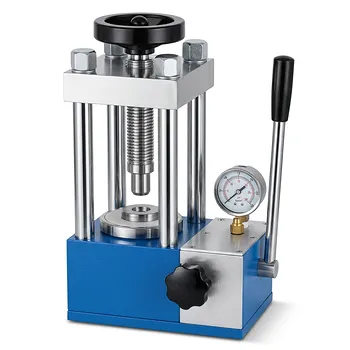
Manual Tablet Press with Dual Scale Pressure Gauge for Pharmaceutical Food Chemical Laboratory Sample Preparation
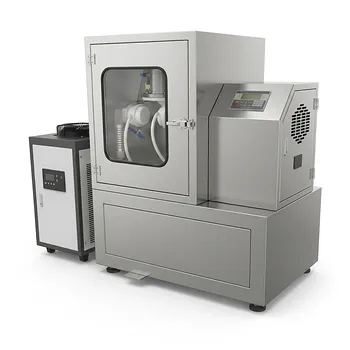
Vibratory Ultra-Low Temperature Ultrafine Grinder for Cryogenic Powder Processing
Heating Temperature Controlled High Energy Vibratory Ball Mill
Small Liquid Nitrogen Cryogenic Grinder for Plastic and Heat-Sensitive Material Sample Preparation
Cyclonic Laboratory Mill for NIR Spectroscopy Sample Preparation Food and Feed Grinding
Water Cooled Pulse Jet Ultrafine Grinder
Portable Cutting Mill for Laboratory Sample Preparation and RoHS WEEE Compliance Testing
Ordinary Type Rotary Tablet Press for Pharmaceutical Chemical Food Electronic Industries
Custom Explosion-Proof Sealed Jaw Crusher for Laboratory and Industrial Sample Preparation
Water Cooled Cryogenic Ultra Fine Cell Wall Breaking Mill