Why is an air-jet sieve shaker preferred for mineral fillers? Solve Blinding & Agglomeration in Fine Powder Analysis
Updated 5 months ago
The air-jet sieve shaker is preferred because it utilizes high-velocity airflow to solve the problems of particle agglomeration and sieve blinding that render traditional vibratory methods inaccurate for fine powders. By fluidizing the material, it ensures that ultra-fine mineral fillers—particularly those smaller than 0.063 mm—can pass through the mesh with high repeatability and precision.
Core Takeaway: While vibratory shakers rely on mechanical impact that often causes fine powders to clump or clog, air-jet sieving uses controlled air streams to disperse particles and clear the mesh simultaneously, making it the definitive standard for analyzing micro-fine mineral fillers.
Overcoming the Physical Limitations of Fine Powders
The Failure of Mechanical Vibration
Traditional vibratory shakers rely on vertical or circular motion to move material across a sieve. For mineral fillers, this mechanical action often forces fine particles into the mesh openings, leading to sieve blinding (clogging) and stopping the separation process.
Combating Particle Agglomeration
Fine mineral particles often stick together due to electrostatic adsorption or moisture, forming clusters called agglomerates. Vibratory motion is rarely strong enough to break these bonds, causing the shaker to treat a cluster of fine particles as a single large grain.
Managing Material Cohesiveness
Mineral fillers are inherently cohesive and have strong surface energy. Without an external force to separate these particles, a vibratory shaker will produce a skewed particle size distribution (PSD) that suggests the material is coarser than it actually is.
The Mechanics of Air-Jet Dispersion
The Role of the Rotating Nozzle
An air-jet sieve shaker features a rotating nozzle beneath the sieve deck that blows a high-velocity stream of air upward. This stream fluidizes the powder, lifting it off the mesh and ensuring every particle is suspended in the air.
High-Speed Impact and De-agglomeration
As the air carries the particles, they collide with each other and the sieve lid. This high-speed impact provides the energy necessary to break down agglomerates into individual primary particles, which are then small enough to pass through the mesh.
Continuous Mesh Cleaning
The air stream doesn't just move the powder; it also passes through the sieve apertures from the bottom. This action continuously clears the mesh, preventing particles from becoming lodged and ensuring the full surface area of the sieve remains functional throughout the test.
Impact on Data Integrity and Compliance
Accuracy in Ultra-Fine Ranges
Air-jet sieving is specifically designed for materials where the majority of particles must pass through a 0.063 mm (63μm) sieve. It provides the high-order precision required for advanced characterizations, such as the Number Density Function (NDF).
Repeatability and Standardization
Because the airflow is strictly controlled, the process is highly repeatable across different batches and labs. This reliability is essential for meeting international standards like EN 933-10, which governs the testing of fillers for bituminous mixtures.
Minimizing Mechanical Attrition
Unlike aggressive vibratory methods that can crush fragile or brittle granules, air-jet sieving uses air as the transport medium. This minimizes mechanical attrition, ensuring the results reflect the actual size of the particles rather than fragments created during the test.
Understanding the Trade-offs
Single Sieve Limitation
The most significant trade-off is that air-jet shakers typically process only one sieve at a time. While vibratory shakers can stack multiple sieves for a full gradation in one cycle, air-jet sieving requires a separate run for each mesh size.
Requirement for Vacuum Integration
An air-jet system requires a high-quality industrial vacuum to generate the necessary pressure differential. This adds to the equipment footprint and maintenance requirements compared to a standalone mechanical shaker.
Suitability for Coarse Materials
Air-jet sieving is optimized for "micro" ranges (typically 20μm to 2mm). It is not effective for coarse aggregates, where the mass of the particles is too great for the airflow to fluidize effectively.
Applying This to Your Laboratory Goals
Choosing the Right Method for Your Project
Selecting the correct sieving technology depends entirely on the material's fineness and the precision required for your final application.
- If your primary focus is compliance with asphalt filler standards (e.g., EN 933-10): Use an air-jet sieve to ensure particles smaller than 0.063 mm are accurately accounted for without mesh blinding.
- If your primary focus is analyzing high-order moments or EQMOM algorithms: Use air-jet sieving to guarantee the de-agglomeration necessary for validating advanced reconstruction models.
- If your primary focus is rapid, multi-stage grading of coarse aggregates: Stick with a traditional vibratory shaker, as the particles are too heavy for effective air fluidization.
- If your primary focus is protecting fragile or brittle granules: Utilize the air-jet method to reduce the mechanical force applied to the particles during the separation process.
By prioritizing the air-jet method for fine mineral fillers, you ensure that your data reflects the true physical properties of the material rather than the limitations of the testing equipment.
Summary Table:
| Feature | Air-Jet Sieve Shaker | Vibratory Sieve Shaker |
|---|---|---|
| Primary Mechanism | High-velocity fluidizing airflow | Mechanical vertical/circular vibration |
| Best For | Fine powders & fillers (< 63μm) | Coarse aggregates & granules |
| Mesh Blinding | Prevented by continuous air cleaning | High risk with fine or cohesive powders |
| Agglomeration | High-speed impact breaks clusters | Poor; treats clusters as single grains |
| Throughput | Single sieve per cycle | Multiple sieves (stacked) per cycle |
| Standard Compliance | Essential for EN 933-10 | Standard for coarse grading (EN 933-1) |
Optimize Your Material Analysis with Expert Solutions
Achieving precise particle size distribution is the foundation of quality control in material science. [Your Brand Name] provides complete laboratory sample preparation solutions specifically engineered for the challenges of powder processing and compaction.
From overcoming particle agglomeration with our air-jet and vibratory sieve shakers to achieving ultimate material density with our Cold/Warm Isostatic Presses (CIP/WIP), we offer the tools you need for data integrity. Our extensive product line includes:
- Precision Milling: Planetary ball mills, jet mills, and cryogenic grinders.
- Sieving & Mixing: Air-jet sieves, test sieves, and high-efficiency powder mixers.
- Advanced Compaction: Standard hydraulic lab presses, XRF pellet presses, and vacuum hot presses.
Ready to enhance your lab’s accuracy and repeatability? Contact our technical team today to find the perfect equipment for your specific material challenges.
References
- M. Wasilewska, Natalia Ignatiuk. Evaluation of Different Mineral Filler Aggregates for Asphalt Mixtures. DOI: 10.1088/1757-899x/245/2/022042
Mentioned Products
- Laboratory Air Jet Sieving Machine for Fine Powder Particle Size Analysis and Deagglomeration
- Vibratory Sieve Shaker Electromagnetic 3D Motion Powder Particle Size Analyzer for Dry and Wet Sieving
- Stainless Steel Laboratory Vibratory Test Sieve Shaker
- 三维电磁微量振动筛分仪
- Small Laboratory Vibrating Sieve Shaker for Precise Particle Size Analysis
People Also Ask
- What role do laboratory test sieves play in the nanocrystallization process of iron powder? Ensure Uniform Refinement
- What is the function of a laboratory test sieve in the river sediment sample preparation process? Ensure Precise Data
- What is the purpose of using 0.038 mm sieves in magnetite grinding? Quantify Kinetics and Boost Grinding Efficiency
- How do laboratory test sieves contribute to the analysis of soil texture composition? Optimize Particle Grading Accuracy
- Why is a 0.08mm standard sieve required for testing the fineness of cement? Optimize Recycled Pervious Concrete Quality

Tech Team · PowderPreparation
Last updated on May 14, 2026
Related Products
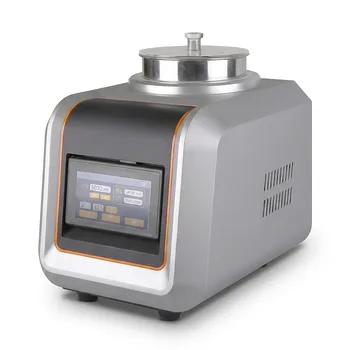
Laboratory Air Jet Sieving Machine for Fine Powder Particle Size Analysis and Deagglomeration
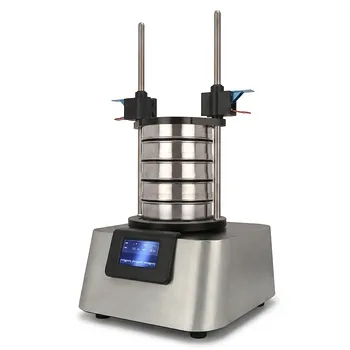
Vibratory Sieve Shaker Electromagnetic 3D Motion Powder Particle Size Analyzer for Dry and Wet Sieving
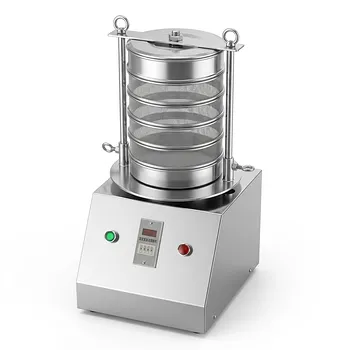
Stainless Steel Laboratory Vibratory Test Sieve Shaker
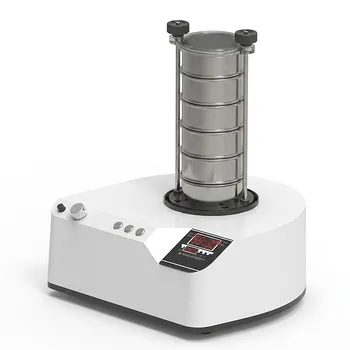
三维电磁微量振动筛分仪
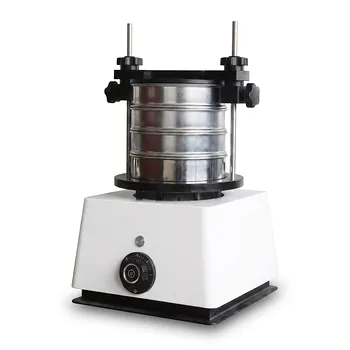
Small Laboratory Vibrating Sieve Shaker for Precise Particle Size Analysis
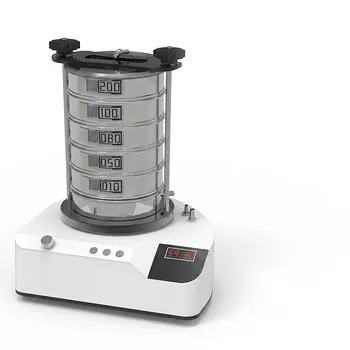
Heavy Duty Dry Three Dimensional Vibratory Sieve Shaker for Particle Separation
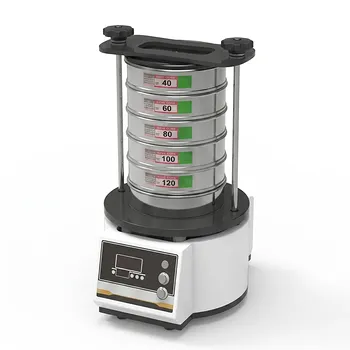
Dry Three Dimensional Vibratory Sieve Shaker
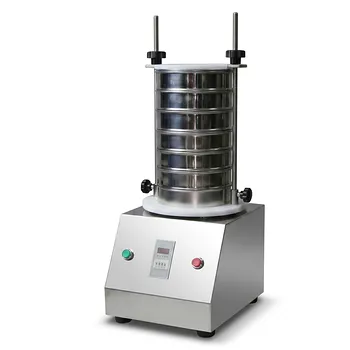
Small Laboratory Vibratory Sieve Shaker for Powder Gradation and Particle Size Analysis
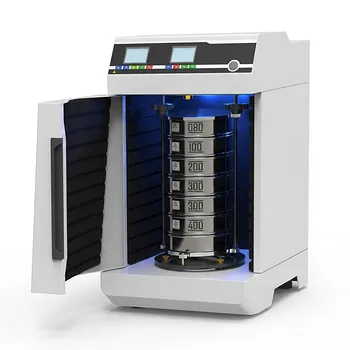
Laboratory Dry and Wet Three Dimensional Vibratory Sieve Shaker for Particle Analysis
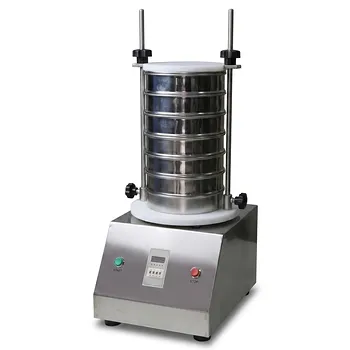
Laboratory Vibratory Test Sieve Shaker for Precision Particle Size Analysis and Powder Grading
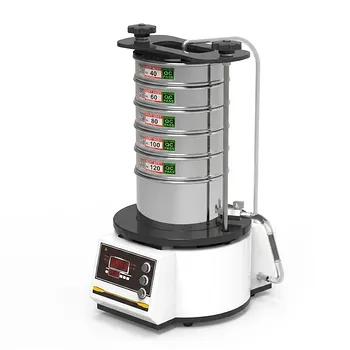
High Frequency Wet Three-Dimensional Vibrating Sieve Shaker for Dry and Wet Particle Size Analysis
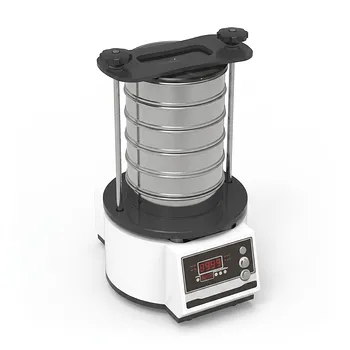
Tapping Oscillating Sieve Shaker for Dry and Wet Particle Size Analysis
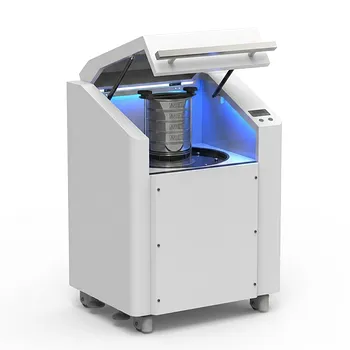
High Frequency Cabinet Type Three-Dimensional Rotary Vibrating Sieve Shaker for Dry Sieving and Particle Classification
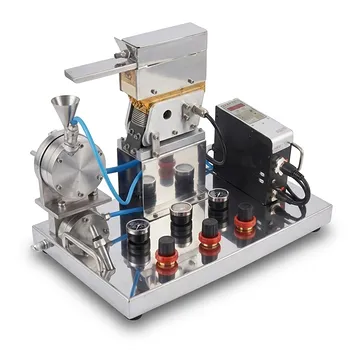
Benchtop Micro Air Jet Mill for Ultrafine Grinding of High Value Powders
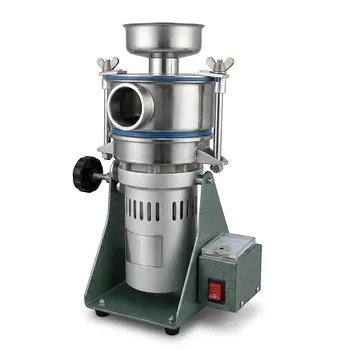
Small Airflow Ultra-Fine Grinder for Laboratory Sample Preparation
Airflow Ultrafine Pulverizer for Laboratory Ultra-fine Grinding
Water Cooled Pulse Jet Ultrafine Grinder