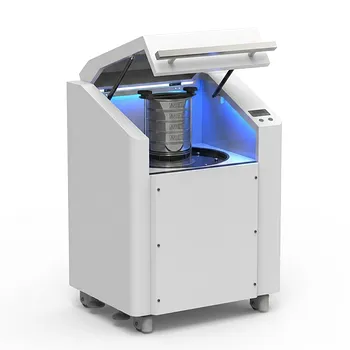
Why is an industrial-grade air-jet sieve used to verify the performance of a micron classifier? Ensure PSD Accuracy
Updated 5 months ago
Industrial-grade air-jet sieves are the definitive tool for verifying micron classifier performance because they provide the precision and de-agglomeration necessary to measure true particle size distribution (PSD).
Unlike traditional vibratory methods, an air-jet sieve uses high-velocity airflow and negative pressure to overcome the physical forces—such as electrostatic charge and moisture—that cause fine powders to clump. This ensures that the data used to calibrate a micron classifier reflects the actual physical dimensions of the material rather than the limitations of the testing process.
The air-jet sieve serves as an empirical benchmark, using aerodynamic dispersion to break up agglomerates and accurately map the particle size distribution. This process allows operators to confirm that a micron classifier is meeting the specific engineering curves required for high-performance applications.
The Role of Aerodynamic Dispersion in Validation
Overcoming Agglomeration and Electrostatic Forces
At the micron level, particles are often hygroscopic or prone to clumping due to surface tension. Mechanical vibration is generally insufficient to break these bonds, which can lead to false readings and inaccurate classifier calibration. The air-jet sieve uses a rotating nozzle to create a fluidized bed, effectively dispersing agglomerates so individual particles can be measured.
Precision in the Fine Particle Range
Industrial air-jet sieves are optimized for the critical range between 32 and 100 micrometers. By using negative pressure to pull particles through the mesh, the system achieves a more thorough separation than gravity-based systems. This precision is essential for validating that a classifier’s output meets the narrow particle size distribution curves required for materials like quartz powder.
Validating Process Integrity Beyond Sizing
Quantitative Analysis of Coating Strength
Beyond simple sizing, these sieves are used to evaluate how well additives are bound to a carrier surface. The controlled suction removes weakly bound particles, allowing engineers to calculate the ratio of stable coating on the material. This data is vital for adjusting classifier process parameters to improve the durability and quality of the final product.
Consistency in Engineering Standards
For many industrial applications, meeting a precise PSD is a non-negotiable requirement for material performance. The air-jet sieve provides a standardized laboratory reference that translates theoretical settings into verified physical reality. This ensures that the micron classifier is not just "running," but is operating within the strict tolerances required for the end-use application.
Understanding the Trade-offs
Material Sensitivity and Attrition
While high-velocity air is excellent for dispersion, it can be too aggressive for extremely fragile materials. Excessive air pressure or prolonged suction times may cause particle attrition, where the particles break down during the test itself. Operators must carefully calibrate the negative pressure settings to ensure they are dispersing agglomerates without destroying the sample’s integrity.
Mesh Maintenance and Wear
The fine mesh screens (down to 32 micrometers) used in these sieves are highly sensitive and can be easily damaged. Inconsistent cleaning or improper handling can lead to blinding of the mesh, which skews validation results. Reliable performance verification requires a strict protocol for mesh inspection and replacement to maintain the accuracy of the baseline data.
How to Apply This to Your Validation Process
Making the Right Choice for Your Goal
- If your primary focus is Precise PSD Calibration: Utilize the air-jet sieve to establish a baseline distribution, ensuring your micron classifier is hitting its target cut-points accurately.
- If your primary focus is Material Quality Control: Use the negative pressure function to test for "loose" additives or weakly bound coatings to ensure product durability.
- If your primary focus is Processing Difficult Materials: Deploy the air-jet sieve specifically for hygroscopic or high-agglomeration powders where traditional vibratory sieves fail to provide reliable data.
By integrating the air-jet sieve as a primary validation step, you ensure your micron classifier delivers a product that meets exact engineering specifications with repeatable accuracy.
Summary Table:
| Feature | Function in Validation | Key Benefit |
|---|---|---|
| Aerodynamic Dispersion | Breaks electrostatic & hygroscopic bonds | Ensures true particle measurement, not agglomerates |
| Negative Pressure Suction | Pulls fine particles (32–100µm) through mesh | Achieves higher precision than vibratory sieving |
| Rotating Nozzle Nozzle | Creates a fluidized bed for the sample | Provides consistent, repeatable PSD benchmarks |
| Controlled Suction | Removes weakly bound additives/coatings | Quantifies coating stability and process integrity |
| Standardized Reference | Translates theoretical curves to physical reality | Guarantees classifier output meets strict tolerances |
Optimize Your Material Analysis with Expert Solutions
Achieving precise particle size distribution is critical for high-performance material science. We provide complete laboratory sample preparation solutions tailored to your specific needs. Our expertise spans the entire powder processing workflow, specializing in high-precision powder processing and compaction equipment.
Our extensive product lines include:
- Sizing & Analysis: Advanced air-jet sieve shakers, vibratory sieve shakers, and a wide range of test sieves.
- Milling & Grinding: Planetary ball mills, jet mills, disc mills, rotor mills, and liquid nitrogen cryogenic grinders.
- Crushing: Industrial-strength jaw and roll crushers.
- Mixing: High-efficiency powder mixers and vacuum defoaming mixers.
- Compaction: A full spectrum of hydraulic presses, including Cold/Warm Isostatic Presses (CIP/WIP), XRF pellet presses, and vacuum hot presses.
Whether you are validating a micron classifier or developing new materials, our equipment ensures accuracy and repeatability. Contact our technical team today to discuss how our solutions can enhance your laboratory’s efficiency and product quality.
References
- Nang Xuan Ho, Nhu The Dau. Numerical Study to Optimize the Operating Parameters of a Real-Sized Industrial-Scale Micron Air Classifier Used for Manufacturing Fine Quartz Powder and a Comparison with the Prototype Model. DOI: 10.3390/pr13010106
Mentioned Products
- Laboratory Air Jet Sieving Machine for Fine Powder Particle Size Analysis and Deagglomeration
- Stainless Steel Rotary Vibrating Sieve High Precision Circular Vibratory Separator Industrial Powder Grading Machine Multi Layer Sifting Equipment
- Benchtop Micro Air Jet Mill for Ultrafine Grinding of High Value Powders
- High Speed Air Induced Ultrafine Pulverizer Laboratory Superfine Powder Mill for Pharmaceutical and Material Science Sample Preparation
- Small Airflow Ultra-Fine Grinder for Laboratory Sample Preparation
People Also Ask
- What role do laboratory test sieves play in the nanocrystallization process of iron powder? Ensure Uniform Refinement
- What is the function of a laboratory test sieve in the river sediment sample preparation process? Ensure Precise Data
- What is the purpose of using 0.038 mm sieves in magnetite grinding? Quantify Kinetics and Boost Grinding Efficiency
- How do laboratory test sieves contribute to the analysis of soil texture composition? Optimize Particle Grading Accuracy
- Why is a 0.08mm standard sieve required for testing the fineness of cement? Optimize Recycled Pervious Concrete Quality

Tech Team · PowderPreparation
Last updated on May 14, 2026
Related Products
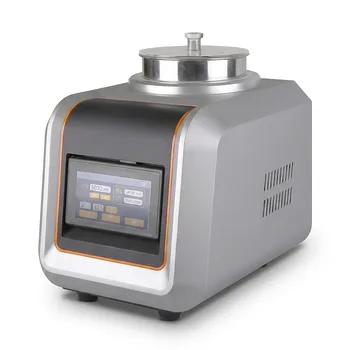
Laboratory Air Jet Sieving Machine for Fine Powder Particle Size Analysis and Deagglomeration

Stainless Steel Rotary Vibrating Sieve High Precision Circular Vibratory Separator Industrial Powder Grading Machine Multi Layer Sifting Equipment
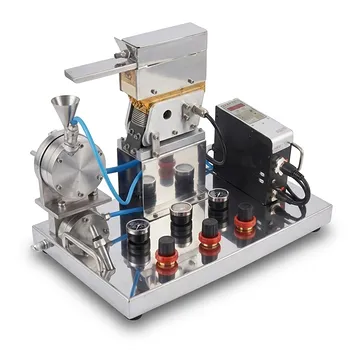
Benchtop Micro Air Jet Mill for Ultrafine Grinding of High Value Powders
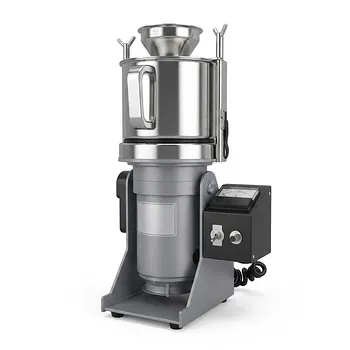
High Speed Air Induced Ultrafine Pulverizer Laboratory Superfine Powder Mill for Pharmaceutical and Material Science Sample Preparation
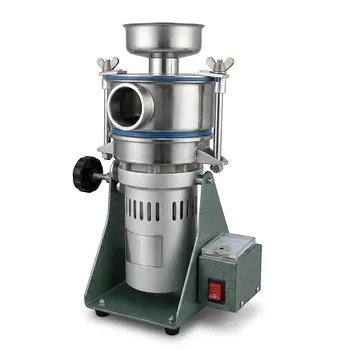
Small Airflow Ultra-Fine Grinder for Laboratory Sample Preparation
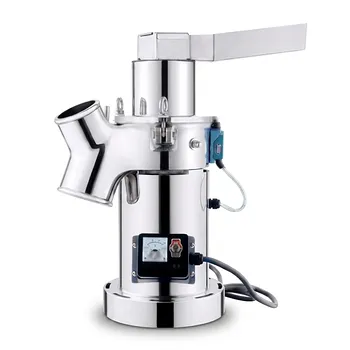
Airflow Ultrafine Pulverizer for Laboratory Ultra-fine Grinding