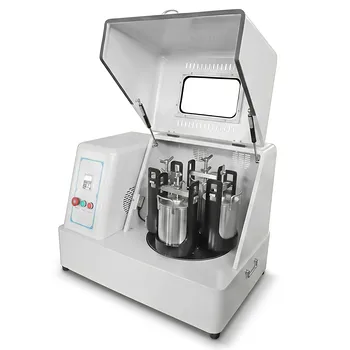
What is the significance of the stirring speed in Budesonide nano-milling? Master Kinetic Energy for Drug Refinement
Updated 3 months ago
The stirring speed is the primary driver of kinetic energy within a nano-milling system. By setting a specific high stirring speed, you establish a violent collision environment where mechanical forces become strong enough to overcome the lattice energy of Budesonide crystals. This continuous energy input is the fundamental requirement for refining drug particles into the nano-scale and maintaining a uniform suspension.
The stirring speed dictates the intensity of collisions between milling media, directly determining the efficiency of particle size reduction and the thermal stability of the final Budesonide nanosuspension.
The Mechanics of Energy Transfer
Overcoming Lattice Energy
Budesonide exists in a crystalline state held together by specific lattice energy. High stirring speeds generate the necessary mechanical force to break these crystalline bonds, allowing the particles to fracture into smaller units.
Maintaining Suspension Uniformity
Continuous agitation ensures that the drug particles and milling media remain in constant, irregular motion. This prevents the drug from settling and ensures that every particle is subjected to consistent grinding forces throughout the process.
Driving Particle Refinement
The refinement of drug particles is not instantaneous but is an ongoing process fueled by constant energy. A stable stirring speed provides the predictable energy levels required to achieve a narrow and reproducible particle size distribution.
Critical Process Parameters
Kinetic Energy Management
The stirrer acts as the engine of the mill, converting rotational motion into the kinetic energy of the milling beads. The speed setting determines the frequency and the force of the impacts between the beads and the Budesonide crystals.
Motion Dynamics
At optimal speeds, the milling media maintain a state of high-velocity movement within the liquid. This movement is essential for ensuring that the collision environment remains active and that no "dead zones" exist within the milling chamber.
Understanding the Trade-offs
Thermal Degradation Risks
While high speeds accelerate milling, they also generate significant frictional heat. Excessive stirring speeds can lead to temperature spikes that may compromise the physical stability or biological activity of the formulation.
Media Wear and Contamination
Increasing the stirring speed beyond the necessary threshold can lead to accelerated wear of the grinding media. This increases the risk of introducing bead fragments or material impurities into the pharmaceutical product.
Energy Efficiency vs. Processing Time
There is a point of diminishing returns where increasing speed no longer significantly reduces particle size but does increase energy consumption and equipment wear. Finding the "sweet spot" is essential for cost-effective and clean production.
Optimizing Your Nano-Milling Parameters
Selecting the correct stirring speed requires a balance between the energy needed for breakage and the sensitivity of the Budesonide molecule.
- If your primary focus is rapid particle size reduction: Utilize the highest stable stirring speed supported by your equipment's cooling system to maximize collision frequency.
- If your primary focus is long-term physical stability: Maintain a moderate, consistent speed to ensure uniform particle coating and prevent thermal stress that leads to aggregation.
- If your primary focus is minimizing contamination: Optimize for the lowest effective speed that still overcomes the drug's lattice energy to reduce the mechanical erosion of milling beads.
Mastering the balance of stirring speed allows for the precise engineering of Budesonide nanoparticles with high efficacy and exceptional stability.
Summary Table:
| Key Factor | Impact on Nano-Milling Process | Primary Risk/Constraint |
|---|---|---|
| Kinetic Energy | Breaks crystalline bonds (lattice energy) | Thermal degradation of Budesonide |
| Suspension Uniformity | Prevents settling; ensures irregular motion | Maintenance of active collision zones |
| Particle Refinement | Dictates collision frequency and force | Media wear and bead contamination |
| Energy Efficiency | Determines processing time and throughput | Diminishing returns at excessive speeds |
Optimize Your Pharmaceutical Nano-Milling with Expert Solutions
Achieving the perfect balance of kinetic energy and thermal stability requires precision equipment. At our facility, we provide complete laboratory sample preparation solutions tailored for material science and pharmaceutical R&D.
We specialize in high-performance powder processing equipment, including:
- Advanced Mills: Planetary ball mills, jet mills, and high-energy sand/bead mills for precise nano-scale refinement.
- Sample Prep: Liquid nitrogen cryogenic grinders, jaw/roll crushers, and vibratory sieve shakers.
- Compaction & Processing: A full spectrum of hydraulic presses (CIP/WIP), vacuum hot presses, and specialized powder mixers.
Whether you are refining Budesonide or developing new crystalline formulations, our equipment ensures uniform particle distribution and minimal contamination. Contact us today to enhance your lab's efficiency and product stability!
References
- Rebecca Olubi, Cynthia Bosquillon. Evaluating the effects of processing parameters on budesonide nanocrystals prepared by nanomilling.. DOI: 10.5920/bjpharm.1140
Mentioned Products
- Mass Production Nano Sand Mill for Industrial Nanomaterial Grinding and Dispersion
- Vertical Nano Bead Mill for Ceramic Materials with Permanent Magnet Motor and High Efficiency Grinding
- Nano High Energy Vibratory Ball Mill with Heating and Temperature Control
- Nano Laboratory Bead Mill Desktop Sub Micron Sand Mill Screenless Seal Less Powder Grinder
- Laboratory Nano High Energy Ball Mill Ultrafine Grinding Mechanical Alloying
People Also Ask
- How does an industrial grinding mill contribute to groundnut shell powder preparation? Enhance Polymer Filler Performance
- Why is a sand mill used to process solid carbon-forming agents like PPVA and PER? Enhance Dispersion & Flame Retardancy
- Why Silicon Nitride Media is Superior to Zirconia for Si-B-C-N Ceramics? Ensure Purity & Nanostructure Integrity
- What is the purpose of using a 50 µm fine nylon sieve to filter ceramic slurries? Optimize Your DLP 3D Printing Results
- What is the function of a planetary centrifugal mixer in NiMnO3/rGO preparation? Optimize Your Hybrid Electrodes

Tech Team · PowderPreparation
Last updated on Jun 03, 2026
Related Products
Mass Production Nano Sand Mill for Industrial Nanomaterial Grinding and Dispersion
Vertical Nano Bead Mill for Ceramic Materials with Permanent Magnet Motor and High Efficiency Grinding

Nano High Energy Vibratory Ball Mill with Heating and Temperature Control
Nano Laboratory Bead Mill Desktop Sub Micron Sand Mill Screenless Seal Less Powder Grinder
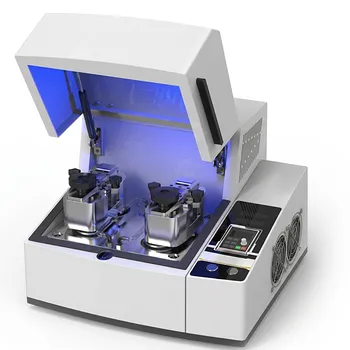
Laboratory Nano High Energy Ball Mill Ultrafine Grinding Mechanical Alloying
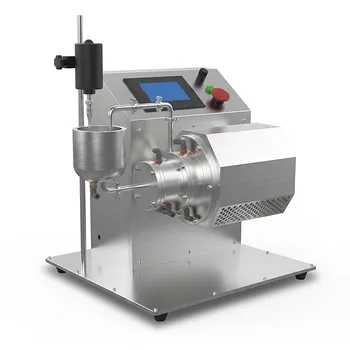
Laboratory Horizontal Pin Nano Sand Mill
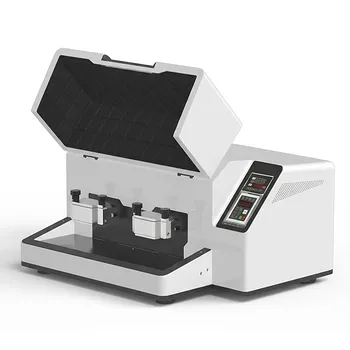
Nanoscale High-Energy Vibratory Ball Mill for Laboratory Sample Preparation, Mechanochemistry, and Mechanical Alloying
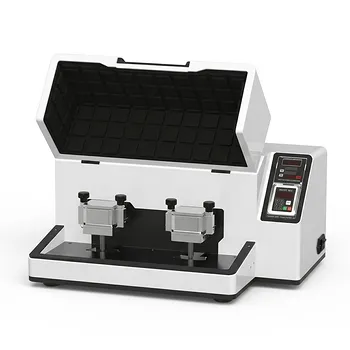
Nanoscale High Energy Vibratory Ball Mill Low Temperature
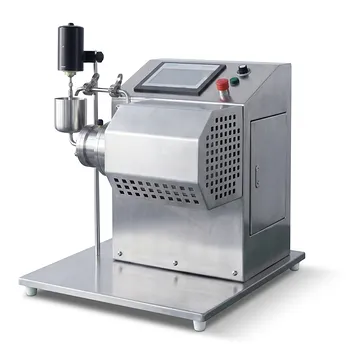
High Efficiency Laboratory Bead Mill Nano Powder Dispersion Sand Mill for Material Science Research

Nano High Energy Vibratory Ball Mill for Laboratory Sample Preparation
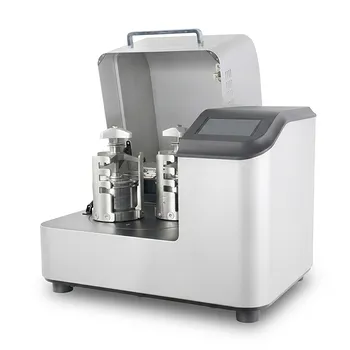
High Energy Planetary Ball Mill for Nano Scale Grinding and Mechanical Alloying
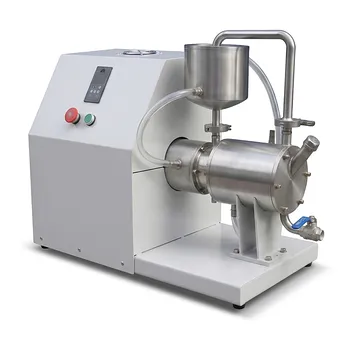
Laboratory Small Horizontal Sand Mill for Nano Materials Wet Grinding
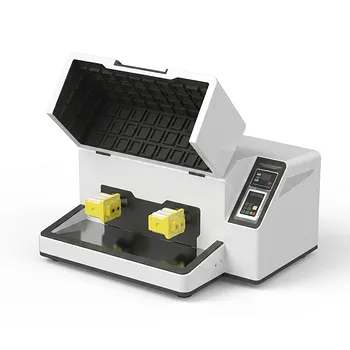
Multi-Platform Nanoscale High-Energy Vibratory Ball Mill
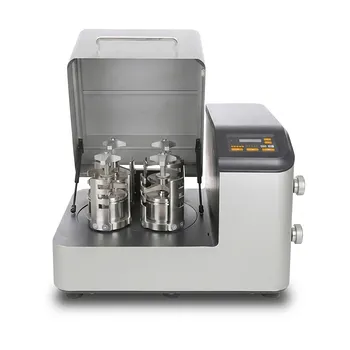
High Energy Planetary Ball Mill for Nano Scale Grinding and Colloidal Mixing in Material Science Research
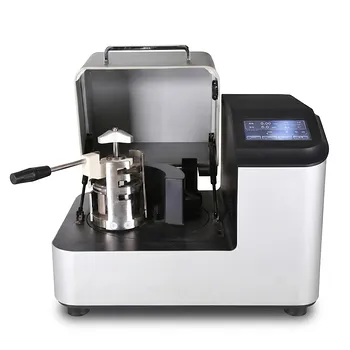
High Energy Laboratory Planetary Ball Mill for Nano Grinding and Material Science Sample Preparation
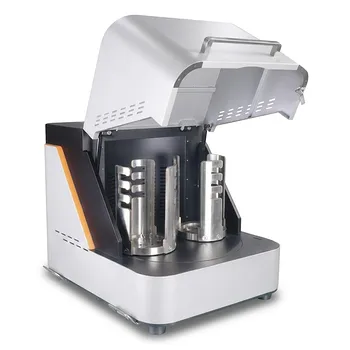
High Energy Laboratory Planetary Ball Mill for Nano Grinding and Colloidal Mixing of Hard and Brittle Materials
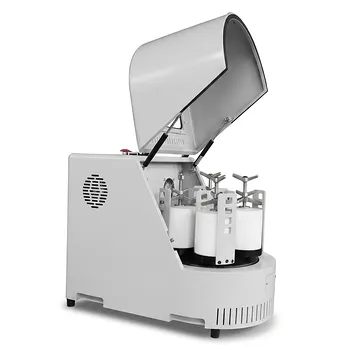
Vertical Semi Circular Planetary Ball Mill for Laboratory Precision Grinding
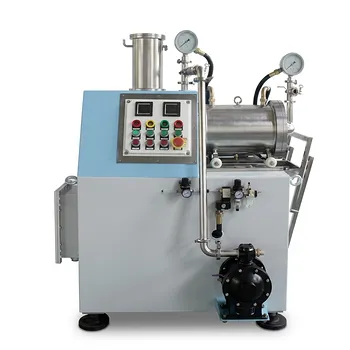
Horizontal Bead Mill for Nanoscale Grinding and Advanced Material Powder Processing
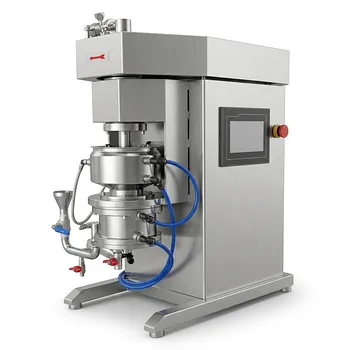
Small Ceramic Structure Laboratory Sand Mill Nanoscale Grinding Dispersion Equipment Seal-less Screen-less Design