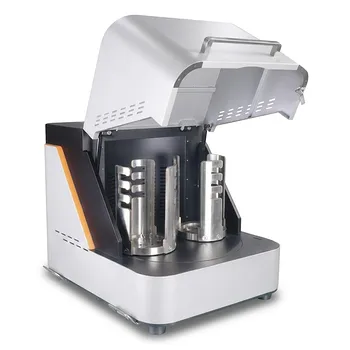
What is the function of a planetary centrifugal mixer in NiMnO3/rGO preparation? Optimize Your Hybrid Electrodes
Updated 3 months ago
The planetary centrifugal mixer is the critical bridge between raw chemical components and a high-performance hybrid electrode. In the preparation of $\text{NiMnO}_3/\text{rGO}$ materials, this equipment utilizes simultaneous high-speed revolution and rotation to generate powerful centrifugal forces. These forces break down oxide aggregates and encapsulate them within the reduced graphene oxide (rGO) network, establishing the stable physical interfaces required for superior electrochemical performance.
The primary function of the planetary centrifugal mixer is to achieve a uniform, damage-free dispersion of $\text{NiMnO}_3$ particles within an rGO matrix. By creating a stable contact interface and eliminating air bubbles, the mixer ensures the electrode maintains high rate performance and long-term cycling stability.
Engineering the $\text{NiMnO}_3/\text{rGO}$ Interface
Surface Encapsulation and Contact
The mixer leverages the adhesive properties of rGO to physically encapsulate the surfaces of $\text{NiMnO}_3$ micron-sized aggregates. This process creates a stable physical contact interface between the active oxide and the conductive graphene network. This interface is vital for efficient electron transport during charge and discharge cycles.
Structural Preservation
Unlike traditional high-shear mixing that can fracture delicate materials, the planetary centrifugal mixer utilizes non-contact mixing. This allows for the high-energy dispersion of materials without damaging the intrinsic structure or original morphology of the $\text{NiMnO}_3$ particles. Maintaining this structural integrity is essential for preserving the theoretical capacity of the hybrid material.
Breaking Oxide Aggregates
Oxide materials like $\text{NiMnO}_3$ naturally tend to form micron-sized aggregates that limit surface area exposure. The intense centrifugal forces generated by the mixer effectively break these clusters apart. This ensures that the active material is finely distributed, maximizing its interaction with the conductive rGO framework.
Critical Role in Slurry Quality
Achieving Micro-Scale Homogeneity
In the preparation of electrode slurries, the mixer ensures that active materials, conductive agents, and binders are dispersed at a micron scale. This high-energy dispersion prevents particle agglomeration, which is a leading cause of inconsistent electrochemical activity. A uniform slurry leads to a consistent coating, ensuring every part of the electrode performs predictably.
Rapid Degassing and Defoaming
The simultaneous revolution and rotation actions act to eliminate internal air bubbles and micro-bubbles from the high-viscosity slurry. Removing these bubbles is critical because trapped air creates coating irregularities and "dead zones" in the finished electrode. Effective degassing ensures the rheological consistency needed for high-precision manufacturing processes like Direct Ink Writing (DIW).
Optimizing Conductive Networks
By ensuring a thorough mix of rGO and binders like SBR or CMC, the mixer helps establish a superior conductive network. This network reduces the internal resistance of the electrode. This is particularly important for hybrid materials where the synergy between the oxide and the carbonaceous support dictates the overall power density.
Understanding the Trade-offs
Thermal Management Needs
The high-speed rotation required to generate sufficient centrifugal force can lead to internal heat buildup within high-viscosity slurries. If temperatures are not monitored, it could potentially impact the stability of certain polymer binders or volatile solvents. Most modern mixers require specific timing protocols to balance energy input with thermal dissipation.
Energy Consumption vs. Throughput
While planetary centrifugal mixers provide unparalleled mixing quality, they often operate in batch processes rather than continuous flows. For large-scale industrial production, the energy cost per kilogram can be higher than traditional stirrers. However, this is typically offset by the reduced processing time and the superior quality of the final electrode.
How to Apply This to Your Project
When utilizing a planetary centrifugal mixer for advanced hybrid materials, your approach should vary based on your specific manufacturing goals:
- If your primary focus is Maximum Rate Performance: Prioritize higher revolution speeds to ensure the most intimate encapsulation of $\text{NiMnO}_3$ by rGO for rapid electron transfer.
- If your primary focus is Structural Longevity: Utilize pulsed mixing cycles at moderate speeds to prevent any potential mechanical stress on the $\text{NiMnO}_3$ crystal structure.
- If your primary focus is Manufacturing Consistency: Focus on the degassing phase of the mixing cycle to ensure a bubble-free slurry that translates to uniform electrode mass loading.
By mastering the mechanical forces of the planetary centrifugal mixer, researchers can unlock the full electrochemical potential of the $\text{NiMnO}_3/\text{rGO}$ hybrid system.
Summary Table:
| Key Function | Mechanical Action | Impact on Electrode Performance |
|---|---|---|
| Surface Encapsulation | Centrifugal force creates stable rGO/oxide contact | Enhanced electron transport and rate performance |
| Structural Preservation | Gentle, non-contact mixing | Maintains intrinsic morphology and theoretical capacity |
| De-agglomeration | Breaking of micron-sized oxide clusters | Maximizes active surface area and material utilization |
| Rapid Degassing | Simultaneous revolution and rotation | Eliminates bubbles for uniform, defect-free coatings |
| Micro-Homogeneity | High-energy dispersion of active materials/binders | Ensures consistent electrochemical activity and longevity |
Elevate Your Material Research with Expert Sample Preparation
Achieving the perfect synergy in NiMnO3/rGO hybrid materials requires precision at the micro-scale. At [Brand Name], we specialize in providing complete laboratory sample preparation solutions for material science, focusing on high-performance powder processing and compaction equipment.
Our extensive product lines are designed to help you bridge the gap between raw chemicals and high-performance devices:
- Advanced Mixing & Milling: Planetary centrifugal mixers, defoaming mixers, and planetary ball, jet, or cryogenic grinders for perfect dispersion.
- Sizing & Processing: Jaw/roll crushers and vibratory/air-jet sieve shakers for precise particle size control.
- Precision Compaction: A full spectrum of hydraulic presses, including Cold/Warm Isostatic Presses (CIP/WIP), vacuum hot presses, and XRF pellet presses.
Ready to optimize your electrode slurry and maximize cycling stability?
Contact our technical experts today to discuss how our specialized equipment can enhance your laboratory’s efficiency and material performance.
References
- Svetlana Veleva, Radostina Stoyanova. Mixing Approaches in Enhancing the Capacitive Performance of rGO-Based Hybrid Electrodes. DOI: 10.3390/ma18112460
Mentioned Products
- Laboratory Horizontal Pin Nano Sand Mill
- High Energy Planetary Ball Mill for Nano Scale Grinding and Mechanical Alloying
- Multi-Platform Nanoscale High-Energy Vibratory Ball Mill
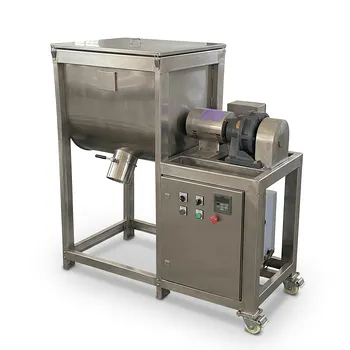
- Horizontal Ribbon Mixer for Dry Powder and Slurry Blending
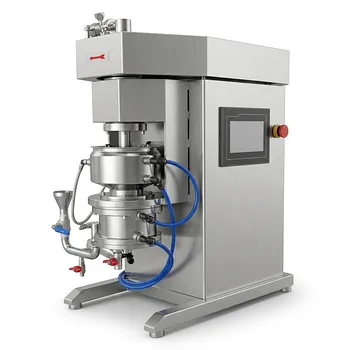
- Small Ceramic Structure Laboratory Sand Mill Nanoscale Grinding Dispersion Equipment Seal-less Screen-less Design
People Also Ask
- What is the significance of the stirring speed in Budesonide nano-milling? Master Kinetic Energy for Drug Refinement
- What is the role of a pin mill in the raw material pretreatment stage of modified glutinous rice starch? Key Benefits
- How do precision stainless steel molds help form Strontium Titanate green bodies? Boost Density and Uniformity.
- Why is the ball milling of MWCNTs conducted under wet conditions? Optimize Dispersion and Prevent Agglomeration
- What are the advantages of a micron-scale mill with IPA wet-grinding for geopolymer analysis? Protect Sample Integrity

Tech Team · PowderPreparation
Last updated on Jun 03, 2026
Related Products
Laboratory Horizontal Pin Nano Sand Mill
High Energy Planetary Ball Mill for Nano Scale Grinding and Mechanical Alloying
Multi-Platform Nanoscale High-Energy Vibratory Ball Mill
Horizontal Ribbon Mixer for Dry Powder and Slurry Blending
Small Ceramic Structure Laboratory Sand Mill Nanoscale Grinding Dispersion Equipment Seal-less Screen-less Design
Mass Production Nano Sand Mill for Industrial Nanomaterial Grinding and Dispersion
Laboratory Nano High Energy Ball Mill Ultrafine Grinding Mechanical Alloying
Portable Cutting Mill for Laboratory Sample Preparation and RoHS WEEE Compliance Testing
Laboratory Disc Mill for Ore and Mineral Sample Preparation
Three-Dimensional Motion Mixer for Laboratory Powder and Granule Blending
Cyclonic Laboratory Mill for NIR Spectroscopy Sample Preparation Food and Feed Grinding
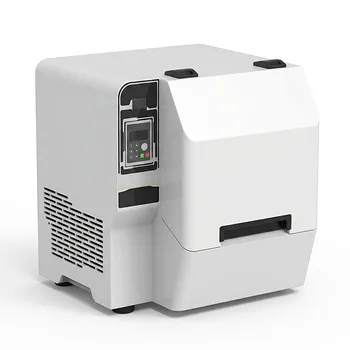
Nano High Energy Vibratory Ball Mill for Laboratory Sample Preparation
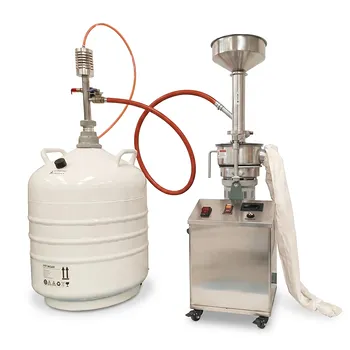
Laboratory Liquid Nitrogen Cryogenic Grinder Polymer Sample Preparation Pulverizer
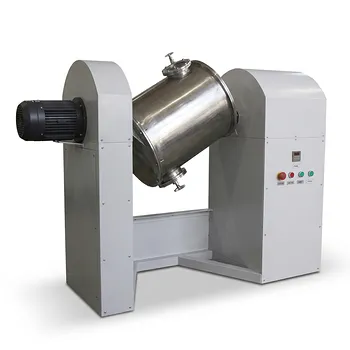
Inclined Mixer for Homogeneous Powder Blending and Grinding
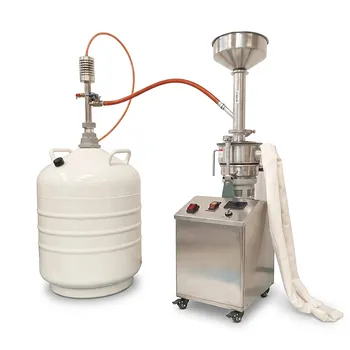
Laboratory Liquid Nitrogen Cryogenic Grinder for Polymer and Elastomer Materials
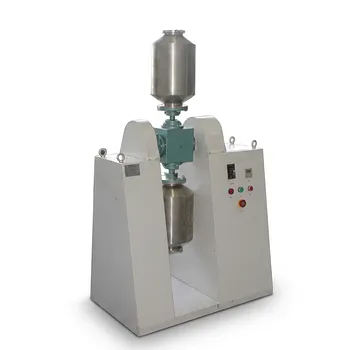
Multi Dimensional Universal Mixer for High Uniformity Powder Blending
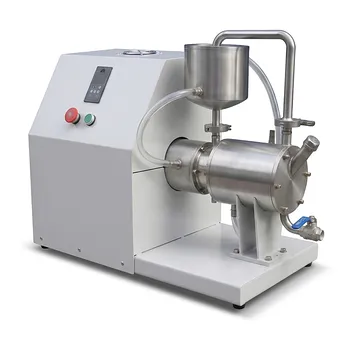
Laboratory Small Horizontal Sand Mill for Nano Materials Wet Grinding
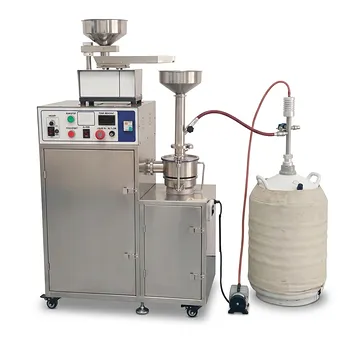
Small Liquid Nitrogen Cryogenic Grinder with Vibratory Feeder for Laboratory Sample Preparation
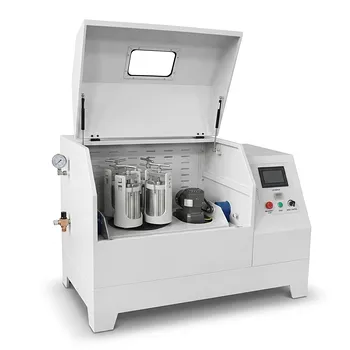
Vertical Production Planetary Ball Mill for High Throughput Powder Processing