Importance of powder flow/cohesion before CIP of Aluminum Titanate? Achieve 60-65% Theoretical Density & Uniformity.
Updated 5 months ago
Evaluating powder flowability and cohesion is the critical prerequisite for achieving structural uniformity during Cold Isostatic Pressing (CIP) of Aluminum Titanate. By ensuring granulated powders possess a specific cohesion index—ideally between 11 and 14—manufacturers can guarantee consistent mold filling and eliminate the density gradients that lead to structural failure in the final green body.
Quantitative analysis of powder flow is the only way to ensure that the isotropic pressure of a CIP system acts upon a uniformly packed volume, preventing internal defects and ensuring a high-quality green body.
The Role of Flowability in Mold Filling
Ensuring Consistent Packing Density
Aluminum Titanate powders must fill a flexible container evenly to prevent air pockets or localized areas of low density. If the powder does not flow freely, the mold fills inconsistently, which the subsequent pressing process cannot fully correct.
Minimizing Structural Defects
When flowability is optimized, the powder creates a stable, uniform starting point for compression. This stability is essential for minimizing density gradients, which are the primary cause of cracks and warping during the transition from powder to a solid green body.
The Quantitative Metrics of Success
The Cohesion Index Benchmark
A cohesion index between 11 and 14 serves as the gold standard for Aluminum Titanate granulation. This specific range indicates that the powder has attained "excellent free-flowing" characteristics, allowing for rapid and repeatable mold charging.
Predicting Powder Behavior
Quantifying these metrics removes the guesswork from the production cycle. By confirming the cohesion index before pressing, engineers can predict exactly how the powder will rearrange under pressure, ensuring the resulting green body meets strict structural requirements.
How CIP Transforms Powder into Green Bodies
Mechanics of Isotropic Pressure
During the CIP process, a hydraulic medium applies extremely high pressure (typically 100 MPa or more) uniformly from all directions. This isotropic force overcomes the static friction between dry particles, forcing them to move as a single unit.
Particle Rearrangement and Interlocking
The pressure causes Aluminum Titanate particles to undergo rolling, twisting, and interlocking. This physical rearrangement allows the material to reach 60-65% of its theoretical density without the need for chemical solvents or binders that might contaminate the final product.
Potential Pitfalls in Powder Preparation
Over-reliance on High Pressure
A common mistake is assuming that higher pressing forces can compensate for poor powder flow. While high pressure increases density, it cannot fix "bridging" or voids caused by cohesive powders during the initial filling stage.
Ignoring Environmental Factors
Powder flowability is highly sensitive to ambient conditions such as humidity. If the cohesion index is not verified immediately before the CIP process, the powder may clump, leading to an unpredictable and non-uniform green body.
Applying These Metrics to Your Production
Strategic Recommendations for Success
The following guidelines help align powder preparation with specific production goals:
- If your primary focus is structural integrity: Prioritize achieving a cohesion index between 11 and 14 to eliminate internal density gradients before the pressing cycle begins.
- If your primary focus is maximizing green density: Ensure the powder is properly granulated to allow for maximum particle rearrangement and interlocking, targeting 60-65% theoretical density.
- If your primary focus is process repeatability: Standardize the quantitative assessment of flowability for every batch to ensure uniform mold filling across high-volume production runs.
Mastering the initial flow characteristics of Aluminum Titanate is the most effective way to ensure the reliability and density of the final isostatically pressed component.
Summary Table:
| Metric | Target Value | Significance in CIP |
|---|---|---|
| Cohesion Index | 11 - 14 | Ensures "excellent free-flowing" behavior and repeatable mold charging. |
| Flowability | Free-flowing | Prevents air pockets and inconsistent packing density in flexible molds. |
| Isotropic Pressure | ≥ 100 MPa | Forces particle rearrangement (rolling/twisting) to overcome friction. |
| Green Body Density | 60 - 65% | Target theoretical density achieved without binders or chemical solvents. |
Optimize Your Material Performance with Precision Sample Preparation
Achieving structural integrity in Aluminum Titanate starts with superior powder preparation and high-performance compaction. At our core, we provide complete laboratory sample preparation solutions tailored for material science professionals.
Whether you need to reach the perfect cohesion index through our planetary ball mills and sieve shakers, or require uniform compaction using our advanced Cold/Warm Isostatic Presses (CIP/WIP), we have the expertise to elevate your results. Our equipment range includes:
- Powder Processing: High-efficiency crushers, cryogenic grinders, and mixers (powder/defoaming).
- Advanced Compaction: Standard lab presses, XRF pellet presses, and vacuum hot presses.
- Sizing & Analysis: Vibratory and air-jet sieve shakers for precise particle control.
Ready to eliminate density gradients and structural defects in your green bodies?
Contact our technical team today to find the ideal solution for your laboratory's needs.
References
- Ramanathan Papitha, Roy Johnson. Pressure slip casting and cold isostatic pressing of aluminum titanate green ceramics: A comparative evaluation. DOI: 10.2298/pac1304159p
Mentioned Products
- 6 Ton Variable Frequency Single Punch Tablet Press
- 6-Ton Small Single-Punch Tablet Press — Laboratory Powder & Granule Tableting Equipment / Tablet Forming Machine
- Laboratory Liquid Nitrogen Cryogenic Grinder Polymer Sample Preparation Pulverizer
- High Energy Planetary Ball Mill for Nano Scale Grinding and Mechanical Alloying
- 5 Ton Single Punch Tablet Press Laboratory Small Batch Production
People Also Ask
- Why is a laboratory hydraulic press required for FT-IR KBr pellets? Achieve Precise Sample Clarity for ZrC–SiC Analysis
- Why is vacuum sealing and flexible packaging necessary for Aluminum Titanate powders during CIP? Ensure Peak Density
- What are the advantages of using hardened steel molds and graphite spray for titanium powder? Ensure structural integrity
- Why is a laboratory hydraulic press required to compress oyster shell powder before XRF analysis? Improve Data Accuracy.
- What role does a high-strength stainless steel mold kit play in the uniaxial die compaction process? Ensuring Precision

Tech Team · PowderPreparation
Last updated on May 14, 2026
Related Products
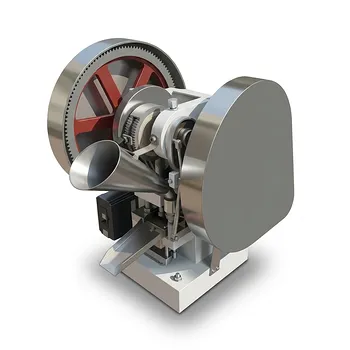
6 Ton Variable Frequency Single Punch Tablet Press
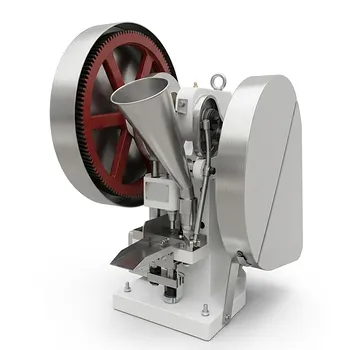
6-Ton Small Single-Punch Tablet Press — Laboratory Powder & Granule Tableting Equipment / Tablet Forming Machine
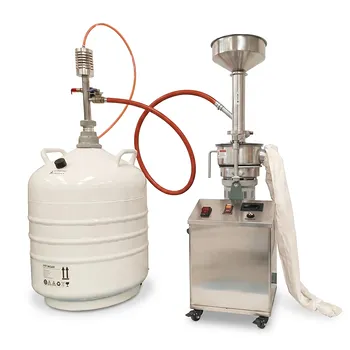
Laboratory Liquid Nitrogen Cryogenic Grinder Polymer Sample Preparation Pulverizer
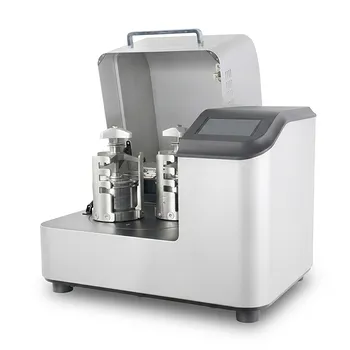
High Energy Planetary Ball Mill for Nano Scale Grinding and Mechanical Alloying
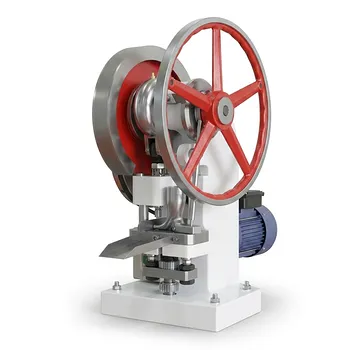
5 Ton Single Punch Tablet Press Laboratory Small Batch Production
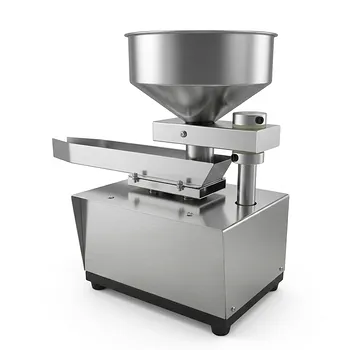
Automatic Vibrating Powder Feeder for Laboratory Material Processing Precision Vibratory Hopper Feeder for Granular and Powder Material Handling Industrial Grade Vibrating Tray Feeder for Consistent Material Sample Preparation
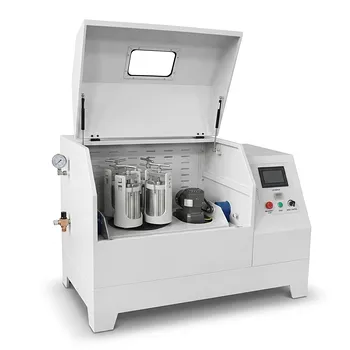
Vertical Production Planetary Ball Mill for High Throughput Powder Processing
Manual Tablet Press with Dual Scale Pressure Gauge for Pharmaceutical Food Chemical Laboratory Sample Preparation
Small Liquid Nitrogen Cryogenic Grinder for Plastic and Heat-Sensitive Material Sample Preparation
Laboratory Liquid Nitrogen Cryogenic Grinder for Polymer and Elastomer Materials
Small Liquid Nitrogen Cryogenic Grinder for Ultrafine Grinding of Heat-Sensitive Materials in Laboratories
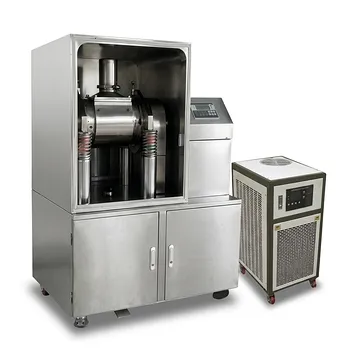
Small Vibrating Ultrafine Grinder for Traditional Chinese Medicine
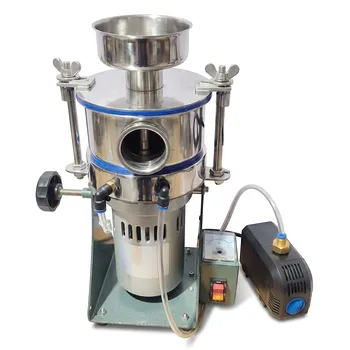
Water Cooled Airflow Ultra Fine Grinder for Low Temperature Material Processing
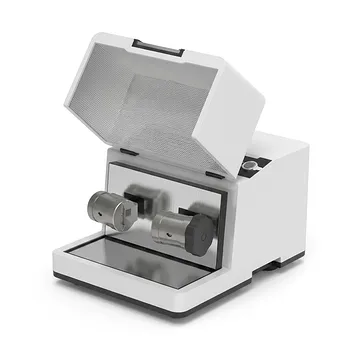
Heating Temperature Controlled High Energy Vibratory Ball Mill
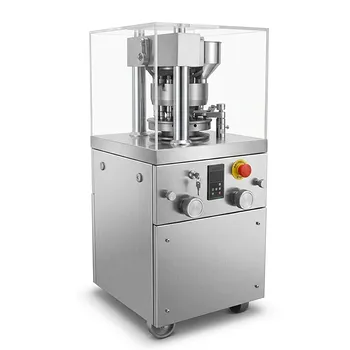
Ordinary Type Rotary Tablet Press for Pharmaceutical Chemical Food Electronic Industries
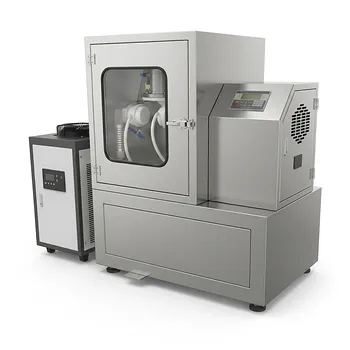
Vibratory Ultra-Low Temperature Ultrafine Grinder for Cryogenic Powder Processing
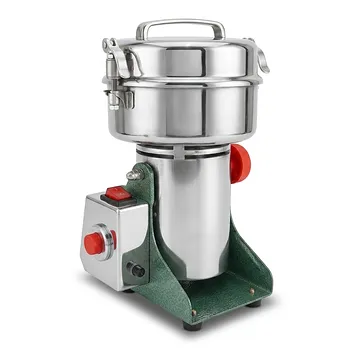
Small High-Speed Laboratory Grinder for Powder Processing
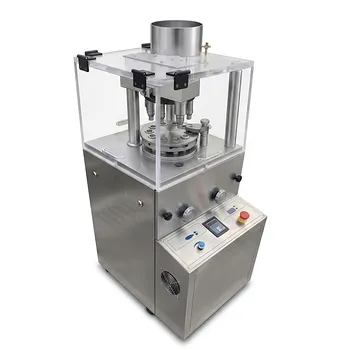
Enhanced 9 Punch Rotary Tablet Press for Powder Compaction
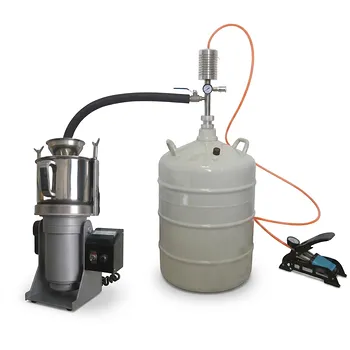
Liquid Nitrogen Cryogenic Grinder for Plastic and Heat-Sensitive Materials