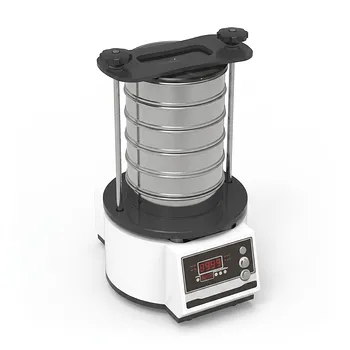
What is the role of vibratory sieving systems in ISRU feedstock preparation? Optimize Your Space Resource Processing
Updated 4 months ago
Vibratory sieving systems serve as the critical gatekeeper in the In-Situ Resource Utilization (ISRU) feedstock preparation chain.
By utilizing mechanical vibration to separate raw planetary regolith into specific particle size components, these systems perform the essential task of beneficiation. This process ensures that the raw material is refined to a high-quality, uniform state, which is necessary for downstream processes like oxygen extraction or 3D printing while simultaneously protecting hardware from damage.
The core role of vibratory sieving is to transform heterogeneous, raw regolith into a standardized engineering material. This classification process is the fundamental requirement for ensuring process repeatability and protecting sensitive ISRU infrastructure from mechanical failure.
The Critical Functions of Beneficiation
Protecting Downstream Processing Equipment
The primary defense for any ISRU plant is the removal of oversized rock fragments and debris. By filtering out these large particles early in the feedstock stage, vibratory sieves prevent mechanical jams and catastrophic wear on subsequent processing components.
Providing Uniform Raw Materials
High-quality feedstock must be uniform to ensure precision in additive manufacturing or chemical extraction. Vibratory sieving isolates specific particle size ranges, which directly improves process control and the consistency of the final output, such as oxygen yield or structural density.
Enhancing Chemical Reaction Kinetics
Maintaining a uniform particle size distribution is essential for eliminating heat transfer gradients during extraction reactions. In processes like pyrolysis or oxygen reduction, uniform particles prevent issues like incomplete carbonization in oversized grains or excessive pressure drops caused by fine "dust" particles.
Optimizing Feedstock for Specific ISRU Applications
Fluidity and Packing in Additive Manufacturing
In lunar or Martian construction, achieving a precise particle size distribution (PSD) is vital for powder bed fluidity. Proper sieving ensures high packing density, which is the physical foundation for the structural integrity and mechanical strength of printed components.
Uniform Mixing and Binder Penetration
When ISRU processes involve mixing regolith with binders or trace components, sieving ensures that the material is fine enough for thorough penetration. This homogeneity is critical for the internal structural density and strength of the resulting aggregates or briquettes.
Precision in Oxygen and Volatile Extraction
By grading materials into precise ranges (similar to the 150-355 µm ranges used in pharmaceutical grading), operators can guarantee mixing uniformity. This level of precision ensures that active extraction processes remain efficient and that volatile yields are predictable across different batches of regolith.
Understanding the Trade-offs and Limitations
Sieve Blinding and Mesh Clogging
One of the primary risks in vibratory systems is "blinding," where fine, jagged particles become wedged in the sieve mesh. This reduces throughput and requires mechanical or ultrasonic interventions to maintain the separation efficiency of the system.
Abrasive Wear and Component Lifespan
Planetary regolith is notoriously abrasive; the constant mechanical vibration required for sieving accelerates the erosion of the mesh and frame. Engineering teams must balance the need for high-frequency vibration with the reality of limited maintenance opportunities in off-world environments.
Power and Mass Constraints
While vibratory systems are effective, they require significant mechanical energy and structural mass to operate reliably. Designers must optimize the vibratory amplitude and frequency to achieve the necessary classification without exceeding the strict power budgets of a space mission.
Maximizing Efficiency in Your ISRU Workflow
How to Apply This to Your Project
Successful feedstock preparation depends on aligning your sieving strategy with your end-product requirements.
- If your primary focus is hardware longevity: Prioritize the removal of all oversized rock fragments to prevent downstream mechanical failures in pumps and reactors.
- If your primary focus is chemical extraction (e.g., Oxygen): Target a narrow, uniform particle size range to eliminate thermal gradients and ensure stable product yields.
- If your primary focus is structural construction: Focus on achieving a precise particle size distribution to maximize the packing density and strength of the final printed material.
- If your primary focus is material mixing: Utilize multiple sieve layers to isolate fine powders, ensuring binders can penetrate the feedstock uniformly.
Effective feedstock preparation through vibratory sieving is the technical foundation that enables sustainable and repeatable resource processing on other worlds.
Summary Table:
| Key Function | Technical Benefit | ISRU Impact |
|---|---|---|
| Beneficiation | Removes oversized rocks & debris | Protects downstream hardware from jams and wear |
| Classification | Isolates specific particle sizes | Ensures consistent reaction kinetics for oxygen extraction |
| PSD Optimization | Maximizes powder packing density | Enhances structural integrity of 3D-printed components |
| Homogenization | Facilitates uniform binder mixing | Improves the mechanical strength of regolith aggregates |
Elevate Your Material Research with Precision Powder Solutions
To achieve repeatable success in space resource utilization and material science, high-quality feedstock preparation is non-negotiable. [Brand Name] provides complete laboratory sample preparation solutions, specializing in advanced powder processing and compaction equipment tailored for demanding research environments.
Our extensive product range includes:
- Particle Grading: High-precision sieve shakers (vibratory and air-jet) with a full range of test sieves.
- Size Reduction: Heavy-duty crushers (jaw/roll) and high-efficiency mills (planetary ball, jet, and cryogenic grinders).
- Material Consolidation: A full spectrum of hydraulic presses, including Cold/Warm Isostatic Presses (CIP/WIP), vacuum hot presses, and XRF pellet presses.
- Advanced Mixing: Specialized powder mixers and defoaming mixers for uniform sample preparation.
Whether you are refining lunar regolith simulants or developing next-generation ceramics, our equipment ensures the precision your project demands. Contact our technical team today to find the perfect solution for your ISRU workflow!
References
- Gunter H. Just, Katherine Smith. Development and test of a Lunar Excavation and Size Separation System (LES<sup>3</sup>) for the LUVMI‐X rover platform. DOI: 10.1002/rob.22050
Mentioned Products
- Vibratory Sieve Shaker Electromagnetic 3D Motion Powder Particle Size Analyzer for Dry and Wet Sieving
- Stainless Steel Rotary Vibrating Sieve High Precision Circular Vibratory Separator Industrial Powder Grading Machine Multi Layer Sifting Equipment
- High Frequency Cabinet Type Three-Dimensional Rotary Vibrating Sieve Shaker for Dry Sieving and Particle Classification
- Three Dimensional Rotary Vibrating Sieve
- Laboratory Dry and Wet Three Dimensional Vibratory Sieve Shaker for Particle Analysis
People Also Ask
- How does a vibratory sieve shaker contribute to optimizing the performance of activated carbon? Enhance Adsorption Precision
- Why is a laboratory vibratory sieve shaker necessary for processing magnesium-based borate precursor powders? Boost Activity
- Why use a vibratory sieve shaker to verify coarse aggregate grading in rubberized concrete? Ensure Structural Integrity
- What function do vibratory sieve shakers and standard test sieves serve in the preparation of adsorbents? Key Guide
- What role does a vibratory sieve shaker play in the particle size analysis of ground corn products? Enhance QC Precision

Tech Team · PowderPreparation
Last updated on Jun 03, 2026
Related Products
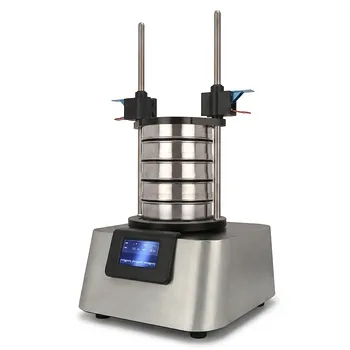
Vibratory Sieve Shaker Electromagnetic 3D Motion Powder Particle Size Analyzer for Dry and Wet Sieving
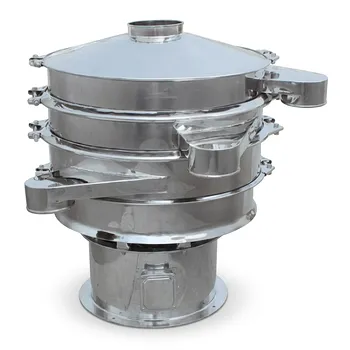
Stainless Steel Rotary Vibrating Sieve High Precision Circular Vibratory Separator Industrial Powder Grading Machine Multi Layer Sifting Equipment
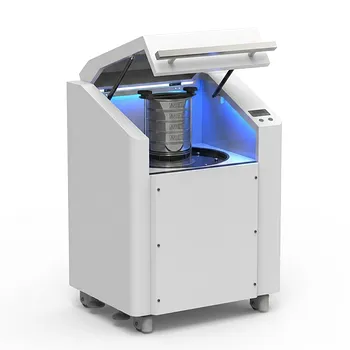
High Frequency Cabinet Type Three-Dimensional Rotary Vibrating Sieve Shaker for Dry Sieving and Particle Classification
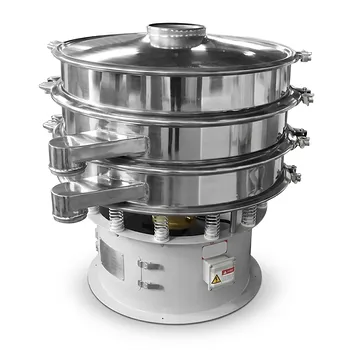
Three Dimensional Rotary Vibrating Sieve
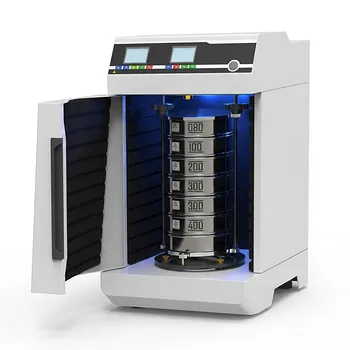
Laboratory Dry and Wet Three Dimensional Vibratory Sieve Shaker for Particle Analysis
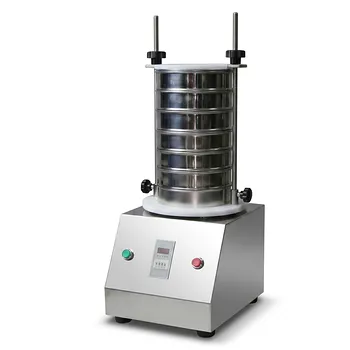
Small Laboratory Vibratory Sieve Shaker for Powder Gradation and Particle Size Analysis
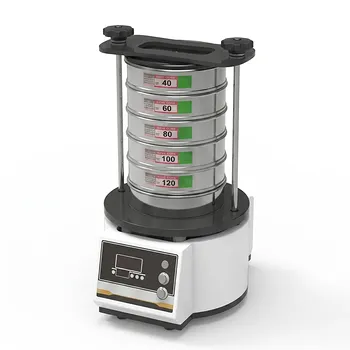
Dry Three Dimensional Vibratory Sieve Shaker
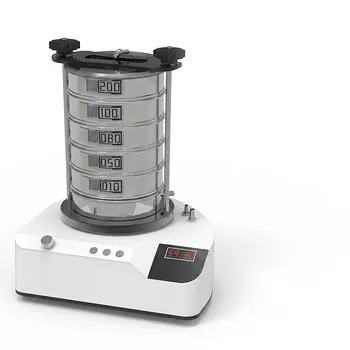
Heavy Duty Dry Three Dimensional Vibratory Sieve Shaker for Particle Separation
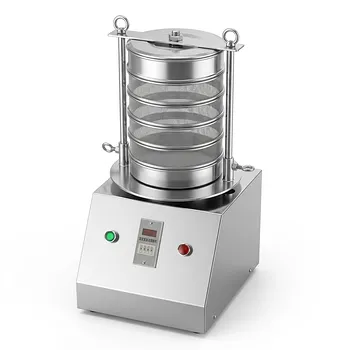
Stainless Steel Laboratory Vibratory Test Sieve Shaker
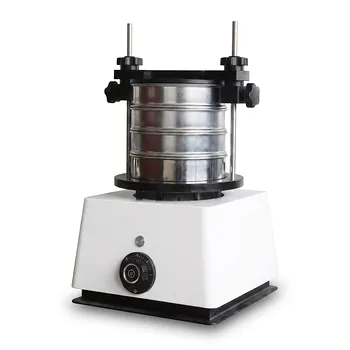
Small Laboratory Vibrating Sieve Shaker for Precise Particle Size Analysis
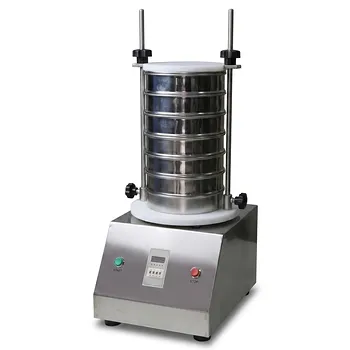
Laboratory Vibratory Test Sieve Shaker for Precision Particle Size Analysis and Powder Grading
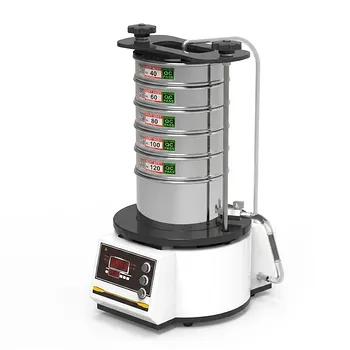
High Frequency Wet Three-Dimensional Vibrating Sieve Shaker for Dry and Wet Particle Size Analysis
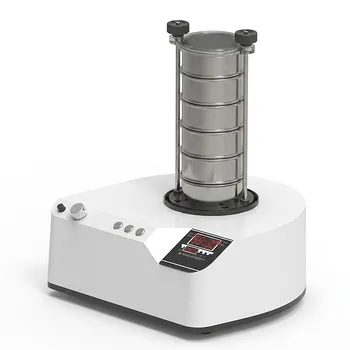
三维电磁微量振动筛分仪
Vibratory Disc Mill for Rapid Fine Grinding and High Throughput Sample Preparation of Hard and Brittle Materials
High Speed Vibratory Disc Mill for Spectral Analysis Sample Preparation and Rapid Powder Grinding
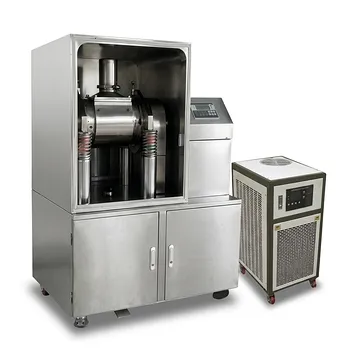
Small Vibrating Ultrafine Grinder for Traditional Chinese Medicine
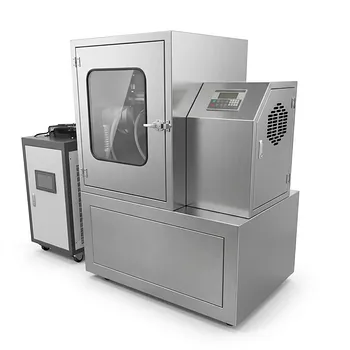
Vibratory Superfine Grinder for Ultra Fine Laboratory Powder Milling
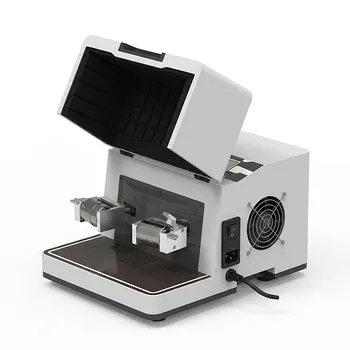
High Energy Hybrid Vibratory Ball Mill for Grinding Mixing and Cell Disruption
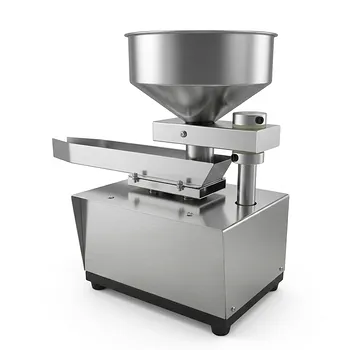
Automatic Vibrating Powder Feeder for Laboratory Material Processing Precision Vibratory Hopper Feeder for Granular and Powder Material Handling Industrial Grade Vibrating Tray Feeder for Consistent Material Sample Preparation