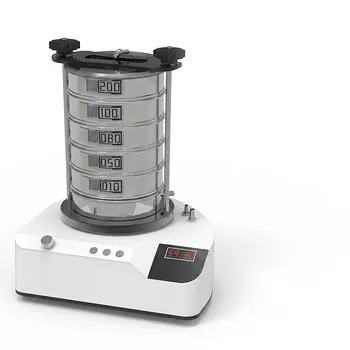
What is the role of the Standard Test Sieve in the preparation of raw materials for polyurethane scaffolds? Precision Porosity
Updated 4 months ago
The precision of polyurethane scaffolds begins with the selection of the correct porogen. In the preparation of these biomaterials, the Standard Test Sieve is used to fractionally screen sodium chloride crystals to isolate a specific particle size range, such as 150–350 μm. This process is critical because the salt particles act as physical templates; the spaces they occupy eventually become the macroporous network essential for the scaffold's biological functionality.
The Standard Test Sieve serves as the primary gatekeeper for scaffold architecture by ensuring porogen uniformity. This precise control dictates the final pore size, which is the fundamental requirement for cell migration, tissue ingrowth, and nutrient transport in meniscus tissue engineering.
Precise Particle Size Control for Porogen Selection
Defining the Scaffold's Internal Architecture
In polyurethane scaffold fabrication, sodium chloride crystals are used as sacrificial porogens. The macroporous structures within the polymer matrix are formed by the specific space occupied by these salt particles before they are leached away.
Because the polymer takes the shape of the voids between the crystals, the Standard Test Sieve acts as the primary tool for designing the scaffold's internal geometry. By selecting a specific mesh size, researchers can pre-determine the exact dimensions of the future pores.
Facilitating Biological Functionality
Tissue engineering, particularly for meniscus repair, requires a highly specific environment for cell ingrowth and nutrient transport. If pores are too small, cells cannot migrate; if they are too large, the scaffold may lack the surface area for proper attachment.
Using high-precision sieves allows for strict control over these parameters. This ensures the resulting scaffold meets the rigorous biological requirements necessary for successful tissue regeneration and metabolic exchange.
Ensuring Consistency and Material Integrity
Eliminating Gradient Variance
A Standard Test Sieve ensures that the porogen distribution is uniform throughout the mixture. Without this screening, a wide range of particle sizes would create an inconsistent pore structure, leading to "dead zones" where nutrients cannot reach.
This uniformity is mirrored in other engineering fields, such as UHPC or biomass preparation, where sieving removes oversized particles that could compromise the final product's density. In scaffolds, this consistency ensures that the mechanical and biological properties are repeatable across different batches.
Removing Impurities and Agglomerates
Raw sodium chloride can often contain agglomerates or oversized crystals due to moisture or manufacturing inconsistencies. The sieving process effectively filters out these irregularities, ensuring that only the desired "fine aggregate" enters the fabrication process.
This level of filtration is a standard protocol across technical disciplines to maintain specimen uniformity. By removing these outliers, the resulting polyurethane matrix maintains its structural integrity and predictable performance during testing.
Understanding the Trade-offs
Precision vs. Throughput
While high-precision sieving ensures an ideal pore size, it can be a time-consuming process, especially when dealing with very fine particles. Over-sieving can also lead to particle attrition, where the crystals break down into smaller, undesired sizes due to prolonged mechanical stress.
The Risk of Mesh Blinding
When working with salt or fine powders, mesh blinding (clogging of the sieve openings) is a common pitfall. If the sieve is not properly cleaned or if the material is slightly damp, the accuracy of the fractional screening decreases, leading to an incorrect pore size distribution in the final scaffold.
How to Apply This to Your Project
Making the Right Choice for Your Goal
- If your primary focus is Cell Migration and Ingrowth: Utilize a sieve range of 150–350 μm to ensure the pore size is large enough for cellular movement but small enough to maintain structural support.
- If your primary focus is Mechanical Strength: Opt for a narrower porogen distribution to ensure a uniform polymer skeleton, as inconsistent pore sizes can create structural weak points.
- If your primary focus is Experimental Repeatability: Standardize your sieving duration and use a vibratory sieve shaker to eliminate human error and ensure a consistent particle size distribution across every batch.
The Standard Test Sieve is not merely a filter, but a foundational calibration tool that defines the success of a polyurethane scaffold's biological and structural performance.
Summary Table:
| Process Phase | Role of Standard Test Sieve | Key Parameter | Biological/Structural Impact |
|---|---|---|---|
| Porogen Selection | Fractional screening of NaCl crystals | 150–350 μm range | Defines pore size for cell migration |
| Architecture Design | Acting as a physical template | Mesh size precision | Ensures macroporous network uniformity |
| Quality Control | Removing agglomerates/impurities | Particle uniformity | Eliminates structural 'dead zones' |
| Repeatability | Standardizing batch production | Sieving duration/amplitude | Ensures consistent mechanical integrity |
Elevate Your Biomaterial Research with Precision Lab Solutions
Achieving the perfect scaffold architecture requires uncompromising accuracy in powder processing. As a leader in complete laboratory sample preparation solutions, we empower material scientists to achieve repeatable, high-quality results.
Whether you are sizing porogens for tissue engineering or preparing advanced ceramics, our extensive product line supports your entire workflow:
- Sieving & Mixing: High-precision Standard Test Sieves (vibratory/air-jet) and advanced powder or defoaming mixers.
- Milling & Grinding: Planetary ball mills, jet mills, and liquid nitrogen cryogenic grinders for ultra-fine particle reduction.
- Advanced Compaction: A full spectrum of hydraulic presses, including Cold/Warm Isostatic Presses (CIP/WIP), vacuum hot presses, and XRF pellet presses.
Ready to optimize your material preparation? Contact our technical experts today to find the perfect equipment configuration for your specific research goals.
References
- R. G. J. C. Heijkants, A. J. Schouten. Polyurethane scaffold formation via a combination of salt leaching and thermally induced phase separation. DOI: 10.1002/jbm.a.31829
Mentioned Products
- Stainless Steel Laboratory Vibratory Test Sieve Shaker
- Laboratory Vibratory Test Sieve Shaker for Precision Particle Size Analysis and Powder Grading
- Small Laboratory Vibrating Sieve Shaker for Precise Particle Size Analysis
- 三维电磁微量振动筛分仪
- Small Laboratory Vibratory Sieve Shaker for Powder Gradation and Particle Size Analysis
People Also Ask
- What function does a laboratory vibratory sieve shaker serve in the production process of metakaolin? Optimize Reactivity
- Why is a precision laboratory vibratory sieve shaker necessary for particle size control? Optimize Biomass Carbonization
- What is the function of a laboratory vibratory sieve shaker? Enhance Coal Particle Size Distribution (PSD) Analysis
- What role do laboratory vibratory sieve shakers and test sieves play before the molding of Nb-Cu composite powders?
- What is the primary function of a laboratory vibratory sieve shaker in the evaluation of sand liquefaction potential?

Tech Team · PowderPreparation
Last updated on Jun 03, 2026
Related Products
Stainless Steel Laboratory Vibratory Test Sieve Shaker
Laboratory Vibratory Test Sieve Shaker for Precision Particle Size Analysis and Powder Grading
Small Laboratory Vibrating Sieve Shaker for Precise Particle Size Analysis
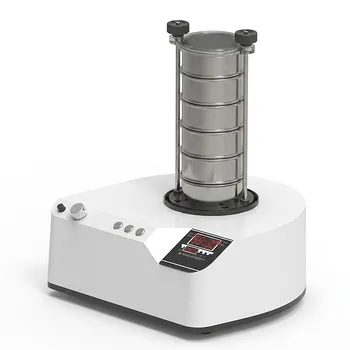
三维电磁微量振动筛分仪
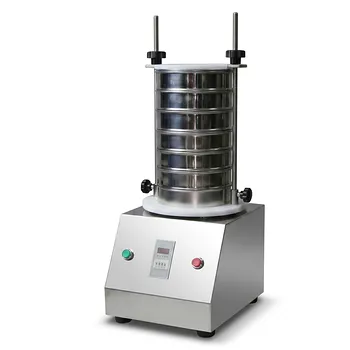
Small Laboratory Vibratory Sieve Shaker for Powder Gradation and Particle Size Analysis
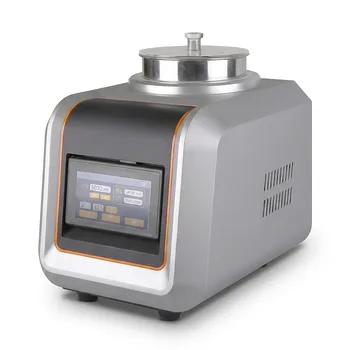
Laboratory Air Jet Sieving Machine for Fine Powder Particle Size Analysis and Deagglomeration
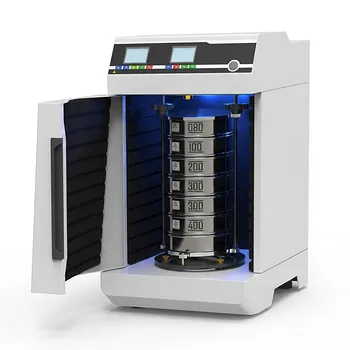
Laboratory Dry and Wet Three Dimensional Vibratory Sieve Shaker for Particle Analysis
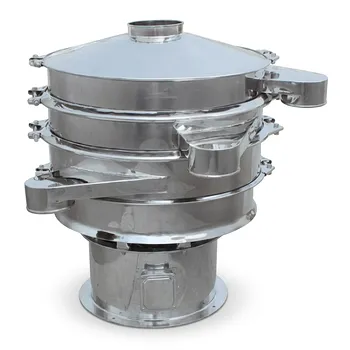
Stainless Steel Rotary Vibrating Sieve High Precision Circular Vibratory Separator Industrial Powder Grading Machine Multi Layer Sifting Equipment
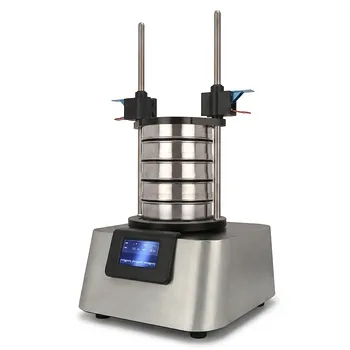
Vibratory Sieve Shaker Electromagnetic 3D Motion Powder Particle Size Analyzer for Dry and Wet Sieving
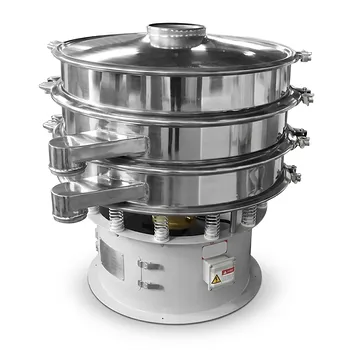
Three Dimensional Rotary Vibrating Sieve
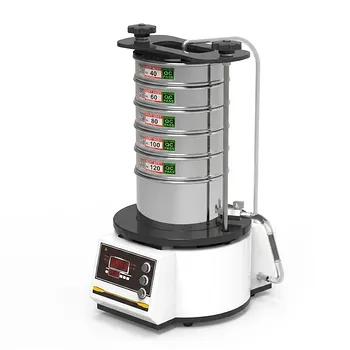
High Frequency Wet Three-Dimensional Vibrating Sieve Shaker for Dry and Wet Particle Size Analysis
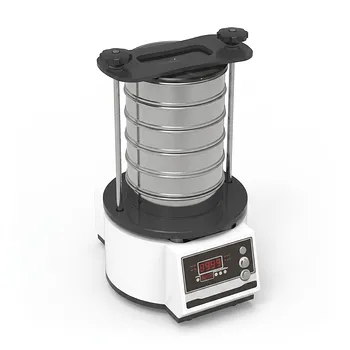
Tapping Oscillating Sieve Shaker for Dry and Wet Particle Size Analysis
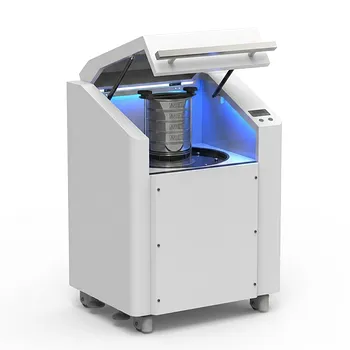
High Frequency Cabinet Type Three-Dimensional Rotary Vibrating Sieve Shaker for Dry Sieving and Particle Classification
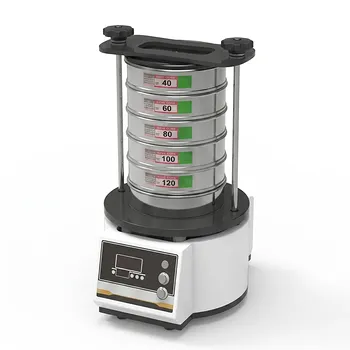
Dry Three Dimensional Vibratory Sieve Shaker