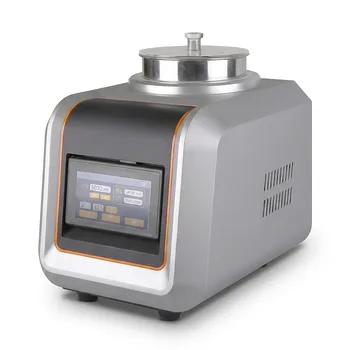
Why crush & sieve PLA modifiers? Ensure Dimensional Compatibility & Superior Composite Performance
Updated 5 months ago
Standardizing the physical dimensions of additives is the critical first step in PLA composite formulation. Crushing bulk modifiers and using a vibratory sieve shaker ensures that additives achieve a specific particle size distribution—ranging from millimeters to microns—that is compatible with the Polylactic Acid (PLA) matrix. This process is necessary to guarantee uniform distribution during pre-mixing and to prevent structural or optical defects during subsequent melt extrusion.
Core Takeaway: Crushing and sieving align the geometry of modifiers with the PLA resin, which is essential for ensuring consistent dispersion. Without this precise particle size control, the final composite is likely to suffer from stress concentration, poor mechanical properties, and surface inconsistencies.
Achieving Dimensional Compatibility with the PLA Matrix
The Role of Crushing in Pre-Mixing
Bulk modifiers, such as rosin esters, often arrive in large, irregular forms that are incompatible with the granular nature of PLA chips. Crushing these modifiers into smaller particles—typically 3 to 5 millimeters—allows them to blend mechanically with the PLA resin before they enter the extruder.
Precision Classification via Vibratory Sieving
A vibratory sieve shaker uses high-precision mesh screens to isolate specific particle size fractions and remove oversized impurities. By ensuring that all additives pass through a designated mesh (e.g., 250 µm or 500 µm), manufacturers can guarantee that the modifier behaves predictably when subjected to heat and shear.
Matching Additive and Resin Geometry
For binary mixtures to remain stable during handling, the particles should have a similar size profile to the base resin. This dimensional compatibility prevents the "sifting effect," where smaller particles settle at the bottom of a hopper, leading to inconsistent material feeding and fluctuating product quality.
The Impact on Material Performance
Enhancing Dispersion and Distribution
During the melt extrusion process, uniform particle size leads to even dispersion within the PLA matrix. When modifiers are properly sized, they melt or distribute more efficiently, ensuring that the chemical and physical properties of the additive are consistent throughout the entire batch.
Mitigating Stress Concentration
Oversized particles act as stress concentrators within a finished part, creating weak points where cracks can initiate. By using a sieve shaker to limit the maximum particle size (sometimes as low as 40 microns), you significantly improve the impact strength and tensile properties of the composite.
Influencing Crystallization and Surface Quality
The particle size of biomass fillers or powders directly affects the crystallization kinetics of the PLA. Furthermore, removing coarse particles prevents optical defects and surface roughness in injection-molded samples or extruded films, ensuring a professional surface morphology.
Understanding the Trade-offs and Limitations
The Risk of Over-Processing
While finer particles generally improve dispersion, excessive crushing can lead to dust generation and material loss. Extremely fine powders may also be prone to agglomeration, where particles clump together due to static or moisture, effectively negating the benefits of the initial sieving process.
Equipment Wear and Contamination
Crushing and sieving abrasive materials can introduce metallic contaminants from the equipment into the PLA mixture. It is vital to use high-quality, wear-resistant sieves and to perform regular maintenance to ensure that the process of preparing the modifier does not degrade the purity of the final biocomposite.
Optimizing Your Preparation Process
How to Apply This to Your Project
- If your primary focus is bulk modification (e.g., rosin esters): Target a particle size of 3 to 5 mm to ensure the additives mix uniformly with standard PLA chips during the initial dry-blend phase.
- If your primary focus is mechanical reinforcement (e.g., plant fibers): Use a 35-mesh or 100 µm sieve to ensure consistent filler size, which is critical for repeatable performance testing and high impact resistance.
- If your primary focus is aesthetic or thin-film applications: Employ a high-precision shaker to remove all particles larger than 40-100 µm to prevent surface inclusions and optical defects.
By masterfully controlling the particle size of your modifiers, you transform a simple mixture into a high-performance, engineered biocomposite.
Summary Table:
| Process Step | Key Objective | Impact on PLA Composite |
|---|---|---|
| Crushing | Size reduction to 3-5mm | Ensures mechanical blending with PLA chips; prevents feeding issues. |
| Vibratory Sieving | Precision classification & impurity removal | Eliminates oversized particles; ensures uniform dispersion and surface quality. |
| Particle Matching | Dimensional compatibility | Prevents the "sifting effect" and ensures consistent material feeding. |
| Fine Sieving (<100µm) | Stress concentration mitigation | Significantly improves impact strength and tensile properties. |
Optimize Your PLA Composite Formulation with Expert Solutions
Achieving perfect dispersion in material science starts with the right sample preparation. We provide complete laboratory sample preparation solutions specifically designed for powder processing and material compaction.
Whether you are processing bulk modifiers or fine biomass fillers, our extensive equipment line ensures consistent results:
- Size Reduction: High-efficiency jaw and roll crushers for initial bulk processing.
- Precision Classification: Vibratory and air-jet sieve shakers with a wide range of test meshes for exact particle size distribution.
- Advanced Milling: Planetary ball, jet, and cryogenic grinders for achieving micron-level powders.
- Material Compaction: A full spectrum of hydraulic presses, including Cold/Warm Isostatic Presses (CIP/WIP), vacuum hot presses, and XRF pellet presses.
Don't let inconsistent particle sizes compromise your mechanical properties or surface morphology. Contact us today to discover how our specialized equipment can enhance your laboratory's efficiency and material performance.
References
- Harrison de la Rosa‐Ramírez, María Dolores Samper. Pentaerythritol and Glycerol Esters Derived from Gum Rosin as Bio-Based Additives for the Improvement of Processability and Thermal Stability of Polylactic Acid. DOI: 10.1007/s10924-023-02949-0
Mentioned Products
- Vibratory Sieve Shaker Electromagnetic 3D Motion Powder Particle Size Analyzer for Dry and Wet Sieving
- Laboratory Dry and Wet Three Dimensional Vibratory Sieve Shaker for Particle Analysis
- Stainless Steel Laboratory Vibratory Test Sieve Shaker
- Heavy Duty Dry Three Dimensional Vibratory Sieve Shaker for Particle Separation
- Dry Three Dimensional Vibratory Sieve Shaker
People Also Ask
- How does a vibratory sieve shaker contribute to optimizing the performance of activated carbon? Enhance Adsorption Precision
- Why is a laboratory vibratory sieve shaker necessary for processing magnesium-based borate precursor powders? Boost Activity
- Why use a vibratory sieve shaker to verify coarse aggregate grading in rubberized concrete? Ensure Structural Integrity
- What function do vibratory sieve shakers and standard test sieves serve in the preparation of adsorbents? Key Guide
- What role does a vibratory sieve shaker play in the particle size analysis of ground corn products? Enhance QC Precision

Tech Team · PowderPreparation
Last updated on May 14, 2026
Related Products
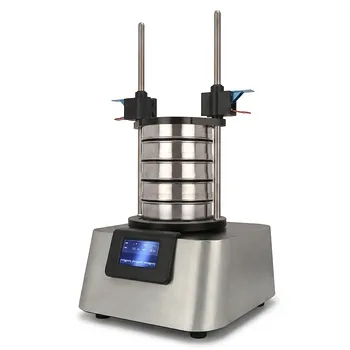
Vibratory Sieve Shaker Electromagnetic 3D Motion Powder Particle Size Analyzer for Dry and Wet Sieving
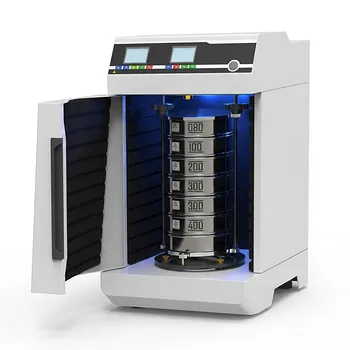
Laboratory Dry and Wet Three Dimensional Vibratory Sieve Shaker for Particle Analysis
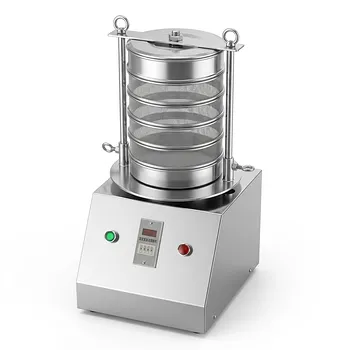
Stainless Steel Laboratory Vibratory Test Sieve Shaker
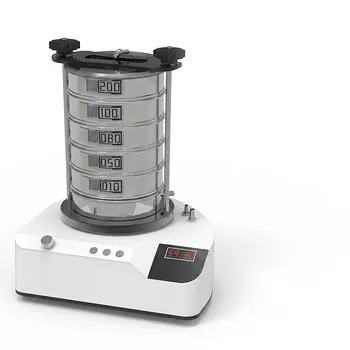
Heavy Duty Dry Three Dimensional Vibratory Sieve Shaker for Particle Separation
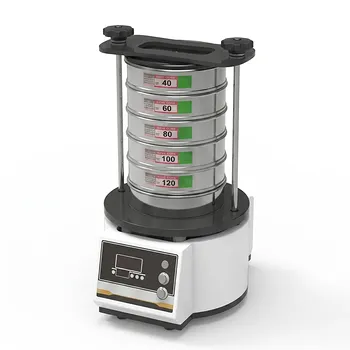
Dry Three Dimensional Vibratory Sieve Shaker
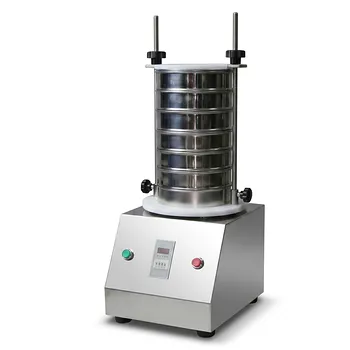
Small Laboratory Vibratory Sieve Shaker for Powder Gradation and Particle Size Analysis
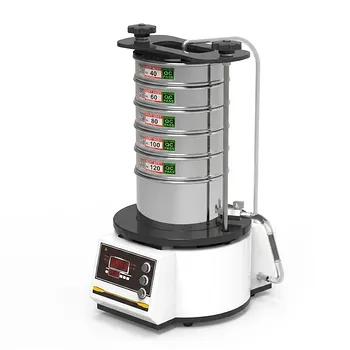
High Frequency Wet Three-Dimensional Vibrating Sieve Shaker for Dry and Wet Particle Size Analysis
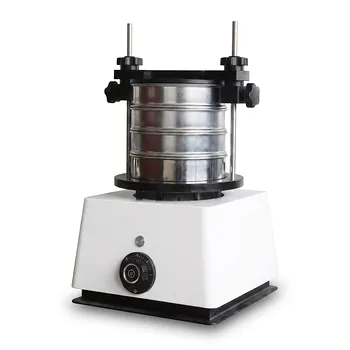
Small Laboratory Vibrating Sieve Shaker for Precise Particle Size Analysis
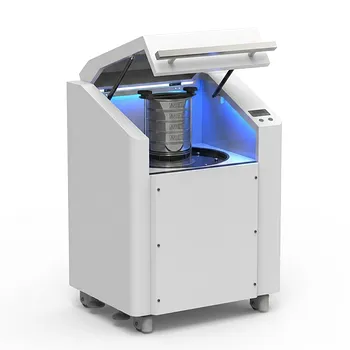
High Frequency Cabinet Type Three-Dimensional Rotary Vibrating Sieve Shaker for Dry Sieving and Particle Classification
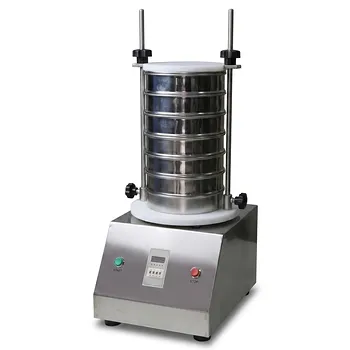
Laboratory Vibratory Test Sieve Shaker for Precision Particle Size Analysis and Powder Grading
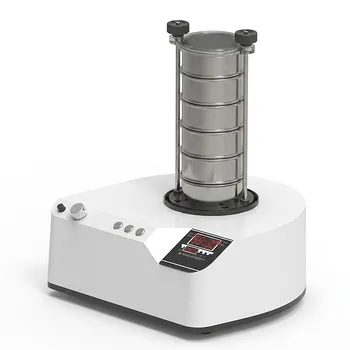
三维电磁微量振动筛分仪
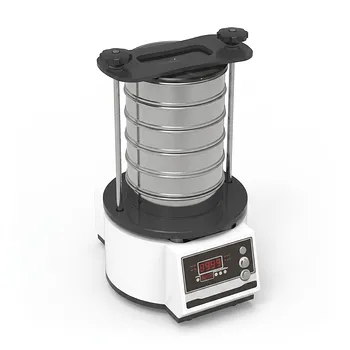
Tapping Oscillating Sieve Shaker for Dry and Wet Particle Size Analysis
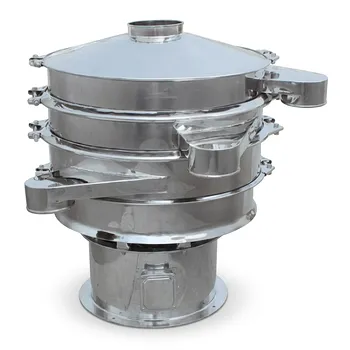
Stainless Steel Rotary Vibrating Sieve High Precision Circular Vibratory Separator Industrial Powder Grading Machine Multi Layer Sifting Equipment
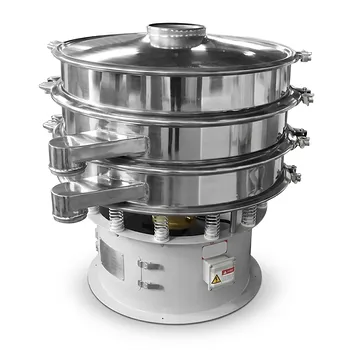
Three Dimensional Rotary Vibrating Sieve
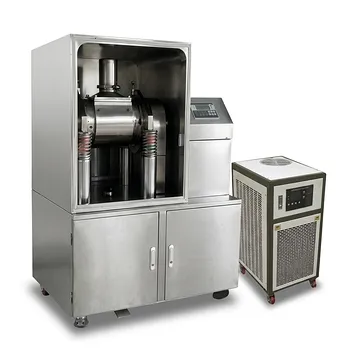
Small Vibrating Ultrafine Grinder for Traditional Chinese Medicine
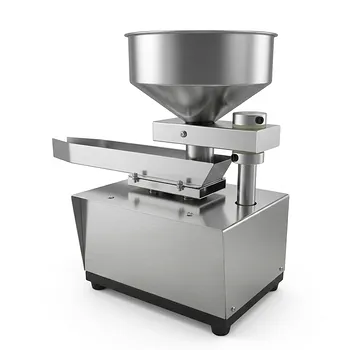
Automatic Vibrating Powder Feeder for Laboratory Material Processing Precision Vibratory Hopper Feeder for Granular and Powder Material Handling Industrial Grade Vibrating Tray Feeder for Consistent Material Sample Preparation
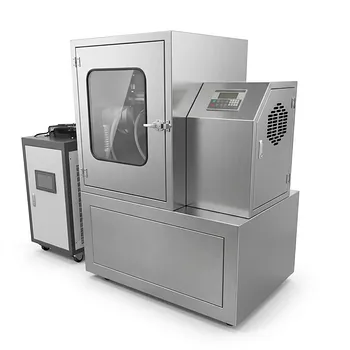
Vibratory Superfine Grinder for Ultra Fine Laboratory Powder Milling
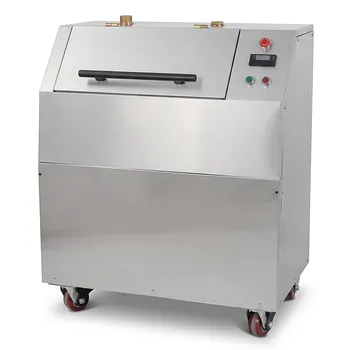
Vibratory Disc Mill for Rapid Fine Grinding and High Throughput Sample Preparation of Hard and Brittle Materials