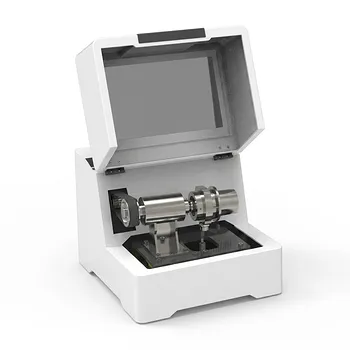
What is the role of the high-energy planetary ball mill in HfB2-SiC prep? Achieve Homogeneity & Mechanical Activation
Updated 4 months ago
The high-energy planetary ball mill is the primary mechanism for microstructural refinement and mechanical activation in the preparation of HfB2-SiC composite powders. It utilizes high-speed rotation to generate intense impact and shear forces that ensure a highly uniform distribution of SiC particles within the hard HfB2 matrix. This process simultaneously reduces particle size and increases the powder's specific surface area, which is critical for achieving high densification during subsequent sintering.
The core role of high-energy planetary ball milling is to transform raw material powders into a highly reactive, homogeneous precursor. By combining physical refinement with mechanical activation, the mill provides the necessary thermodynamic driving force for effective consolidation and structural consistency in the final ceramic.
Achieving Microstructural Homogeneity
Uniform Particle Distribution
The high-speed rotation of the mill—often operating at speeds such as 300 rpm—generates powerful centrifugal and impact forces. These forces ensure that the second-phase SiC particles are deeply and uniformly mixed within the HfB2 matrix at the micrometer or molecular scale.
Breaking Particle Agglomerates
Raw powders often suffer from natural agglomeration, which can lead to defects in the final ceramic structure. High-energy milling effectively breaks down these clusters, ensuring each individual particle is available for reaction and bonding.
Spatial Distribution of Reinforcements
In composite systems, the spatial arrangement of the reinforcement phase is vital for performance. The mechanical impact and friction embed fine particles onto the surfaces of larger matrix powders, creating a superior spatial distribution that prevents localized weak points.
Enhancing Material Reactivity through Mechanical Activation
Increasing Specific Surface Area
As the mill refines the powder to ultra-fine dimensions, the specific surface area increases significantly. A higher surface area provides more contact points for reactions, which is a prerequisite for efficient sintering and alloying.
Lattice Distortion and Energy Storage
Beyond simple size reduction, the high-frequency collisions induce lattice distortion and increase the surface energy of the powder. This "mechanical alloying" stores energy within the material, effectively making the particles more chemically reactive.
Improving Reaction Kinetics
By increasing the contact area and internal energy, the milling process provides ideal reaction kinetics. This is particularly important for processes like Self-propagating High-temperature Synthesis (SHS) or carbothermal reduction, where the mill lowers the required starting temperature.
Understanding Technical Trade-offs and Limitations
Risk of Material Contamination
The intense friction and impact between the grinding balls, the vial, and the powder can lead to media wear. This often introduces impurities from the grinding balls (such as WC or ZrO2) into the HfB2-SiC mixture, potentially degrading the material's high-temperature properties.
Heat Generation and Phase Changes
High-energy milling generates significant internal heat, which can lead to unwanted phase transformations or oxidation if not carefully managed. Specialized cooling cycles or inert gas atmospheres are often required to maintain the chemical integrity of the HfB2 and SiC components.
Energy Efficiency and Scalability
While highly effective for laboratory-scale refinement, high-energy planetary milling is energy-intensive. Achieving the necessary level of refinement requires long milling durations, which may pose challenges for large-scale industrial production.
Optimizing Your Milling Strategy
Effective powder preparation requires balancing the energy input with the desired final characteristics of the HfB2-SiC composite.
- If your primary focus is Maximum Densification: Prioritize longer milling times or higher RPMs to maximize specific surface area and mechanical activation, providing a higher driving force for sintering.
- If your primary focus is Chemical Purity: Use grinding media made of the same material as your matrix (if possible) and utilize lower speeds to minimize contamination from vial wear.
- If your primary focus is Structural Consistency: Ensure a high ball-to-powder weight ratio to facilitate deep, uniform mixing and prevent the survival of raw material agglomerates.
By precisely controlling the milling parameters, researchers can tailor the precursor powder to ensure the final HfB2-SiC ceramic achieves its full potential in extreme environments.
Summary Table:
| Key Role | Technical Mechanism | Impact on HfB2-SiC Composite |
|---|---|---|
| Microstructural Refinement | High-speed impact and shear forces | Reduces particle size and breaks agglomerates for high densification. |
| Mechanical Activation | Lattice distortion and surface energy storage | Increases chemical reactivity and improves sintering kinetics. |
| Homogeneous Mixing | Centrifugal force distribution | Ensures uniform SiC dispersion within the HfB2 matrix at the micro-scale. |
| Surface Engineering | Increased specific surface area | Provides more contact points for effective bonding and alloying. |
Elevate Your Material Synthesis with Precision Milling Solutions
Achieving the perfect HfB2-SiC composite requires more than just mixing; it demands precision-engineered equipment that balances energy input with material purity. At [Brand Name], we provide complete laboratory sample preparation solutions tailored for advanced material science.
Whether you need to achieve ultra-fine refinement with our High-Energy Planetary Ball Mills, ensure void-free consolidation with our Cold/Warm Isostatic Presses (CIP/WIP), or master complex blending with our powder and defoaming mixers, our equipment is designed to meet the rigorous standards of your lab.
Our specialized lineup includes:
- Milling: Planetary ball, jet, and cryogenic grinders for superior particle size control.
- Pressing: Standard lab presses, XRF pellet presses, and vacuum hot presses for high-density ceramics.
- Processing: Jaw/roll crushers and vibratory sieve shakers for comprehensive powder management.
Ready to optimize your powder processing workflow? Contact our technical experts today to find the ideal solution for your specific application requirements!
References
- M. Sakvand, Leila Nikzad. Effect of Graphite Addition on the Microstructure, Mechanical Properties and Oxidation Resistance of HfB2-SiC Composites Prepared by the SPS Method. DOI: 10.5829/ije.2022.35.10a.06
Mentioned Products
- High Energy Planetary Ball Mill for Nano Scale Grinding and Mechanical Alloying
- High Energy Omnidirectional Planetary Ball Mill 16L
- High Energy Laboratory Planetary Ball Mill for Nano Grinding and Colloidal Mixing of Hard and Brittle Materials
- High Energy Omnidirectional Planetary Ball Mill 20L
- High Energy Planetary Ball Mill for Nano Scale Grinding and Colloidal Mixing in Material Science Research
People Also Ask
- Why is a high-energy planetary ball mill used for nano-milling As4Se3? Achieve Expert Structural Transformation
- What role do high-energy planetary ball mills play in FDM composite filament preparation? Optimize Material Performance
- What is the role of a high-energy planetary ball mill in the exfoliation of modified WSe2? Achieve Nano-Precision
- What is the function of a planetary ball mill in glass-ceramic sintering? Optimize Reactivity and Uniformity
- What is the role of a high-energy planetary ball mill in the preparation of high-performance nano-ceramics? Key Guide

Tech Team · PowderPreparation
Last updated on Jun 03, 2026
Related Products

High Energy Planetary Ball Mill for Nano Scale Grinding and Mechanical Alloying
High Energy Omnidirectional Planetary Ball Mill 16L
High Energy Laboratory Planetary Ball Mill for Nano Grinding and Colloidal Mixing of Hard and Brittle Materials
High Energy Omnidirectional Planetary Ball Mill 20L
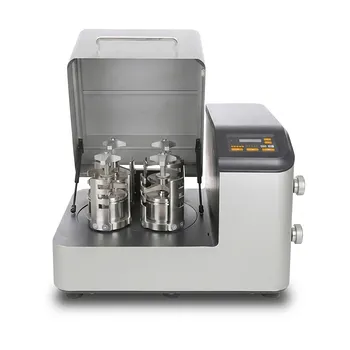
High Energy Planetary Ball Mill for Nano Scale Grinding and Colloidal Mixing in Material Science Research

High Energy Laboratory Planetary Ball Mill for Nano Grinding and Material Science Sample Preparation

8L Planetary Ball Mill for Laboratory Grinding and Sample Preparation
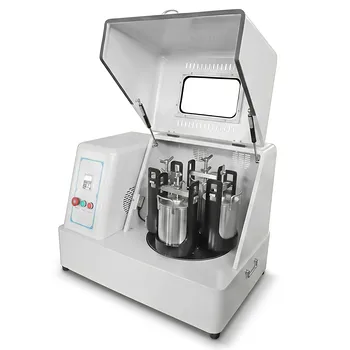
Vertical Square Planetary Ball Mill for Laboratory Sample Preparation and Nanoscale Grinding
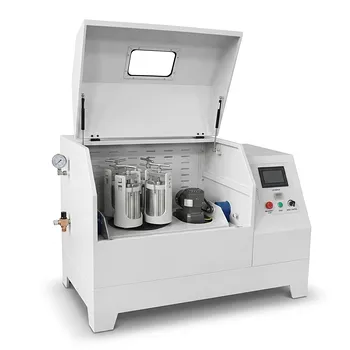
Vertical Production Planetary Ball Mill for High Throughput Powder Processing

Miniature Planetary Ball Mill with Vacuum Grinding and High Efficiency for Laboratory Sample Preparation
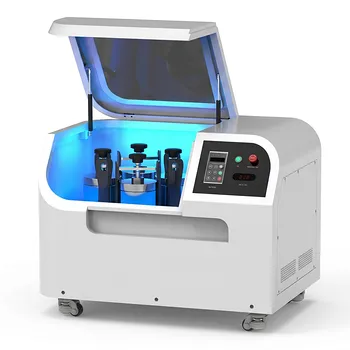
Planetary Ball Mill 12L
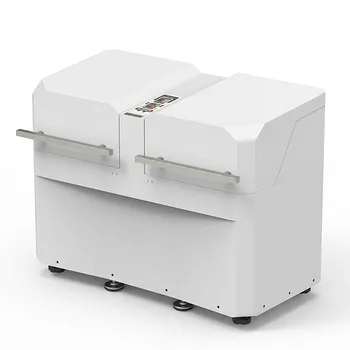
Dual Station Planetary Ball Mill 24L
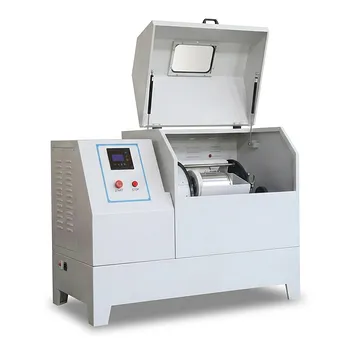
Heavy Duty Horizontal Planetary Ball Mill for Efficient Industrial Grinding and Sample Preparation

Multi-Platform Nanoscale High-Energy Vibratory Ball Mill
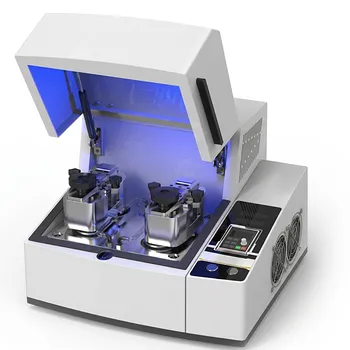
Laboratory Nano High Energy Ball Mill Ultrafine Grinding Mechanical Alloying

High Energy Hybrid Vibratory Ball Mill for Grinding Mixing and Cell Disruption

Nano High Energy Vibratory Ball Mill with Heating and Temperature Control

Nanoscale High-Energy Vibratory Ball Mill for Laboratory Sample Preparation, Mechanochemistry, and Mechanical Alloying

Nano High Energy Vibratory Ball Mill for Laboratory Sample Preparation