What is the role of precision test sieves in the particle size analysis of well-graded granular materials? Key Insights
Updated 5 months ago
Precision test sieves are the primary instruments used to determine the particle size distribution (PSD) of well-graded granular materials. By passing a sample through a stack of graduated apertures—typically ranging from 4.75 mm down to 0.075 mm—they allow for the precise measurement of mass percentages within specific size fractions. This data is fundamental for calculating the Coefficient of Uniformity (Cu) and the Coefficient of Curvature (Cc), the two essential metrics used to classify materials as well-graded.
Core Takeaway: Precision test sieves act as the definitive separation interface, transforming a mixed granular sample into a quantifiable dataset. This process is the prerequisite for optimizing material packing density, ensuring structural integrity in construction, and validating industrial processing efficiency.
The Mechanics of Size Separation
Defining the Particle Size Distribution
The core role of precision sieves is to mechanically separate a soil or aggregate sample into discrete mass fractions. By using a series of sieves with varying aperture sizes, analysts can plot a distribution curve that reveals the "grading" of the material.
Physical Interception and Classification
Sieves function through physical interception, where particles contact the screening surface and are divided into oversized and undersized products. This process ensures that particles are extracted within specific, repeatable ranges, which is vital for maintaining the accuracy of statistical parameters like mean grain size.
Establishing the Separation Interface
In laboratory settings, these sieves serve as the fundamental tool for determining material balances. By stacking sieves from largest to smallest aperture, technicians can ensure that even complex matrices are divided into their base components, such as macro-aggregates and micro-aggregates.
Evaluating Engineering and Material Performance
Calculating Grading Coefficients
For a material to be classified as "well-graded," it must contain a wide range of particle sizes. Data from precision sieves allows engineers to calculate the Cu and Cc, ensuring the material meets the specific grading envelopes required for engineering stability.
Optimizing Packing Density
In applications like concrete production or pavement brick manufacturing, well-graded materials are preferred because they maximize packing density. Precision sieves ensure that finer particles fill the voids between larger aggregates, which significantly reduces porosity and enhances the mechanical strength of the final product.
Benchmarking and Quality Control
Precision test sieves provide the "gold standard" data used to validate newer technologies, such as image analysis software. Because the physical mesh is a constant reference, it remains the core method for assessing the degree of mineral liberation in processing and ensuring compliance with international standards like BS EN 882.
Understanding the Trade-offs and Limitations
Morphological Sensitivity
Standard sieving classifies particles based on their smallest cross-section, which can be misleading for elongated or flaky particles. If a particle is long but thin, it may pass through a mesh that does not truly represent its volume, potentially skewing the gradation data.
Mesh Integrity and Wear
The accuracy of the analysis is entirely dependent on the geometric precision of the mesh. Over time, intense vibration during dry sieving or corrosion during wet sieving can deform aperture shapes, leading to "oversize" leakage and compromised repeatability.
Human and Procedural Error
Sieving is a time-dependent process; if a sample is not agitated for long enough, the "near-mesh" particles may not have sufficient opportunity to pass through. Conversely, excessive sieving time can lead to particle attrition, where fragile materials break down into smaller fractions that were not present in the original sample.
How to Apply This to Your Project
Making the Right Choice for Your Goal
- If your primary focus is structural engineering and soil stability: Use a full stack of sieves from 4.75 mm to 0.075 mm to calculate Cu and Cc, ensuring your fill material will achieve maximum compaction.
- If your primary focus is concrete or geopolymer manufacturing: Prioritize high-precision sieves to control the fine aggregate fraction (e.g., 0.3 to 0.6 mm) to optimize the pore structure and macro-mechanical properties.
- If your primary focus is mineral processing or mining: Use precision sieving as a benchmark to calibrate your automated image analysis systems and determine the efficiency of your crushing and milling circuits.
- If your primary focus is environmental or sediment research: Utilize corrosion-resistant, high-quality sieves for wet sieving to ensure that delicate sediment aggregates are separated without deforming the mesh or the sample.
By standardizing your particle size analysis through precision sieving, you ensure that your materials meet the rigorous technical requirements necessary for safety, durability, and performance.
Summary Table:
| Feature | Role in Particle Size Analysis |
|---|---|
| Primary Function | Mechanical separation of samples into discrete mass fractions |
| Key Parameters | Determines Coefficient of Uniformity (Cu) and Curvature (Cc) |
| Core Objective | Establishes Particle Size Distribution (PSD) for grading |
| Performance Goal | Optimizes packing density and reduces porosity in materials |
| Quality Standard | Acts as the benchmark for validating automated image analysis |
Optimize Your Material Analysis with Expert Solutions
Precision in particle size analysis is the foundation of material integrity. At [Brand Name], we provide complete laboratory sample preparation solutions tailored for material science. Whether you are analyzing soil stability or optimizing concrete mixes, our specialized equipment ensures repeatable, high-accuracy results.
Our extensive product line includes:
- Sieving & Analysis: High-precision vibratory/air-jet sieve shakers and a wide range of test sieves.
- Powder Processing: Advanced crushers (jaw/roll), liquid nitrogen cryogenic grinders, and various mills (planetary ball, jet, disc, rotor).
- Compaction & Pressing: A full spectrum of hydraulic presses, including Cold/Warm Isostatic Presses (CIP/WIP), XRF pellet presses, and vacuum hot presses.
- Mixing: High-efficiency powder mixers and defoaming mixers.
Ready to enhance your lab's efficiency and data accuracy? Contact our technical team today to find the perfect equipment configuration for your specific application!
References
- Dalvir Singh, Santosh Kumar. Moisture Effects on Load-Penetration and Compaction Behavior of Well-Graded Granular Materials. DOI: 10.61552/jme.2025.01.006
Mentioned Products
- Laboratory Vibratory Test Sieve Shaker for Precision Particle Size Analysis and Powder Grading
- Small Laboratory Vibrating Sieve Shaker for Precise Particle Size Analysis
- Stainless Steel Rotary Vibrating Sieve High Precision Circular Vibratory Separator Industrial Powder Grading Machine Multi Layer Sifting Equipment
- 三维电磁微量振动筛分仪
- Small Laboratory Vibratory Sieve Shaker for Powder Gradation and Particle Size Analysis
People Also Ask
- What role does a laboratory sieve shaker play in determining PDI? Achieve Precision in Biomass Quality Testing
- What are the functions of sieve shakers for coconut shell powder? Achieve Precise Particle Size & Quality Control.
- What function does a laboratory sieve shaker perform in the PSD analysis of residual soil? Ensure Precise Grading
- What is the role of a laboratory sieve shaker in the preparation of plantain peel adsorbents? Standardize Particle Size
- What is the function of a laboratory vibratory sieve shaker? Enhance Coal Particle Size Distribution (PSD) Analysis

Tech Team · PowderPreparation
Last updated on May 14, 2026
Related Products
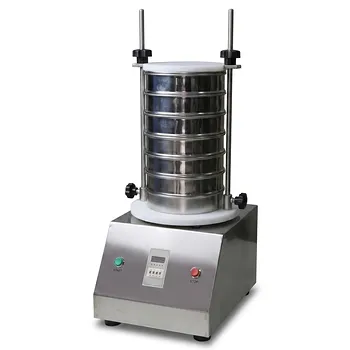
Laboratory Vibratory Test Sieve Shaker for Precision Particle Size Analysis and Powder Grading
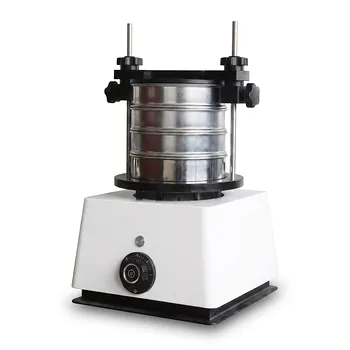
Small Laboratory Vibrating Sieve Shaker for Precise Particle Size Analysis
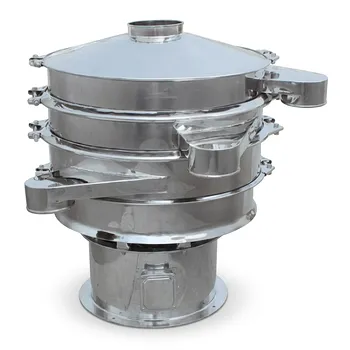
Stainless Steel Rotary Vibrating Sieve High Precision Circular Vibratory Separator Industrial Powder Grading Machine Multi Layer Sifting Equipment
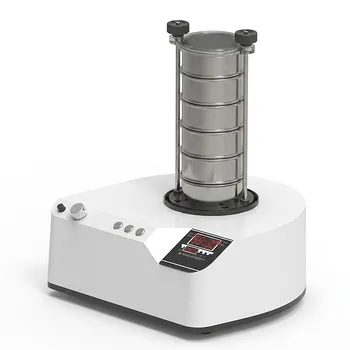
三维电磁微量振动筛分仪
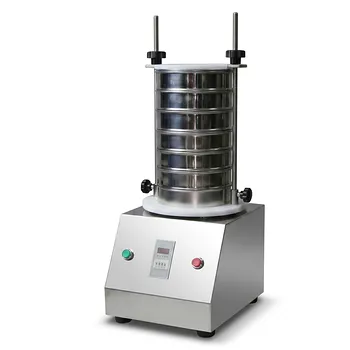
Small Laboratory Vibratory Sieve Shaker for Powder Gradation and Particle Size Analysis
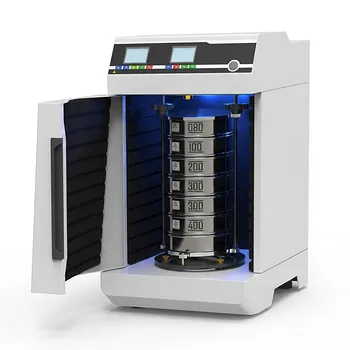
Laboratory Dry and Wet Three Dimensional Vibratory Sieve Shaker for Particle Analysis
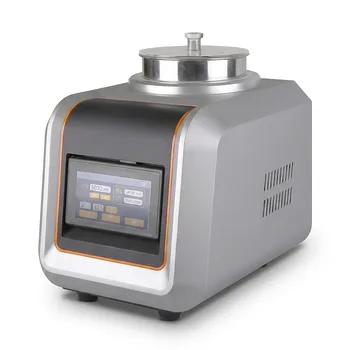
Laboratory Air Jet Sieving Machine for Fine Powder Particle Size Analysis and Deagglomeration
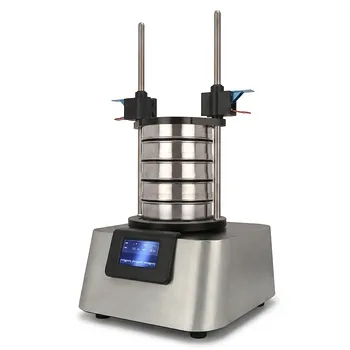
Vibratory Sieve Shaker Electromagnetic 3D Motion Powder Particle Size Analyzer for Dry and Wet Sieving
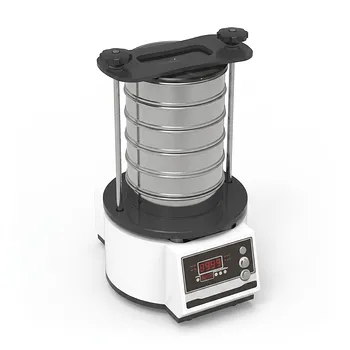
Tapping Oscillating Sieve Shaker for Dry and Wet Particle Size Analysis
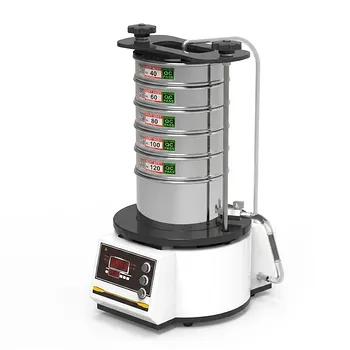
High Frequency Wet Three-Dimensional Vibrating Sieve Shaker for Dry and Wet Particle Size Analysis
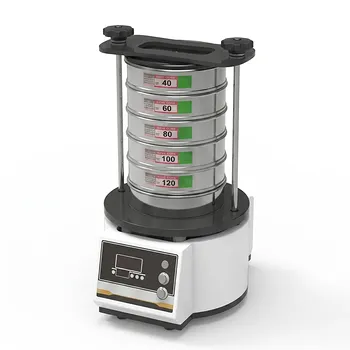
Dry Three Dimensional Vibratory Sieve Shaker
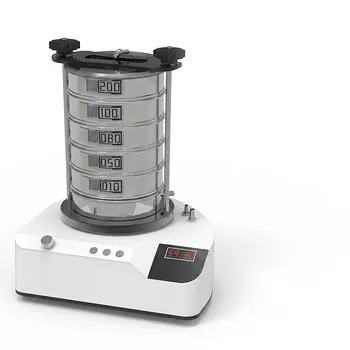
Heavy Duty Dry Three Dimensional Vibratory Sieve Shaker for Particle Separation
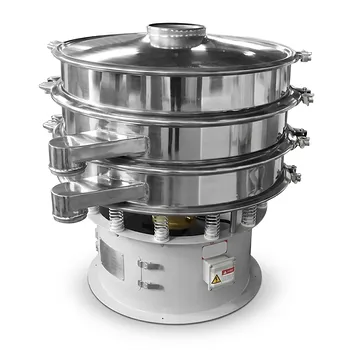
Three Dimensional Rotary Vibrating Sieve
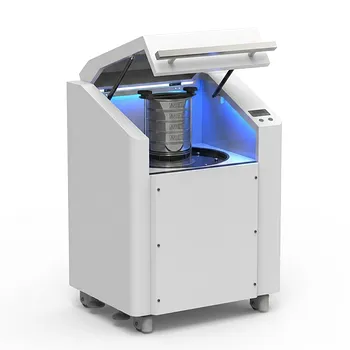
High Frequency Cabinet Type Three-Dimensional Rotary Vibrating Sieve Shaker for Dry Sieving and Particle Classification
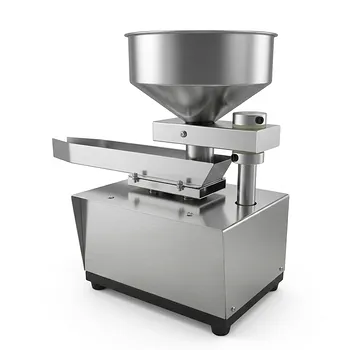
Automatic Vibrating Powder Feeder for Laboratory Material Processing Precision Vibratory Hopper Feeder for Granular and Powder Material Handling Industrial Grade Vibrating Tray Feeder for Consistent Material Sample Preparation
Small High-Speed Laboratory Grinder for Rapid Sample Preparation