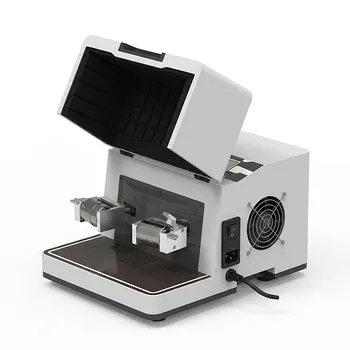
What is the role of a planetary ball mill in the synthesis of biomass-based CaO catalysts? Maximize Surface Activity
Updated 5 months ago
The planetary ball mill serves as the primary high-energy processing unit for transforming raw biomass precursors into high-performance calcium oxide (CaO) catalysts. It achieves this by reducing dried raw materials, such as eggshells, into a fine powder with a strictly uniform particle size distribution. This mechanical transformation is essential for maximizing the specific surface area and catalytic activity required for industrial applications like biodiesel production.
A planetary ball mill facilitates the transition from inert biomass waste to an active catalyst by combining extreme particle size reduction with mechanical activation. This process optimizes the surface-to-volume ratio and ensures the microscopic homogeneity necessary for efficient chemical reactions.
Mechanical Comminution and Surface Area
Maximizing the Active Interface
The planetary ball mill uses high-speed rotation to generate intense impact and shear forces. These forces break down large biomass structures, such as calcined shells, into micron or sub-micron particles.
This drastic reduction in particle size significantly increases the specific surface area of the CaO. A higher surface area provides more available active sites for reactants, which directly translates to higher efficiency during the transesterification process.
Achieving Uniform Particle Distribution
Unlike standard grinding, planetary milling ensures a uniform particle size distribution. Consistency is critical because it prevents localized variations in reaction rates within a reactor.
A uniform powder ensures that the subsequent thermal treatment (calcination) affects all particles equally. This leads to a more predictable and stable catalytic performance in the final product.
Mechanical Activation and Structural Defects
Inducing Surface Defects
High-energy milling does more than just break particles; it introduces microscopic stress and structural defects into the crystal lattice. These defects can act as additional anchoring sites or active centers for chemical reactions.
By breaking original chemical bonds, the mill performs mechanical activation. This process lowers the energy barrier for subsequent chemical transitions, making the catalyst more reactive even at lower operating temperatures.
Enhancing Solid-State Reactivity
In catalyst synthesis involving multiple components, the mill achieves mechanical alloying or forced mixing at the molecular level. This creates a high-density reaction interface between different phases.
This level of mixing is a prerequisite for forming complex structures, such as high-entropy ceramics or multi-metal supported catalysts. It ensures that active components are highly dispersed across the CaO carrier.
Understanding the Trade-offs and Pitfalls
Material Contamination
The high-energy nature of planetary milling can lead to media wear, where small amounts of the grinding jars or balls (e.g., zirconia or stainless steel) contaminate the catalyst. This can alter the chemical purity and unintendedly poison the active sites of the CaO.
Heat Generation and Phase Changes
Intense friction within the milling jars generates significant thermal energy. If not managed through interval cooling, this heat can cause premature phase transitions or the agglomeration of fine powders, effectively reversing the benefits of the milling.
Energy Consumption vs. Yield
Planary ball milling is an energy-intensive process. While longer milling times generally produce finer particles, there is a point of diminishing returns where the energy cost outweighs the marginal gains in catalytic activity.
How to Apply This to Your Synthesis Project
When integrating a planetary ball mill into your biomass-based catalyst production, your approach should vary based on your specific performance requirements.
- If your primary focus is Maximum Catalytic Activity: Prioritize higher rotation speeds and longer milling times to maximize surface area and induce structural defects, while using cooling cycles to prevent particle fusion.
- If your primary focus is High-Purity Catalyst Production: Select grinding media (such as agate or high-purity alumina) that match the hardness of your biomass precursor to minimize elemental contamination from the equipment.
- If your primary focus is Scalable Industrial Efficiency: Optimize the ball-to-powder ratio to achieve the desired micron-level uniformity in the shortest possible timeframe, reducing total energy expenditure per kilogram.
Properly calibrated mechanical milling transforms raw waste into a precision-engineered tool for sustainable chemical synthesis.
Summary Table:
| Key Role | Impact on CaO Catalyst | Technical Benefit |
|---|---|---|
| Mechanical Comminution | Drastic particle size reduction | Increases specific surface area for higher efficiency |
| Particle Uniformity | Consistent distribution | Ensures predictable catalytic performance and stability |
| Mechanical Activation | Induces lattice defects | Lowers reaction energy barriers for higher reactivity |
| Phase Dispersion | Molecular-level mixing | Facilitates high-density reaction interfaces |
| Thermal Management | Prevents agglomeration | Maintains fine powder structure through cooling cycles |
Power Your Catalyst Research with Precision Engineering
At [Your Brand Name], we provide complete laboratory sample preparation solutions tailored for advanced material science. Transforming raw biomass into high-performance CaO catalysts requires the right balance of energy and precision. Our specialized planetary ball mills, jet mills, and rotor mills are designed to achieve the sub-micron uniformity your research demands.
Beyond milling, we offer a full spectrum of powder processing and compaction equipment, including:
- Crushing & Grinding: High-energy jaw/roll crushers and liquid nitrogen cryogenic grinders.
- Sizing & Mixing: Vibratory/air-jet sieve shakers and high-efficiency powder/defoaming mixers.
- Compaction Solutions: A complete range of hydraulic presses, including Cold/Warm Isostatic Presses (CIP/WIP), vacuum hot presses, and XRF pellet presses.
Whether you are a researcher optimizing biodiesel yields or a distributor seeking reliable laboratory equipment, we bring the expertise to enhance your material performance.
Ready to elevate your powder processing workflow? Contact us today for a tailored consultation!
References
- Krishnamoorthy Ramalingam, Bai Yuqi. An evaluation of maximizing production and usage of biofuel by machine learning and experimental approach. DOI: 10.1038/s41598-025-18757-6
Mentioned Products
- Vertical Semi Circular Planetary Ball Mill for Laboratory Precision Grinding
- High Energy Planetary Ball Mill for Nano Scale Grinding and Mechanical Alloying
- Heavy Duty Horizontal Planetary Ball Mill for Efficient Industrial Grinding and Sample Preparation
- Vertical Production Planetary Ball Mill for High Throughput Powder Processing
- 360° Rotating Omnidirectional Laboratory Planetary Ball Mill for Homogeneous Ultra-Fine Grinding and Mixing
People Also Ask
- What role does a planetary ball mill play in the synthesis of Li6PS5Cl (LPSCl)? Unlock High Ionic Conductivity
- Why is a planetary ball mill essential for SiBCN-rGO wet-spinning? Achieve Superior Dispersion and Spinnability
- Why is an intermittent grinding process required for perovskites in a planetary ball mill? Ensure Stability & Purity
- Why is a planetary ball mill required for PET micronization? Ensure Accurate Chemical Analysis of Reprocessed PET
- How does mechanized planetary ball milling compare to manual agate grinding? Optimize sulfide standard material precision.

Tech Team · PowderPreparation
Last updated on May 14, 2026
Related Products
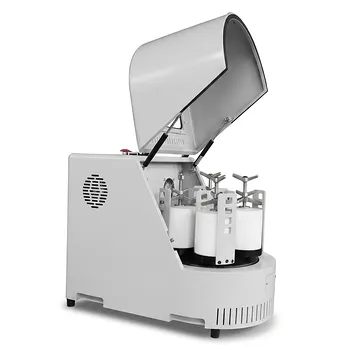
Vertical Semi Circular Planetary Ball Mill for Laboratory Precision Grinding
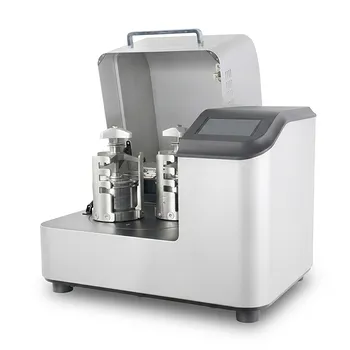
High Energy Planetary Ball Mill for Nano Scale Grinding and Mechanical Alloying
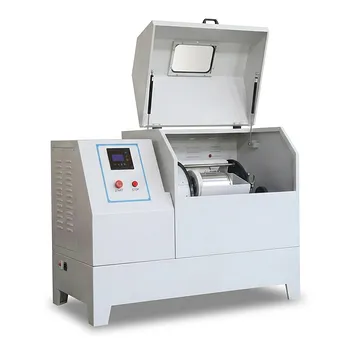
Heavy Duty Horizontal Planetary Ball Mill for Efficient Industrial Grinding and Sample Preparation
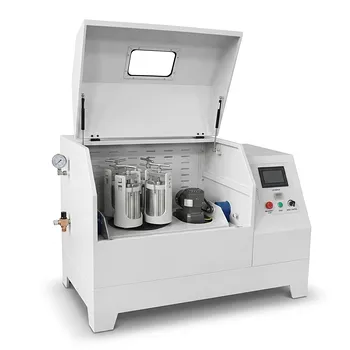
Vertical Production Planetary Ball Mill for High Throughput Powder Processing
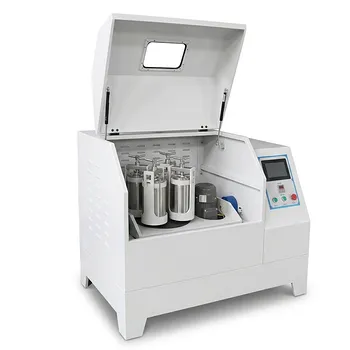
360° Rotating Omnidirectional Laboratory Planetary Ball Mill for Homogeneous Ultra-Fine Grinding and Mixing
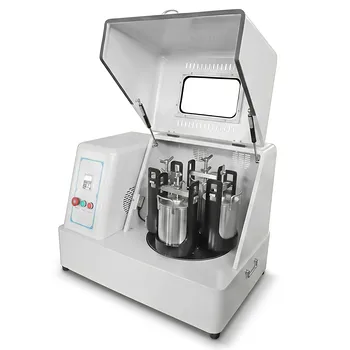
Vertical Square Planetary Ball Mill for Laboratory Sample Preparation and Nanoscale Grinding
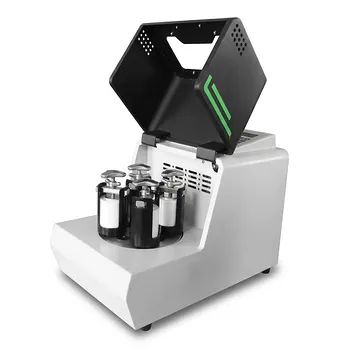
Miniature Planetary Ball Mill with Vacuum Grinding and High Efficiency for Laboratory Sample Preparation
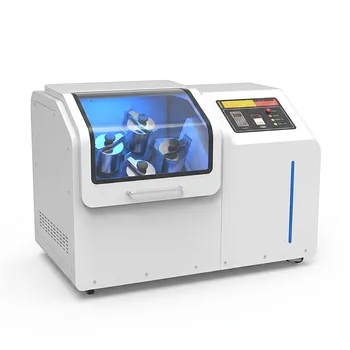
High Energy Omnidirectional Planetary Ball Mill 16L
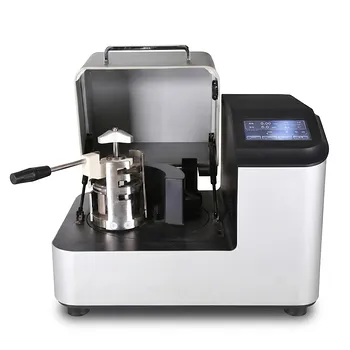
High Energy Laboratory Planetary Ball Mill for Nano Grinding and Material Science Sample Preparation
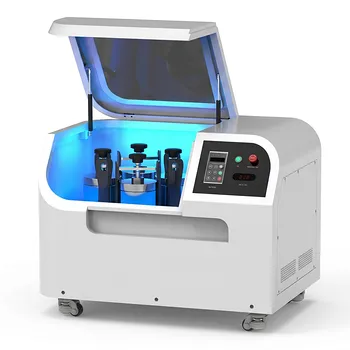
Planetary Ball Mill 12L
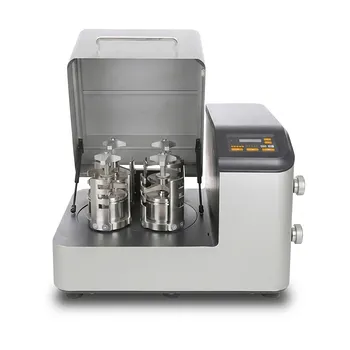
High Energy Planetary Ball Mill for Nano Scale Grinding and Colloidal Mixing in Material Science Research
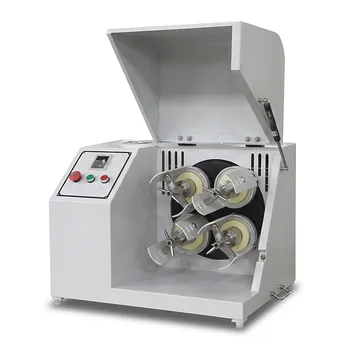
Horizontal Light Duty Planetary Ball Mill for Laboratory Sample Preparation
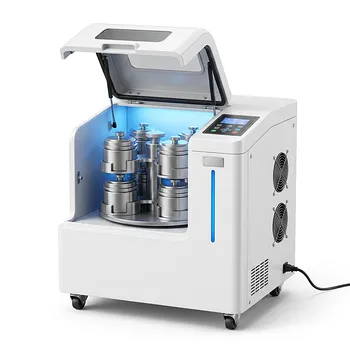
High Energy Omnidirectional Planetary Ball Mill 20L
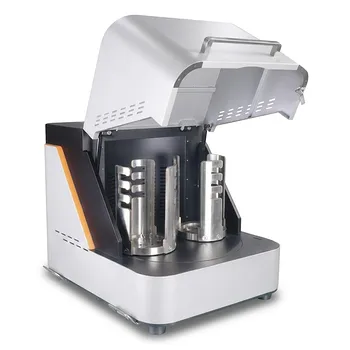
High Energy Laboratory Planetary Ball Mill for Nano Grinding and Colloidal Mixing of Hard and Brittle Materials
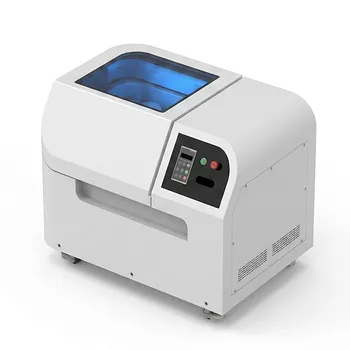
8L Planetary Ball Mill for Laboratory Grinding and Sample Preparation
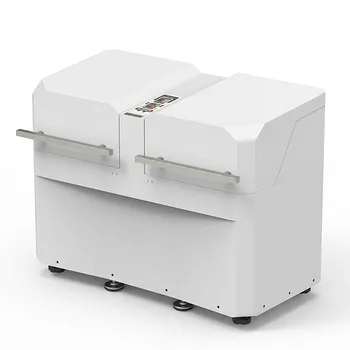
Dual Station Planetary Ball Mill 24L
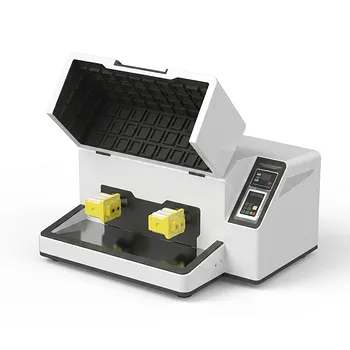
Multi-Platform Nanoscale High-Energy Vibratory Ball Mill

Nano High Energy Vibratory Ball Mill for Laboratory Sample Preparation
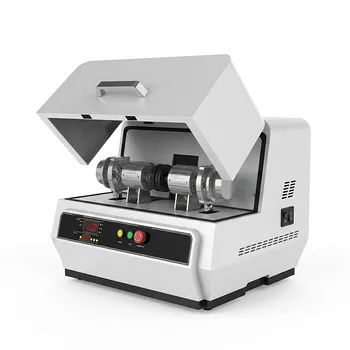
Dual Jar High Energy Vibratory Ball Mill