What is the role of a planetary ball mill in the preparation of surface-modified aluminum flake fillers? Expert Guide
Updated 4 months ago
The planetary ball mill is the primary engine for the structural and chemical transformation of aluminum powder into high-performance flakes. By leveraging high-energy impact and shear forces, this equipment flattens irregular aluminum particles into high-aspect-ratio flakes while simultaneously facilitating the mechanical coating of surface modifiers like stearic acid. This dual-action process is critical for enhancing the material's polarization capability, insulation, and hydrophobicity within polymer matrices.
The role of a planetary ball mill extends beyond simple grinding; it is a mechanochemical tool that simultaneously reshapes aluminum geometry and anchors functional coatings. By precisely controlling mechanical energy, it creates specialized fillers that offer superior dispersion and reactivity.
Geometric Transformation and Aspect Ratio
Physical Deformation of Primary Powder
The high-speed rotation of the planetary ball mill generates intense kinetic energy transferred through grinding media. This energy physically deforms irregular primary aluminum powder, flattening it into a flake structure. The result is a material with a significantly higher aspect ratio, which is essential for creating overlapping conductive or reflective paths in composites.
Enhancing Polarization and Dielectric Properties
The transition from powder to flake geometry directly impacts how the filler behaves in a resin. Increased surface area and the specific flake morphology enhance the polarization capability of the aluminum within epoxy resins. This geometric optimization is a prerequisite for achieving the desired electromagnetic or thermal properties in functional materials.
Surface Modification and Mechanochemical Coating
Facilitating the Coating Process
As the aluminum particles are being reshaped, the mill facilitates the uniform application of modifying agents. For example, it drives the coating of stearic acid onto the aluminum surface through repeated contact. This ensures the flakes possess the necessary insulation and hydrophobicity required for stable performance in organic matrices.
Mechanical Activation and Oxide Disruption
The high-frequency impacts mechanically tear and disrupt the natural alumina layer that resides on the surface of aluminum particles. This disruption exposes "active" aluminum, allowing for stronger bonds with surface modifiers. Furthermore, the process introduces lattice distortions, which significantly increase the chemical reactivity and surface energy of the modified flakes.
Homogenization and Dispersion
Breaking Nanoparticle Agglomeration
In cases where secondary reinforcements (like nano-zirconia or iron oxide) are added, the mill is used to break down nanoparticle agglomeration. The shear forces ensure that these reinforcing phases are distributed uniformly across the aluminum surface. This prevents the formation of "clumps" that could otherwise act as structural weak points in the final product.
Achieving Microscopic Uniformity
The planetary motion ensures that every particle is subjected to the same level of energy, leading to a highly homogeneous powder. This uniformity ensures that the surface modification is consistent across the entire batch. Such consistency is vital for ensuring isotropic mechanical properties and predictable performance in downstream applications.
Understanding the Trade-offs
The Risk of Cold Welding
While the goal is to fracture and shape the powder, excessive energy can lead to cold welding. In this scenario, particles fuse back together instead of refining, which can result in undesirable grain growth or oversized flakes. Careful selection of milling time and the use of process control agents (like lubricants) are necessary to balance fracturing and welding.
Thermal Sensitivity and Material Degradation
High-energy milling generates significant heat, which can lead to the premature oxidation of the aluminum if not managed. Excessive heat can also degrade organic surface modifiers like stearic acid, stripping away the intended insulation. Using "wet grinding" techniques or liquid plasticizers is often required to dissipate heat and protect the chemical integrity of the coating.
How to Apply This to Your Project
When utilizing a planetary ball mill for aluminum flake preparation, your process parameters should align with your specific performance requirements.
- If your primary focus is dielectric performance: Prioritize longer milling times at moderate speeds to maximize the aspect ratio and ensure a dense, insulating stearic acid coating.
- If your primary focus is chemical reactivity: Focus on dry grinding at high speeds to maximize lattice distortion and oxide layer disruption, accepting a potentially lower aspect ratio.
- If your primary focus is structural reinforcement: Utilize a "wet" milling process to maintain grain refinement and prevent cold welding, ensuring a uniform distribution of reinforcement phases.
Successful surface modification is the result of balancing the aggressive physical deformation of the metal with the delicate chemical application of the surface modifier.
Summary Table:
| Function | Mechanism | Key Outcome |
|---|---|---|
| Geometric Shaping | High-energy impact & shear | High-aspect-ratio flakes for better polarization |
| Surface Modification | Mechanochemical coating | Enhanced insulation and hydrophobicity |
| Mechanical Activation | Oxide layer disruption | Increased chemical reactivity and bonding |
| Homogenization | Intense shear forces | Uniform nanoparticle dispersion & no clumping |
Elevate Your Material Research with Precision Powder Processing
Achieving the perfect high-aspect-ratio flake requires more than just equipment—it requires the right solution. At [Company Name], we provide complete laboratory sample preparation solutions for material science, specializing in high-performance powder processing and compaction.
Our extensive range of equipment includes:
- Advanced Milling: Planetary ball mills, jet mills, and liquid nitrogen cryogenic grinders.
- Sizing & Mixing: Sieve shakers, powder mixers, and defoaming mixers.
- Compaction Solutions: A full spectrum of hydraulic presses, including Cold/Warm Isostatic Presses (CIP/WIP), vacuum hot presses, and XRF pellet presses.
Whether you are refining aluminum flakes or developing complex composites, our experts are ready to help you optimize your process. Contact us today to find the perfect equipment for your lab!
References
- Ilkan Calisir, Yi Huang. Designing a filler material to reduce dielectric loss in epoxy-based substrates for high-frequency applications. DOI: 10.1039/d4ra07419j
Mentioned Products
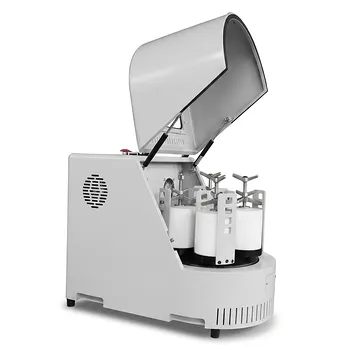
- Vertical Semi Circular Planetary Ball Mill for Laboratory Precision Grinding
- High Energy Planetary Ball Mill for Nano Scale Grinding and Mechanical Alloying
- Heavy Duty Horizontal Planetary Ball Mill for Efficient Industrial Grinding and Sample Preparation
- Vertical Production Planetary Ball Mill for High Throughput Powder Processing
- 360° Rotating Omnidirectional Laboratory Planetary Ball Mill for Homogeneous Ultra-Fine Grinding and Mixing
People Also Ask
- What role does a planetary ball mill play in the synthesis of Li6PS5Cl (LPSCl)? Unlock High Ionic Conductivity
- Why is a planetary ball mill essential for SiBCN-rGO wet-spinning? Achieve Superior Dispersion and Spinnability
- Why is an intermittent grinding process required for perovskites in a planetary ball mill? Ensure Stability & Purity
- Why is a planetary ball mill required for PET micronization? Ensure Accurate Chemical Analysis of Reprocessed PET
- How does mechanized planetary ball milling compare to manual agate grinding? Optimize sulfide standard material precision.

Tech Team · PowderPreparation
Last updated on Jun 03, 2026
Related Products
Vertical Semi Circular Planetary Ball Mill for Laboratory Precision Grinding

High Energy Planetary Ball Mill for Nano Scale Grinding and Mechanical Alloying

Heavy Duty Horizontal Planetary Ball Mill for Efficient Industrial Grinding and Sample Preparation

Vertical Production Planetary Ball Mill for High Throughput Powder Processing

360° Rotating Omnidirectional Laboratory Planetary Ball Mill for Homogeneous Ultra-Fine Grinding and Mixing

Vertical Square Planetary Ball Mill for Laboratory Sample Preparation and Nanoscale Grinding

Miniature Planetary Ball Mill with Vacuum Grinding and High Efficiency for Laboratory Sample Preparation

High Energy Omnidirectional Planetary Ball Mill 16L

High Energy Laboratory Planetary Ball Mill for Nano Grinding and Material Science Sample Preparation
Planetary Ball Mill 12L
High Energy Planetary Ball Mill for Nano Scale Grinding and Colloidal Mixing in Material Science Research
Horizontal Light Duty Planetary Ball Mill for Laboratory Sample Preparation
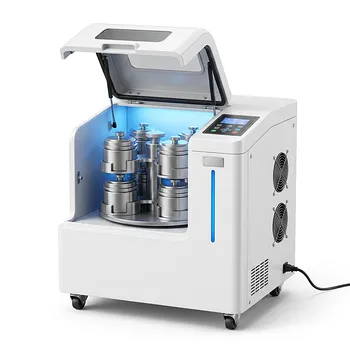
High Energy Omnidirectional Planetary Ball Mill 20L

High Energy Laboratory Planetary Ball Mill for Nano Grinding and Colloidal Mixing of Hard and Brittle Materials

8L Planetary Ball Mill for Laboratory Grinding and Sample Preparation

Dual Station Planetary Ball Mill 24L

Multi-Platform Nanoscale High-Energy Vibratory Ball Mill

Nano High Energy Vibratory Ball Mill for Laboratory Sample Preparation

Dual Jar High Energy Vibratory Ball Mill