What is the role of a planetary ball mill in the preparation of cathode materials for zero-excess lithium-sulfur batteries?
Updated 5 months ago
The planetary ball mill is the primary tool for high-energy mechanochemical processing in zero-excess lithium-sulfur battery production. It serves to reduce the particle size of lithium sulfide ($Li_2S$) to the sub-micron level while simultaneously engineering a molecular-level uniform mixture with conductive carbon agents. This structural transformation is critical for activating the inherently insulating $Li_2S$, effectively lowering reaction overpotential and maximizing the utilization of active materials within the cathode.
Core Takeaway: In zero-excess Li-S batteries, the planetary ball mill transitions raw materials from simple mixtures to high-performance composites by creating the essential conductive networks and triple-phase boundaries required for efficient electrochemical activity.
Engineering the Cathode Microstructure
The fundamental challenge of $Li_2S$ cathodes is their lack of natural conductivity. High-energy milling addresses this by fundamentally altering the physical state of the raw materials.
Particle Size Reduction and Surface Area
The mill utilizes high-frequency impacts and shear forces to break down $Li_2S$ particles from micrometer scales to sub-micron or even nano-scales. This drastic reduction in size significantly increases the available surface area for electrochemical reactions. By minimizing the distance ions must travel within the solid particles, the mill enhances the overall kinetics of the battery.
Molecular-Level Conductive Mixing
Beyond mere size reduction, the planetary ball mill achieves a molecular-level distribution of conductive carbon black throughout the $Li_2S$ matrix. This ensures that the insulating active material is in constant, intimate contact with the electronic conductive network. This "activation" process is what allows the battery to achieve high capacity and stable cycling.
Constructing the Triple-Phase Boundary
In solid-state and zero-excess systems, the cathode must facilitate the simultaneous movement of electrons, ions, and the chemical transformation of sulfur.
Establishing Transport Paths
The high-energy milling process is responsible for constructing the triple-phase boundary. This is the critical intersection where the active sulfur material, the electronic conductive carbon, and the ionic conductive solid electrolyte meet. Without the intense mechanical energy of the mill, these three components would remain discrete, leading to high internal resistance and battery failure.
Mechanochemical Synthesis and In-Situ Reactions
Modern preparation techniques use the planetary ball mill to induce mechanochemical reactions between precursors like phosphorus pentasulfide ($P_2S_5$) and lithium salts. This allows for the in-situ generation of electrolyte components directly within the cathode composite. This one-step preparation simplifies manufacturing while ensuring the tightest possible contact between the active material and the conductive framework.
Understanding the Trade-offs and Pitfalls
While the planetary ball mill is indispensable, its high-energy nature introduces specific technical challenges that must be managed.
Heat Generation and Phase Changes
The intense friction and impact within the milling jars generate significant heat, which can lead to unwanted phase transitions or the degradation of temperature-sensitive precursors. Operators must often use interval milling (alternating run and rest periods) to maintain thermal stability.
Media Contamination and Atmosphere Control
The high-energy collisions can cause wear on the grinding balls and jars, potentially introducing impurities like zirconia or stainless steel into the cathode material. Furthermore, because $Li_2S$ and sulfide electrolytes are highly sensitive to moisture and oxygen, all milling must be conducted under an inert gas atmosphere (such as Argon) to prevent oxidation and ensure material purity.
How to Apply This to Your Project
To optimize the role of the planetary ball mill in your cathode preparation, consider your specific performance targets.
- If your primary focus is maximizing active material utilization: Prioritize longer milling durations at moderate speeds to ensure the finest possible distribution of carbon black within the $Li_2S$ matrix.
- If your primary focus is reducing reaction overpotential: Focus on the "one-step" mechanochemical approach to generate the solid electrolyte in situ, which creates a more seamless triple-phase boundary.
- If your primary focus is maintaining high material purity: Utilize jars and grinding balls made of the same material as your primary ceramic components and strictly enforce inert atmosphere seals during the entire process.
The planetary ball mill is not merely a mixer; it is the catalyst for the structural and chemical synthesis required to make zero-excess lithium-sulfur batteries a functional reality.
Summary Table:
| Key Role | Impact on Cathode Performance | Critical Process Factors |
|---|---|---|
| Size Reduction | Increases surface area; shortens ion diffusion paths. | Grinding ball-to-powder ratio, milling speed. |
| Conductive Mixing | Activates insulating $Li_2S$ by creating molecular contact with carbon. | Uniformity of carbon distribution, milling time. |
| Structural Engineering | Establishes critical triple-phase boundaries (ion/electron/sulfur). | High-energy shear forces and impact frequency. |
| In-Situ Synthesis | Enables one-step mechanochemical synthesis of solid electrolytes. | Thermal control (interval milling), atmosphere purity. |
Elevate Your Battery Research with Precision Sample Preparation
Achieving the perfect cathode microstructure for zero-excess lithium-sulfur batteries requires more than just mixing—it requires high-precision engineering. At [Brand Name], we provide complete laboratory sample preparation solutions tailored for material science and energy storage research.
Our specialized equipment line includes:
- High-Energy Processing: Planetary ball mills, jet mills, and cryogenic grinders for sub-micron particle refinement.
- Material Compaction: A full spectrum of hydraulic presses, including Cold/Warm Isostatic Presses (CIP/WIP), vacuum hot presses, and XRF pellet presses.
- Sizing & Mixing: Vibratory sieve shakers, powder mixers, and high-performance defoaming mixers.
Whether you are focusing on maximizing active material utilization or constructing seamless triple-phase boundaries, our tools ensure the purity and precision your innovation demands.
Ready to optimize your powder processing workflow? Contact our technical experts today to find the ideal solution for your lab!
References
- Joshua Cruddos, Alexander J. E. Rettie. Toward zero-excess lithium sulfur batteries: a systematic cell parameter study. DOI: 10.1088/2515-7655/ada700
Mentioned Products
- Vertical Semi Circular Planetary Ball Mill for Laboratory Precision Grinding
- High Energy Planetary Ball Mill for Nano Scale Grinding and Mechanical Alloying
- Heavy Duty Horizontal Planetary Ball Mill for Efficient Industrial Grinding and Sample Preparation
- Vertical Production Planetary Ball Mill for High Throughput Powder Processing
- 360° Rotating Omnidirectional Laboratory Planetary Ball Mill for Homogeneous Ultra-Fine Grinding and Mixing
People Also Ask
- What role does a planetary ball mill play in the synthesis of Li6PS5Cl (LPSCl)? Unlock High Ionic Conductivity
- Why is a planetary ball mill essential for SiBCN-rGO wet-spinning? Achieve Superior Dispersion and Spinnability
- Why is an intermittent grinding process required for perovskites in a planetary ball mill? Ensure Stability & Purity
- Why is a planetary ball mill required for PET micronization? Ensure Accurate Chemical Analysis of Reprocessed PET
- How does mechanized planetary ball milling compare to manual agate grinding? Optimize sulfide standard material precision.

Tech Team · PowderPreparation
Last updated on May 14, 2026
Related Products
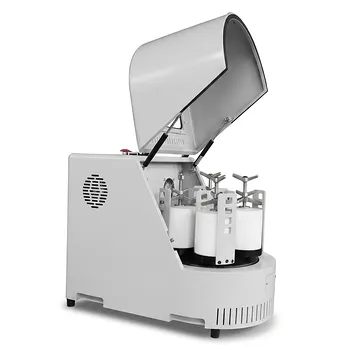
Vertical Semi Circular Planetary Ball Mill for Laboratory Precision Grinding

High Energy Planetary Ball Mill for Nano Scale Grinding and Mechanical Alloying

Heavy Duty Horizontal Planetary Ball Mill for Efficient Industrial Grinding and Sample Preparation

Vertical Production Planetary Ball Mill for High Throughput Powder Processing

360° Rotating Omnidirectional Laboratory Planetary Ball Mill for Homogeneous Ultra-Fine Grinding and Mixing

Vertical Square Planetary Ball Mill for Laboratory Sample Preparation and Nanoscale Grinding

Miniature Planetary Ball Mill with Vacuum Grinding and High Efficiency for Laboratory Sample Preparation

High Energy Omnidirectional Planetary Ball Mill 16L

High Energy Laboratory Planetary Ball Mill for Nano Grinding and Material Science Sample Preparation
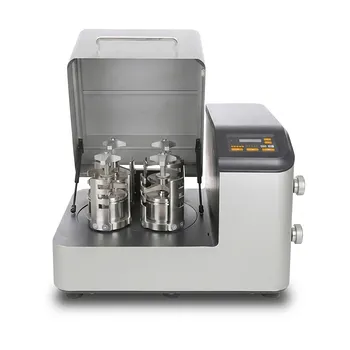
High Energy Planetary Ball Mill for Nano Scale Grinding and Colloidal Mixing in Material Science Research
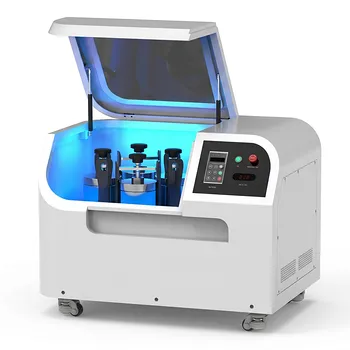
Planetary Ball Mill 12L
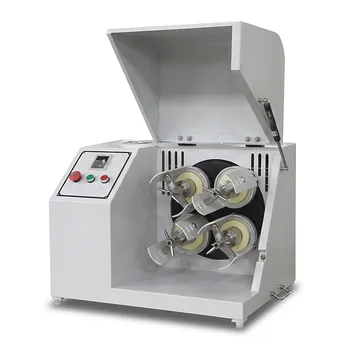
Horizontal Light Duty Planetary Ball Mill for Laboratory Sample Preparation

High Energy Omnidirectional Planetary Ball Mill 20L

High Energy Laboratory Planetary Ball Mill for Nano Grinding and Colloidal Mixing of Hard and Brittle Materials

8L Planetary Ball Mill for Laboratory Grinding and Sample Preparation
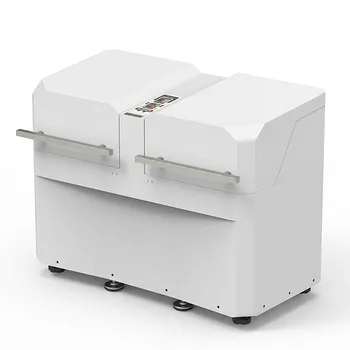
Dual Station Planetary Ball Mill 24L

Multi-Platform Nanoscale High-Energy Vibratory Ball Mill

Nano High Energy Vibratory Ball Mill for Laboratory Sample Preparation
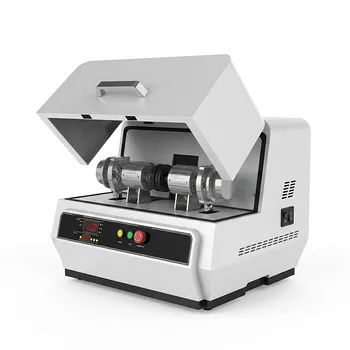
Dual Jar High Energy Vibratory Ball Mill