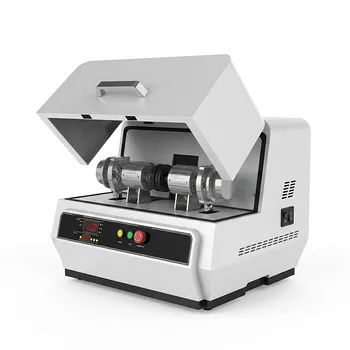
What is the role of a high-energy planetary ball mill in the preparation of HM/DAP composite fire extinguishing powder?
Updated 4 months ago
The high-energy planetary ball mill is the critical engineering component used to achieve deep particle refinement and mechanochemical surface modification of HM/DAP composite fire extinguishing powder. By utilizing high-frequency impact and shear forces, the equipment facilitates the forced coating of hydrophobic nano-silica onto the powder surface. This process transforms the raw materials into a specialized composite with superior flowability and moisture resistance, which are essential for reliable storage and discharge during fire suppression.
The role of a high-energy planetary ball mill extends beyond simple grinding; it acts as a mechanochemical reactor that bonds hydrophobic agents to the powder surface. This ensures the composite powder remains stable and effective in high-humidity environments.
Mechanisms of Material Transformation
High-Frequency Impact and Shear
The mill operates through a unique planetary motion that generates intense impact and friction forces. These forces are significantly higher than those found in conventional milling, allowing for the rapid breakdown of material agglomerations.
The grinding balls collide with the HM/DAP particles at high velocities, transferring kinetic energy directly into the powder. This energy-intensive environment is what enables the deep refinement of the powder to the necessary sub-micron or nano-scale levels.
Deep Particle Refinement
Achieving a consistent, fine particle size is vital for the efficacy of fire extinguishing agents. The high-energy mill systematically reduces the particle size of the DAP (diammonium phosphate) matrix.
By increasing the specific surface area of the powder, the mill ensures that the fire suppressant can react more quickly when deployed. This refinement is the foundation for creating a high-performance interconnected network within the composite structure.
Surface Modification and Forced Coating
Forced Coating of Hydrophobic Nano-Silica
One of the most critical roles of the mill is the mechanochemical modification of the powder surface. The high-energy collisions drive hydrophobic nano-silica particles to adhere or "embed" onto the surface of the larger DAP particles.
This is not a simple mixing process but a forced coating mechanism. The impact energy overcomes the natural repulsion between materials, ensuring the silica forms a protective, uniform layer around the core suppressant.
Enhancing Flowability and Moisture Resistance
The primary goal of this surface modification is to solve the twin problems of clumping and moisture absorption. The silica layer acts as a physical barrier that prevents water molecules from reaching the hygroscopic DAP core.
Furthermore, the coating reduces the friction between individual particles. This significantly enhances the flowability of the powder, ensuring it can be discharged through fire extinguishing equipment without clogging or interruptions.
Mechanochemical Activation
Increasing Surface Reactivity
The intense mechanical energy processed by the mill induces structural defects on the powder surface. These defects increase the concentration of active sites, effectively lowering the activation energy barrier for subsequent chemical reactions.
This activation ensures that the components are distributed with extreme uniformity. A more reactive powder surface leads to a more efficient chemical interaction with the flame during fire suppression.
Mechanical Alloying Principles
Similar to processes used in metal matrix composites, the high-energy mill uses mechanical alloying to integrate the HM (hydrophobic modifier) and DAP. This involves repeated fracturing and "cold welding" of the particles.
This continuous cycle of breaking and re-bonding ensures that the additives are not just mixed but are integrated into a single, cohesive composite material. This structural integrity is what prevents the components from separating during long-term storage.
Understanding the Trade-offs
Heat Generation and Thermal Sensitivity
The high-energy nature of planetary milling generates significant internal heat due to constant friction and impact. For materials like DAP, excessive heat can lead to thermal degradation or unwanted chemical transitions.
Engineers must carefully calibrate milling speeds and durations to prevent the material from losing its fire-extinguishing properties. Cooling intervals or specialized milling jars are often required to manage this thermal load.
Energy Consumption and Throughput
While highly effective, high-energy planetary milling is an energy-intensive process. It requires more power per unit of material compared to standard rotary mills or jet mills.
This makes the process more expensive to scale for mass production. Additionally, the batch-based nature of planetary milling can create bottlenecks in high-volume manufacturing environments.
How to Apply This to Your Project
Refining Your Preparation Strategy
When selecting a milling protocol, your choices should be dictated by the environmental conditions the fire extinguishing powder will face and the required discharge precision.
- If your primary focus is maximum shelf-life in humid environments: Prioritize longer milling times at moderate speeds to ensure a complete and uniform forced coating of nano-silica.
- If your primary focus is rapid fire suppression speed: Focus on maximizing the rotational speed (e.g., 300+ rpm) to achieve the highest possible specific surface area through deep refinement.
- If your primary focus is minimizing production costs: Optimize the ball-to-powder ratio to achieve the desired particle size with the minimum necessary energy expenditure.
The high-energy planetary ball mill is the indispensable tool for transforming raw chemical powders into high-performance, moisture-resistant composite fire extinguishing agents.
Summary Table:
| Mechanism | Key Function | Benefit for Fire Suppressants |
|---|---|---|
| High-Frequency Impact | Particle size reduction (sub-micron) | Increased surface area for faster fire suppression |
| Forced Coating | Embedding nano-silica onto DAP surfaces | Superior moisture resistance and anti-clumping |
| Mechanochemical Activation | Creating surface structural defects | Enhanced reactivity and uniform component distribution |
| Mechanical Alloying | Repeated fracturing and cold welding | Structural integrity and long-term storage stability |
Elevate Your Material Research with Precision Powder Solutions
Achieving the perfect composite structure requires equipment that delivers consistent, high-energy performance. At [Brand Name], we provide complete laboratory sample preparation solutions specifically designed for material science and advanced powder processing.
Whether you are refining HM/DAP composites or developing new functional materials, our extensive product line supports every stage of your workflow:
- Advanced Milling: High-energy planetary ball mills, jet mills, cryogenic grinders, and rotor mills for deep refinement.
- Sizing & Mixing: Vibratory sieve shakers and high-efficiency powder/defoaming mixers.
- Compaction Excellence: A full spectrum of hydraulic presses, including Cold/Warm Isostatic Presses (CIP/WIP), vacuum hot presses, and XRF pellet presses.
Ready to optimize your powder processing results? Contact our technical experts today to discuss how our specialized equipment can enhance your lab's capabilities and product performance.
References
- Lijing Wang, Haijun Zhang. Enhanced Fire-Extinguishing Performance and Synergy Mechanism of HM/DAP Composite Dry Powder. DOI: 10.3390/ma18030533
Mentioned Products
- Vertical Production Planetary Ball Mill for High Throughput Powder Processing
- High Energy Omnidirectional Planetary Ball Mill 16L
- High Energy Omnidirectional Planetary Ball Mill 20L
- Planetary Ball Mill 12L
- Vertical Square Planetary Ball Mill for Laboratory Sample Preparation and Nanoscale Grinding
People Also Ask
- What is the function of a high-performance planetary ball mill in AMZ laminates? Master Ceramic Homogenization.
- What is the role of a planetary ball mill in Al–Si3N4 nanocomposite prep? Achieve Uniform Homogenization
- What is the function of a planetary ball mill in lanthanum hexaaluminate synthesis? Master Micron-Level Homogenization
- What role does a planetary ball mill play in the synthesis of Er-doped PMN-PT ceramics? Enhancing Homogeneity & Purity
- What are the advantages of using a planetary ball mill for the fine grinding of barium silicate glass powder? Peak Results

Tech Team · PowderPreparation
Last updated on Jun 03, 2026
Related Products
Vertical Production Planetary Ball Mill for High Throughput Powder Processing
High Energy Omnidirectional Planetary Ball Mill 16L
High Energy Omnidirectional Planetary Ball Mill 20L
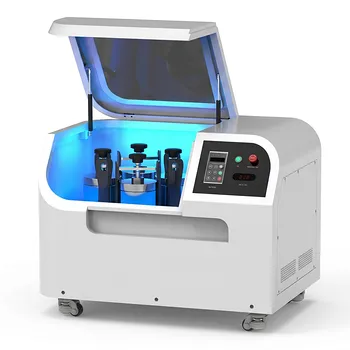
Planetary Ball Mill 12L
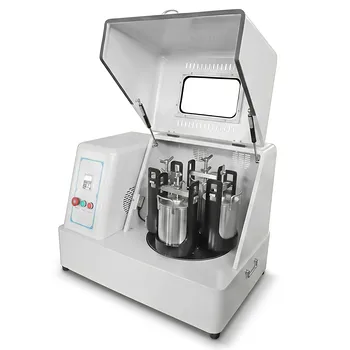
Vertical Square Planetary Ball Mill for Laboratory Sample Preparation and Nanoscale Grinding

8L Planetary Ball Mill for Laboratory Grinding and Sample Preparation
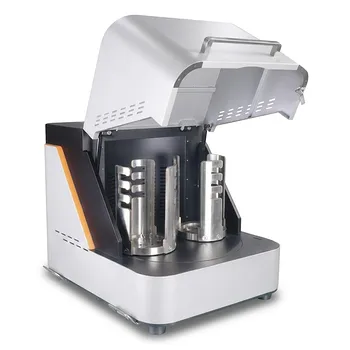
High Energy Laboratory Planetary Ball Mill for Nano Grinding and Colloidal Mixing of Hard and Brittle Materials
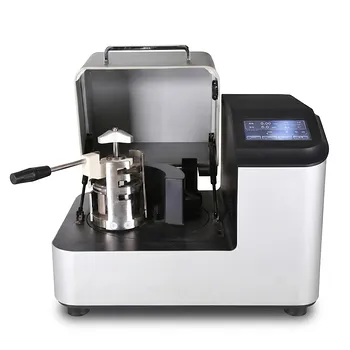
High Energy Laboratory Planetary Ball Mill for Nano Grinding and Material Science Sample Preparation
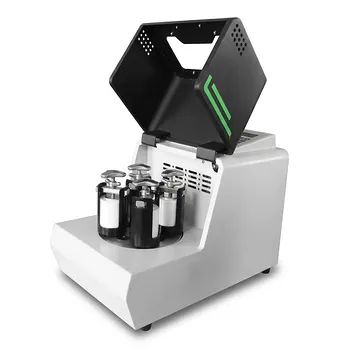
Miniature Planetary Ball Mill with Vacuum Grinding and High Efficiency for Laboratory Sample Preparation
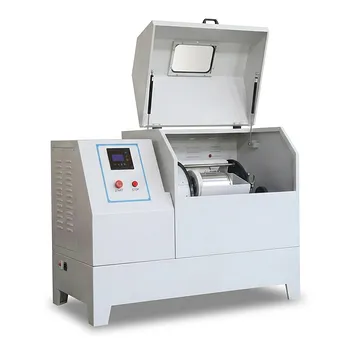
Heavy Duty Horizontal Planetary Ball Mill for Efficient Industrial Grinding and Sample Preparation
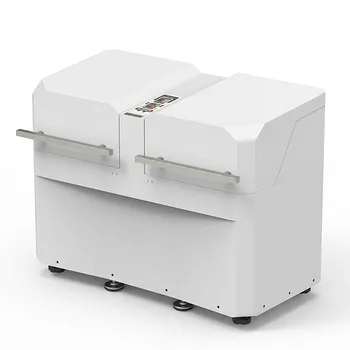
Dual Station Planetary Ball Mill 24L
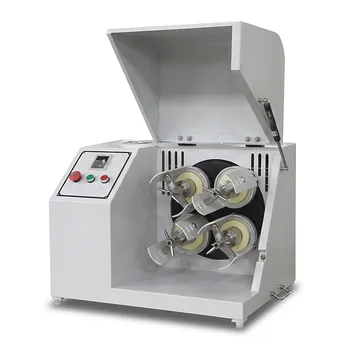
Horizontal Light Duty Planetary Ball Mill for Laboratory Sample Preparation
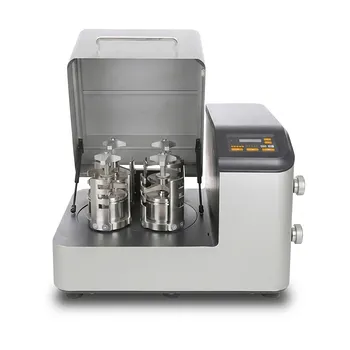
High Energy Planetary Ball Mill for Nano Scale Grinding and Colloidal Mixing in Material Science Research

High Energy Planetary Ball Mill for Nano Scale Grinding and Mechanical Alloying
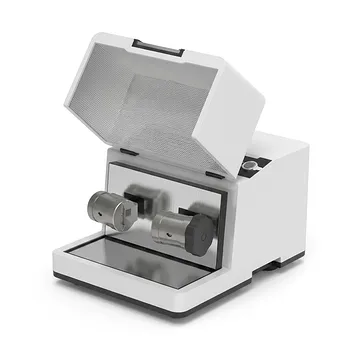
Heating Temperature Controlled High Energy Vibratory Ball Mill
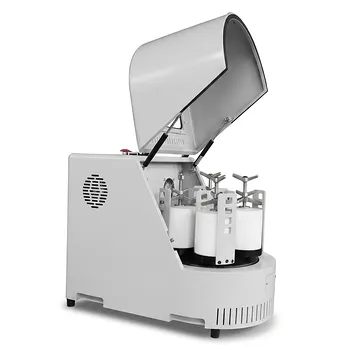
Vertical Semi Circular Planetary Ball Mill for Laboratory Precision Grinding

High Energy Hybrid Vibratory Ball Mill for Grinding Mixing and Cell Disruption
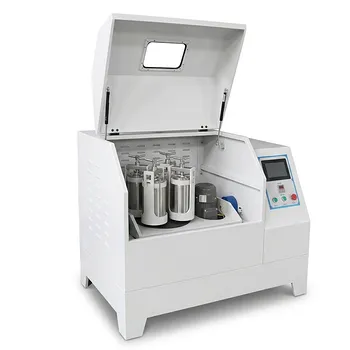
360° Rotating Omnidirectional Laboratory Planetary Ball Mill for Homogeneous Ultra-Fine Grinding and Mixing

Nano High Energy Vibratory Ball Mill for Laboratory Sample Preparation