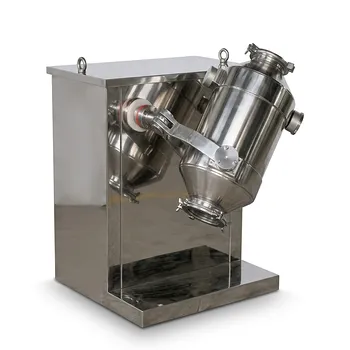
What is the role of a dual asymmetric centrifugal mixer in Ni/gamma-Al2O3 catalyst slurries? Precision Homogenization
Updated 4 months ago
In the preparation of Ni/gamma-Al2O3 catalyst slurries, a dual asymmetric centrifugal mixer (DAC) acts as a high-energy homogenization and degassing tool. It utilizes simultaneous revolution and rotation to uniformly disperse nickel precursors and alumina powders within an aqueous hydrogel or gelling agent. By eliminating mixing defects like air bubbles and particle agglomeration, the DAC ensures the stable rheological properties required for high-precision 3D printing and catalyst performance.
The dual asymmetric centrifugal mixer provides a non-contact, high-shear environment that achieves perfect homogeneity and air-free slurries in a fraction of the time of traditional methods. This process is essential for preventing structural defects in the final catalyst and maintaining consistent electrochemical activity.
Achieving High-Energy Micro-Scale Homogeneity
High-Shear Agglomerate Breakdown
The DAC mixer utilizes simultaneous revolution and rotation to generate powerful shear and impact forces. These forces are capable of breaking down stubborn powder agglomerates that often form when mixing fine nickel precursors and nano-alumina.
Rapid Powder Wetting and Diffusion
The equipment ensures the highly uniform diffusion of powders within the aqueous hydrogel or solvent. This "high-energy" environment facilitates rapid wetting of the gamma-Al2O3 particles, allowing for a high degree of homogeneity even with high volume fractions of solids.
Consistent Rheological Properties
For additive manufacturing, such as 3D printing, the slurry must maintain stable flowability. The intense mixing action ensures that the gelling agents and active materials are perfectly integrated, resulting in a predictable and stable viscosity.
Structural Integrity Through Degassing
Elimination of Voids and Air Bubbles
Standard mixing often introduces air into the slurry, which leads to pore defects in the final molded composite. The powerful centrifugal force applied by the DAC automatically eliminates these bubbles, ensuring the density of the green body and the structural integrity of the catalyst.
Preventing Micro-Bubble Defects
In vacuum-enabled models, the mixer can eliminate even micro-bubbles from the slurry. This is critical for preventing internal structural weaknesses that could cause the catalyst to fail under the mechanical stresses of industrial operation.
Preservation of Chemical Purity
Non-Contact, Bladeless Mixing
Because the DAC is a bladeless system, it relies on the movement of the container itself to mix the materials. This non-contact method effectively avoids the introduction of impurities or metal fragments that often wear off traditional mixing paddles.
Prevention of Contamination
Maintaining the high purity of Ni/gamma-Al2O3 is vital for its catalytic efficiency. By removing the need for internal mixing elements, the risk of cross-contamination between batches is significantly reduced, ensuring consistent chemical composition.
Understanding the Technical Constraints
Managing Thermal Energy
The high shear forces generated during the mixing process can lead to significant heat buildup in the slurry. While this energy is necessary for dispersion, excessive heat may trigger premature gelling or affect the stability of certain nickel precursors if not monitored.
Capacity and Batch Limits
DAC mixers are typically batch-processing machines with specific weight limits to maintain the necessary "asymmetric" balance. This means that while they are incredibly efficient for R&D and high-value production, scaling to massive industrial volumes requires multiple units or larger, more expensive specialized hardware.
How to Apply This to Your Project
When integrating a dual asymmetric centrifugal mixer into your catalyst preparation workflow, consider your specific production goals to optimize the settings.
- If your primary focus is 3D printing precision: Use the DAC to focus on degassing and achieving a stable viscosity to ensure the slurry flows through print nozzles without clogging or creating voids.
- If your primary focus is maximizing catalyst activity: Prioritize the non-contact mixing benefits to ensure zero contamination of the nickel active sites by external mixing hardware.
- If your primary focus is high solids loading: Leverage the high-shear rotation to incorporate high volume fractions of alumina powder into the resin or hydrogel without leaving dry agglomerates.
By mastering the balance of shear force and centrifugal degassing, you can produce catalyst slurries that are structurally sound and chemically optimized for high-performance applications.
Summary Table:
| Key Role | Technical Mechanism | Impact on Catalyst Performance |
|---|---|---|
| Homogenization | High-shear rotation/revolution | Breaks agglomerates for uniform Ni precursor distribution. |
| Degassing | Powerful centrifugal forces | Eliminates air bubbles and voids for high structural integrity. |
| Contamination Control | Bladeless, non-contact mixing | Prevents metallic impurities from affecting chemical purity. |
| Rheology Control | High-energy micro-dispersion | Ensures stable viscosity for high-precision 3D printing. |
Elevate Your Material Research with Expert Sample Prep Solutions
Achieving the perfect Ni/gamma-Al2O3 catalyst slurry requires the right balance of homogeneity and purity. At [Your Brand Name], we provide complete laboratory sample preparation solutions for material science, specializing in high-performance powder processing and compaction equipment.
From breaking down raw materials with our jaw/roll crushers and planetary ball mills to achieving bubble-free slurries with our defoaming mixers, we support every stage of your workflow. Our range also includes cryogenic grinders, jet mills, and air-jet sieve shakers for precise particle size control.
Need to finalize your catalyst body? We manufacture a full spectrum of hydraulic presses, including Cold/Warm Isostatic Presses (CIP/WIP), vacuum hot presses, and XRF pellet presses to ensure the highest density and strength for your materials.
Ready to optimize your catalyst performance? Contact us today for a tailored equipment consultation!
References
- Seyed Ali Razavi, M. Morales. 3D-printed Ni/γ-Al2O3 catalysts for CO2 methanation: Effect of Ni loading and sintering temperature. DOI: 10.1016/j.cej.2025.168665
Mentioned Products
- Dual Cup Vacuum Centrifugal Mixer Planetary Paste Defoaming Machine Industrial Material Processor
- Industrial Planetary Centrifugal Vacuum Defoaming Mixer for High Viscosity Paste and Advanced Material Science
- 非介入式材料均质机真空脱泡行星搅拌高粘度混合设备
- High Viscosity Planetary Centrifugal Mixing and Vacuum Defoaming Machine for Laboratory Material Preparation
- High Efficiency Vacuum Planetary Centrifugal Mixer and Defoaming Machine for Industrial Material Research and Precise Laboratory Powder Dispersion
People Also Ask
- Why is a vacuum centrifugal defoaming mixer required to process ceramic slurry before 3D printing? Ensure High Density
- Why is a vacuum centrifugal de-foaming mixer required before DIW of PZT ink? Achieve Dense, Bubble-Free Piezo Ceramics
- What are the advantages of centrifugal defoaming mixers for recycled slurries? Achieve Superior Electrode Quality
- Why is centrifugal defoaming necessary for magnetic composite inks? Ensure Void-Free Extrusion for 3D Printing
- Why is vacuum defoaming necessary for PDMS mixtures before microwave irradiation curing? Key to Structural Integrity

Tech Team · PowderPreparation
Last updated on Jun 03, 2026
Related Products
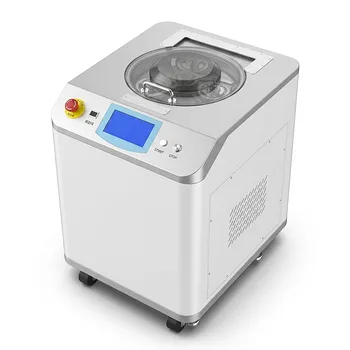
Dual Cup Vacuum Centrifugal Mixer Planetary Paste Defoaming Machine Industrial Material Processor
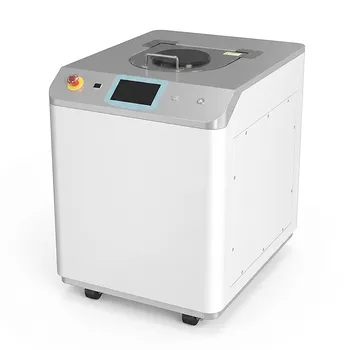
Industrial Planetary Centrifugal Vacuum Defoaming Mixer for High Viscosity Paste and Advanced Material Science
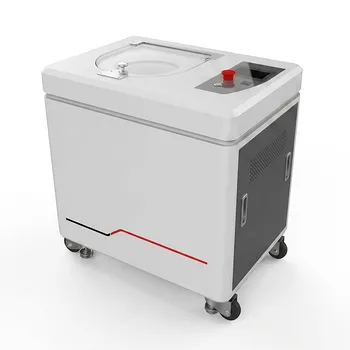
非介入式材料均质机真空脱泡行星搅拌高粘度混合设备
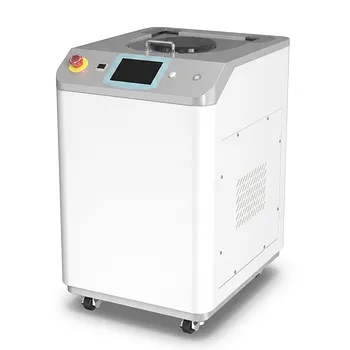
High Viscosity Planetary Centrifugal Mixing and Vacuum Defoaming Machine for Laboratory Material Preparation
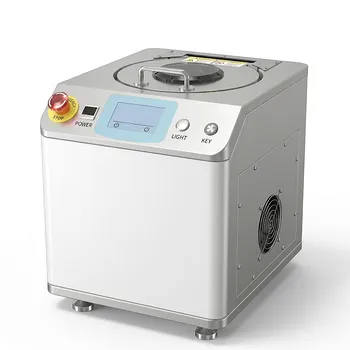
High Efficiency Vacuum Planetary Centrifugal Mixer and Defoaming Machine for Industrial Material Research and Precise Laboratory Powder Dispersion
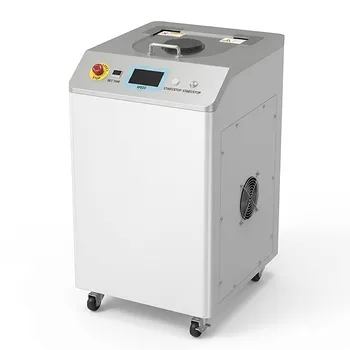
High Viscosity Planetary Centrifugal Vacuum Mixer for Material Defoaming and Uniform Mixing
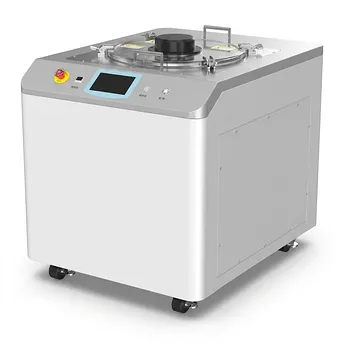
Industrial Planetary Centrifugal Vacuum Defoaming Mixer for High Viscosity Paste and Powder Homogenization
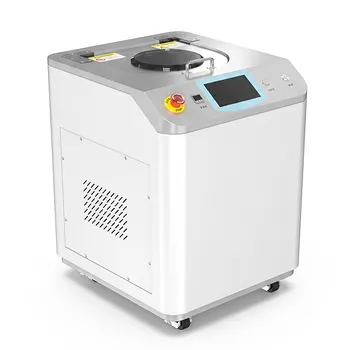
High Speed Vacuum Planetary Centrifugal Mixer and Defoamer for Industrial Paste Processing
Industrial Double Cone Mixer for Powder Blending and Homogeneous Mixing
Ultra Centrifugal Mill for Rapid Laboratory Sample Preparation and Fine Powder Grinding
Ultra Centrifugal Mill High Speed Laboratory Grinder for Fibrous and Brittle Sample Preparation
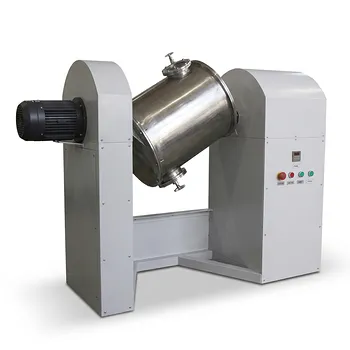
Inclined Mixer for Homogeneous Powder Blending and Grinding
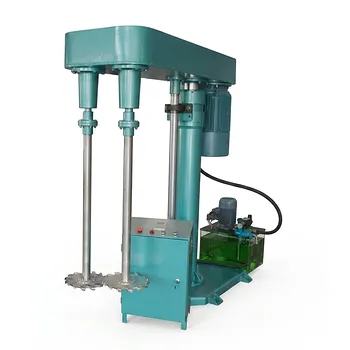
Hydraulic Double Shaft Disperser for High Viscosity Liquid Mixing and Dispersion
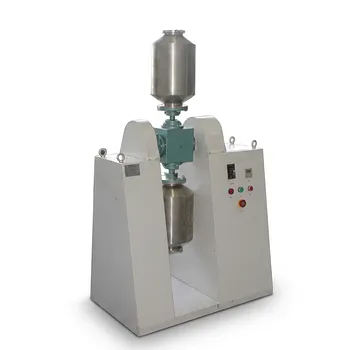
Multi Dimensional Universal Mixer for High Uniformity Powder Blending
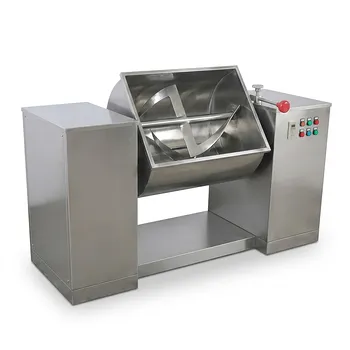
Horizontal Trough Mixer for Uniform Powder and Paste Blending
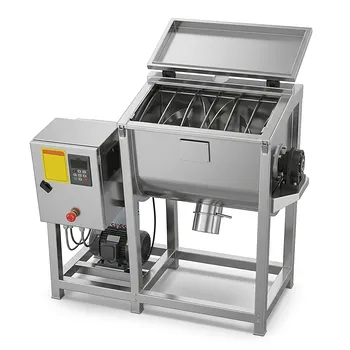
Horizontal Ribbon Mixer for Uniform Powder and Slurry Mixing
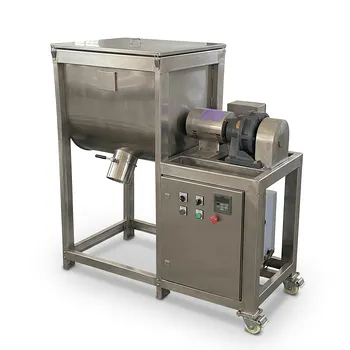
Horizontal Ribbon Mixer for Dry Powder and Slurry Blending
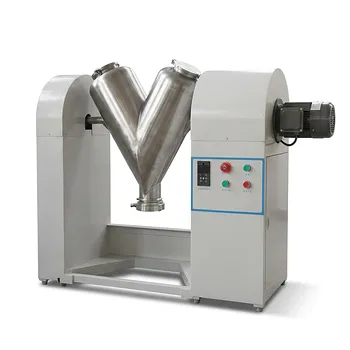
V-Type Powder Mixer for Uniform Blending of Dry Powders and Granules
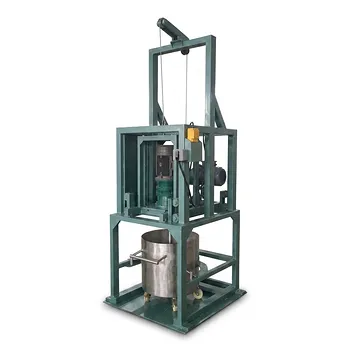
High-Speed Simple Disperser for Efficient Mixing, Dispersion, and Emulsification