How does a planetary centrifugal mixer address key challenges in Tyr-CDs@EVA optical films? Ensure Optical Clarity.
Updated 4 months ago
The planetary centrifugal mixer addresses the critical challenges of nanoparticle agglomeration and air entrapment in Tyr-CDs@EVA optical films. By utilizing simultaneous revolution and rotation forces, the mixer achieves molecular-level dispersion of carbon dots within the viscous EVA polymer while eliminating micro-bubbles that cause light scattering.
The core advantage of planetary centrifugal mixing lies in its ability to perform high-shear blending and vacuum-level defoaming in a single, bladeless process. This dual action is essential for maintaining the optical transparency and structural uniformity required for high-performance Luminescent Solar Concentrator (LSC) films.
Overcoming Viscosity and Agglomeration
Achieving Molecular-Level Dispersion
Tyr-CDs (carbon dots) have a natural tendency to cluster, which is exacerbated when introduced to a viscous EVA polymer solution. The planetary mixer uses the combined forces of revolution and rotation to generate intense shear, forcing these nanoparticles into a uniform, molecular-level dispersion.
Maintaining Material Integrity
Unlike traditional impellers, this bladeless technology mixes the material within its own container. This prevents the introduction of contaminants and protects the polymer chains from the localized mechanical stress that can occur with high-speed stirring blades.
Homogeneity in High-Viscosity Media
Ethylene-vinyl acetate (EVA) is inherently thick, making traditional blending inefficient and time-consuming. The centrifugal forces generated by the mixer ensure that even high-proportion additives are blended into the matrix with extreme homogeneity in a very short timeframe.
Eliminating Optical Defects through Defoaming
The Impact of Micro-bubbles on Scattering
In optical applications like LSCs, any trapped air acts as a scattering center that disrupts light propagation. By removing these micro-bubbles, the mixer ensures the cured films maintain the high optical transparency necessary for efficient energy collection.
Centrifugal Force as a Clarification Tool
The revolution of the mixer generates powerful forces that push the heavier liquid to the outside of the container, forcing microscopic air bubbles to the surface where they collapse. This process is far more effective than gravity-based degassing for highly viscous polymer slurries.
Preventing Structural Pore Defects
Eliminating air at the mixing stage prevents the formation of pore defects during the subsequent drying and molding processes. This results in a film with superior density and airtightness, which are critical for the mechanical reliability of the final composite.
Understanding the Trade-offs
Heat Generation and Thermal Sensitivity
The intense friction and shear required for molecular dispersion can lead to localized heat buildup within the EVA matrix. If not carefully monitored, this temperature rise could potentially affect the fluorescent properties of the Tyr-CDs or trigger premature polymerization.
Equipment Scaling and Batch Limits
While planetary mixers offer unmatched precision, they are typically limited by fixed container volumes. For large-scale industrial production, this requires a transition from batch processing to multiple units, which may impact throughput compared to continuous flow mixing systems.
How to Apply This to Your Project
Optimizing Your Mixing Protocol
Achieving the perfect Tyr-CDs@EVA film requires balancing the intensity of the shear force with the thermal limits of your materials.
- If your primary focus is maximum optical clarity: Prioritize the defoaming phase by utilizing longer revolution cycles at slightly lower speeds to ensure all micro-bubbles are purged.
- If your primary focus is preventing nanoparticle quenching: Monitor the temperature of the EVA solution closely and use interval mixing cycles to prevent heat-induced degradation of the carbon dots.
- If your primary focus is mechanical durability: Ensure high rotation speeds are used to achieve the most uniform dispersion possible, which minimizes structural weak points in the cured film.
Mastering the balance of revolution and rotation forces allows you to transform a complex viscous mixture into a flawless, high-performance optical medium.
Summary Table:
| Challenge | Mixer Action | Impact on Optical Film |
|---|---|---|
| Nanoparticle Agglomeration | High-shear revolution/rotation | Molecular-level dispersion of carbon dots |
| Air Entrapment | Centrifugal vacuum-level defoaming | Eliminates light scattering; ensures transparency |
| High Viscosity (EVA) | Bladeless, intense kinetic energy | Homogeneous blending without material degradation |
| Contamination Risk | Mixing in closed containers | Maintains chemical purity and structural integrity |
Elevate Your Material Research with Precision Sample Preparation
Achieving flawless dispersion in high-viscosity optical films requires more than just standard stirring—it demands the advanced power of planetary centrifugal and defoaming technology. At [Company Name], we provide complete laboratory sample preparation solutions tailored for material science innovators.
From planetary ball mills and defoaming mixers for perfect nanoparticle integration to a full spectrum of hydraulic presses (CIP/WIP/Hot Presses) for final material compaction, our equipment is designed to ensure consistency and reliability in every batch. Whether you are processing advanced carbon dots or specialized polymers, we help you eliminate defects and optimize performance.
Ready to refine your mixing protocol? Contact our technical experts today to find the ideal processing solution for your laboratory needs.
References
- Yunxiang Liu, Tetsuhiko Isobe. Performance enhancement of carbon dot-based luminescent solar concentrators <i>via</i> surface modification and TiO <sub>2</sub> -enhanced scattering. DOI: 10.1039/d5tc03684d
Mentioned Products
- High Viscosity Planetary Centrifugal Vacuum Mixer for Material Defoaming and Uniform Mixing
- High Efficiency Vacuum Planetary Centrifugal Mixer and Defoaming Machine for Industrial Material Research and Precise Laboratory Powder Dispersion
- Industrial Planetary Centrifugal Vacuum Defoaming Mixer for High Viscosity Paste and Powder Homogenization
- High Viscosity Planetary Centrifugal Mixing and Vacuum Defoaming Machine for Laboratory Material Preparation
- High Speed Vacuum Planetary Centrifugal Mixer and Defoamer for Industrial Paste Processing
People Also Ask
- What core functions does a planetary centrifugal mixer perform? Optimize Hard Carbon Anode Slurry & Degassing
- Why is a planetary centrifugal mixer recommended for geopolymer slurries? Achieve high-shear, air-free homogenization.
- Why is a planetary centrifugal mixer utilized for wood powder and HPMC? Achieve uniform dispersion & rapid defoaming.
- What is the role of a planetary centrifugal mixer in UHTC slurry preparation? Achieve Void-Free, High-Viscosity Mixing
- Planetary Centrifugal Mixer vs. Manual Mixing for Eu2O3 Resins: Achieving Superior Dispersion & Deaeration

Tech Team · PowderPreparation
Last updated on May 14, 2026
Related Products
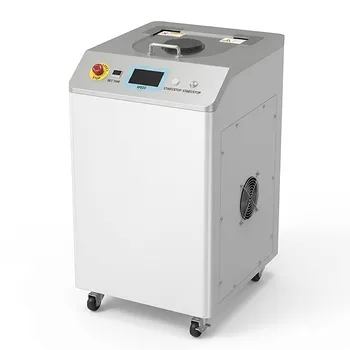
High Viscosity Planetary Centrifugal Vacuum Mixer for Material Defoaming and Uniform Mixing
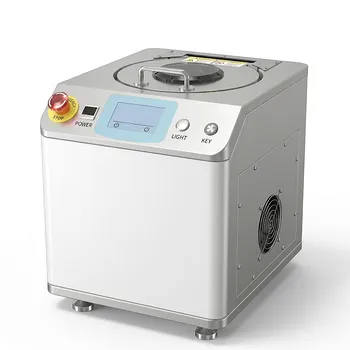
High Efficiency Vacuum Planetary Centrifugal Mixer and Defoaming Machine for Industrial Material Research and Precise Laboratory Powder Dispersion
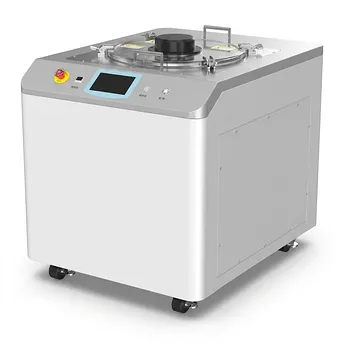
Industrial Planetary Centrifugal Vacuum Defoaming Mixer for High Viscosity Paste and Powder Homogenization
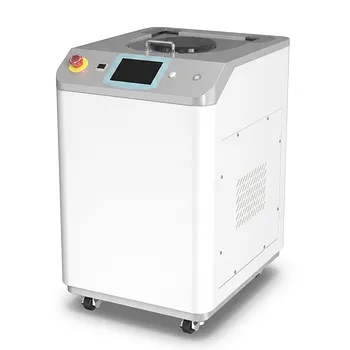
High Viscosity Planetary Centrifugal Mixing and Vacuum Defoaming Machine for Laboratory Material Preparation
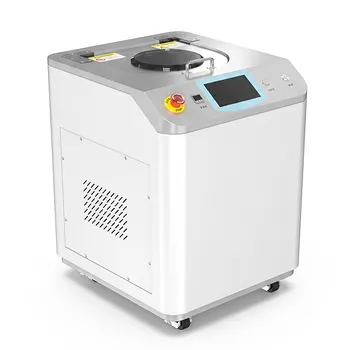
High Speed Vacuum Planetary Centrifugal Mixer and Defoamer for Industrial Paste Processing
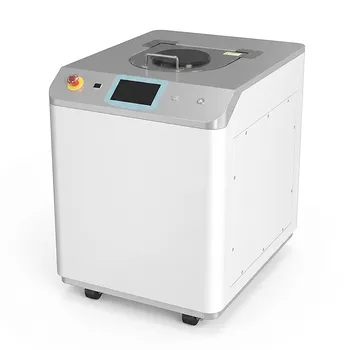
Industrial Planetary Centrifugal Vacuum Defoaming Mixer for High Viscosity Paste and Advanced Material Science
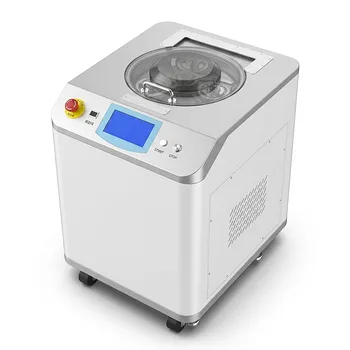
Dual Cup Vacuum Centrifugal Mixer Planetary Paste Defoaming Machine Industrial Material Processor
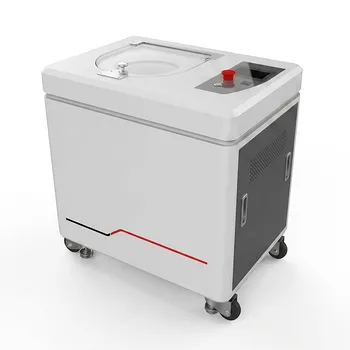
非介入式材料均质机真空脱泡行星搅拌高粘度混合设备
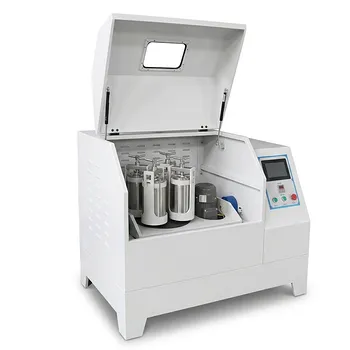
360° Rotating Omnidirectional Laboratory Planetary Ball Mill for Homogeneous Ultra-Fine Grinding and Mixing
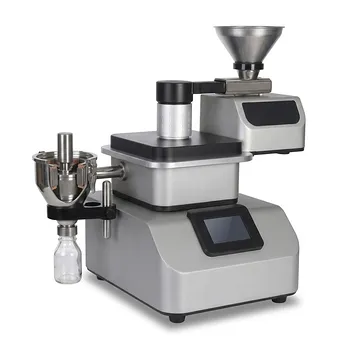
Ultra Centrifugal Mill for Rapid Laboratory Sample Preparation and Fine Powder Grinding
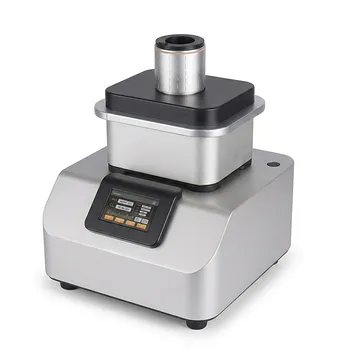
Ultra Centrifugal Mill High Speed Laboratory Grinder for Fibrous and Brittle Sample Preparation
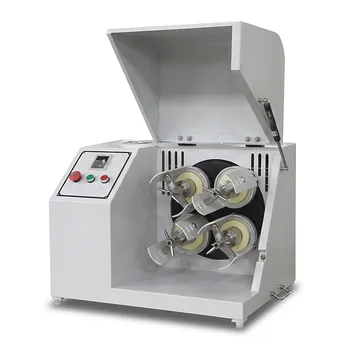
Horizontal Light Duty Planetary Ball Mill for Laboratory Sample Preparation
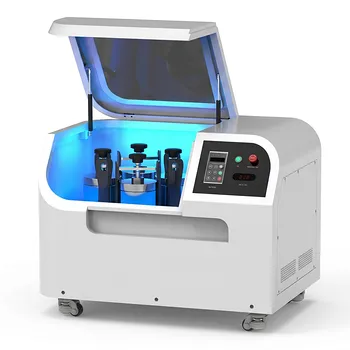
Planetary Ball Mill 12L
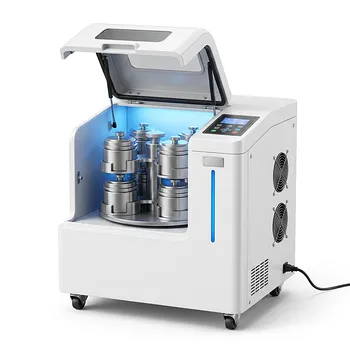
High Energy Omnidirectional Planetary Ball Mill 20L

Heavy Duty Horizontal Planetary Ball Mill for Efficient Industrial Grinding and Sample Preparation

Vertical Production Planetary Ball Mill for High Throughput Powder Processing

High Energy Omnidirectional Planetary Ball Mill 16L

Miniature Planetary Ball Mill with Vacuum Grinding and High Efficiency for Laboratory Sample Preparation

Vertical Square Planetary Ball Mill for Laboratory Sample Preparation and Nanoscale Grinding