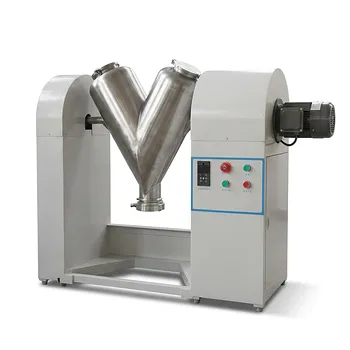
Why are centrifugal mixers typically equipped with variable speed drive systems for flow control? Master Your Mixing.
Updated 5 months ago
Variable speed drive systems are the cornerstone of centrifugal mixing precision. By adjusting the rotor’s angular velocity, these systems allow operators to fine-tune the intensity of the centrifugal force field. This capability is essential because it enables the mixer to accommodate the unique physical properties—such as mass and friction—of various material formulas, ensuring consistent results across different batches.
Centrifugal mixers require variable speed drives to precisely calibrate centrifugal force against specific material properties like particle mass and friction coefficients. This adjustment ensures that components maintain optimal contact with the vessel's conical surfaces for efficient flow and homogeneous mixing.
The Physics of Variable Centrifugal Force
Controlling Angular Velocity
The primary function of a variable speed drive, such as a DC motor with a rheostat, is to modulate the rotor's speed. Because centrifugal force is directly proportional to the square of the angular velocity, even small adjustments in speed result in significant changes to the force applied to the materials.
Managing Material Inertia and Friction
Every material component possesses a unique friction coefficient and specific particle mass. Variable speed systems allow the operator to find the "sweet spot" where the force is strong enough to overcome internal friction without damaging delicate particles.
Adapting to Diverse Material Formulas
Compensating for Particle Mass Variations
In a complex formula, ingredients often have vastly different weights and densities. Precise speed control allows the equipment to exert the exact amount of force needed to move heavy particles while keeping lighter components integrated into the mix.
Optimizing Contact with Conical Surfaces
For a centrifugal mixer to function correctly, the material must maintain consistent contact with the conical processing surfaces. Variable speed drives ensure the velocity is high enough to "climb" the walls for effective processing but not so high that it causes material bypass or mechanical strain.
Understanding the Trade-offs
Precision vs. System Complexity
While variable speed drives offer unmatched flexibility, they increase the complexity of the electrical system. Using components like rheostats or modern Variable Frequency Drives (VFDs) requires more robust maintenance and cooling compared to fixed-speed alternatives.
Heat Generation and Material Integrity
Operating at high angular velocities increases the intensity of the mixing dynamics, which can lead to frictional heat. If the speed is not carefully managed via the drive system, sensitive formulas may degrade or experience unwanted phase changes during the mixing cycle.
Applying Speed Control to Your Process
Choosing the correct speed profile is vital for balancing throughput with mix quality. Your approach should vary based on the physical characteristics of your raw materials.
- If your primary focus is handling high-density materials: Use higher angular velocities to ensure the centrifugal force is sufficient to overcome particle inertia and maintain flow.
- If your primary focus is processing shear-sensitive components: Utilize the variable drive to lower the speed, reducing the impact force and heat generation while maintaining a steady mixing rhythm.
- If your primary focus is multi-formula flexibility: Invest in a drive system with programmable speed profiles to quickly switch between the unique centrifugal requirements of different recipes.
By mastering the relationship between rotor speed and material physics, you can transform a standard mixing process into a highly optimized, repeatable scientific operation.
Summary Table:
| Feature | Impact on Mixing | Key Benefit |
|---|---|---|
| Angular Velocity Control | Modulates centrifugal force intensity | Allows precise calibration for different densities |
| Inertia Management | Overcomes particle-specific friction | Ensures consistent flow across diverse formulas |
| Surface Optimization | Controls contact with conical walls | Prevents material bypass and mechanical strain |
| Heat Regulation | Minimizes frictional heat generation | Protects shear-sensitive and delicate materials |
Elevate Your Material Research with Precision Mixing Solutions
At [Company Name], we provide complete laboratory sample preparation solutions tailored for material science. Achieving a homogeneous mix is the first step toward breakthrough results, and our specialized centrifugal mixers and defoaming mixers are engineered to handle your most complex formulas with precision.
Our expertise extends across the entire powder processing workflow. We offer high-performance equipment including:
- Powder Processing: Jaw/roll crushers, liquid nitrogen cryogenic grinders, and a variety of mills (planetary ball, jet, sand/bead, disc, and rotor).
- Particle Analysis: Sieve shakers (vibratory/air-jet) with a wide range of test sieves and meshes.
- Compaction Excellence: A full spectrum of hydraulic presses, including Cold/Warm Isostatic Presses (CIP/WIP), standard lab presses, XRF pellet presses, and vacuum hot presses.
Ready to optimize your lab's efficiency and material integrity? Contact our technical team today to discuss how our specialized powder processing and compaction equipment can support your specific research goals!
References
- Andrey Globin, A. M. Kurgansky. Theoretical studies of the process of mixing feed with a centrifugal mixer. DOI: 10.51419/202145504.
Mentioned Products
- High Viscosity Planetary Centrifugal Vacuum Mixer for Material Defoaming and Uniform Mixing
- Dual Cup Vacuum Centrifugal Mixer Planetary Paste Defoaming Machine Industrial Material Processor
- Industrial Planetary Centrifugal Vacuum Defoaming Mixer for High Viscosity Paste and Powder Homogenization
- High Efficiency Vacuum Planetary Centrifugal Mixer and Defoaming Machine for Industrial Material Research and Precise Laboratory Powder Dispersion
- High Speed Vacuum Planetary Centrifugal Mixer and Defoamer for Industrial Paste Processing
People Also Ask
- What core functions does a planetary centrifugal mixer perform? Optimize Hard Carbon Anode Slurry & Degassing
- Why is a planetary centrifugal mixer recommended for geopolymer slurries? Achieve high-shear, air-free homogenization.
- Why is a planetary centrifugal mixer utilized for wood powder and HPMC? Achieve uniform dispersion & rapid defoaming.
- How does a planetary centrifugal mixer address key challenges in Tyr-CDs@EVA optical films? Ensure Optical Clarity.
- What is the role of a planetary centrifugal mixer in UHTC slurry preparation? Achieve Void-Free, High-Viscosity Mixing

Tech Team · PowderPreparation
Last updated on May 14, 2026
Related Products
High Viscosity Planetary Centrifugal Vacuum Mixer for Material Defoaming and Uniform Mixing
Dual Cup Vacuum Centrifugal Mixer Planetary Paste Defoaming Machine Industrial Material Processor
Industrial Planetary Centrifugal Vacuum Defoaming Mixer for High Viscosity Paste and Powder Homogenization
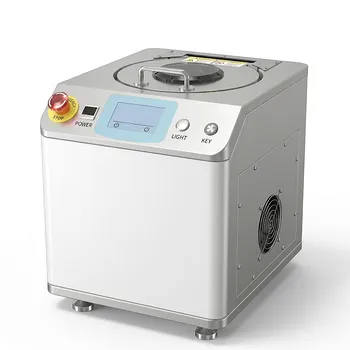
High Efficiency Vacuum Planetary Centrifugal Mixer and Defoaming Machine for Industrial Material Research and Precise Laboratory Powder Dispersion
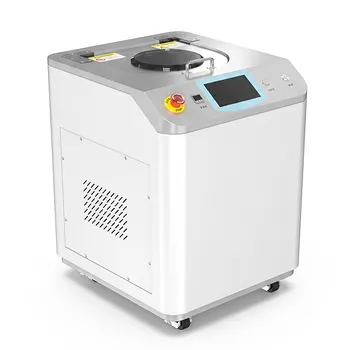
High Speed Vacuum Planetary Centrifugal Mixer and Defoamer for Industrial Paste Processing
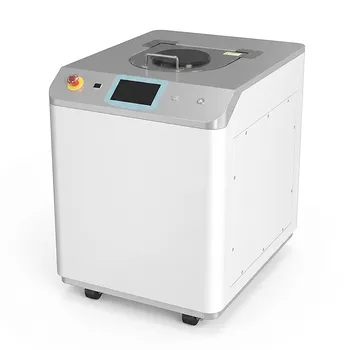
Industrial Planetary Centrifugal Vacuum Defoaming Mixer for High Viscosity Paste and Advanced Material Science
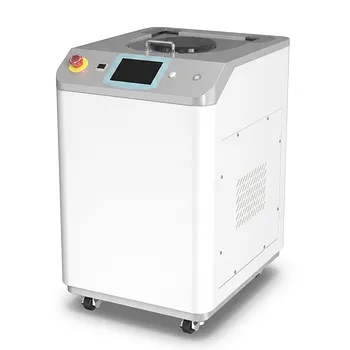
High Viscosity Planetary Centrifugal Mixing and Vacuum Defoaming Machine for Laboratory Material Preparation
Ultra Centrifugal Mill High Speed Laboratory Grinder for Fibrous and Brittle Sample Preparation
非介入式材料均质机真空脱泡行星搅拌高粘度混合设备
Ultra Centrifugal Mill for Rapid Laboratory Sample Preparation and Fine Powder Grinding
Inclined Mixer for Homogeneous Powder Blending and Grinding
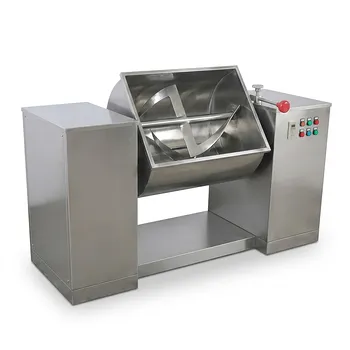
Horizontal Trough Mixer for Uniform Powder and Paste Blending
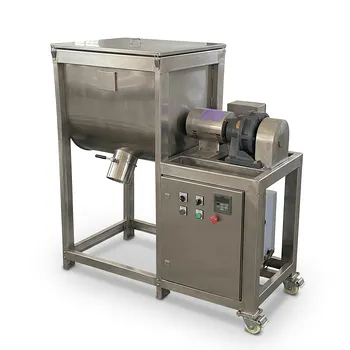
Horizontal Ribbon Mixer for Dry Powder and Slurry Blending
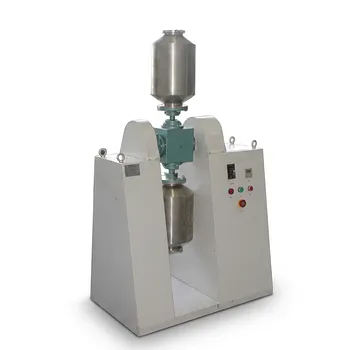
Multi Dimensional Universal Mixer for High Uniformity Powder Blending
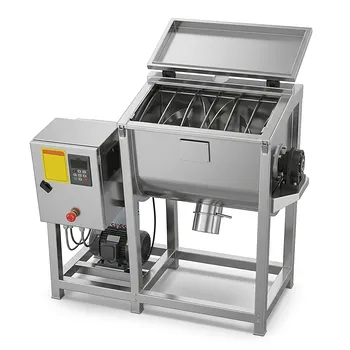
Horizontal Ribbon Mixer for Uniform Powder and Slurry Mixing
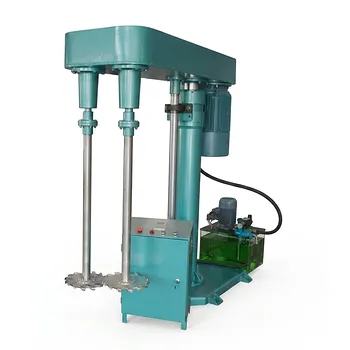
Hydraulic Double Shaft Disperser for High Viscosity Liquid Mixing and Dispersion
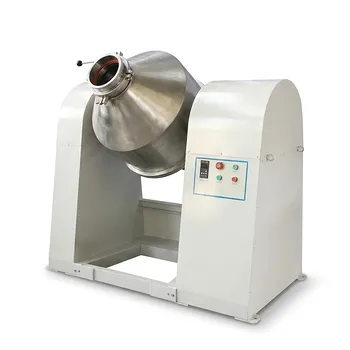
Industrial Double Cone Mixer for Powder Blending and Homogeneous Mixing
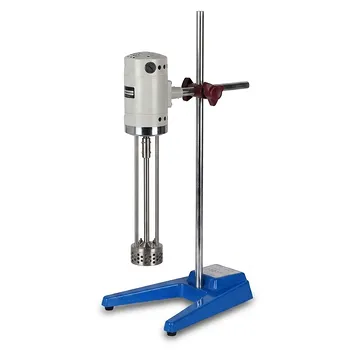
High Shear Laboratory Emulsifier for Mixing and Homogenization
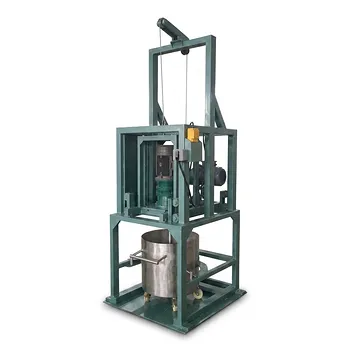
High-Speed Simple Disperser for Efficient Mixing, Dispersion, and Emulsification