What are the advantages of planetary centrifugal mixers for LSM-CeO2 slurries? Superior Results
Updated 5 months ago
The primary advantage of using a planetary centrifugal defoaming mixer for LSM-CeO2 slurries is the simultaneous achievement of multi-scale dispersion and total gas elimination. By combining high-speed revolution and rotation, the equipment breaks down nano-scale $CeO_2$ agglomerates while ensuring sub-micron $La_{0.7}Sr_{0.3}MnO_3$ (LSM) particles are uniformly distributed. This dual-action process results in a highly dense, defect-free electrode coating that maintains superior structural integrity after sintering.
Core Takeaway: A planetary centrifugal mixer solves the complex challenge of mixing materials of vastly different scales (nano and sub-micron) by applying high shear and centrifugal forces without the use of blades. This ensures a homogeneous, bubble-free slurry that translates directly into higher electrode density and better adhesion.
Achieving Multi-Scale Homogeneity
Breaking Down Nano-Agglomerates
Nano-sized $CeO_2$ particles have a natural tendency to cluster into large, stubborn agglomerates that degrade material performance. The rotation-induced shear forces in a planetary mixer provide the high energy required to tear these clusters apart at a molecular level. This ensures that the nano-components are fully available for hetero-coagulation with the larger LSM particles.
Uniform Dispersion of Micron-Sized LSM
While rotation handles the nano-scale, the revolution-generated centrifugal force focuses on the larger sub-micron LSM powders. This force drives the heavier particles through the solvent, preventing sedimentation and ensuring a perfectly uniform distribution throughout the viscous medium. The result is a slurry where the two distinct materials are intimately and evenly mixed.
Bladeless Mixing and Material Purity
Traditional mixers use blades that can introduce contaminants through wear or create "dead zones" where material remains unmixed. Planetary mixers are bladeless, utilizing the container's motion itself to stir the contents. This eliminates the risk of cross-contamination and ensures 100% of the LSM-CeO2 batch is subjected to the same processing intensity.
Enhancing Slurry Rheology and Coating Quality
Integrated Vacuum Defoaming
Micro-bubbles trapped in a slurry act as structural weak points, leading to pores and cracks in the final electrode. The integrated vacuum defoaming function removes these bubbles during the mixing cycle. This ensures that the coating applied to the electrolyte surface is continuous and possesses the "structural continuity" required for high-performance applications.
Optimized Fluidity and Adhesion
The high-energy mixing process optimizes the rheological properties of the slurry, giving it the ideal viscosity for coating. Slurries prepared this way exhibit excellent fluidity, allowing them to level out smoothly on the substrate. This leads to superior adhesion between the electrode and the electrolyte, which is critical for long-term electrochemical stability.
Rapid Processing Times
Unlike traditional ball milling or magnetic stirring, which can take hours or days, planetary centrifugal mixing achieves homogenization in minutes. This rapid processing prevents the "re-agglomeration" of nano-particles that can occur during long, low-energy mixing cycles. The efficiency of the process preserves the precise chemical balance of the LSM-CeO2 interface.
Understanding the Trade-offs
Potential for Thermal Build-up
The high shear forces required to disperse nano-$CeO_2$ generate significant frictional heat within the slurry. If not monitored, this temperature rise can affect the stability of certain binders or solvents like NMP. Many high-end mixers include cooling systems or require "step-mixing" to mitigate this risk.
Equipment Cost and Scaling
Planetary centrifugal mixers are specialized instruments with a higher capital cost than standard laboratory mixers. Additionally, while they are excellent for high-value electrode materials, they are typically limited to smaller batch sizes compared to industrial-scale stirred tanks. Users must balance the need for extreme precision against total production volume requirements.
How to Apply This to Your Project
When preparing LSM-CeO2 slurries, your choice of mixing parameters should be driven by your final performance requirements.
- If your primary focus is maximizing electrode density: Prioritize the vacuum defoaming settings and higher revolution speeds to ensure the LSM particles are packed as tightly as possible without air gaps.
- If your primary focus is nano-particle integration: Focus on the rotation speed (shear force) to ensure the $CeO_2$ is fully de-agglomerated and can coat the LSM particles effectively.
- If your primary focus is substrate adhesion: Ensure the mixing time is optimized to reach the ideal viscosity, preventing a slurry that is too thin to bond or too thick to coat uniformly.
By leveraging the dual-motion capabilities of a planetary centrifugal mixer, you can transform a challenging hetero-coagulated system into a high-performance, defect-free electrode layer.
Summary Table:
| Key Feature | Core Benefit | Impact on Material Performance |
|---|---|---|
| Dual-Action Motion | Multi-scale dispersion | Uniformly distributes nano-CeO2 and sub-micron LSM |
| Vacuum Defoaming | Total gas elimination | Produces defect-free, high-density electrode coatings |
| Bladeless Mixing | Zero contamination | Maintains high material purity with no "dead zones" |
| High-Shear Forces | De-agglomeration | Breaks down stubborn clusters for better coagulation |
| Rapid Processing | High efficiency | Prevents re-agglomeration by mixing in minutes |
Elevate Your Material Research with Precision Engineering
Achieving the perfect LSM-CeO2 slurry requires absolute control over dispersion and density. At [Our Brand], we provide complete laboratory sample preparation solutions for material science, specializing in high-performance powder processing and compaction equipment.
Our specialized product lines support every stage of your workflow:
- Advanced Mixing: Planetary centrifugal and defoaming mixers, powder mixers, and liquid nitrogen cryogenic grinders.
- Precision Milling: Planetary ball mills, jet, sand/bead, disc, and rotor mills, plus jaw/roll crushers.
- Superior Compaction: A full spectrum of hydraulic presses, including Cold/Warm Isostatic Presses (CIP/WIP), standard lab presses, XRF pellet presses, and vacuum hot presses.
- Sifting & Classification: Vibratory and air-jet sieve shakers with various test sieves.
Ready to eliminate defects and enhance your electrode performance? Contact our experts today to find the ideal equipment solution for your laboratory needs.
References
- 直登 染谷. CeO 2 /La 0.7 Sr 0.3 MnO 3 ヘテロ凝集体からの多孔質電極の作製と YSZ 電解質/電極界面抵抗に及ぼす熱処理の影響. DOI: 10.15002/00013661
Mentioned Products
- Industrial Planetary Centrifugal Vacuum Defoaming Mixer for High Viscosity Paste and Powder Homogenization
- High Viscosity Planetary Centrifugal Vacuum Mixer for Material Defoaming and Uniform Mixing
- Industrial Planetary Centrifugal Vacuum Defoaming Mixer for High Viscosity Paste and Advanced Material Science
- High Efficiency Vacuum Planetary Centrifugal Mixer and Defoaming Machine for Industrial Material Research and Precise Laboratory Powder Dispersion
- High Viscosity Planetary Centrifugal Mixing and Vacuum Defoaming Machine for Laboratory Material Preparation
People Also Ask
- Why is a planetary centrifugal defoaming mixer essential in battery slurry? Achieve High Homogeneity & Degassing
- What process advantages do planetary gravity mixers provide for r-GO/RuO2 electrodes? Achieve Superior Nanoscale Dispersion
- What is the function of industrial planetary centrifugal mixers in 3D printing inks? Achieve Perfect Homogenization
- What are the primary advantages of planetary centrifugal mixers? Master Bladeless Mixing & Vacuum Defoaming
- How does the tilt angle of the container influence fluid flow within a planetary centrifugal mixer? Master 3D Convection

Tech Team · PowderPreparation
Last updated on May 14, 2026
Related Products
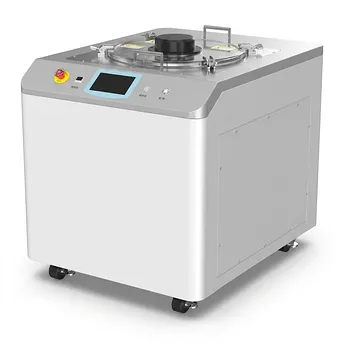
Industrial Planetary Centrifugal Vacuum Defoaming Mixer for High Viscosity Paste and Powder Homogenization
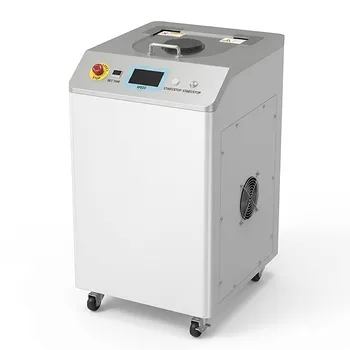
High Viscosity Planetary Centrifugal Vacuum Mixer for Material Defoaming and Uniform Mixing
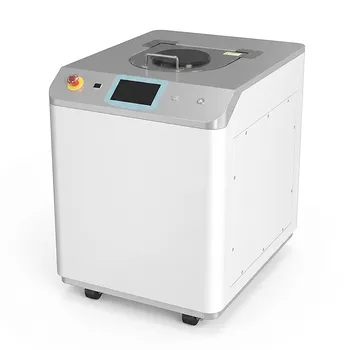
Industrial Planetary Centrifugal Vacuum Defoaming Mixer for High Viscosity Paste and Advanced Material Science
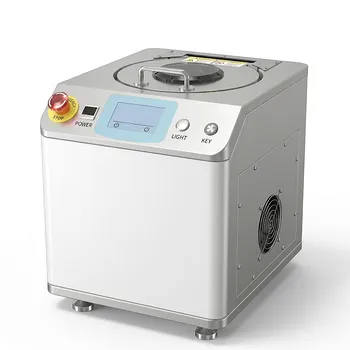
High Efficiency Vacuum Planetary Centrifugal Mixer and Defoaming Machine for Industrial Material Research and Precise Laboratory Powder Dispersion
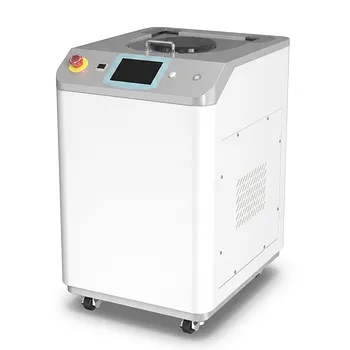
High Viscosity Planetary Centrifugal Mixing and Vacuum Defoaming Machine for Laboratory Material Preparation
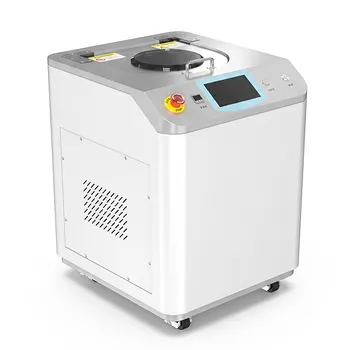
High Speed Vacuum Planetary Centrifugal Mixer and Defoamer for Industrial Paste Processing
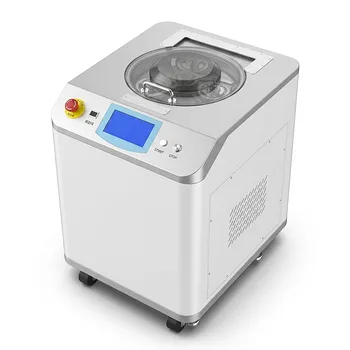
Dual Cup Vacuum Centrifugal Mixer Planetary Paste Defoaming Machine Industrial Material Processor
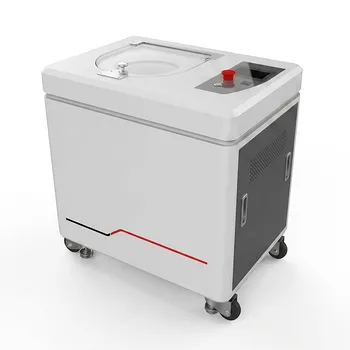
非介入式材料均质机真空脱泡行星搅拌高粘度混合设备

360° Rotating Omnidirectional Laboratory Planetary Ball Mill for Homogeneous Ultra-Fine Grinding and Mixing
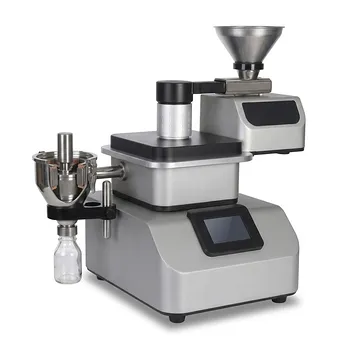
Ultra Centrifugal Mill for Rapid Laboratory Sample Preparation and Fine Powder Grinding
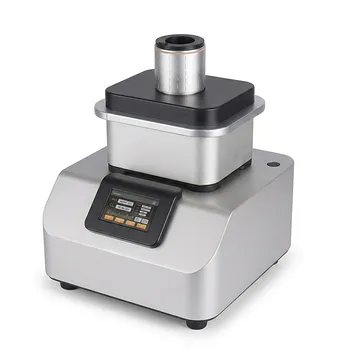
Ultra Centrifugal Mill High Speed Laboratory Grinder for Fibrous and Brittle Sample Preparation
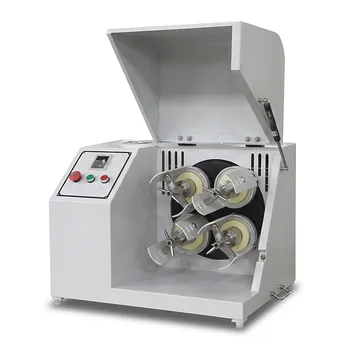
Horizontal Light Duty Planetary Ball Mill for Laboratory Sample Preparation

High Energy Omnidirectional Planetary Ball Mill 20L

Vertical Production Planetary Ball Mill for High Throughput Powder Processing

High Energy Omnidirectional Planetary Ball Mill 16L

Miniature Planetary Ball Mill with Vacuum Grinding and High Efficiency for Laboratory Sample Preparation