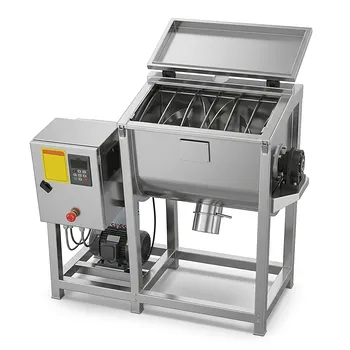
Why is an industrial-grade planetary centrifugal mixer used for secondary stirring? Achieve Void-Free Filler Dispersion
Updated 4 months ago
Planetary centrifugal mixers are essential for secondary stirring because they generate intense shear forces that achieve microscopic uniform dispersion of fillers while simultaneously removing microscopic air bubbles. This dual-action process, driven by high-frequency revolution and rotation, ensures that high-viscosity epoxy resin thoroughly penetrates fillers like silica or boron nitride, which is impossible with traditional mechanical stirring.
Core Takeaway: The planetary centrifugal mixer is used to break down molecular-level filler agglomeration and eliminate internal micro-voids, creating a dense, homogenous composite structure with stable thermal and mechanical properties.
Overcoming Molecular Resistance
Breaking Van der Waals Forces
Industrial-grade planetary mixers utilize a unique combination of high-speed revolution and rotation to generate powerful dispersion energy. This energy is critical for breaking the Van der Waals forces that naturally cause nano and micro-fillers to clump together in a viscous resin matrix.
Deep Resin Penetration
The intense shear forces created during the mixing cycle facilitate the thorough penetration of epoxy resin into the interstitial spaces of the fillers. By forcing the resin into these gaps, the mixer ensures that every filler particle is completely wetted, which is a prerequisite for achieving a high volume percentage of filler loading (often 30-40 vol%).
Ensuring Structural Integrity and Density
Centrifugal Defoaming Action
Unlike traditional blade mixers that often introduce air, the planetary centrifugal mixer performs an integrated defoaming function. The centrifugal forces drive air bubbles to the surface, eliminating micro-voids that would otherwise become stress concentration points or causes of experimental error.
Preventing Pore Defects
By removing microscopic bubbles during the secondary stirring phase, the equipment improves the density and mechanical reliability of the cured sample. This process is vital for preventing internal pore defects that compromise the structural integrity of the final composite material.
Bladeless Kinetic Stability
Because this mixing method is bladeless, it achieves molecular-level uniform dispersion without damaging the physical properties of inorganic fillers. This ensures the kinetic stability of the mixed system, keeping modified segments evenly distributed throughout the coating or matrix.
Optimizing Functional Performance
Building Thermal and Insulation Networks
For composites requiring specific physical properties, such as thermal conductivity, the mixer ensures the formation of stable thermal conduction networks. Uniformly dispersed boron nitride or silica particles must be strategically positioned within the resin to transfer heat or provide insulation effectively.
Facilitating Curing Reactions
During the secondary stage when curing agents are added, the mixer ensures thorough contact and reaction between the agent and the pre-dispersed matrix. This high-speed rotation for a short duration ensures that the chemical reaction occurs uniformly throughout the entire volume of the material.
Understanding the Trade-offs
Heat Generation and Viscosity
The intense shear forces required for dispersion can generate significant frictional heat within high-viscosity resins. While this can temporarily lower viscosity and improve mixing, it may also accelerate the curing reaction of the epoxy, reducing the available working time (pot life).
Equipment Cost and Scalability
Planetary centrifugal mixers are high-precision instruments that represent a higher capital investment compared to simple overhead stirrers. Additionally, while they are superior for high-value, high-performance composites, the batch sizes are typically limited by the capacity of the centrifugal containers.
How to Apply This to Your Project
Recommendations Based on Your Goals
- If your primary focus is thermal management: Use the planetary mixer to ensure fillers like boron nitride form a continuous, non-agglomerated network for maximum heat dissipation.
- If your primary focus is mechanical strength: Prioritize the centrifugal defoaming settings to eliminate micro-voids that lead to premature structural failure during stress testing.
- If your primary focus is high-loading composites: Utilize the high-energy shear settings to wet surface-treated powders, allowing for filler volumes of up to 40% without losing homogeneity.
By leveraging the unique physics of planetary motion, you can transform a simple mixture of resin and filler into a high-performance, defect-free composite material.
Summary Table:
| Feature | Mechanism | Impact on Composite Quality |
|---|---|---|
| High-Shear Dispersion | Breaks Van der Waals forces | Eliminates filler clumps for microscopic uniformity |
| Centrifugal Defoaming | Drives air to the surface | Removes micro-voids and prevents stress concentrations |
| Bladeless Mixing | Kinetic kinetic stability | Protects filler physical properties and prevents contamination |
| High-Energy Wetting | Forced resin penetration | Ensures 100% filler wetting even at high loading (30-40 vol%) |
| Secondary Stirring | Rapid matrix integration | Facilitates uniform curing reactions and thermal networks |
Elevate Your Material Research with Precision Engineering
Ready to eliminate micro-voids and achieve perfect filler dispersion in your composite materials? [Your Brand Name] provides complete laboratory sample preparation solutions for material science, specializing in high-performance powder processing and compaction equipment.
Our extensive product line is designed to handle every stage of your workflow:
- Mixing & Dispersion: Industrial-grade planetary centrifugal mixers, powder mixers, and defoaming mixers for defect-free resins.
- Size Reduction: Advanced mills (planetary ball, jet, sand/bead, disc, rotor) and crushers (jaw/roll) for precise particle sizing.
- Material Compaction: A full spectrum of hydraulic presses, including Cold/Warm Isostatic Presses (CIP/WIP), vacuum hot presses, and XRF pellet presses.
- Analysis Prep: Vibratory and air-jet sieve shakers with specialized test sieves.
Don't let agglomeration or internal defects compromise your results. Contact our experts today to find the ideal equipment for your specific material challenges and ensure the structural integrity of your high-performance composites!
References
- Fuqiang Tian, Shuting Zhang. Effect of Temperature on the Charge Transport Behavior of Epoxy/Nano−SiO2/Micro−BN Composite. DOI: 10.3390/nano12101617
Mentioned Products
- High Viscosity Planetary Centrifugal Vacuum Mixer for Material Defoaming and Uniform Mixing
- High Efficiency Vacuum Planetary Centrifugal Mixer and Defoaming Machine for Industrial Material Research and Precise Laboratory Powder Dispersion
- Industrial Planetary Centrifugal Vacuum Defoaming Mixer for High Viscosity Paste and Powder Homogenization
- High Viscosity Planetary Centrifugal Mixing and Vacuum Defoaming Machine for Laboratory Material Preparation
- High Speed Vacuum Planetary Centrifugal Mixer and Defoamer for Industrial Paste Processing
People Also Ask
- What core functions does a planetary centrifugal mixer perform? Optimize Hard Carbon Anode Slurry & Degassing
- Why is a planetary centrifugal mixer recommended for geopolymer slurries? Achieve high-shear, air-free homogenization.
- Why is a planetary centrifugal mixer utilized for wood powder and HPMC? Achieve uniform dispersion & rapid defoaming.
- How does a planetary centrifugal mixer address key challenges in Tyr-CDs@EVA optical films? Ensure Optical Clarity.
- What is the role of a planetary centrifugal mixer in UHTC slurry preparation? Achieve Void-Free, High-Viscosity Mixing

Tech Team · PowderPreparation
Last updated on Jun 03, 2026
Related Products
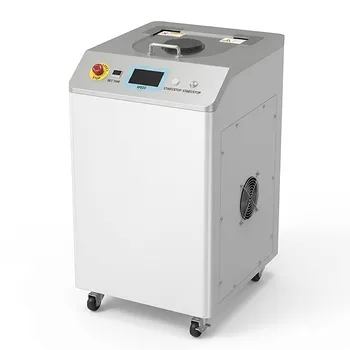
High Viscosity Planetary Centrifugal Vacuum Mixer for Material Defoaming and Uniform Mixing
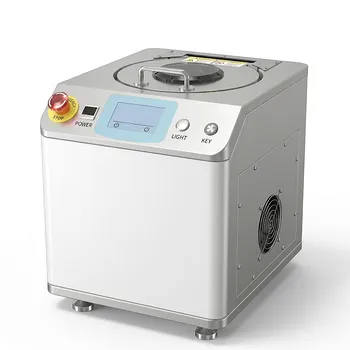
High Efficiency Vacuum Planetary Centrifugal Mixer and Defoaming Machine for Industrial Material Research and Precise Laboratory Powder Dispersion
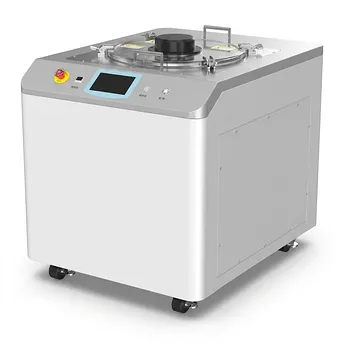
Industrial Planetary Centrifugal Vacuum Defoaming Mixer for High Viscosity Paste and Powder Homogenization
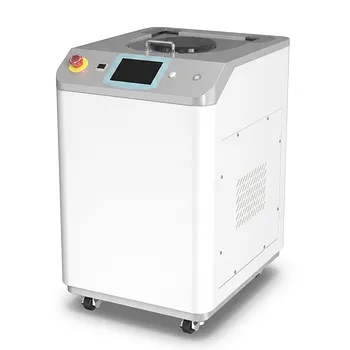
High Viscosity Planetary Centrifugal Mixing and Vacuum Defoaming Machine for Laboratory Material Preparation
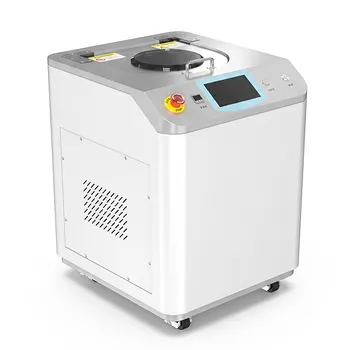
High Speed Vacuum Planetary Centrifugal Mixer and Defoamer for Industrial Paste Processing
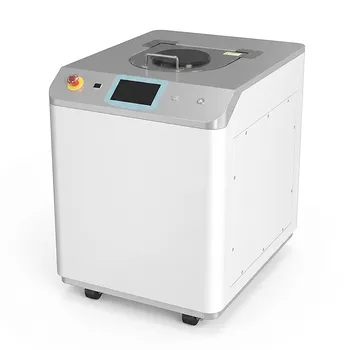
Industrial Planetary Centrifugal Vacuum Defoaming Mixer for High Viscosity Paste and Advanced Material Science
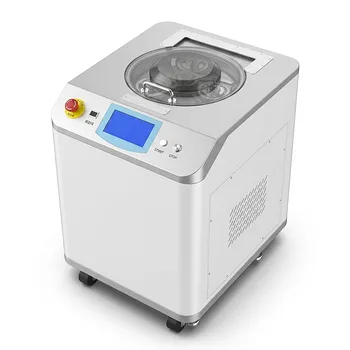
Dual Cup Vacuum Centrifugal Mixer Planetary Paste Defoaming Machine Industrial Material Processor
非介入式材料均质机真空脱泡行星搅拌高粘度混合设备
360° Rotating Omnidirectional Laboratory Planetary Ball Mill for Homogeneous Ultra-Fine Grinding and Mixing
Ultra Centrifugal Mill for Rapid Laboratory Sample Preparation and Fine Powder Grinding
Ultra Centrifugal Mill High Speed Laboratory Grinder for Fibrous and Brittle Sample Preparation
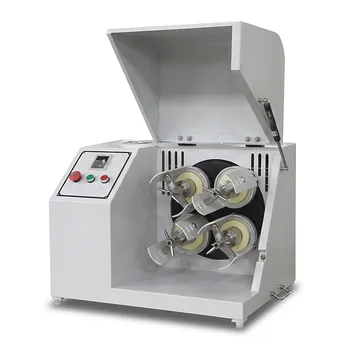
Horizontal Light Duty Planetary Ball Mill for Laboratory Sample Preparation
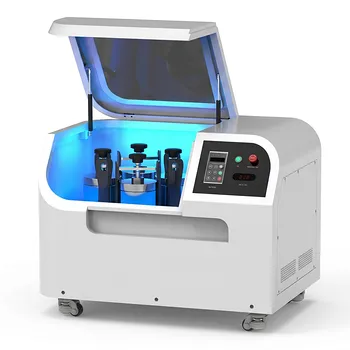
Planetary Ball Mill 12L
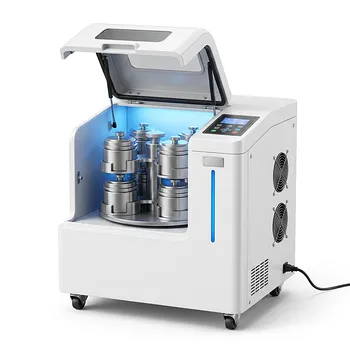
High Energy Omnidirectional Planetary Ball Mill 20L
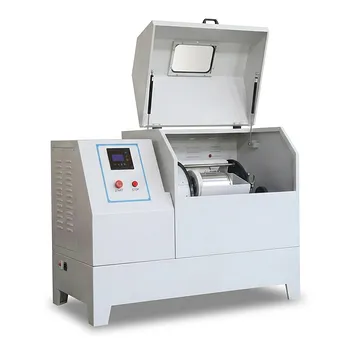
Heavy Duty Horizontal Planetary Ball Mill for Efficient Industrial Grinding and Sample Preparation

Vertical Production Planetary Ball Mill for High Throughput Powder Processing

High Energy Omnidirectional Planetary Ball Mill 16L
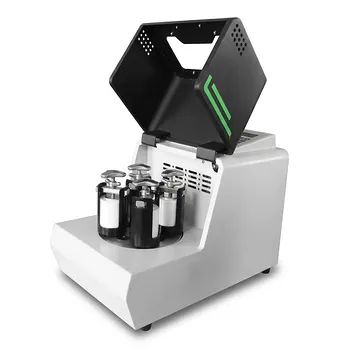
Miniature Planetary Ball Mill with Vacuum Grinding and High Efficiency for Laboratory Sample Preparation
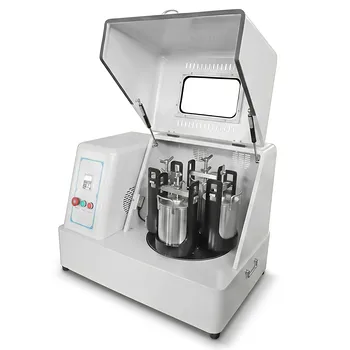
Vertical Square Planetary Ball Mill for Laboratory Sample Preparation and Nanoscale Grinding