What is the purpose of using standard test sieves with specific mesh sizes? Optimize Nanocomposite Precursor Performance
Updated 4 months ago
The use of standard test sieves with specific mesh sizes, such as 0.2mm and 0.16mm, is essential for strictly controlling the particle size distribution of nanocomposite precursors before thermal processing. This precision ensures uniform material flow within reactors and facilitates the consistent escape of gaseous byproducts like nitrogen oxides and water vapor. By eliminating oversized particles and agglomerates, manufacturers can guarantee a final composite with highly predictable pore structures, carbon content, and surface reactivity.
Core Takeaway: Precise sieving transforms inconsistent raw powders into a standardized feedstock, which is the foundational requirement for achieving uniform chemical reactions, optimal surface area, and stable material performance in the final nanocomposite.
Optimizing Thermal Decomposition and Pyrolysis
Ensuring Uniform Gas Diffusion
During the pyrolysis of nanocomposite precursors, thermal decomposition generates gaseous byproducts such as nitrogen oxides and water vapor. If the particle size is uneven, these gases may become trapped or escape inconsistently, leading to internal pressure imbalances.
Standardizing the powder size ensures that gas escape routes are uniform throughout the material mass. This results in a final composite with a highly consistent pore structure and stable carbon content.
Stabilizing Reactor Dynamics
For processes involving rotary reactors, maintaining a uniform particle size is critical for consistent material flow and tumbling. Particles within the 0.16mm to 0.2mm range exhibit predictable mechanical behavior, preventing "dead zones" where material might under-process.
Uniform tumbling ensures that every particle is exposed to the same thermal environment. This level of control is what allows for the mass production of nanocomposites with repeatable technical specifications.
Enhancing Microstructural and Chemical Uniformity
Controlling Specific Surface Area (SSA)
The particle size distribution directly dictates the specific surface area of the precursor powder. In bamboo-based or metallic nanocomposites, this area determines the efficiency of active site loading, such as manganese oxide distribution.
By using specific mesh sizes, technicians can optimize the surface-to-volume ratio. This optimization ensures high adsorption efficiency for target ions, such as Cu(II), in environmental applications.
Eliminating Agglomerates and Secondary Particles
Precursors often form lumps or "secondary agglomerates" during cryogenic ball milling or drying stages. These aggregates can create structural defects in the final product if they are not removed.
Sieving acts as a mechanical "cutoff," ensuring that only particles meeting the strict size threshold proceed. This results in a green body with a consistent internal structure during pressing or coating stages.
Improving Downstream Processability
Maximizing Powder Flowability
For applications involving cold spraying or automated feeding, powder flowability is a non-negotiable requirement. Irregular or oversized particles can cause "bridging" in hoppers or inconsistent feed rates.
Sieving to a fine, uniform grade ensures a stable and continuous supply of powder. This directly impacts the thickness uniformity and quality of resulting coatings or 3D-printed components.
Increasing Green Body Density
In dry pressing processes, the ability of particles to fill a mold efficiently determines the density of the "green body." A controlled distribution of fine particles fills the microscopic voids between larger particles.
This optimized packing leads to higher filling performance and density. The result is a more robust final material that is less prone to structural stress concentrations or segregation.
Understanding the Trade-offs and Challenges
The Risk of Mesh Blinding
Using very fine mesh sizes, such as 0.16mm, increases the risk of "blinding," where particles become wedged in the sieve openings. This can reduce sieving efficiency and lead to inaccurate size distributions if the equipment is not properly maintained or vibrated.
Material Loss vs. Precision
Strict particle size control inherently results in "oversize" waste material that cannot be used in the current batch. Technical advisors must balance the need for extreme precision with the economic realities of material yield, especially when working with expensive precursors.
Contamination Concerns
Repeated contact between abrasive precursor powders and stainless steel sieves can introduce trace metallic contaminants. For high-purity nanocomposite applications, the sieve material must be carefully selected to ensure it does not compromise the chemical integrity of the precursor.
How to Apply This to Your Project
Implementation Guidelines
- If your primary focus is Adsorption or Catalysis: Prioritize the 0.16mm (160μm) or finer range to maximize specific surface area and ensure uniform loading of active phases.
- If your primary focus is Structural Integrity or Pressing: Use a 0.2mm (200μm) sieve to eliminate large agglomerates that act as stress concentrators, ensuring a high-density green body.
- If your primary focus is Thermal Synthesis (Pyrolysis): Focus on achieving a narrow distribution "envelope" between 0.16mm and 0.2mm to ensure predictable gas escape and carbonization.
By mastering particle size distribution through standardized sieving, you ensure that your nanocomposite precursors transition from raw chemicals to high-performance engineered materials with total consistency.
Summary Table:
| Application Goal | Benefit of Precise Sieving | Key Material Outcome |
|---|---|---|
| Thermal Pyrolysis | Facilitates uniform gas diffusion | Consistent pore structure & carbon content |
| Surface Engineering | Controls Specific Surface Area (SSA) | High adsorption efficiency & active site loading |
| Powder Processing | Eliminates agglomerates & lumps | Improved flowability & coating uniformity |
| Material Compaction | Optimizes particle packing density | High-density green bodies without defects |
Elevate Your Material Research with Precision Sample Preparation
Achieving consistent results in nanocomposite synthesis requires absolute control over particle size and powder quality. At [Your Brand Name], we provide complete laboratory sample preparation solutions tailored for material science.
From eliminating agglomerates to preparing high-density green bodies, our expert-grade equipment ensures your precursors meet the strictest technical specifications:
- Powder Processing: High-performance sieve shakers (vibratory and air-jet) with precision meshes, plus a full range of planetary ball mills, jet mills, and cryogenic grinders.
- Compaction & Synthesis: Advanced Cold/Warm Isostatic Presses (CIP/WIP), vacuum hot presses, and XRF pellet presses for superior material density.
- Mixing Excellence: Specialized powder and defoaming mixers for perfectly homogeneous precursors.
Ready to optimize your lab's workflow? Contact our technical team today to find the perfect solution for your powder processing and compaction needs!
References
- В.М. Гунько, J. Skubiszewska–Zięba. Nanostructured composites with precipitated silica – Ni crystallites coated by char with carbonized starch. DOI: 10.15407/hftp14.02.143
Mentioned Products
- Laboratory Vibratory Test Sieve Shaker for Precision Particle Size Analysis and Powder Grading
- Small Laboratory Vibrating Sieve Shaker for Precise Particle Size Analysis
- Small Laboratory Vibratory Sieve Shaker for Powder Gradation and Particle Size Analysis
- 三维电磁微量振动筛分仪
- Laboratory Dry and Wet Three Dimensional Vibratory Sieve Shaker for Particle Analysis
People Also Ask
- What role does a laboratory sieve shaker play in determining PDI? Achieve Precision in Biomass Quality Testing
- What are the functions of sieve shakers for coconut shell powder? Achieve Precise Particle Size & Quality Control.
- What function does a laboratory sieve shaker perform in the PSD analysis of residual soil? Ensure Precise Grading
- What is the role of a laboratory sieve shaker in the preparation of plantain peel adsorbents? Standardize Particle Size
- What is the function of a laboratory vibratory sieve shaker? Enhance Coal Particle Size Distribution (PSD) Analysis

Tech Team · PowderPreparation
Last updated on Jun 03, 2026
Related Products

Laboratory Vibratory Test Sieve Shaker for Precision Particle Size Analysis and Powder Grading

Small Laboratory Vibrating Sieve Shaker for Precise Particle Size Analysis

Small Laboratory Vibratory Sieve Shaker for Powder Gradation and Particle Size Analysis

三维电磁微量振动筛分仪
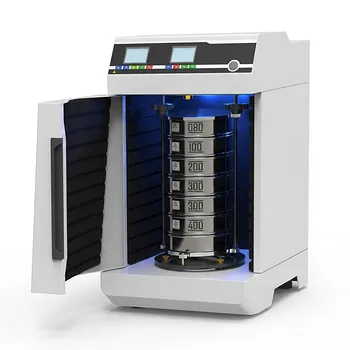
Laboratory Dry and Wet Three Dimensional Vibratory Sieve Shaker for Particle Analysis
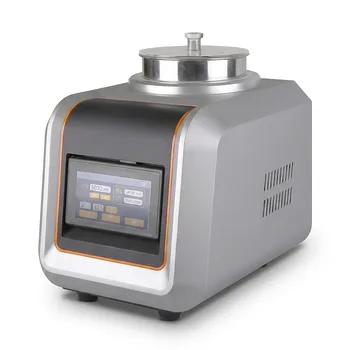
Laboratory Air Jet Sieving Machine for Fine Powder Particle Size Analysis and Deagglomeration

High Frequency Wet Three-Dimensional Vibrating Sieve Shaker for Dry and Wet Particle Size Analysis

Vibratory Sieve Shaker Electromagnetic 3D Motion Powder Particle Size Analyzer for Dry and Wet Sieving

Tapping Oscillating Sieve Shaker for Dry and Wet Particle Size Analysis

Dry Three Dimensional Vibratory Sieve Shaker

Heavy Duty Dry Three Dimensional Vibratory Sieve Shaker for Particle Separation

Stainless Steel Rotary Vibrating Sieve High Precision Circular Vibratory Separator Industrial Powder Grading Machine Multi Layer Sifting Equipment

Three Dimensional Rotary Vibrating Sieve
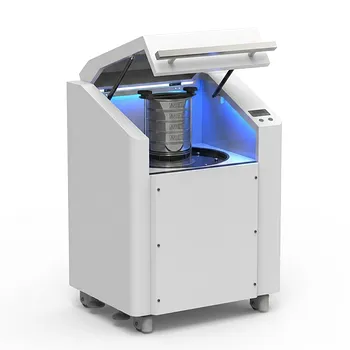
High Frequency Cabinet Type Three-Dimensional Rotary Vibrating Sieve Shaker for Dry Sieving and Particle Classification
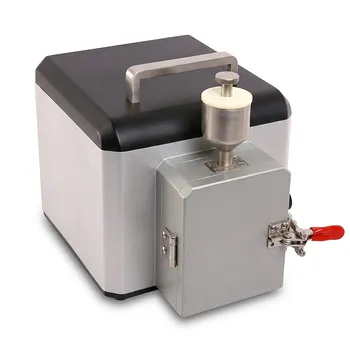
Portable Cutting Mill for Laboratory Sample Preparation and RoHS WEEE Compliance Testing
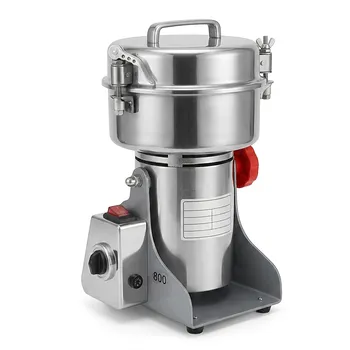
Small High-Speed Laboratory Grinder for Rapid Sample Preparation
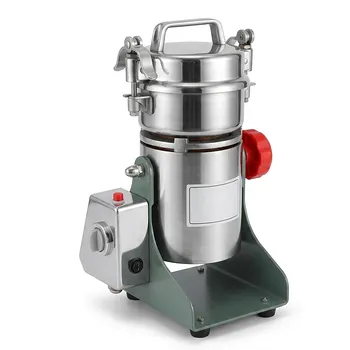
High Speed Swing Type Laboratory Pulverizer for Fine Powder Grinding and Sample Preparation
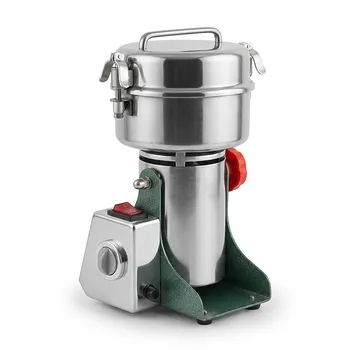
Small High-Speed Swing Grinder for Laboratory Sample Preparation
Continuous Feeding Grinder High Efficiency Pulverizer for Lab Sample Preparation