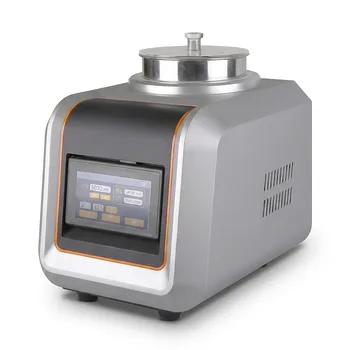
What is the purpose of automatic vibratory sieve shakers in DE grading? Ensure Precision & Scientific Validity
Updated 4 months ago
Precision particle grading of diatomaceous earth is essential for establishing a scientific correlation between particle size and specific functional outcomes. Using an automatic vibratory sieve shaker alongside precision metal test sieves (with apertures such as 20, 75, 150, and 250 µm) allows researchers to classify micronized components into distinct fractions. This process ensures the scientific validity and comparability of experimental data, particularly when studying how particle size influences variables like insecticidal efficacy.
The combination of vibratory shakers and precision sieves transforms raw diatomaceous earth into standardized technical components. By isolating specific particle size fractions, users can control the physical and chemical performance of the material for specialized industrial and biological applications.
Achieving Scientific Validity through Precise Grading
Defining Particle Size Fractions
Diatomaceous earth (DE) is frequently micronized for use in sensitive applications. Precision metal test sieves allow for the isolation of specific ranges, such as 20 µm to 250 µm, which are critical for consistent testing.
Ensuring Data Comparability
Without standardized mechanical separation, experimental results cannot be accurately replicated. Using an automatic vibratory sieve shaker removes human error and provides the stable vibration frequency necessary for repeatable grading.
Correlating Size to Efficacy
In biological studies, the insecticidal efficacy of DE is directly tied to its abrasive and absorptive qualities, which vary by size. Precise grading allows researchers to pinpoint the "sweet spot" where particle size maximizes impact on target pests.
Mechanics of the Vibratory Sieve Shaker
The Role of Mechanical Vibration
The shaker uses mechanical power to move particles across a stack of sieves with decreasing aperture sizes. This motion ensures that every particle has multiple opportunities to pass through the mesh, leading to a more accurate cut-point.
Maintaining Consistent Frequency
Unlike manual shaking, an automatic shaker provides a stable vibration frequency. This consistency is vital for ensuring that finer particles (like silt-sized fractions at 0.075 mm) are effectively separated from larger aggregates.
Protecting Sieve Integrity
Precision metal sieves are delicate instruments. The controlled motion of a vibratory shaker helps prevent the "blinding" (clogging) of the mesh while ensuring the physical integrity of the micronized DE particles is maintained during the process.
Impact on Industrial and Research Applications
Optimization of Physical Properties
Beyond insecticidal use, grading influences how DE behaves in liquids. Precise particle size distribution (PSD) is decisive for studying defluoridation kinetics and managing pressure drops in filtration beds.
Maximizing Packing Density
In structural applications, controlling the grading curve allows for maximum packing density. This reduces porosity and optimizes the physical structure of the material, which is a principle shared with high-performance concrete and asphalt grading.
Standardizing Raw Materials
Whether used in pest control or as a mineral filler, standardized fractions provide uniform raw materials. This uniformity is fundamental for creating accurate strength models or predicting how the material will react in high-temperature environments.
Understanding the Trade-offs and Pitfalls
The Risk of Sample Degradation
Over-sieving or using excessive vibration intensity can cause attrition, where the DE particles break down into even smaller fragments during the test. This results in a "false" grading report that does not reflect the original material.
Sieve Blinding and Maintenance
Micron-sized particles are prone to static electricity and moisture, which can cause them to stick to the metal mesh. Failure to properly clean and calibrate precision sieves leads to inaccurate data and rapid equipment wear.
Limitations of Mechanical Sieving
While effective for ranges down to 20 µm, mechanical sieving becomes less reliable for sub-micron particles. At extremely fine scales, the physical properties of the DE may require air-jet sieving or laser diffraction for true accuracy.
Making the Right Choice for Your Goal
Effective grading requires aligning your equipment settings with your specific research or production objectives.
- If your primary focus is biological efficacy testing: Use the narrowest possible aperture ranges (e.g., 20-75 µm) to isolate the exact size fractions that interact most aggressively with target organisms.
- If your primary focus is filtration or flow dynamics: Prioritize the consistency of the vibratory frequency to ensure a repeatable particle size distribution curve, which is critical for calculating bed pressure drops.
- If your primary focus is material standardization for manufacturing: Implement a strict sieve maintenance and calibration schedule to ensure that your raw material grading remains uniform across different production batches.
Precision in particle grading is the bridge between raw mineral potential and predictable, high-performance application results.
Summary Table:
| Feature | Function in DE Grading | Key Benefit |
|---|---|---|
| Automatic Vibration | Removes human error & provides stable frequency | Ensures repeatable & standardized grading data |
| Precision Metal Mesh | Isolates specific fractions (20-250 µm) | Enables accurate correlation between size & efficacy |
| Controlled Motion | Prevents mesh blinding & particle attrition | Maintains sample integrity & extends sieve lifespan |
| Mechanical Separation | Uniformly distributes particles across stacks | Optimizes packing density & physical properties |
Elevate Your Material Analysis with Precision Equipment
Achieving scientific validity in diatomaceous earth grading requires more than just standard tools—it demands precision and reliability. [Our Brand] provides complete laboratory sample preparation solutions for material science, specializing in high-performance powder processing and compaction equipment.
From our automatic vibratory and air-jet sieve shakers that ensure accurate particle size distribution to our extensive lines of crushers, planetary ball mills, and hydraulic presses (CIP/WIP), we offer the technical edge your research deserves. Whether you are optimizing insecticidal efficacy or structural packing density, our equipment is designed to deliver consistent, high-quality results.
Ready to optimize your lab’s efficiency? Contact our experts today to find the perfect solution for your powder processing needs!
References
- Songül Henteş, Ali Arda Işıkber. Insecticidal efficacy of local diatomaceous earth compositions with different particle sizes against stored grain pests. DOI: 10.16970/entoted.1518849
Mentioned Products
- Vibratory Sieve Shaker Electromagnetic 3D Motion Powder Particle Size Analyzer for Dry and Wet Sieving
- Small Laboratory Vibratory Sieve Shaker for Powder Gradation and Particle Size Analysis
- Laboratory Dry and Wet Three Dimensional Vibratory Sieve Shaker for Particle Analysis
- Stainless Steel Laboratory Vibratory Test Sieve Shaker
- Heavy Duty Dry Three Dimensional Vibratory Sieve Shaker for Particle Separation
People Also Ask
- How does a vibratory sieve shaker contribute to optimizing the performance of activated carbon? Enhance Adsorption Precision
- Why is a laboratory vibratory sieve shaker necessary for processing magnesium-based borate precursor powders? Boost Activity
- Why use a vibratory sieve shaker to verify coarse aggregate grading in rubberized concrete? Ensure Structural Integrity
- What function do vibratory sieve shakers and standard test sieves serve in the preparation of adsorbents? Key Guide
- What role does a vibratory sieve shaker play in the particle size analysis of ground corn products? Enhance QC Precision

Tech Team · PowderPreparation
Last updated on Jun 03, 2026
Related Products
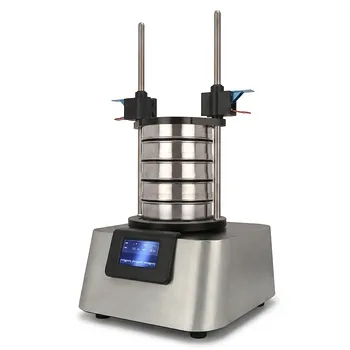
Vibratory Sieve Shaker Electromagnetic 3D Motion Powder Particle Size Analyzer for Dry and Wet Sieving
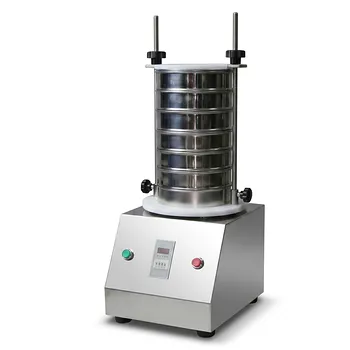
Small Laboratory Vibratory Sieve Shaker for Powder Gradation and Particle Size Analysis
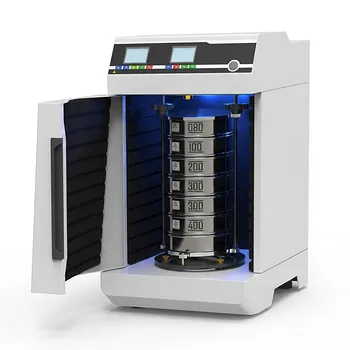
Laboratory Dry and Wet Three Dimensional Vibratory Sieve Shaker for Particle Analysis
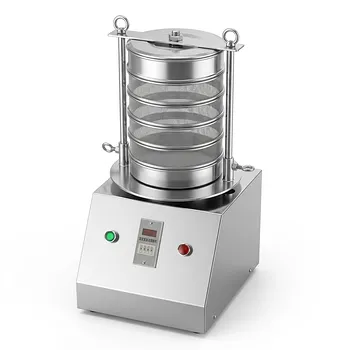
Stainless Steel Laboratory Vibratory Test Sieve Shaker
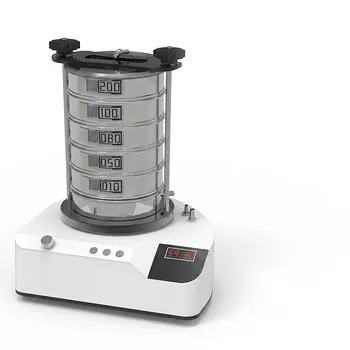
Heavy Duty Dry Three Dimensional Vibratory Sieve Shaker for Particle Separation
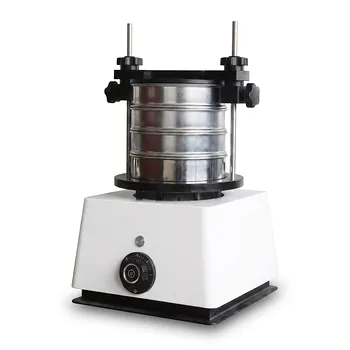
Small Laboratory Vibrating Sieve Shaker for Precise Particle Size Analysis
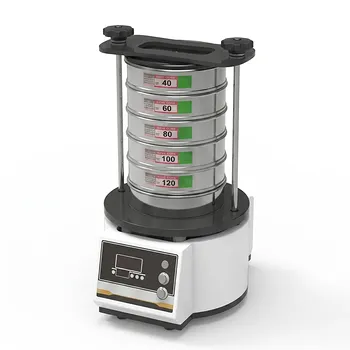
Dry Three Dimensional Vibratory Sieve Shaker
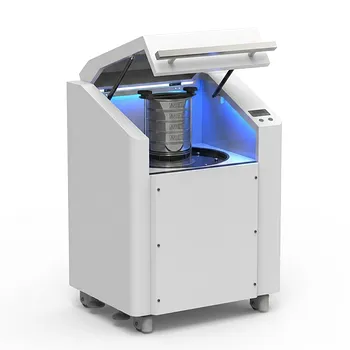
High Frequency Cabinet Type Three-Dimensional Rotary Vibrating Sieve Shaker for Dry Sieving and Particle Classification
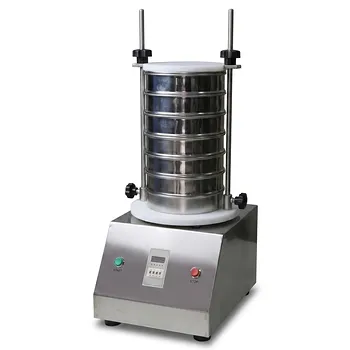
Laboratory Vibratory Test Sieve Shaker for Precision Particle Size Analysis and Powder Grading
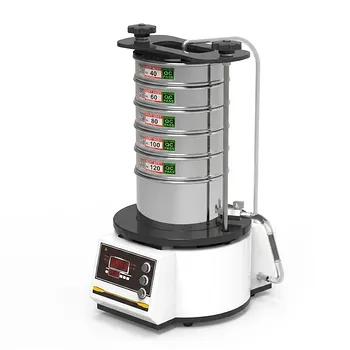
High Frequency Wet Three-Dimensional Vibrating Sieve Shaker for Dry and Wet Particle Size Analysis
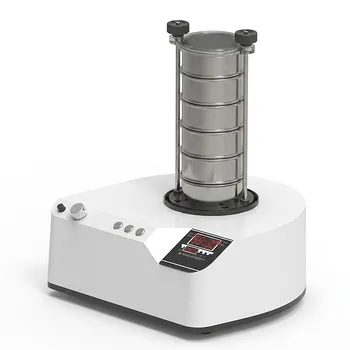
三维电磁微量振动筛分仪
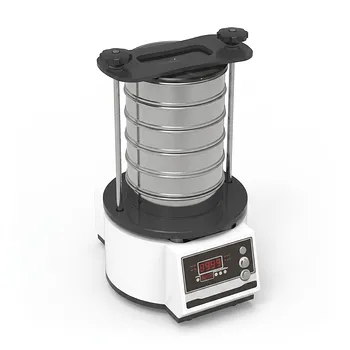
Tapping Oscillating Sieve Shaker for Dry and Wet Particle Size Analysis
Automatic Vibrating Powder Feeder for Laboratory Material Processing Precision Vibratory Hopper Feeder for Granular and Powder Material Handling Industrial Grade Vibrating Tray Feeder for Consistent Material Sample Preparation

Stainless Steel Rotary Vibrating Sieve High Precision Circular Vibratory Separator Industrial Powder Grading Machine Multi Layer Sifting Equipment
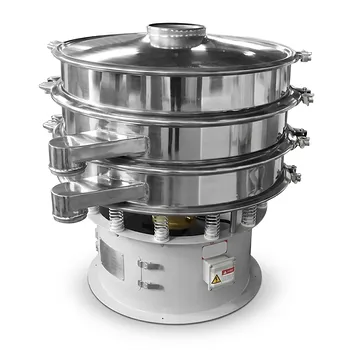
Three Dimensional Rotary Vibrating Sieve
Vibratory Superfine Grinder for Ultra Fine Laboratory Powder Milling
Small Vibrating Ultrafine Grinder for Traditional Chinese Medicine
Vibratory Disc Mill for Rapid Fine Grinding and High Throughput Sample Preparation of Hard and Brittle Materials
High Energy Hybrid Vibratory Ball Mill for Grinding Mixing and Cell Disruption