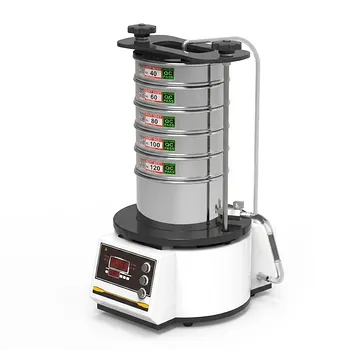
What is the purpose of using a 40μm fine sieve for classification and desliming prior to phosphate reverse flotation?
Updated 4 months ago
The primary purpose of using a 40μm fine sieve prior to phosphate reverse flotation is to remove ultrafine "slime" particles that interfere with the chemical and physical efficiency of the separation process. By eliminating these sub-40μm particles, operators prevent non-selective reagent consumption and the physical coating of larger mineral grains, which significantly enhances the final $P_2O_5$ grade of the concentrate.
Using a 40μm sieve serves as a critical "desliming" step that purifies the flotation environment. This ensures that chemical reagents target the intended minerals rather than being wasted on high-surface-area fines, leading to higher selectivity and lower operational costs.
Protecting Flotation Chemistry and Reagent Efficiency
Reducing Excessive Reagent Consumption
Ultrafine slime particles possess a disproportionately high surface area relative to their mass. These particles non-selectively absorb flotation reagents, requiring much higher chemical dosages to achieve the desired reaction. Removing these fines via a 40μm sieve ensures that reagents are available to interact specifically with the target minerals.
Preventing Non-Selective Particle Coating
Slime particles have a tendency to physically coat the surfaces of larger, valuable mineral grains. This "slime coating" creates a barrier that prevents collectors from attaching to the intended phosphate particles. Effective classification strips away these interfering fines before they can compromise the selectivity of the flotation stage.
Optimizing the Physical Flotation Environment
Ensuring Bubble Stability and Attachment
The presence of excessive fine clay and siliceous gangue can destabilize the froth layer or interfere with bubble formation. Consistent particle sizing through desliming leads to more predictable and stable bubble-particle attachment. This stability is essential for maintaining high separation efficiency and ensuring that gangue is rejected effectively.
Enhancing Final $P_2O_5$ Grade
Eliminating fine gangue at the pre-treatment stage directly improves the purity of the flotation feed. This allows the reverse flotation process to focus exclusively on removing coarser impurities rather than struggling with microscopic waste. The result is a final phosphate concentrate with a significantly higher $P_2O_5$ percentage and better commercial value.
Understanding the Trade-offs
Potential Loss of Fine Values
Aggressive desliming at the 40μm threshold may result in the loss of extremely fine phosphate particles that are otherwise valuable. Operators must carefully monitor the cut point to ensure that the gain in concentrate grade is not offset by an unacceptable drop in total recovery.
Maintenance and Equipment Wear
Fine sieves are susceptible to "blinding," where particles become lodged in the mesh, reducing throughput. Regular maintenance and the use of wet desliming techniques are necessary to ensure the 40μm sieve continues to perform its classification role accurately.
Making the Right Choice for Your Goal
When implementing a desliming stage, your specific processing objectives should dictate your sieve parameters.
- If your primary focus is Maximum Grade: Utilize a strict 40μm cut point to remove as much clay and siliceous slime as possible to ensure the highest $P_2O_5$ concentration.
- If your primary focus is Reagent Cost Reduction: Prioritize thorough wet desliming to eliminate high-surface-area fines that trigger excessive chemical consumption.
- If your primary focus is Total Mass Recovery: Consider a slightly smaller mesh size or a multi-stage classification process to recover fine phosphate while still removing the most problematic ultrafine slimes.
Implementing a precise 40μm desliming step transforms the flotation environment from a chaotic, reagent-heavy process into a streamlined, high-efficiency separation system.
Summary Table:
| Key Benefit | Action / Mechanism | Operational Impact |
|---|---|---|
| Reagent Efficiency | Removes high-surface-area fines | Significant reduction in chemical consumption |
| Surface Protection | Prevents "slime coating" on grains | Improves collector attachment to phosphate |
| Process Stability | Ensures predictable bubble formation | More stable froth and higher mineral recovery |
| Grade Enhancement | Pre-purifies flotation feed | Directly increases final P2O5 concentration |
Optimize Your Mineral Processing Workflow with Precision Equipment
Achieving high-purity concentrates starts with accurate sample preparation. [Our Brand Name] provides complete laboratory solutions for material science, specializing in high-performance powder processing and compaction equipment.
Whether you need to ensure precise 40μm desliming using our vibratory or air-jet sieve shakers or require robust size reduction with our jaw crushers and planetary ball mills, we have the expertise to enhance your lab's efficiency. Our full spectrum of equipment includes:
- Sieving Solutions: Comprehensive range of test sieves and meshes for accurate classification.
- Milling & Grinding: Jet mills, sand mills, and cryogenic grinders for ultrafine particle sizing.
- Compaction Excellence: Cold/Warm Isostatic Presses (CIP/WIP), vacuum hot presses, and standard lab presses for material research.
- Mixing Technology: Advanced powder and defoaming mixers for uniform sample preparation.
Ready to improve your $P_2O_5$ grade and reduce operational costs? Contact our technical experts today to find the perfect equipment for your material science applications!
References
- Khadija Lalam, Ahmed Chebak. Evaluation and Optimization of Phosphate Recovery from Coarse Rejects Using Reverse Flotation. DOI: 10.3390/su16198614
Mentioned Products
- Laboratory Air Jet Sieving Machine for Fine Powder Particle Size Analysis and Deagglomeration
- 三维电磁微量振动筛分仪
- Jaw Crusher with 400x600mm Feed Opening for Primary Rock Crushing in Mining and Construction
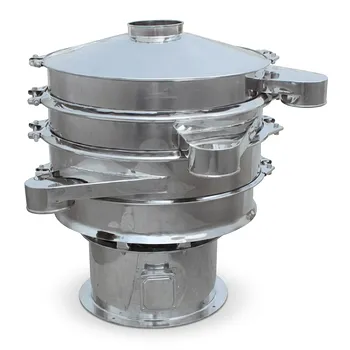
- Stainless Steel Rotary Vibrating Sieve High Precision Circular Vibratory Separator Industrial Powder Grading Machine Multi Layer Sifting Equipment
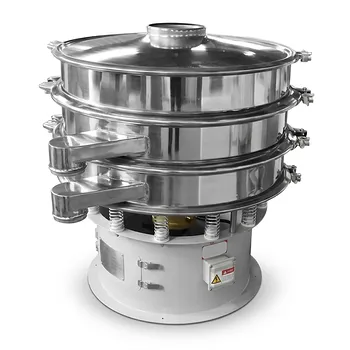
- Three Dimensional Rotary Vibrating Sieve
People Also Ask
- What role do laboratory test sieves play in the nanocrystallization process of iron powder? Ensure Uniform Refinement
- What is the function of a laboratory test sieve in the river sediment sample preparation process? Ensure Precise Data
- What is the purpose of using 0.038 mm sieves in magnetite grinding? Quantify Kinetics and Boost Grinding Efficiency
- How do laboratory test sieves contribute to the analysis of soil texture composition? Optimize Particle Grading Accuracy
- Why is a 0.08mm standard sieve required for testing the fineness of cement? Optimize Recycled Pervious Concrete Quality

Tech Team · PowderPreparation
Last updated on Jun 03, 2026
Related Products
Laboratory Air Jet Sieving Machine for Fine Powder Particle Size Analysis and Deagglomeration
三维电磁微量振动筛分仪
Jaw Crusher with 400x600mm Feed Opening for Primary Rock Crushing in Mining and Construction
Stainless Steel Rotary Vibrating Sieve High Precision Circular Vibratory Separator Industrial Powder Grading Machine Multi Layer Sifting Equipment
Three Dimensional Rotary Vibrating Sieve
Heavy Duty Dry Three Dimensional Vibratory Sieve Shaker for Particle Separation
Vibratory Sieve Shaker Electromagnetic 3D Motion Powder Particle Size Analyzer for Dry and Wet Sieving
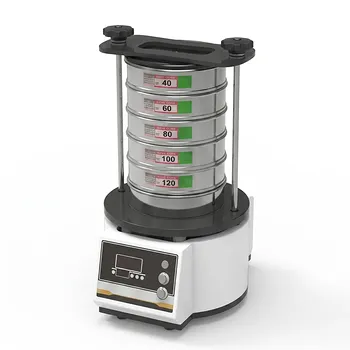
Dry Three Dimensional Vibratory Sieve Shaker
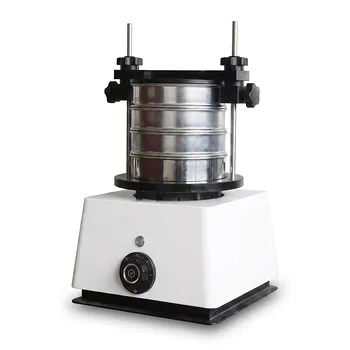
Small Laboratory Vibrating Sieve Shaker for Precise Particle Size Analysis
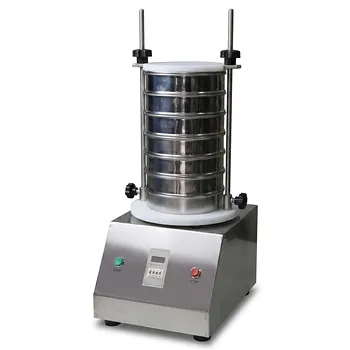
Laboratory Vibratory Test Sieve Shaker for Precision Particle Size Analysis and Powder Grading