What is the purpose of using a 300-mesh test sieve for ceramic powders? Optimize Density & Structural Integrity
Updated 4 months ago
The use of a 300-mesh test sieve is a critical refinement step designed to ensure the microstructural integrity of the final ceramic. By processing pre-mixed high-entropy ceramic powders through this specific mesh, manufacturers effectively break up soft agglomerates formed during the drying stage and filter out large-sized impurities. This ensures a high degree of particle size uniformity, which is foundational for achieving a dense, defect-free green body during the pressing phase.
Core Takeaway: A 300-mesh sieve acts as a quality gate that eliminates oversized particles and aggregates, ensuring a uniform micron-level powder. This uniformity is essential for consistent particle packing, which prevents the formation of density gradients and micropores during the sintering of high-entropy ceramics.
Enhancing Structural Uniformity and Density
Eliminating Agglomerates and Impurities
During the drying of ceramic powders, "soft agglomerates" frequently form, which can compromise the consistency of the mix. The 300-mesh sieve mechanically breaks these clusters apart, restoring the powder to its intended primary particle state.
Additionally, the sieve acts as a filter for large-sized impurities or unground particles. Removing these outliers is vital because even a small number of oversized particles can create localized stress points during the forming process.
Optimizing Particle Packing Density
The uniformity provided by a 300-mesh sieve allows particles to pack more efficiently during dry pressing or molding. High-entropy ceramics require a high green body density to ensure that the final product reaches its theoretical strength.
When particles are of a consistent, controlled size, they fill the mold more effectively, leaving fewer gaps. This results in a homogeneous structure that is free from the density gradients that often lead to warping or cracking during heat treatment.
Improving Sintering and Performance Reliability
Achieving Micron-Level Precision
A 300-mesh sieve specifically limits the powder particle size to approximately 50 microns or less. This level of precision is necessary to reach the micron-level scale required for advanced high-entropy ceramic applications.
Controlling the size to this degree ensures that if a binder is used, it can achieve complete coating coverage. This leads to superior mechanical bonding and more predictable chemical reactions during the sintering phase.
Preventing Internal Defects and Voids
Uniform particle distribution directly prevents the formation of micropores within the final ceramic structure. Micropores are often the result of air pockets or irregular gaps caused by oversized aggregates that failed to pack tightly.
By ensuring a consistent size distribution, the sieve helps the ceramic achieve uniform sintering shrinkage. This predictable shrinkage is the key to producing components with high dimensional accuracy and structural reliability.
Understanding the Trade-offs
Process Efficiency vs. Precision
While a 300-mesh sieve provides excellent precision, it can significantly increase processing time compared to lower mesh counts. The finer the mesh, the more likely it is to "blind" or clog, requiring mechanical agitation or ultrasonic assistance to maintain throughput.
Soft vs. Hard Agglomerates
A sieve is highly effective at breaking up soft agglomerates formed during drying, but it cannot reduce hard aggregates formed during high-temperature synthesis. If hard aggregates are present, the material may require secondary ball milling before it can successfully pass through a 300-mesh screen.
Risk of Mesh Contamination
In high-purity ceramic production, the material of the sieve itself must be considered. Prolonged sieving of abrasive high-entropy powders can cause mesh wear, potentially introducing trace metallic impurities into the ceramic powder.
Applying This to Your Production Goal
How to Apply This to Your Project
The selection and implementation of a 300-mesh sieving step should be tailored to the specific performance requirements of your ceramic component.
- If your primary focus is maximum mechanical strength: Perform sieving immediately before the pressing stage to ensure the highest possible green body density and minimal internal voids.
- If your primary focus is chemical homogeneity: Use the 300-mesh sieve to guarantee a consistent specific surface area, which facilitates uniform chemical reactions and phase stability.
- If your primary focus is precision dimensions: Ensure strict particle size control to achieve predictable sintering shrinkage and reduce the need for post-sintering machining.
Properly executed sieving transforms a raw powder into a high-performance precursor capable of meeting the rigorous demands of high-entropy ceramic applications.
Summary Table:
| Key Feature | Role in Ceramic Processing | Impact on Final Material |
|---|---|---|
| Mesh Size (300) | Filters particles to ≤ 50 microns | Ensures micron-level precision and uniformity |
| Agglomerate Removal | Breaks up "soft" clusters from drying | Restores powder to primary particle state |
| Impurity Filtering | Removes oversized unground particles | Prevents localized stress and cracking |
| Packing Efficiency | Optimizes particle arrangement | Higher green body density and lower porosity |
| Sintering Control | Ensures uniform surface area | Predictable shrinkage and dimensional accuracy |
Elevate Your Material Science Research with Precision Powder Processing
Achieving the perfect high-entropy ceramic requires more than just quality powders; it demands precision equipment. We provide complete laboratory sample preparation solutions tailored for advanced material science and powder metallurgy.
Our extensive product line is designed to handle every stage of your workflow:
- Processing & Milling: High-performance planetary ball mills, jet mills, and cryogenic grinders to achieve the ideal primary particle size.
- Sieving & Classification: Vibratory and air-jet sieve shakers with high-precision test sieves (including 300-mesh and finer) to ensure perfect uniformity.
- Mixing: Specialized powder and vacuum defoaming mixers for homogeneous chemical distribution.
- Compaction & Pressing: A full spectrum of hydraulic presses, including Cold/Warm Isostatic Presses (CIP/WIP), vacuum hot presses, and XRF pellet presses to guarantee maximum green body density.
Whether you are a researcher or a high-tech manufacturer, our equipment ensures your materials meet the most rigorous standards. Contact our experts today to optimize your lab workflow!
References
- Jiahang Liu, Honglin Guo. A novel high-entropy (Sc0.2La0.2Sm0.2Er0.2Yb0.2)2Zr2O7 ceramics with excellent thermophysical properties designed by thermal properties tailoring theory. DOI: 10.2298/pac2504334l
Mentioned Products
- Stainless Steel Laboratory Vibratory Test Sieve Shaker
- Laboratory Vibratory Test Sieve Shaker for Precision Particle Size Analysis and Powder Grading
- Small Laboratory Vibrating Sieve Shaker for Precise Particle Size Analysis
- Laboratory Air Jet Sieving Machine for Fine Powder Particle Size Analysis and Deagglomeration
- 三维电磁微量振动筛分仪
People Also Ask
- What function does a laboratory vibratory sieve shaker serve in the production process of metakaolin? Optimize Reactivity
- Why is a precision laboratory vibratory sieve shaker necessary for particle size control? Optimize Biomass Carbonization
- What is the function of a laboratory vibratory sieve shaker? Enhance Coal Particle Size Distribution (PSD) Analysis
- What role do laboratory vibratory sieve shakers and test sieves play before the molding of Nb-Cu composite powders?
- What is the primary function of a laboratory vibratory sieve shaker in the evaluation of sand liquefaction potential?

Tech Team · PowderPreparation
Last updated on Jun 03, 2026
Related Products

Stainless Steel Laboratory Vibratory Test Sieve Shaker

Laboratory Vibratory Test Sieve Shaker for Precision Particle Size Analysis and Powder Grading

Small Laboratory Vibrating Sieve Shaker for Precise Particle Size Analysis
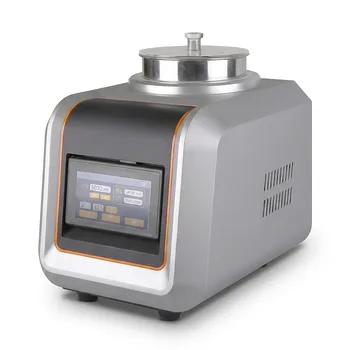
Laboratory Air Jet Sieving Machine for Fine Powder Particle Size Analysis and Deagglomeration

三维电磁微量振动筛分仪

Three Dimensional Rotary Vibrating Sieve

Small Laboratory Vibratory Sieve Shaker for Powder Gradation and Particle Size Analysis

Stainless Steel Rotary Vibrating Sieve High Precision Circular Vibratory Separator Industrial Powder Grading Machine Multi Layer Sifting Equipment

Laboratory Dry and Wet Three Dimensional Vibratory Sieve Shaker for Particle Analysis

Vibratory Sieve Shaker Electromagnetic 3D Motion Powder Particle Size Analyzer for Dry and Wet Sieving

Heavy Duty Dry Three Dimensional Vibratory Sieve Shaker for Particle Separation

High Frequency Cabinet Type Three-Dimensional Rotary Vibrating Sieve Shaker for Dry Sieving and Particle Classification

Dry Three Dimensional Vibratory Sieve Shaker
