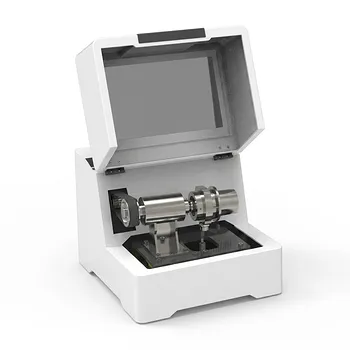
What is the purpose of secondary ball milling for Y-type hexagonal ferrite? Optimize densification & additive dispersion
Updated 4 months ago
Secondary ball milling is the critical bridge between pre-sintering and final densification. In the production of Y-type hexagonal ferrites, this process ensures that sintering aids like bismuth oxide (Bi₂O₃) achieve an atomic-level uniform coating on the ferrite particles, which is essential for creating a continuous liquid phase that allows for high-density material formation at significantly lower temperatures.
Core Takeaway: Secondary ball milling transforms pre-sintered ceramic blocks into active sub-micron powders while simultaneously dispersing low-melting-point additives. This ensures a homogeneous liquid phase during final sintering, which is the primary mechanism for achieving structural densification and optimized electrical properties.
Achieving Homogeneous Additive Distribution
Facilitating Liquid Phase Sintering
The introduction of bismuth oxide (Bi₂O₃) acts as a sintering aid by forming a liquid phase at relatively low temperatures. Secondary ball milling provides the high-energy mechanical action required to coat this additive across the surface of the ferrite particles at an atomic level. Without this uniform dispersion, the liquid phase would be localized, leading to uneven grain growth and poor material integrity.
Optimizing Electrical and Insulation Properties
Beyond simple mixing, the milling process ensures that modifiers like manganese dioxide (MnO₂) are integrated into the main crystalline phase. This uniform distribution helps manage defect dipole behavior, which is essential for enhancing the insulation resistance and overall dielectric performance of the ceramic. Achieving this level of homogeneity is nearly impossible through simple stirring or low-energy mixing methods.
Enhancing Particle Activity and Reactivity
Increasing Specific Surface Area
The secondary milling stage pulverizes the coarse ceramic blocks formed during pre-firing back into sub-micron powders. This physical crushing dramatically increases the specific surface area of the particles, which in turn increases their surface energy. Higher surface energy translates to increased "activity" in the green body, providing the necessary drive for material transport during final sintering.
Improving Reaction Kinetics
High-energy milling, particularly when using planetary ball mills, creates powerful impact and shear forces. These forces provide favorable reaction kinetics by ensuring intimate contact between the ferrite and the additives. This contact is vital for the formation of the desired single-phase powder during subsequent thermal processing.
Structural Refinement and Agglomeration Control
Breaking Down Pre-Sintering Agglomerates
During the initial pre-sintering (calcination) phase, particles often form slight agglomerations or "hard necks" due to heat. Secondary ball milling effectively breaks these clusters down, ensuring a consistent particle size distribution. A narrow, consistent particle size is a prerequisite for achieving high-density "green bodies" during the pressing stage.
Achieving Sub-Micron Precision
The goal of secondary grinding is often to reach the sub-micron level, which is critical for high-frequency applications of Y-type ferrites. Pulverizing the material to this degree allows for a more compact arrangement of particles during molding. This compactness reduces the distance atoms must travel during sintering, further lowering the required densification temperature.
Understanding the Trade-offs
The Risk of Media Contamination
While high-energy milling is necessary for dispersion, extended milling times can lead to contamination from the milling media (such as wear from zirconia or steel balls). These impurities can settle at the grain boundaries and negatively alter the magnetic permeability or dielectric loss of the ferrite. Engineers must balance the need for fine particle size with the risk of introducing foreign elements into the crystal lattice.
Over-Milling and Lattice Distortion
Excessive mechanical energy can cause significant lattice distortion or even amorphization of the ferrite phase. While high surface energy is beneficial, too much structural damage to the pre-sintered phase can interfere with the final grain growth. Precise control over milling time and energy intensity is required to maintain the phase purity of the Y-type hexagonal structure.
How to Apply This to Your Project
Maximizing the Efficacy of Secondary Milling
To ensure your secondary milling process yields the best possible Y-type ferrite, consider your primary performance targets:
- If your primary focus is lowering sintering temperature: Prioritize high-energy planetary milling to maximize the surface energy and ensure the Bi₂O₃ is coated at an atomic level.
- If your primary focus is high-frequency magnetic performance: Minimize milling time to the shortest duration needed for sub-micron pulverization to avoid contamination from grinding media.
- If your primary focus is electrical insulation: Ensure modifiers like MnO₂ are added at the start of the secondary milling phase to optimize defect dipole distribution.
The success of your final ceramic depends entirely on the transition of the material from a passive pre-sintered block to a highly active, homogeneously doped sub-micron powder.
Summary Table:
| Key Purpose | Mechanism | Benefit for Y-type Ferrite |
|---|---|---|
| Additive Dispersion | Atomic-level coating of Bi₂O₃ | Uniform liquid phase & lower sintering temperature |
| Particle Refinement | Pulverizing to sub-micron levels | Increased specific surface area & reaction kinetics |
| Agglomerate Control | Breaking "hard necks" from pre-firing | Consistent particle size & higher green body density |
| Property Tuning | Homogeneous integration of MnO₂ | Enhanced insulation resistance & dielectric performance |
Elevate Your Material Research with Precision Sample Prep
Achieving the perfect sub-micron powder for Y-type hexagonal ferrites requires high-energy precision. At [Company Name], we provide complete laboratory sample preparation solutions tailored for material science.
Whether you need to achieve atomic-level dispersion with our planetary ball mills and jet mills, or require high-density compaction using our Cold/Warm Isostatic Presses (CIP/WIP) and vacuum hot presses, our equipment is designed for consistency and performance. We also offer a full range of crushers, cryogenic grinders, and sieve shakers to streamline your workflow.
Ready to optimize your sintering results? Contact us today to discuss how our powder processing and hydraulic press solutions can advance your project!
References
- Yang Bai, Ji Zhou. Low-fired Y-type hexagonal ferrite for hyper frequency applications. DOI: 10.1007/s40145-012-0015-z
Mentioned Products
- Dual Station Planetary Ball Mill 24L
- Vertical Semi Circular Planetary Ball Mill for Laboratory Precision Grinding
- Vertical Square Planetary Ball Mill for Laboratory Sample Preparation and Nanoscale Grinding
- Heavy Duty Horizontal Planetary Ball Mill for Efficient Industrial Grinding and Sample Preparation
- High Energy Laboratory Planetary Ball Mill for Nano Grinding and Colloidal Mixing of Hard and Brittle Materials
People Also Ask
- Why is a planetary ball mill required for PET micronization? Ensure Accurate Chemical Analysis of Reprocessed PET
- What is the core role of a planetary ball mill in the preparation of modified cellulose fillers? Key Insights
- How does a planetary ball mill contribute to the homogenization of trace elements? Achieve Sub-Micron Uniformity
- Why is an intermittent grinding process required for perovskites in a planetary ball mill? Ensure Stability & Purity
- What role does a planetary ball mill play in the synthesis of Li6PS5Cl (LPSCl)? Unlock High Ionic Conductivity

Tech Team · PowderPreparation
Last updated on Jun 03, 2026
Related Products

Dual Station Planetary Ball Mill 24L

Vertical Semi Circular Planetary Ball Mill for Laboratory Precision Grinding

Vertical Square Planetary Ball Mill for Laboratory Sample Preparation and Nanoscale Grinding

Heavy Duty Horizontal Planetary Ball Mill for Efficient Industrial Grinding and Sample Preparation

High Energy Laboratory Planetary Ball Mill for Nano Grinding and Colloidal Mixing of Hard and Brittle Materials

8L Planetary Ball Mill for Laboratory Grinding and Sample Preparation

Miniature Planetary Ball Mill with Vacuum Grinding and High Efficiency for Laboratory Sample Preparation

Vertical Production Planetary Ball Mill for High Throughput Powder Processing
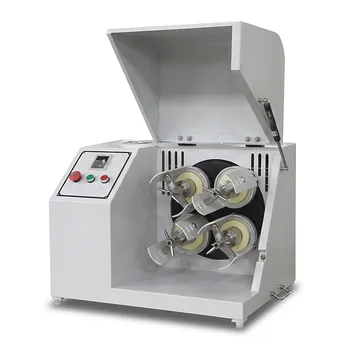
Horizontal Light Duty Planetary Ball Mill for Laboratory Sample Preparation
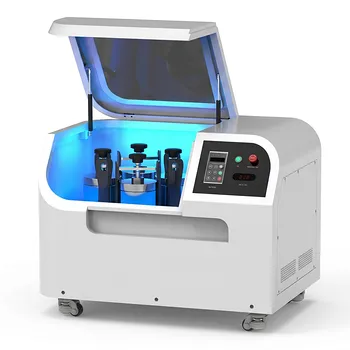
Planetary Ball Mill 12L

360° Rotating Omnidirectional Laboratory Planetary Ball Mill for Homogeneous Ultra-Fine Grinding and Mixing

High Energy Omnidirectional Planetary Ball Mill 20L

High Energy Omnidirectional Planetary Ball Mill 16L

High Energy Planetary Ball Mill for Nano Scale Grinding and Colloidal Mixing in Material Science Research

High Energy Laboratory Planetary Ball Mill for Nano Grinding and Material Science Sample Preparation

High Energy Planetary Ball Mill for Nano Scale Grinding and Mechanical Alloying
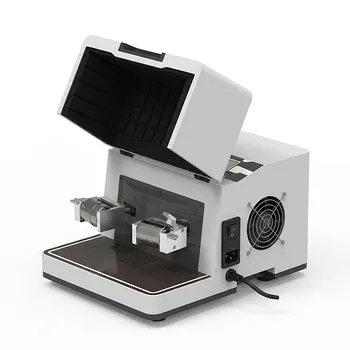
High Energy Hybrid Vibratory Ball Mill for Grinding Mixing and Cell Disruption
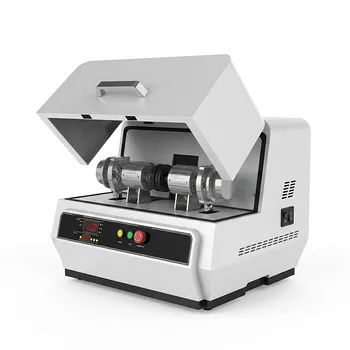
Dual Jar High Energy Vibratory Ball Mill
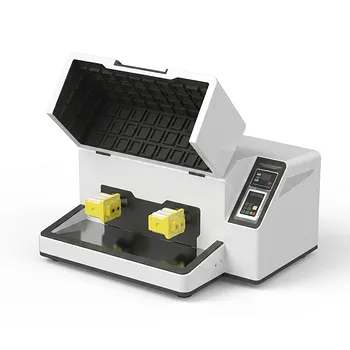
Multi-Platform Nanoscale High-Energy Vibratory Ball Mill