What is the core role of a planetary ball mill in the preparation of modified cellulose fillers? Key Insights
Updated 4 months ago
The core role of a planetary ball mill is mechanochemical activation.
It utilizes high-speed rotation to generate intense impact and shear forces that disrupt the crystalline structure of native cellulose. This process transforms the material’s morphology—from bulk fibers to granular or nanoscale particles—significantly increasing its specific surface area and chemical reactivity for subsequent modification.
The planetary ball mill serves as a critical bridge between raw cellulose and functional fillers by using mechanical energy to break internal hydrogen bonds and expose active chemical sites. This dual action of physical size reduction and structural activation ensures superior dispersion and reactivity in polymer systems.
Mechanochemical Activation and Structural Disruption
Disrupting the Hydrogen Bond Network
Cellulose is naturally resistant to modification due to a dense network of beta-1,4 glycosidic bonds and internal hydrogen bonding. The planetary ball mill provides the mechanical energy required to shatter this lattice, reducing crystallinity and making the polymer chains accessible.
Exposing Active Hydroxyl Groups
By pulverizing the cellulose fibers, the mill increases the exposure of active hydroxyl (-OH) groups. This is a vital prerequisite for in-situ chemical modifications, such as esterification, as it allows reagents to penetrate the fiber interior more efficiently.
Increasing Specific Surface Area
The high-energy collisions between grinding balls and the jar walls refine cellulose fibers to specific mesh sizes. This significantly increases the specific surface area, providing more contact points for catalysts or polymer matrices.
Morphological Transformation for Matrix Integration
Dry Grinding for Granular Morphology
In dry processing environments, the planetary ball mill transforms fibrous cellulose into a granular morphology. This structural change is essential for improving the dispersion of fillers within polymer matrices, preventing the clumping often seen with raw, untreated fibers.
Wet Grinding for Nanoscale Fibrils
When liquid plasticizers are introduced (wet grinding), the mill promotes fibrillation rather than simple crushing. This produces nanoscale fibrils with a high aspect ratio, which are highly effective for reinforcing composite materials.
Enhancing Interfacial Interaction
The intense shearing action during milling facilitates better surface interaction between the cellulose filler and additives like plasticizers. This ensures that the final modified filler is more compatible with the intended polymer environment.
Understanding the Trade-offs
Thermal Degradation Risks
The high-energy collisions necessary for activation generate significant heat within the milling jar. If not managed through cooling cycles, this heat can lead to thermal degradation of the cellulose, potentially charring the material or altering its chemical properties.
Structural Integrity vs. Particle Size
While reducing particle size increases reactivity, excessive milling can lead to a significant reduction in molecular weight. Over-processing may break the polymer chains themselves, which can weaken the mechanical reinforcement properties of the filler in the final product.
Energy Consumption and Scaling
Planetary ball milling is a high-energy process that is highly effective at a laboratory or pilot scale but can be costly for mass production. Balancing the duration of milling with the required degree of activation is critical for economic viability.
How to Apply This to Your Project
- If your primary focus is maximizing chemical reactivity: Use high-energy dry milling to focus on disrupting the crystalline lattice and exposing the maximum number of hydroxyl groups for chemical grafting.
- If your primary focus is structural reinforcement: Employ wet grinding techniques to produce high-aspect-ratio fibrils that provide better mechanical interlocking within a composite.
- If your primary focus is uniform polymer blending: Prioritize the transformation of cellulose into a granular morphology to ensure the filler disperses evenly without forming large aggregates.
By mastering the balance of impact and shear forces, the planetary ball mill transforms inert cellulose into a highly reactive, versatile filler for advanced material science.
Summary Table:
| Core Function | Impact on Cellulose | Material Benefit |
|---|---|---|
| Mechanochemical Activation | Disrupts crystalline lattice & H-bonds | Increases chemical reactivity for modification |
| Size Reduction | Transforms fibers to granular/nanoscale | Maximizes specific surface area |
| Morphology Control | Enables dry grinding (granular) vs. wet (fibrils) | Optimizes dispersion and reinforcement |
| Surface Interaction | Exposes active hydroxyl (-OH) groups | Enhances interfacial bonding with polymers |
Elevate Your Material Research with Precision Sample Prep
At [Brand Name], we provide complete laboratory sample preparation solutions tailored for material science. Understanding the critical role of mechanochemical activation, we offer high-performance planetary ball mills, jet mills, and cryogenic grinders designed to transform raw materials into high-value functional fillers.
Our extensive expertise covers the entire powder processing workflow:
- Size Reduction: Jaw/roll crushers, mills (planetary, jet, sand, disc), and liquid nitrogen grinders.
- Classification & Mixing: Vibratory/air-jet sieve shakers and advanced powder/defoaming mixers.
- Compaction & Shaping: A full spectrum of hydraulic presses, including Cold/Warm Isostatic Presses (CIP/WIP), XRF pellet presses, and vacuum hot presses.
Whether you are focusing on chemical grafting or structural reinforcement, our equipment ensures the consistency and quality your research demands. Contact our technical experts today to discuss your project requirements and find the ideal solution for your laboratory.
References
- Roberta Capuano, Maria Emanuela Errico. Enhancement of Stability Towards Aging and Soil Degradation Rate of Plasticized Poly(lactic Acid) Composites Containing Ball-Milled Cellulose. DOI: 10.3390/polym17152127
Mentioned Products
- Vertical Semi Circular Planetary Ball Mill for Laboratory Precision Grinding
- High Energy Planetary Ball Mill for Nano Scale Grinding and Mechanical Alloying
- Heavy Duty Horizontal Planetary Ball Mill for Efficient Industrial Grinding and Sample Preparation
- Vertical Production Planetary Ball Mill for High Throughput Powder Processing
- 360° Rotating Omnidirectional Laboratory Planetary Ball Mill for Homogeneous Ultra-Fine Grinding and Mixing
People Also Ask
- What role does a planetary ball mill play in the synthesis of Li6PS5Cl (LPSCl)? Unlock High Ionic Conductivity
- Why is a planetary ball mill essential for SiBCN-rGO wet-spinning? Achieve Superior Dispersion and Spinnability
- Why is an intermittent grinding process required for perovskites in a planetary ball mill? Ensure Stability & Purity
- Why is a planetary ball mill required for PET micronization? Ensure Accurate Chemical Analysis of Reprocessed PET
- How does mechanized planetary ball milling compare to manual agate grinding? Optimize sulfide standard material precision.

Tech Team · PowderPreparation
Last updated on Jun 03, 2026
Related Products
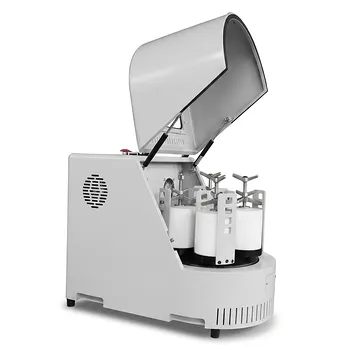
Vertical Semi Circular Planetary Ball Mill for Laboratory Precision Grinding

High Energy Planetary Ball Mill for Nano Scale Grinding and Mechanical Alloying
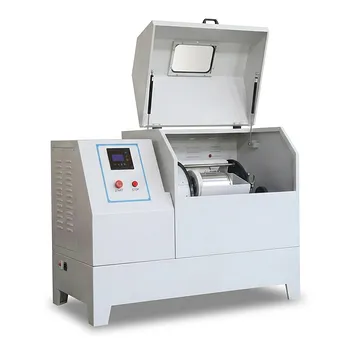
Heavy Duty Horizontal Planetary Ball Mill for Efficient Industrial Grinding and Sample Preparation
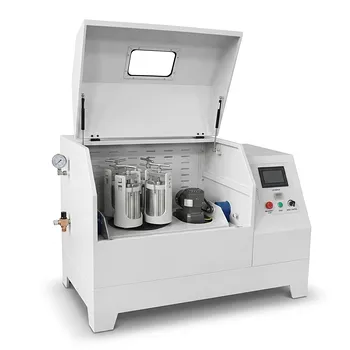
Vertical Production Planetary Ball Mill for High Throughput Powder Processing
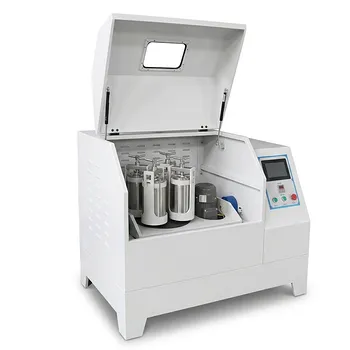
360° Rotating Omnidirectional Laboratory Planetary Ball Mill for Homogeneous Ultra-Fine Grinding and Mixing
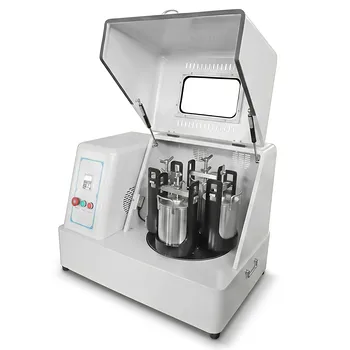
Vertical Square Planetary Ball Mill for Laboratory Sample Preparation and Nanoscale Grinding

Miniature Planetary Ball Mill with Vacuum Grinding and High Efficiency for Laboratory Sample Preparation
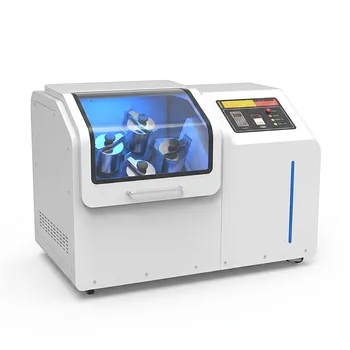
High Energy Omnidirectional Planetary Ball Mill 16L

High Energy Laboratory Planetary Ball Mill for Nano Grinding and Material Science Sample Preparation
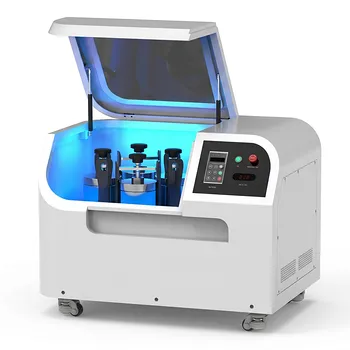
Planetary Ball Mill 12L
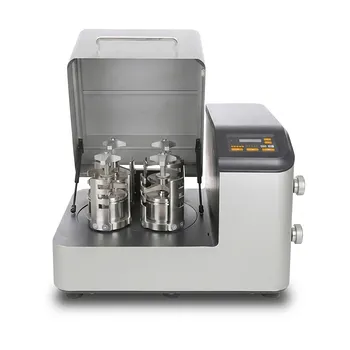
High Energy Planetary Ball Mill for Nano Scale Grinding and Colloidal Mixing in Material Science Research
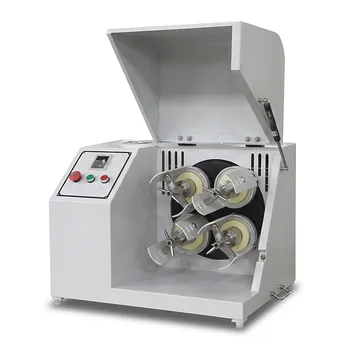
Horizontal Light Duty Planetary Ball Mill for Laboratory Sample Preparation
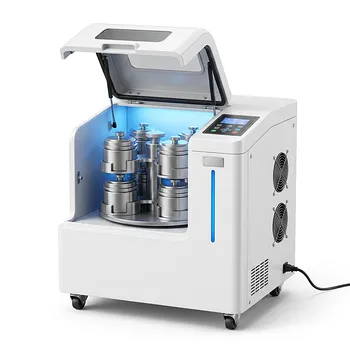
High Energy Omnidirectional Planetary Ball Mill 20L

High Energy Laboratory Planetary Ball Mill for Nano Grinding and Colloidal Mixing of Hard and Brittle Materials

8L Planetary Ball Mill for Laboratory Grinding and Sample Preparation
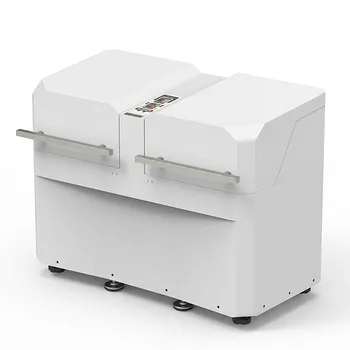
Dual Station Planetary Ball Mill 24L

Multi-Platform Nanoscale High-Energy Vibratory Ball Mill

Nano High Energy Vibratory Ball Mill for Laboratory Sample Preparation
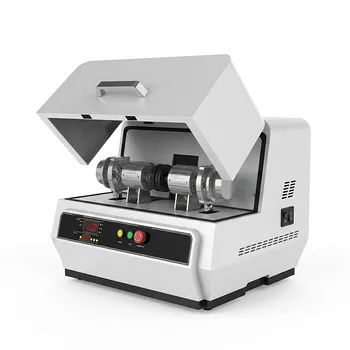
Dual Jar High Energy Vibratory Ball Mill