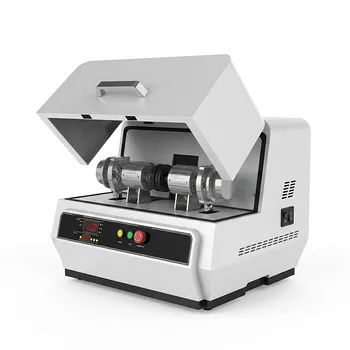
What is the purpose of ethanol as a grinding aid in Al-Cu-Fe ball milling? Achieve Superior Particle Uniformity.
Updated 5 months ago
Adding ethanol as a grinding aid in the Al-Cu-Fe quasicrystal ball milling process primarily serves to lower the surface energy of the powder. This chemical intervention weakens the electrostatic and Van der Waals forces between particles, preventing severe agglomeration and the sticking of material to the grinding jars and balls. Consequently, it ensures higher grinding efficiency and a more uniform particle size distribution in the final catalyst powder.
The use of ethanol transforms the milling environment from a dry, high-friction state to a controlled "wet" process. This manages the physical attraction between ultrafine particles while acting as a process control agent to balance the structural evolution of the alloy.
Managing Interparticle Forces and Surface Energy
Reduction of Surface Energy
During high-energy ball milling, the creation of new surfaces leads to high surface energy in the Al-Cu-Fe particles. Ethanol acts as a surfactant, adsorbing onto these fresh surfaces to stabilize them and reduce their tendency to bond with one another.
Neutralizing Electrostatic and Van der Waals Forces
As particles reach the sub-micron or nanometer scale, electrostatic and Van der Waals forces become dominant, causing the powder to clump. Ethanol molecules provide a physical and chemical barrier that weakens these attractive forces, ensuring the powder remains highly dispersible throughout the process.
Preventing Equipment Adhesion
Without a grinding aid, ductile powders like aluminum alloys tend to "cake" or stick to the inner walls of the grinding jar and the surfaces of the milling balls. By preventing this adhesion, ethanol ensures that the kinetic energy of the impact is directed toward grinding the powder rather than being wasted on a stagnant layer of material.
Balancing the Mechanical Alloying Process
Controlling Cold Welding vs. Fracturing
In the milling of Al-Cu-Fe quasicrystals, there is a constant competition between cold welding (particles fusing) and fracturing (particles breaking). Ethanol acts as a Process Control Agent (PCA), coating the particles to limit excessive cold welding, which allows fracturing to dominate and results in finer powders.
Improving Mixing Uniformity
The liquid medium facilitates a slurry-like consistency, which promotes better fluidity within the mill. This movement ensures that the aluminum, copper, and iron components are mixed thoroughly at a microscopic level, preventing compositional segregation in the final quasicrystalline phase.
Heat Dissipation and Cooling
High-energy milling generates significant localized heat, which can lead to unwanted thermal oxidation or premature phase transformations. Ethanol serves as a coolant for heat dissipation, maintaining a stable temperature and protecting the chemical integrity of the ultrafine powders.
Understanding the Trade-offs
Risk of Organic Contamination
While ethanol is chemically stable, prolonged milling at extremely high energies can occasionally lead to the decomposition of the alcohol. This may introduce trace carbon contamination into the metal matrix, which could affect the catalytic properties of the Al-Cu-Fe quasicrystals.
Post-Processing Requirements
The transition to wet milling necessitates a subsequent drying step, such as rotary evaporation or vacuum drying. While ethanol is highly volatile and easy to remove, any residual moisture or impurities in the ethanol itself could introduce oxides into the final powder.
Pressure Build-up in the Mill
Because ethanol is volatile, the heat generated during milling can increase the internal pressure of the grinding jar. This requires careful monitoring of milling intervals and jar seals to ensure safety and prevent the leakage of the liquid medium.
How to Apply This to Your Project
Making the Right Choice for Your Goal
- If your primary focus is achieving the smallest possible particle size: Use ethanol to maximize fracturing and prevent the secondary agglomeration that typically halts size reduction in dry milling.
- If your primary focus is maintaining maximum chemical purity: Ensure the use of anhydrous (water-free) ethanol and utilize vacuum drying post-milling to remove all traces of the liquid medium.
- If your primary focus is high-throughput production: Monitor the ratio of ethanol to powder closely; too much liquid can cushion the impacts and reduce the energy transfer needed for quasicrystal formation.
By strategically using ethanol as a surfactant, you can transform a chaotic milling process into a controlled synthesis of high-quality, uniform quasicrystalline powders.
Summary Table:
| Function | Mechanism | Key Benefit |
|---|---|---|
| Surface Stabilization | Adsorbs as a surfactant on new surfaces | Reduces surface energy and particle bonding |
| Agglomeration Control | Neutralizes Van der Waals & electrostatic forces | Prevents clumping and sticking to milling jars |
| Process Control (PCA) | Limits excessive cold welding of ductile alloy | Promotes fracturing for finer particle sizes |
| Thermal Management | Acts as a coolant for high-energy dissipation | Prevents oxidation and unwanted phase changes |
| Mixing Efficiency | Facilitates a slurry-like consistency | Ensures microscopic compositional uniformity |
Elevate Your Powder Synthesis with Expert Solutions
Achieving the perfect quasicrystalline structure requires more than just the right chemistry—it requires precision equipment. At [Company Name], we provide complete laboratory sample preparation solutions tailored for material science.
Whether you are refining Al-Cu-Fe catalysts or developing advanced alloys, our high-performance planetary ball mills, jet mills, and cryogenic grinders ensure optimal particle size reduction while preventing contamination. To complete your workflow, we offer a full spectrum of compaction technology, including Cold/Warm Isostatic Presses (CIP/WIP) and vacuum hot presses for superior material density.
Ready to optimize your milling process? Contact our technical team today to discuss your specific application and discover how our specialized powder processing and compaction equipment can enhance your research outcomes.
References
- Huixin Jin, Ryuji Tamura. Superior Performance and Catalytic Mechanism of an Icosahedral Quasicrystal Al‐Cu‐Fe in CO <sub>2</sub> Reduction to CO. DOI: 10.1002/cssc.202501424
Mentioned Products
- Heavy Duty Horizontal Planetary Ball Mill for Efficient Industrial Grinding and Sample Preparation
- Vertical Semi Circular Planetary Ball Mill for Laboratory Precision Grinding
- Vertical Square Planetary Ball Mill for Laboratory Sample Preparation and Nanoscale Grinding
- High Energy Planetary Ball Mill for Nano Scale Grinding and Mechanical Alloying
- Vertical Production Planetary Ball Mill for High Throughput Powder Processing
People Also Ask
- Why grind lime-pozzolan specimens for TG/DTA for 3 mins? Master sample prep for high-precision thermal analysis.
- What is the role of a planetary ball mill in the mechanical activation of ZTA powder? Boost Sintering Performance
- What is the function of a planetary ball mill in wollastonite ceramic prep? Achieve Molecular Homogenization & Reactivity
- How does a planetary ball mill contribute to the homogenization of trace elements? Achieve Sub-Micron Uniformity
- What is the function of a high-performance planetary ball mill in AMZ laminates? Master Ceramic Homogenization.

Tech Team · PowderPreparation
Last updated on May 14, 2026
Related Products
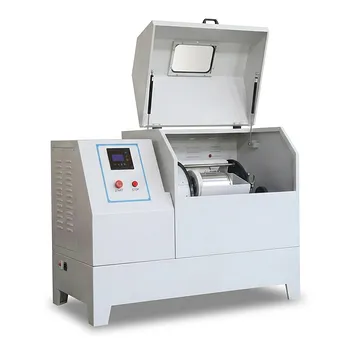
Heavy Duty Horizontal Planetary Ball Mill for Efficient Industrial Grinding and Sample Preparation
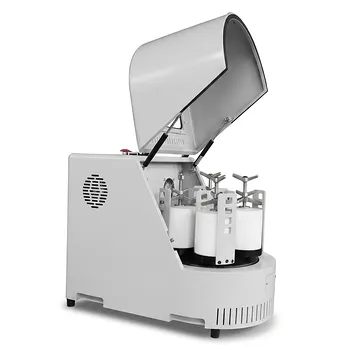
Vertical Semi Circular Planetary Ball Mill for Laboratory Precision Grinding

Vertical Square Planetary Ball Mill for Laboratory Sample Preparation and Nanoscale Grinding
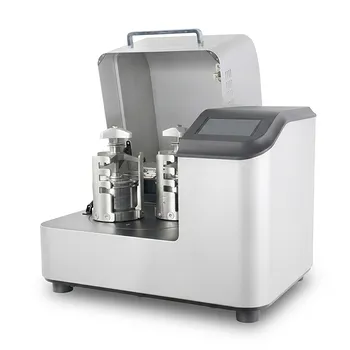
High Energy Planetary Ball Mill for Nano Scale Grinding and Mechanical Alloying

Vertical Production Planetary Ball Mill for High Throughput Powder Processing
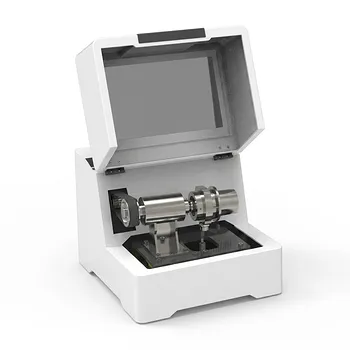
Single Tank High Energy Vibratory Ball Mill for Laboratory Grinding and Mixing
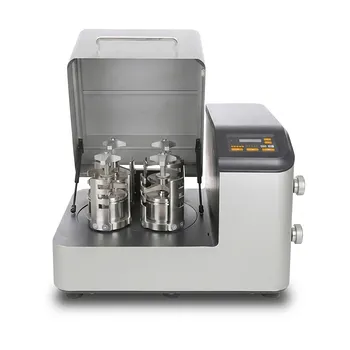
High Energy Planetary Ball Mill for Nano Scale Grinding and Colloidal Mixing in Material Science Research

High Energy Laboratory Planetary Ball Mill for Nano Grinding and Material Science Sample Preparation

Miniature Planetary Ball Mill with Vacuum Grinding and High Efficiency for Laboratory Sample Preparation
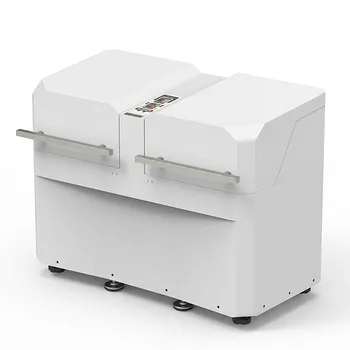
Dual Station Planetary Ball Mill 24L
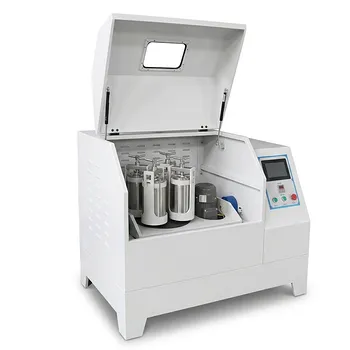
360° Rotating Omnidirectional Laboratory Planetary Ball Mill for Homogeneous Ultra-Fine Grinding and Mixing
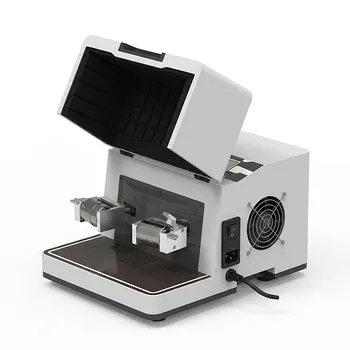
High Energy Hybrid Vibratory Ball Mill for Grinding Mixing and Cell Disruption
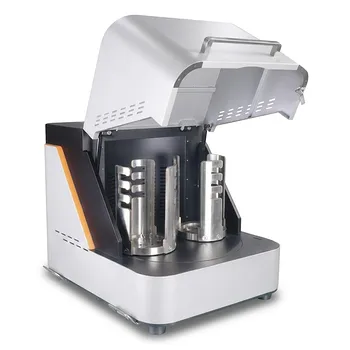
High Energy Laboratory Planetary Ball Mill for Nano Grinding and Colloidal Mixing of Hard and Brittle Materials
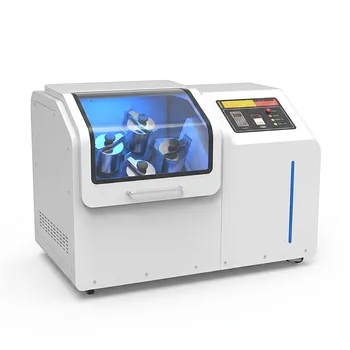
High Energy Omnidirectional Planetary Ball Mill 16L
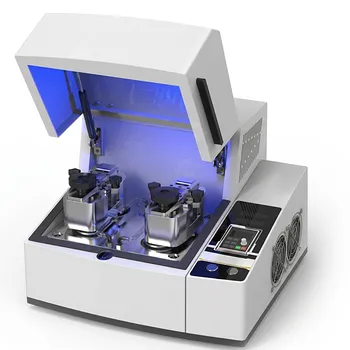
Laboratory Nano High Energy Ball Mill Ultrafine Grinding Mechanical Alloying
Planetary Ball Mill 12L

High Throughput Micro Ball Mill for Cryogenic Grinding and Laboratory Cell Disruption

8L Planetary Ball Mill for Laboratory Grinding and Sample Preparation
Nanoscale High-Energy Vibratory Ball Mill for Laboratory Sample Preparation, Mechanochemistry, and Mechanical Alloying