What is the primary role of a laboratory-grade dry ball mill in initial talc grinding? Essential Feed Preparation.
Updated 4 months ago
The primary role of a laboratory-grade dry ball mill in the initial grinding of ultra-fine talc is to perform controlled size reduction of raw ore. It transforms talc starting at -2mm into a micron-level feed powder, typically achieving a d90 of approximately 93.52μm. This step is critical because it creates a consistent intermediate product that meets the specific feed requirements of secondary ultra-fine grinding equipment.
The laboratory ball mill acts as the essential bridge between raw ore and ultra-fine processing, providing the necessary mechanical energy to reach a precise intermediate fineness. By optimizing operational parameters, it ensures the material is properly conditioned for high-efficiency secondary milling while allowing for the prediction of industrial energy requirements.
Achieving Precision in Particle Size Reduction
Transitioning from Ore to Micron-Level Feed
The dry ball mill is specifically designed to handle talc ore with a starting particle size of -2mm. Its main objective is to reduce this raw material down to the micron level, which is necessary for the next stage of production.
A successful initial stage results in a powder with a specific fineness, such as a d90 of 93.52μm. This level of refinement ensures that the material is fine enough to be processed by more specialized equipment in the secondary ultra-fine grinding stage.
Controlling Variables for Optimal Fineness
To achieve the desired output, operators must carefully optimize the rotation speed and media filling rate. These variables directly influence the amount of mechanical energy transferred to the talc particles.
The mill uses a combination of impact and attrition to refine the particles. By adjusting these settings, the laboratory-grade mill can produce a stable output that mimics the results required for larger-scale production.
The Strategic Role in the Production Chain
Preparing for Secondary Ultra-Fine Grinding
Ultra-fine grinding equipment, such as stirred-media mills, often requires a specific feed size to operate efficiently. The dry ball mill serves as the pretreatment tool that brings the raw talc into this required range.
Without this initial stage, the secondary mills would face excessive wear or fail to reach the desired sub-micron levels. The ball mill ensures the specific surface area is increased enough to facilitate subsequent processing.
Simulating Industrial-Scale Performance
Beyond simple grinding, the laboratory ball mill is used to evaluate the grindability of the material. This allows engineers to measure changes in particle size distribution relative to specific power consumption.
These tests are vital for conducting Bond Work Index (BWI) simulations. The data collected helps predict the unit energy consumption and efficiency of industrial-scale equipment, such as roller presses or large-scale mills.
Understanding the Trade-offs
Mechanical Energy vs. Particle Agglomeration
In dry grinding, as the powder becomes finer, particles may begin to agglomerate due to static electricity or surface energy. This can limit the efficiency of the ball mill if the process is run for too long without grinding aids.
While the mill is excellent for reaching the 90μm range, using it to reach sub-micron levels directly is often energy-inefficient. This is why it is strictly used as an "initial" or "primary" stage tool in the ultra-fine talc workflow.
Complexity of Parameter Calibration
Achieving a precise d90 requires significant calibration of the media-to-material ratio. If the media filling rate is too low, the impact energy is insufficient; if it is too high, the media can interfere with its own motion, reducing the mill's effectiveness.
How to Apply This to Your Project
Making the Right Choice for Your Goal
- If your primary focus is industrial scaling: Use the laboratory ball mill to conduct BWI tests to accurately predict the energy costs and equipment requirements for your full-scale plant.
- If your primary focus is material preparation: Optimize the rotation speed specifically to hit the d90 target of ~93μm to ensure your secondary stirred-media mill operates at peak efficiency.
- If your primary focus is quality control: Monitor the specific surface area and particle distribution after the initial grind to ensure consistency in the chemical reactivity of the talc powder.
By mastering the initial grinding stage, you ensure the technical and economic viability of the entire ultra-fine powder production process.
Summary Table:
| Feature | Specification/Role |
|---|---|
| Primary Function | Controlled size reduction (Raw ore to micron feed) |
| Input Material Size | -2 mm talc ore |
| Target Output (d90) | Approximately 93.52 μm |
| Key Control Variables | Rotation speed & Media filling rate |
| Strategic Value | Bridges raw processing to secondary ultra-fine milling |
| Analytical Use | Bond Work Index (BWI) & energy consumption prediction |
Optimize Your Powder Processing Workflow Today
Achieving the perfect particle size distribution requires precision equipment and expert solutions. At [Brand Name], we provide complete laboratory sample preparation solutions for material science, specializing in high-performance powder processing and compaction equipment.
Our extensive range includes:
- Advanced Milling: Planetary ball mills, jet mills, and dry ball mills for precise size reduction.
- Sample Preparation: Jaw/roll crushers, cryogenic grinders, and sieve shakers.
- Compaction Excellence: A full spectrum of hydraulic presses, including Cold/Warm Isostatic Presses (CIP/WIP), vacuum hot presses, and XRF pellet presses.
- Mixing Solutions: Powder mixers and vacuum defoaming mixers for uniform material consistency.
Whether you are scaling up industrial talc production or conducting specialized research, our equipment ensures accuracy, reliability, and efficiency. Contact our technical experts today to find the ideal solution for your laboratory's needs!
References
- Ömer GÜLEÇ, Metin Uçurum. Combination of Conventional Ball Mill and Stirred Mill to Obtain Ultra-Fine Talc. DOI: 10.21605/cukurovaumfd.1377725
Mentioned Products
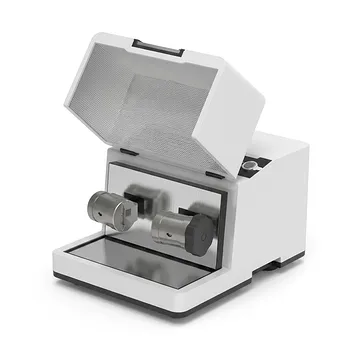
- Single Tank High Energy Vibratory Ball Mill for Laboratory Grinding and Mixing
- Vertical Square Planetary Ball Mill for Laboratory Sample Preparation and Nanoscale Grinding
- Miniature Planetary Ball Mill with Vacuum Grinding and High Efficiency for Laboratory Sample Preparation
- Heavy Duty Horizontal Planetary Ball Mill for Efficient Industrial Grinding and Sample Preparation
- High Throughput Micro Ball Mill for Cryogenic Grinding and Laboratory Cell Disruption
People Also Ask
- What is the primary purpose of using a vibratory ball mill in the preparation of respirable carbon fiber fragments?
- What is the purpose of using a vibratory ball mill for Al-Ni-Fe alloy ribbons? Achieve High Catalytic Activity
- Why is a vibratory ball mill preferred over a planetary ball mill for rapid powder particle refinement? High-Speed Impact
- How does a high-energy vibratory ball mill improve the performance of MgH2? Optimize Hydrogen Storage Kinetics
- What role do high-energy ball mills play in the preparation of reinforcements for hybrid metal matrix composites?

Tech Team · PowderPreparation
Last updated on May 14, 2026
Related Products
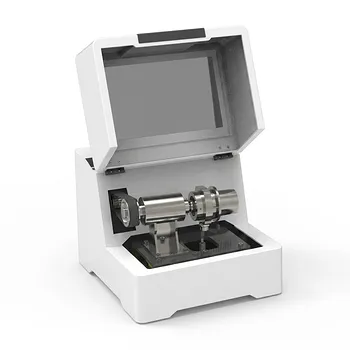
Single Tank High Energy Vibratory Ball Mill for Laboratory Grinding and Mixing
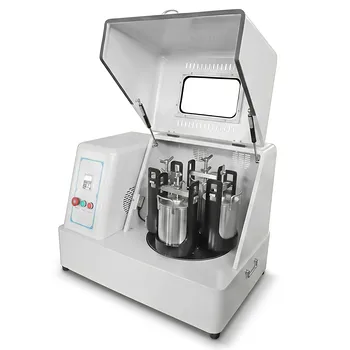
Vertical Square Planetary Ball Mill for Laboratory Sample Preparation and Nanoscale Grinding
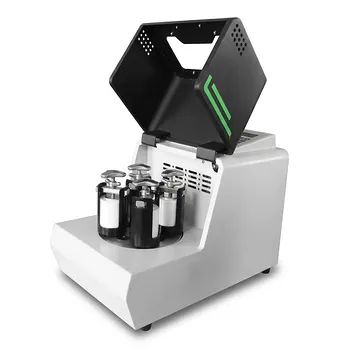
Miniature Planetary Ball Mill with Vacuum Grinding and High Efficiency for Laboratory Sample Preparation
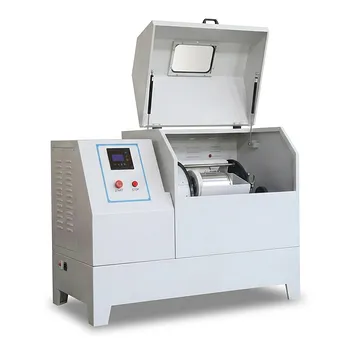
Heavy Duty Horizontal Planetary Ball Mill for Efficient Industrial Grinding and Sample Preparation

High Throughput Micro Ball Mill for Cryogenic Grinding and Laboratory Cell Disruption
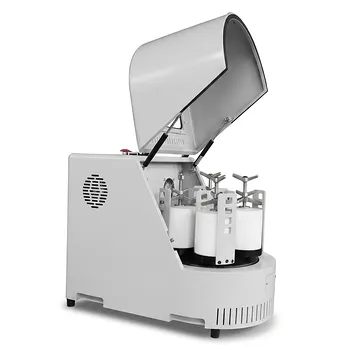
Vertical Semi Circular Planetary Ball Mill for Laboratory Precision Grinding
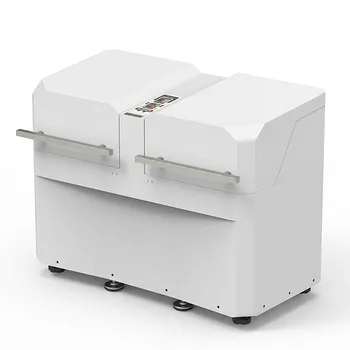
Dual Station Planetary Ball Mill 24L
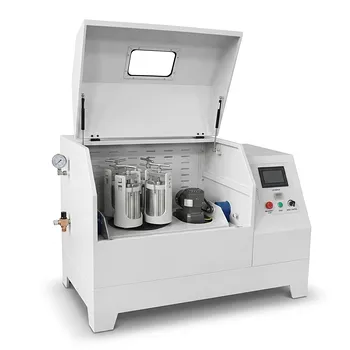
Vertical Production Planetary Ball Mill for High Throughput Powder Processing
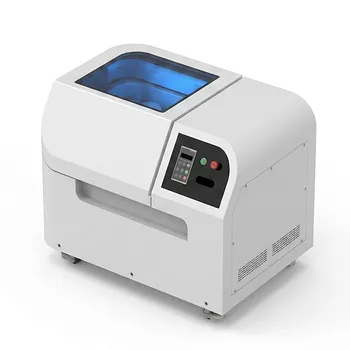
8L Planetary Ball Mill for Laboratory Grinding and Sample Preparation
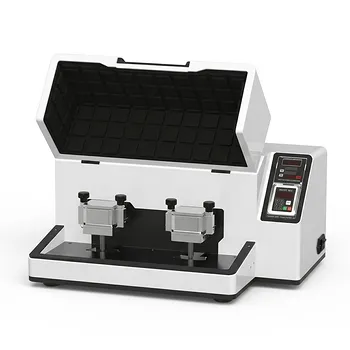
Nanoscale High Energy Vibratory Ball Mill Low Temperature
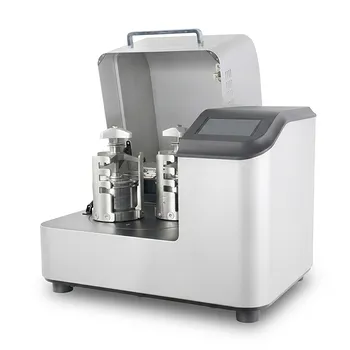
High Energy Planetary Ball Mill for Nano Scale Grinding and Mechanical Alloying
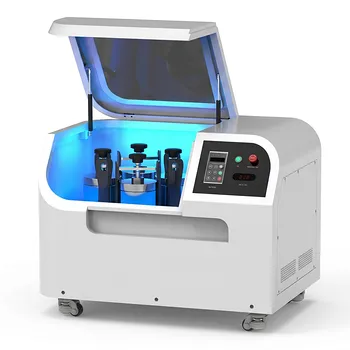
Planetary Ball Mill 12L
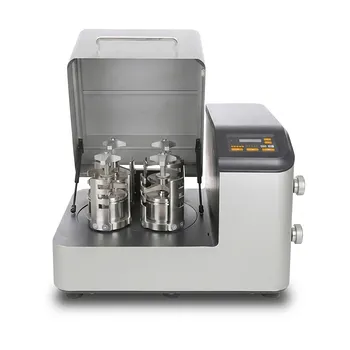
High Energy Planetary Ball Mill for Nano Scale Grinding and Colloidal Mixing in Material Science Research
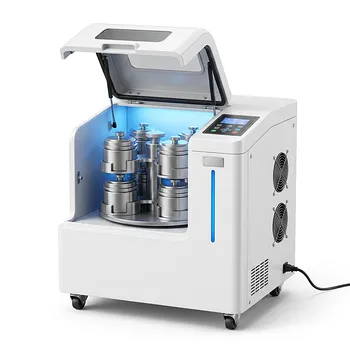
High Energy Omnidirectional Planetary Ball Mill 20L
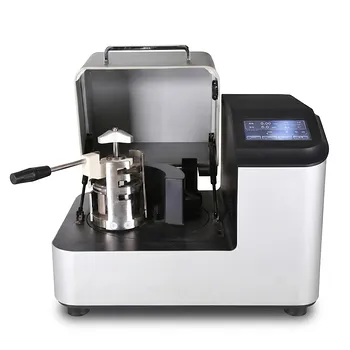
High Energy Laboratory Planetary Ball Mill for Nano Grinding and Material Science Sample Preparation
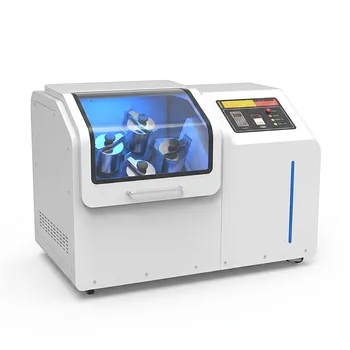
High Energy Omnidirectional Planetary Ball Mill 16L
High Energy Hybrid Vibratory Ball Mill for Grinding Mixing and Cell Disruption
360° Rotating Omnidirectional Laboratory Planetary Ball Mill for Homogeneous Ultra-Fine Grinding and Mixing
Nanoscale High-Energy Vibratory Ball Mill for Laboratory Sample Preparation, Mechanochemistry, and Mechanical Alloying