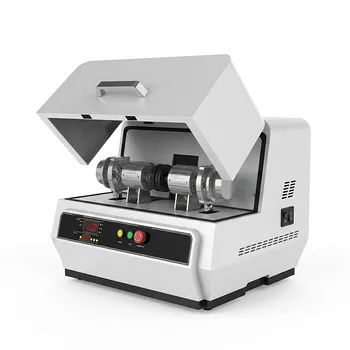
What is the primary function of the ball milling process in the preparation of silicon nitride whisker (Si3N4w) preform slurries?
Updated 5 months ago
The primary function of ball milling in the preparation of silicon nitride whisker (Si3N4w) preform slurries is to achieve the full, uniform dispersion of the whiskers within an aqueous solution. This process ensures that subsequently added monomers and crosslinking agents mix thoroughly with the whiskers, creating a homogeneous, low-viscosity slurry that is essential for high-quality gel-casting or molding.
Ball milling transforms a mixture of raw materials into a stable, homogeneous suspension by using mechanical force to de-agglomerate whiskers and ensure uniform distribution. This state is critical for maintaining low viscosity and ensuring the structural integrity of the final ceramic product.
Achieving Homogeneous Dispersion
De-agglomeration via Mechanical Force
In their raw state, silicon nitride whiskers often form tightly packed clusters or agglomerates. Ball milling uses high-frequency impact and shear forces from the grinding media to break these clusters apart. This ensures that every individual whisker is separated and available for interaction with the surrounding medium.
Uniformity of the Reinforcement Phase
For a ceramic to be "high-quality," the reinforcement phase—in this case, the whiskers—must be distributed evenly throughout the matrix. Milling prevents localized concentrations of whiskers, which would otherwise lead to structural weak points or defects in the sintered ceramic.
Facilitating Chemical Integration
Once the whiskers are fully dispersed, other components like monomers and crosslinking agents can be introduced. Because the whiskers are already separated, these chemicals can coat the surfaces uniformly. This creates the chemical foundation necessary for the subsequent gelation or "setting" of the slurry.
Optimizing Slurry Rheology
Controlling Slurry Viscosity
High-quality molding requires a low-viscosity slurry that flows easily into complex molds. Ball milling, often aided by dispersants, ensures that the internal friction of the slurry is minimized by preventing whisker clumping.
Improving Specific Surface Area
The mechanical energy of the mill can increase the specific surface area and reactivity of the materials. While whiskers are generally kept intact, the process ensures that the liquid medium and sintering additives (like alumina or yttria) are in intimate contact with the reinforcement phase.
Stability of the Suspension
A well-milled slurry results in a highly uniform and stable suspension. This stability prevents the "settling out" of components during the casting process, which is vital for maintaining a consistent solid content—typically between 55% and 65%—throughout the green body.
Understanding the Trade-offs
Risk of Whisker Damage
While long-duration milling ensures dispersion, it presents a risk of mechanical degradation of the whiskers. Excessive milling can break the whiskers into shorter segments, reducing their aspect ratio and potentially diminishing the toughening effect they provide to the final ceramic.
Time vs. Homogeneity
Extending milling time—sometimes from one week to two—can significantly reduce particle size and improve homogeneity. However, this increases energy consumption and production timelines, requiring a careful balance between the required fineness and manufacturing efficiency.
Contamination Concerns
The high-energy impacts between the grinding balls and the slurry can lead to wear of the grinding media. This may introduce small amounts of impurity into the silicon nitride mixture, which can affect the purity and dielectric properties of the final product if the media material is not carefully selected.
Applying Ball Milling to Your Project
Recommendations for Success
To choose the right milling approach, you must align the process parameters with your specific fabrication goals.
- If your primary focus is Gel-Casting High-Quality Preforms: Prioritize long-duration, low-speed milling to ensure full dispersion of whiskers without fracturing them, maintaining a low-viscosity profile for intricate molds.
- If your primary focus is DLP 3D Printing: Focus on achieving a highly stable, sub-micron distribution to ensure flowability and prevent clogging during the high-resolution printing process.
- If your primary focus is Reaction Bonding of Thick Components: Utilize high-energy milling to reduce the average particle size of the raw silicon powder, which facilitates complete nitridation during the sintering stage.
By precisely controlling the mechanical energy of the ball milling process, you establish the fundamental material uniformity required for advanced silicon nitride ceramics.
Summary Table:
| Key Aspect | Primary Benefit | Risk/Trade-off |
|---|---|---|
| Dispersion | De-agglomerates whiskers for uniform distribution | Excessive milling can break/shorten whiskers |
| Rheology | Maintains low viscosity for complex molding | High energy consumption and long processing times |
| Stability | Prevents component settling; ensures solid content | Potential contamination from grinding media wear |
| Integration | Enhances coating of monomers and crosslinkers | Increased reactivity may complicate chemical control |
Optimize Your Advanced Ceramic Processing
Achieving the perfect silicon nitride whisker dispersion requires precision equipment designed for material science. At [Company Name], we provide complete laboratory sample preparation solutions tailored for high-performance ceramics.
Our extensive range includes:
- Powder Processing: High-efficiency planetary ball mills, jet mills, and rotor mills for perfect de-agglomeration.
- Mixing & Sieve Shakers: Specialized powder and defoaming mixers, alongside vibratory sieve shakers for particle size control.
- Compaction Equipment: A full spectrum of hydraulic presses, including Cold/Warm Isostatic Presses (CIP/WIP), standard lab presses, and vacuum hot presses for superior sintering results.
Whether you are scaling up gel-casting or perfecting 3D printing slurries, our expertise in powder processing and compaction ensures structural integrity and manufacturing efficiency. Contact our technical team today to find the ideal solution for your laboratory’s needs!
References
- Mingxing Li, Jie Zhou. Formation of nanocrystalline graphite in polymer-derived SiCN by polymer infiltration and pyrolysis at a low temperature. DOI: 10.1007/s40145-021-0501-2
Mentioned Products
- Heavy Duty Horizontal Planetary Ball Mill for Efficient Industrial Grinding and Sample Preparation
- Vertical Semi Circular Planetary Ball Mill for Laboratory Precision Grinding
- Vertical Square Planetary Ball Mill for Laboratory Sample Preparation and Nanoscale Grinding
- High Energy Planetary Ball Mill for Nano Scale Grinding and Mechanical Alloying
- Vertical Production Planetary Ball Mill for High Throughput Powder Processing
People Also Ask
- Why grind lime-pozzolan specimens for TG/DTA for 3 mins? Master sample prep for high-precision thermal analysis.
- What is the role of a planetary ball mill in the mechanical activation of ZTA powder? Boost Sintering Performance
- What is the function of a planetary ball mill in wollastonite ceramic prep? Achieve Molecular Homogenization & Reactivity
- How does a planetary ball mill contribute to the homogenization of trace elements? Achieve Sub-Micron Uniformity
- What is the function of a high-performance planetary ball mill in AMZ laminates? Master Ceramic Homogenization.

Tech Team · PowderPreparation
Last updated on May 14, 2026
Related Products
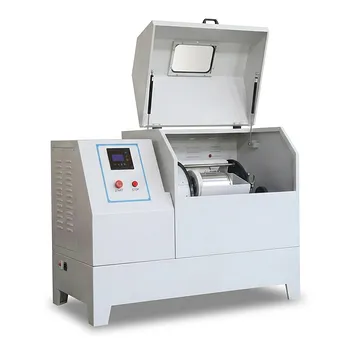
Heavy Duty Horizontal Planetary Ball Mill for Efficient Industrial Grinding and Sample Preparation
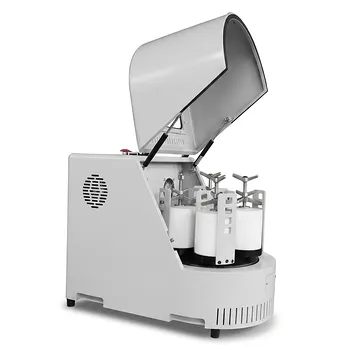
Vertical Semi Circular Planetary Ball Mill for Laboratory Precision Grinding

Vertical Square Planetary Ball Mill for Laboratory Sample Preparation and Nanoscale Grinding

High Energy Planetary Ball Mill for Nano Scale Grinding and Mechanical Alloying
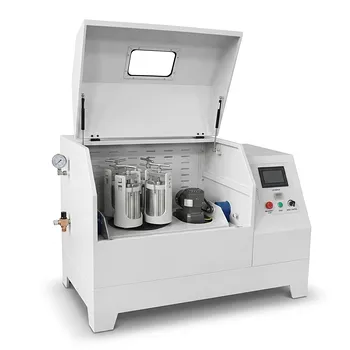
Vertical Production Planetary Ball Mill for High Throughput Powder Processing
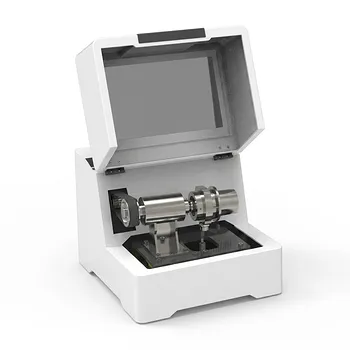
Single Tank High Energy Vibratory Ball Mill for Laboratory Grinding and Mixing
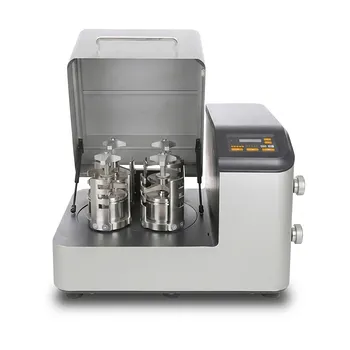
High Energy Planetary Ball Mill for Nano Scale Grinding and Colloidal Mixing in Material Science Research

High Energy Laboratory Planetary Ball Mill for Nano Grinding and Material Science Sample Preparation

Miniature Planetary Ball Mill with Vacuum Grinding and High Efficiency for Laboratory Sample Preparation
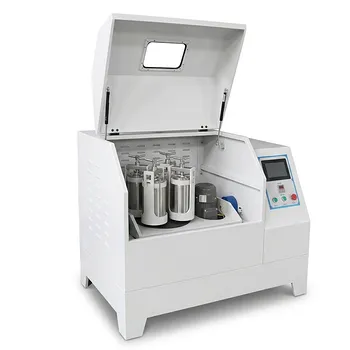
360° Rotating Omnidirectional Laboratory Planetary Ball Mill for Homogeneous Ultra-Fine Grinding and Mixing
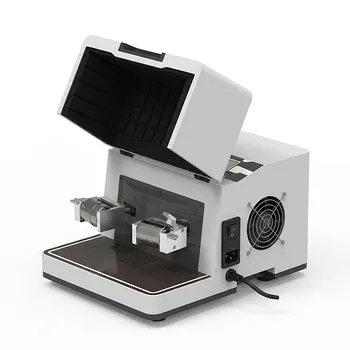
High Energy Hybrid Vibratory Ball Mill for Grinding Mixing and Cell Disruption
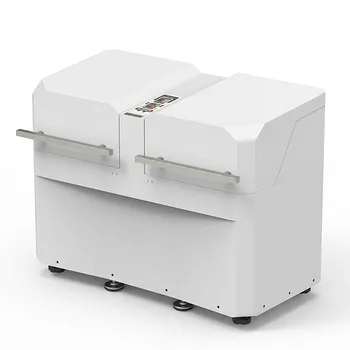
Dual Station Planetary Ball Mill 24L
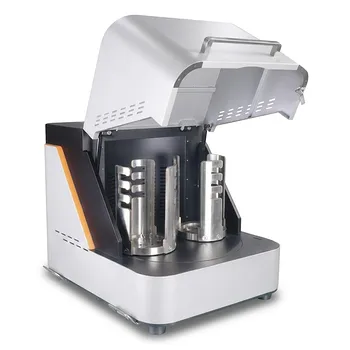
High Energy Laboratory Planetary Ball Mill for Nano Grinding and Colloidal Mixing of Hard and Brittle Materials
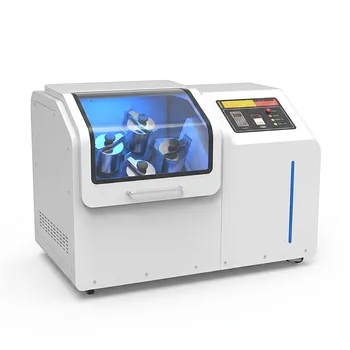
High Energy Omnidirectional Planetary Ball Mill 16L
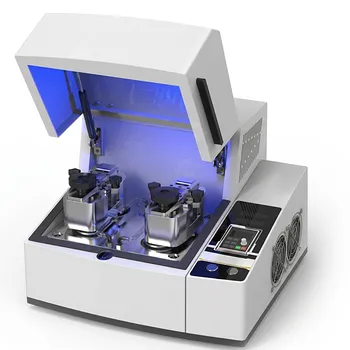
Laboratory Nano High Energy Ball Mill Ultrafine Grinding Mechanical Alloying
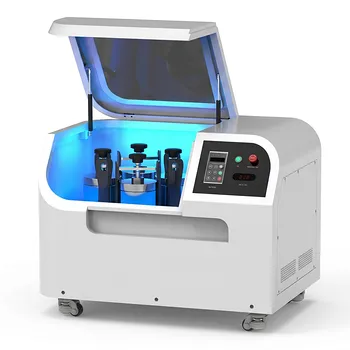
Planetary Ball Mill 12L

High Throughput Micro Ball Mill for Cryogenic Grinding and Laboratory Cell Disruption
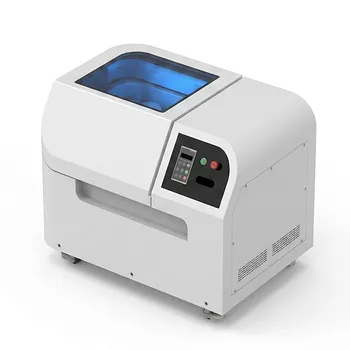
8L Planetary Ball Mill for Laboratory Grinding and Sample Preparation
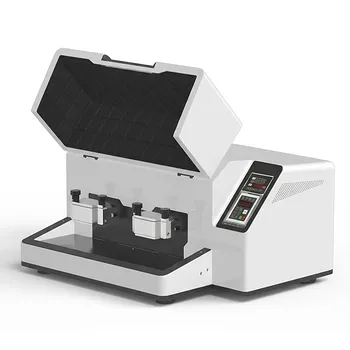
Nanoscale High-Energy Vibratory Ball Mill for Laboratory Sample Preparation, Mechanochemistry, and Mechanical Alloying