Why is a planetary ball mill required for the refinement of beta-SiAlON? Optimize Sub-Micron Powder for Dense Ceramics
Updated 5 months ago
High-energy planetary ball milling is the critical precursor to successful beta-SiAlON fabrication because it reduces coarse raw materials to sub-micron scales, typically achieving a median particle size (D50) of 0.5 μm. This intensive refinement generates the high specific surface area and particle reactivity necessary to drive densification during Spark Plasma Sintering (SPS). Without this high-energy processing, the covalent bonds within the material would resist the mass migration required to eliminate porosity.
Planetary ball milling utilizes synchronized revolution and rotation to impart extreme shear forces and impact energy into beta-SiAlON precursors. This process transforms heterogeneous powders into a reactive, sub-micron state, ensuring the chemical homogeneity and diffusion kinetics required for high-density ceramic sintering.
The Mechanics of Sub-Micron Refinement
Revolution and Rotation Dynamics
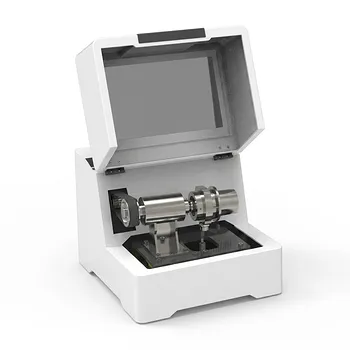
A planetary ball mill operates on a principle where the grinding jars rotate on their own axes while simultaneously revolving around a central sun wheel. This dual-motion geometry generates massive centrifugal forces that propel grinding media with significantly higher kinetic energy than standard vibratory or rotary mills.
Achieving Sub-Micron Particle Size
The resulting high-frequency impacts and intense shear forces effectively crush coarse beta-SiAlON grains. This reduces the material to sub-micron levels, which is essential for increasing the number of contact points between particles during the initial stages of sintering.
Breaking Powder Agglomerates
Raw ceramic powders often contain stubborn agglomerates that can lead to structural defects in the final product. Planetary milling uses a high-energy wet milling process, often involving isopropyl alcohol, to break these clusters and ensure a primary particle distribution that is both fine and uniform.
Enhancing Sintering Kinetics and Densification
Increasing Specific Surface Area
As the particle size decreases to the 0.5 μm range, the specific surface area of the powder increases exponentially. This increased surface energy acts as the primary thermodynamic driving force for the subsequent sintering process, allowing for lower temperatures and shorter hold times.
Overcoming Low Diffusion Mobility
Beta-SiAlON, like many covalent ceramics, suffers from low atomic diffusion mobility, making it difficult to consolidate. The high-energy milling process creates lattice distortions and defects in the powder, which lowers the activation energy required for mass transport and accelerates densification.
Facilitating Liquid-Phase Sintering
Sintering aids, such as yttrium oxide or scandium oxide, must be perfectly distributed to form a transient liquid phase. Planetary milling ensures microscopic uniformity of these additives, preventing localized grain growth and promoting a homogenous microstructure during the liquid-phase sintering process.
Understanding the Trade-offs and Limitations
Potential for Material Contamination
The high energy levels that make planetary mills effective also increase the wear on the grinding jars and media. To prevent metallic or silica contamination, engineers must carefully select high-hardness media, such as silicon carbide (SiC) or alumina, that are chemically compatible with the SiAlON matrix.
Energy-Induced Phase Changes
Prolonged high-energy milling can sometimes trigger unwanted mechanochemical reactions or phase transformations before sintering even begins. It is vital to balance the milling duration and rotation speed to achieve the desired particle size without compromising the stoichiometric integrity of the beta-SiAlON precursors.
Heat Generation During Processing
The friction generated during dry planetary milling can lead to significant temperature spikes within the jars. Wet milling techniques are often preferred for beta-SiAlON to dissipate heat and prevent the powder from re-agglomerating or oxidizing during the refinement process.
Optimizing Your Milling Strategy
Proper execution of the milling phase determines the mechanical strength and thermal uniformity of the final ceramic component.
- If your primary focus is maximizing density: Utilize high-speed planetary milling with a D50 target of 0.5 μm to ensure sufficient surface energy for Spark Plasma Sintering.
- If your primary focus is chemical purity: Select grinding media with the same composition as your sintering aids or the primary matrix to minimize the impact of media wear.
- If your primary focus is rate performance: Prioritize the wet milling process to ensure the highest possible degree of homogenization between the SiAlON and rare earth oxide additives.
By precisely controlling the energy input and mechanical dynamics of the planetary mill, you provide the necessary physical foundation for the synthesis of high-performance beta-SiAlON ceramics.
Summary Table:
| Key Milling Aspect | Mechanism of Action | Benefit to Sintering |
|---|---|---|
| Size Reduction | High-energy impact/shear to D50 0.5 μm | Increases contact points and densification rates |
| Surface Energy | Exponential increase in specific surface area | Provides thermodynamic drive for lower-temp sintering |
| De-agglomeration | High-energy wet milling (e.g., in IPA) | Eliminates structural defects and residual porosity |
| Homogenization | Microscopic blending of sintering aids | Facilitates uniform liquid-phase and grain structure |
| Lattice Activation | Creation of distortions and defects | Lowers activation energy for atomic diffusion |
Achieve Unmatched Precision in Material Synthesis
Optimizing beta-SiAlON refinement requires more than just a mill—it requires a complete sample preparation strategy. We provide complete laboratory sample preparation solutions for material science, specializing in professional-grade powder processing and compaction equipment.
Our extensive product lines are designed to support your research from raw material to final sintered component:
- Advanced Milling: Planetary ball mills, jet mills, and liquid nitrogen cryogenic grinders for achieving sub-micron precision.
- Preparation & Sizing: Jaw/roll crushers, vibratory/air-jet sieve shakers, and high-efficiency powder mixers.
- Superior Compaction: A full spectrum of hydraulic presses, including Cold/Warm Isostatic Presses (CIP/WIP), vacuum hot presses, and XRF pellet presses.
Whether you are focusing on maximizing density or ensuring chemical purity, our equipment provides the reliability and performance your lab demands. Contact our technical experts today to discuss your application and discover how our solutions can enhance your material performance.
References
- Mohammed Shahien, Toshitaka Sakurai. Combustion Synthesis and Sintering of β-Sialon Ceramics (z = 2). DOI: 10.2472/jsms.57.1248
Mentioned Products
- Vertical Semi Circular Planetary Ball Mill for Laboratory Precision Grinding
- High Energy Planetary Ball Mill for Nano Scale Grinding and Mechanical Alloying
- Vertical Production Planetary Ball Mill for High Throughput Powder Processing
- Heavy Duty Horizontal Planetary Ball Mill for Efficient Industrial Grinding and Sample Preparation
- 360° Rotating Omnidirectional Laboratory Planetary Ball Mill for Homogeneous Ultra-Fine Grinding and Mixing
People Also Ask
- What role does a planetary ball mill play in the synthesis of Li6PS5Cl (LPSCl)? Unlock High Ionic Conductivity
- Why is a planetary ball mill essential for SiBCN-rGO wet-spinning? Achieve Superior Dispersion and Spinnability
- Why is an intermittent grinding process required for perovskites in a planetary ball mill? Ensure Stability & Purity
- Why is a planetary ball mill required for PET micronization? Ensure Accurate Chemical Analysis of Reprocessed PET
- How does mechanized planetary ball milling compare to manual agate grinding? Optimize sulfide standard material precision.

Tech Team · PowderPreparation
Last updated on May 14, 2026
Related Products
Vertical Semi Circular Planetary Ball Mill for Laboratory Precision Grinding
High Energy Planetary Ball Mill for Nano Scale Grinding and Mechanical Alloying
Vertical Production Planetary Ball Mill for High Throughput Powder Processing
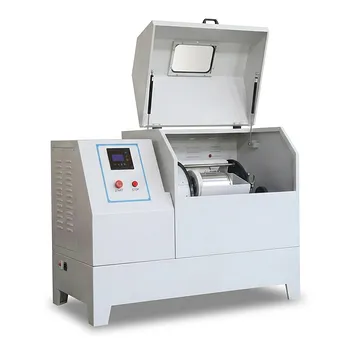
Heavy Duty Horizontal Planetary Ball Mill for Efficient Industrial Grinding and Sample Preparation
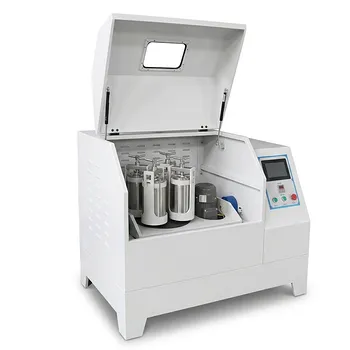
360° Rotating Omnidirectional Laboratory Planetary Ball Mill for Homogeneous Ultra-Fine Grinding and Mixing
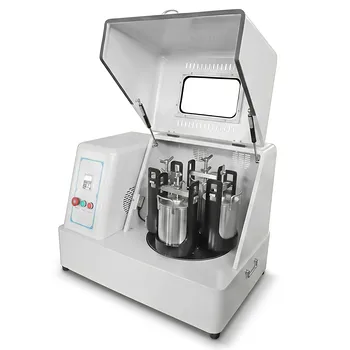
Vertical Square Planetary Ball Mill for Laboratory Sample Preparation and Nanoscale Grinding
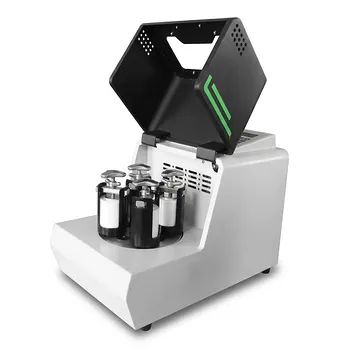
Miniature Planetary Ball Mill with Vacuum Grinding and High Efficiency for Laboratory Sample Preparation
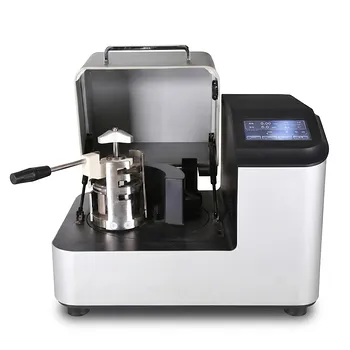
High Energy Laboratory Planetary Ball Mill for Nano Grinding and Material Science Sample Preparation
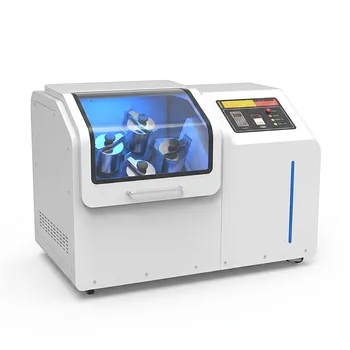
High Energy Omnidirectional Planetary Ball Mill 16L
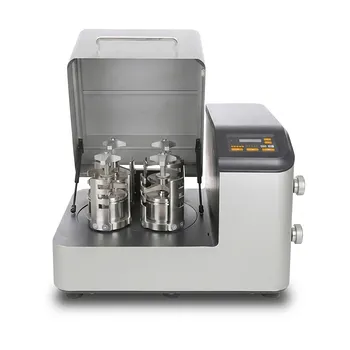
High Energy Planetary Ball Mill for Nano Scale Grinding and Colloidal Mixing in Material Science Research
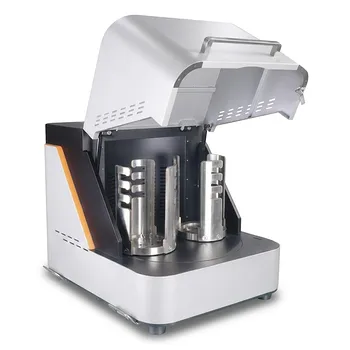
High Energy Laboratory Planetary Ball Mill for Nano Grinding and Colloidal Mixing of Hard and Brittle Materials
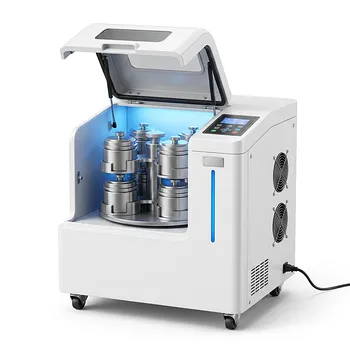
High Energy Omnidirectional Planetary Ball Mill 20L
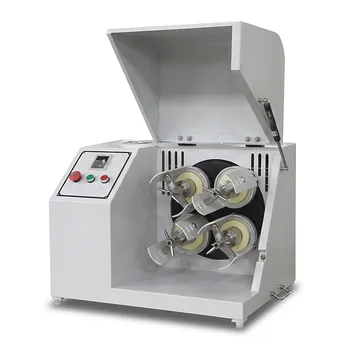
Horizontal Light Duty Planetary Ball Mill for Laboratory Sample Preparation
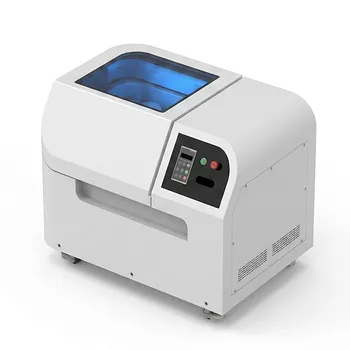
8L Planetary Ball Mill for Laboratory Grinding and Sample Preparation
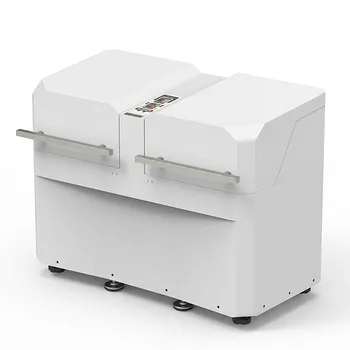
Dual Station Planetary Ball Mill 24L
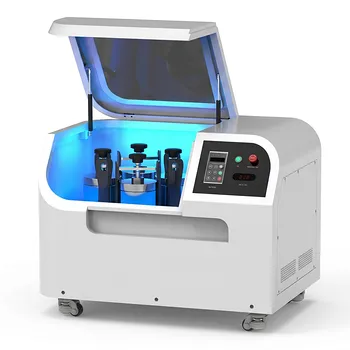
Planetary Ball Mill 12L
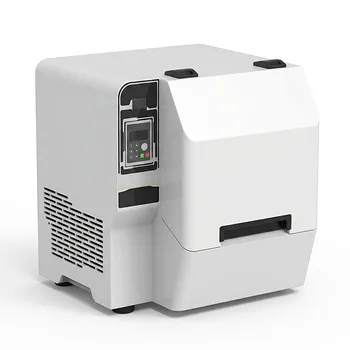
Nano High Energy Vibratory Ball Mill for Laboratory Sample Preparation
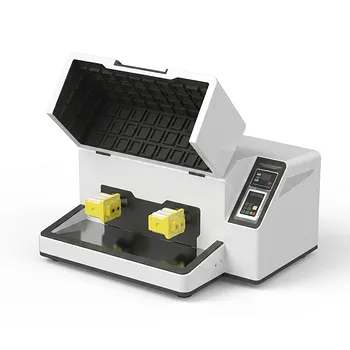
Multi-Platform Nanoscale High-Energy Vibratory Ball Mill
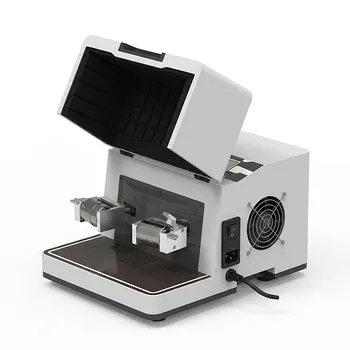
High Energy Hybrid Vibratory Ball Mill for Grinding Mixing and Cell Disruption