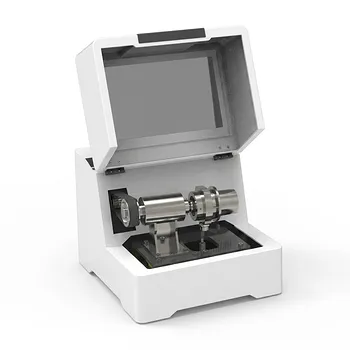
What is the primary function of a planetary ball mill in SiC–VC powder prep? Achieve High-Energy Homogenization
Updated 3 months ago
The primary function of a planetary ball mill in the preparation of SiC–VC composite powders is to achieve deep, micron-level homogenization and increase particle reactivity through high-energy mechanical impact. By generating intense shear forces, the mill breaks down powder agglomerates and ensures the vanadium carbide (VC) reinforcement phase is uniformly distributed within the silicon carbide (SiC) matrix.
Core Takeaway: A planetary ball mill transforms raw material powders into a high-reactivity, uniform mixture, establishing the necessary physical foundation for achieving high densification and a consistent microstructure during subsequent consolidation processes.
Achieving Deep Micron-Level Homogenization
Intense Mechanical Impact and Shear Forces
The planetary ball mill utilizes high-speed rotation to create a "planetary" motion where the grinding jars rotate on their own axes while revolving around a central sun wheel. This motion generates powerful impact and shear forces between the grinding media and the powder. These forces are essential for overcoming the cohesive strengths of fine powders to ensure a thorough blend.
Eliminating Powder Agglomerates
Fine SiC and VC particles naturally tend to clump together into larger clusters, known as agglomerates, due to van der Waals forces. The high-energy milling process forcibly breaks these clusters, ensuring that individual particles are separated and coated. This prevents the formation of "soft spots" or defects in the final ceramic structure.
Ensuring Uniform Reinforcement Distribution
In a composite, the reinforcement phase (VC) must be perfectly dispersed to provide its intended strengthening benefits. The mill ensures a sub-micron level distribution of components, which is critical for suppressing abnormal grain growth during the sintering stage. This uniformity directly correlates to the mechanical reliability of the final composite.
Driving Sintering Performance and Reactivity
Increasing Particle Reactivity
Beyond simple mixing, the mechanical energy transferred during milling can refine the raw material particles and increase their specific surface area. This creates more contact points between the SiC and VC particles, effectively lowering the energy barrier for chemical bonding and diffusion. Increased reactivity is a primary driver for faster and more complete densification.
Establishing the Foundation for Densification
The goal of raw material preparation is to enable high-density results during electric consolidation or other sintering methods. A well-milled powder packs more efficiently and responds more uniformly to heat and pressure. This leads to a final material with fewer pores and a more consistent microstructural grain size.
Understanding the Trade-offs and Pitfalls
Potential for Media Contamination
While high-energy milling is effective, the constant impact can lead to the wear of the grinding balls and jars. This wear can introduce impurities (such as alumina, zirconia, or steel) into the SiC–VC mixture, potentially altering the chemical purity and thermal properties of the final composite.
Thermal Management During Milling
The intense mechanical action generates significant heat within the milling jars, which can lead to unintended phase changes or oxidation of the powders. Proper rotation speeds and cooling intervals must be managed to maintain the chemical integrity of the vanadium carbide and silicon carbide phases.
Energy Consumption vs. Particle Size
There is a point of diminishing returns where additional milling time no longer significantly improves particle size or distribution. Over-milling can lead to re-agglomeration or excessive energy waste, making it critical to optimize the ball-to-powder ratio and milling duration for specific project requirements.
How to Apply This to Your Project
Recommendations Based on Your Goal
- If your primary focus is maximum material density: Prioritize longer milling durations at moderate speeds to ensure the highest possible particle reactivity and surface area.
- If your primary focus is high chemical purity: Use grinding media and jar linings made of the same material as your matrix (e.g., SiC-lined) to minimize the impact of wear-related contamination.
- If your primary focus is structural consistency: Focus on optimizing the rotation speed and ball-to-powder ratio to achieve the most uniform micron-scale dispersion of the VC reinforcement phase.
A properly calibrated planetary ball milling process is the indispensable first step in bridging the gap between raw powder components and high-performance SiC–VC composites.
Summary Table:
| Key Function | Mechanism | Impact on SiC–VC Composite |
|---|---|---|
| Homogenization | High-energy impact & shear | Ensures uniform VC distribution in SiC matrix |
| De-agglomeration | Breaking van der Waals forces | Eliminates "soft spots" and structural defects |
| Reactivity Boost | Increased specific surface area | Lowers sintering energy & drives densification |
| Microstructure Control | Sub-micron level dispersion | Suppresses abnormal grain growth during heating |
Elevate Your Material Research with Precision Powder Solutions
Achieving the perfect SiC–VC composite requires more than just mixing; it demands high-performance equipment that ensures purity and uniformity. At [Company Name], we provide complete laboratory sample preparation solutions tailored for material science professionals.
Whether you are refining ceramic powders or preparing for high-pressure consolidation, our specialized equipment is designed to meet your most rigorous standards:
- Advanced Milling: Planetary ball mills, jet mills, and cryogenic grinders for micron-level refinement.
- Powder Processing: Sieve shakers, powder mixers, and defoaming mixers to ensure consistency.
- Compaction Excellence: A full spectrum of hydraulic presses, including Cold/Warm Isostatic Presses (CIP/WIP), vacuum hot presses, and XRF pellet presses.
Ready to optimize your powder processing workflow? Contact our technical experts today to find the ideal equipment for your specific material requirements and achieve superior densification results.
References
- V. V. Ivzhenko, Jacek Caban. Improvement of Microstructure and Mechanical Properties of SiC–VC System Obtained by Electroconsolidation. DOI: 10.3390/ma18184331
Mentioned Products
- Vertical Semi Circular Planetary Ball Mill for Laboratory Precision Grinding
- High Energy Planetary Ball Mill for Nano Scale Grinding and Mechanical Alloying
- Vertical Production Planetary Ball Mill for High Throughput Powder Processing
- Heavy Duty Horizontal Planetary Ball Mill for Efficient Industrial Grinding and Sample Preparation
- 360° Rotating Omnidirectional Laboratory Planetary Ball Mill for Homogeneous Ultra-Fine Grinding and Mixing
People Also Ask
- Why is a planetary ball mill essential for SiBCN-rGO wet-spinning? Achieve Superior Dispersion and Spinnability
- What role does a planetary ball mill play in the synthesis of Li6PS5Cl (LPSCl)? Unlock High Ionic Conductivity
- Why is a planetary ball mill required for PET micronization? Ensure Accurate Chemical Analysis of Reprocessed PET
- How does mechanized planetary ball milling compare to manual agate grinding? Optimize sulfide standard material precision.
- Why is a planetary ball mill required during the synthesis of sodium zeolite from coal gangue? Achieve High Reactivity

Tech Team · PowderPreparation
Last updated on May 14, 2026
Related Products
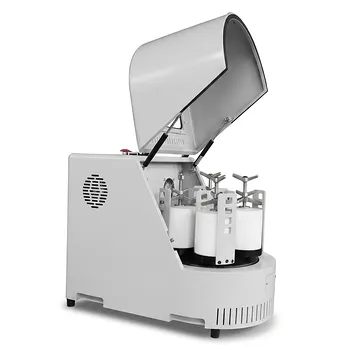
Vertical Semi Circular Planetary Ball Mill for Laboratory Precision Grinding
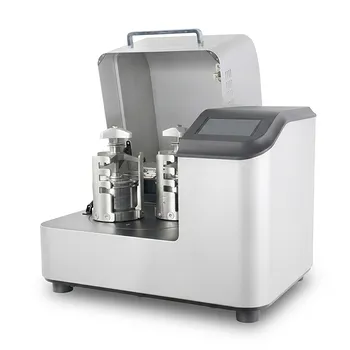
High Energy Planetary Ball Mill for Nano Scale Grinding and Mechanical Alloying
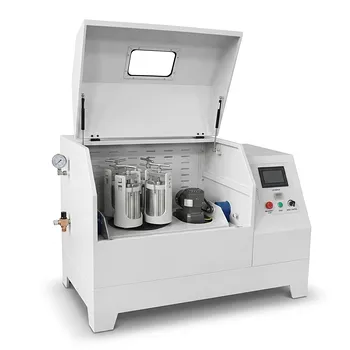
Vertical Production Planetary Ball Mill for High Throughput Powder Processing
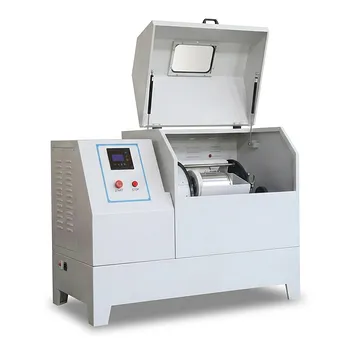
Heavy Duty Horizontal Planetary Ball Mill for Efficient Industrial Grinding and Sample Preparation
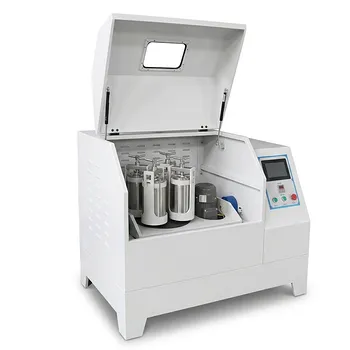
360° Rotating Omnidirectional Laboratory Planetary Ball Mill for Homogeneous Ultra-Fine Grinding and Mixing
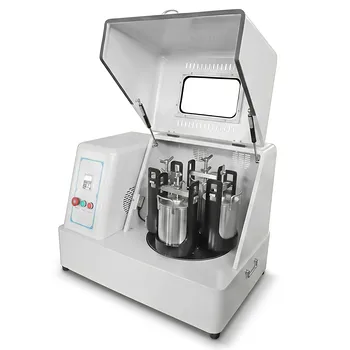
Vertical Square Planetary Ball Mill for Laboratory Sample Preparation and Nanoscale Grinding
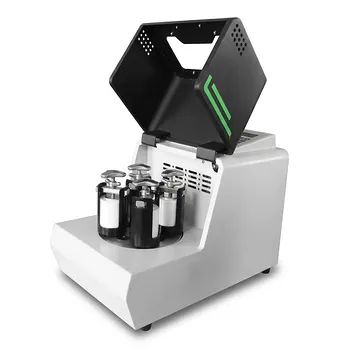
Miniature Planetary Ball Mill with Vacuum Grinding and High Efficiency for Laboratory Sample Preparation
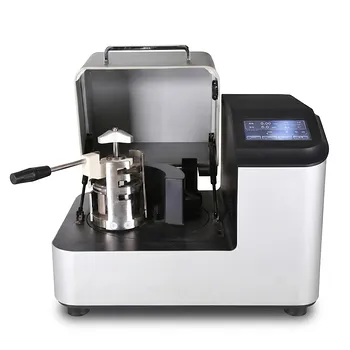
High Energy Laboratory Planetary Ball Mill for Nano Grinding and Material Science Sample Preparation
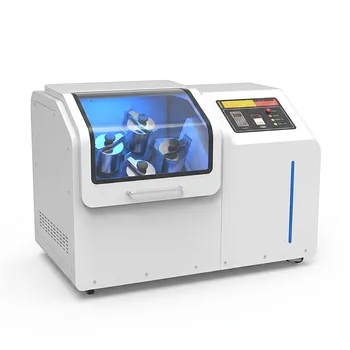
High Energy Omnidirectional Planetary Ball Mill 16L
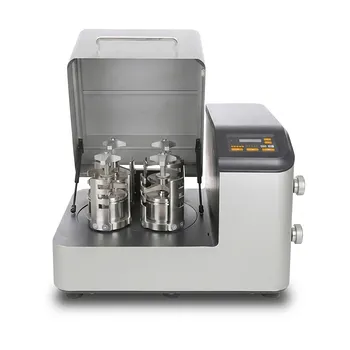
High Energy Planetary Ball Mill for Nano Scale Grinding and Colloidal Mixing in Material Science Research
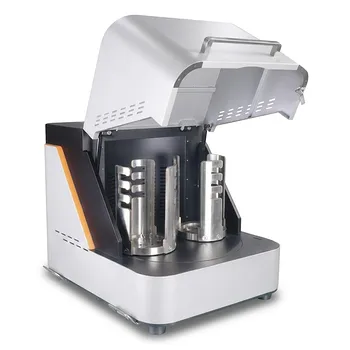
High Energy Laboratory Planetary Ball Mill for Nano Grinding and Colloidal Mixing of Hard and Brittle Materials
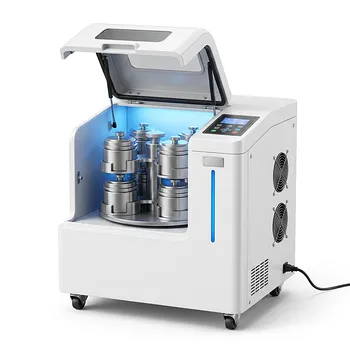
High Energy Omnidirectional Planetary Ball Mill 20L
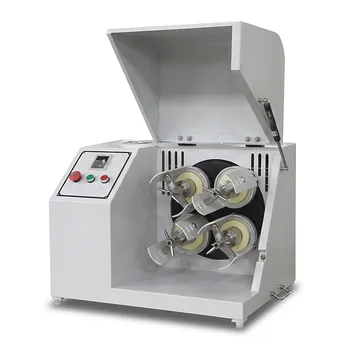
Horizontal Light Duty Planetary Ball Mill for Laboratory Sample Preparation

8L Planetary Ball Mill for Laboratory Grinding and Sample Preparation
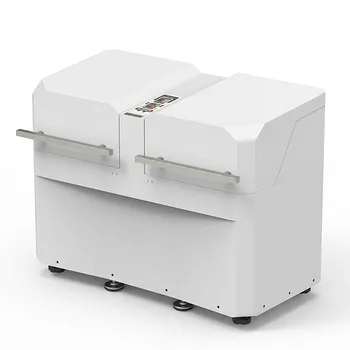
Dual Station Planetary Ball Mill 24L
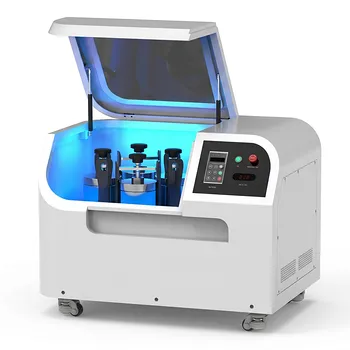
Planetary Ball Mill 12L

Nano High Energy Vibratory Ball Mill for Laboratory Sample Preparation

Multi-Platform Nanoscale High-Energy Vibratory Ball Mill

High Energy Hybrid Vibratory Ball Mill for Grinding Mixing and Cell Disruption