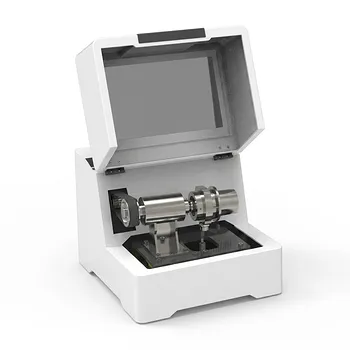
What is the primary function of a high-energy planetary ball mill in preparing Beta-Si3N4? Master Microstructural Control
Updated 5 months ago
The primary function of a high-energy planetary ball mill in preparing self-reinforced Beta-Si3N4 ceramics is to achieve molecular-level uniform mixing of the silicon nitride starting powder with trace rare earth oxide additives. This process utilizes high-frequency impact and shear forces to ensure that additives like Y2O3, Al2O3, or Lu2O3 are perfectly distributed throughout the matrix. This homogeneity is the critical physical prerequisite for forming a uniform liquid phase during sintering, which ultimately promotes the growth of elongated Beta-Si3N4 grains with balanced aspect ratios.
High-energy planetary ball milling serves as the foundation for microstructural control by combining intense particle refinement with atomic-level homogenization. Without this step, the ceramic would lack the uniform liquid phase necessary to develop the self-reinforcing elongated grain structure that gives Beta-Si3N4 its superior mechanical properties.
Achieving Molecular-Level Homogeneity
Uniform Distribution of Trace Additives
The mill ensures that trace rare earth oxides are distributed evenly across the surface of the Si3N4 particles. This prevents the formation of localized additive clusters, which can lead to structural weak points or uneven grain growth during the sintering process.
Formation of the Liquid Phase
During sintering, the oxide additives react with the silica layer on the silicon nitride to form a liquid phase. A high-energy mill ensures this phase is consistent throughout the material, allowing for steady and predictable phase transitions from alpha to beta silicon nitride.
Microstructural Consistency
Homogeneous mixing is essential for achieving a uniform microstructure in the final ceramic. This uniformity reduces interfacial defects and microscopic gaps, which optimizes how the material handles thermal stress and mechanical loads.
Enhancing Sintering Activity through Refinement
Particle Size Reduction
High-energy milling refines raw powders—often starting at 1–3 µm—down to sub-micron or nanometer scales. This drastic reduction in size significantly increases the specific surface area of the powder.
Increasing Reactivity
Smaller particles possess higher surface energy, which increases the sintering activity of the powder. This allows the reaction to occur at lower temperatures and promotes more efficient densification of the ceramic matrix.
Physical Foundation for Phase Transition
The refinement process creates the necessary physical environment for the solid-phase synthesis of intermediate phases, such as aluminum silicate. These intermediate phases are crucial for the eventual formation of the high-strength Beta-Si3N4 structure.
The Mechanics of High-Energy Milling
High-Frequency Impact Forces
The planetary motion generates intense, high-frequency impacts between the grinding balls and the raw materials. This energy is what breaks down the strong covalent bonds of the silicon nitride and pulverizes the oxide additives.
Shear and Friction
In addition to impact, the equipment generates strong shear forces and friction. These actions are responsible for the "smearing" effect that helps achieve atomic-level mixing between chemically different components.
Precision Control
By adjusting the speed and duration of the rotation, engineers can precisely control the final particle size and the degree of mixing. This precision is vital for creating high-purity powders used in advanced applications like electrochemical sensors or high-performance coatings.
Understanding the Trade-offs and Pitfalls
Media Contamination
The primary risk of high-energy milling is the introduction of impurities from the grinding balls or the vial walls. If the milling media wears down, foreign elements can enter the powder, potentially degrading the high-temperature performance of the Si3N4.
Over-Milling and Structural Damage
Excessive milling can lead to the "amorphization" of the powder, where the crystal structure is destroyed rather than refined. While high surface energy is good for sintering, too much structural damage can interfere with the controlled growth of the elongated beta grains.
Thermal Management During Milling
The high-speed rotation generates significant heat, which can cause the powder to clump or oxidize prematurely. Utilizing wet mixing or controlled atmospheres is often necessary to maintain the chemical integrity of the raw materials.
How to Apply This to Your Project
Making the Right Choice for Your Goal
To achieve the best results in your ceramic preparation, tailor your milling strategy to your specific structural requirements.
- If your primary focus is maximum fracture toughness: Prioritize the uniform distribution of additives at the expense of extreme refinement to ensure the growth of large, elongated Beta-Si3N4 grains.
- If your primary focus is low-temperature sintering: Focus on maximizing particle refinement to the nanometer scale to increase surface reactivity and decrease the required energy input.
- If your primary focus is material purity: Use milling media made of the same material as your powder (e.g., Si3N4 balls) to minimize the impact of mechanical wear and contamination.
The success of self-reinforced Beta-Si3N4 depends entirely on the precise execution of the high-energy milling stage to bridge the gap between raw powders and a high-performance microstructure.
Summary Table:
| Core Function | Physical Action | Resulting Material Property |
|---|---|---|
| Homogenization | Molecular-level mixing of additives | Uniform liquid phase & grain growth |
| Refinement | Sub-micron particle size reduction | Enhanced sintering activity & densification |
| Activation | High-frequency impact & shear | Optimized phase transition to Beta-Si3N4 |
Elevate Your Material Synthesis with Precision Equipment
Achieve superior ceramic properties with SYL-Lab’s complete laboratory sample preparation solutions. We specialize in the high-performance equipment needed to bridge the gap between raw powders and advanced microstructures.
Our extensive line includes:
- Powder Processing: High-energy planetary ball mills, jet mills, and cryogenic grinders for molecular-level homogenization.
- Mixing Solutions: Powder mixers and defoaming mixers to ensure trace additive consistency.
- Advanced Compaction: A full spectrum of hydraulic presses, including Cold/Warm Isostatic Presses (CIP/WIP), vacuum hot presses, and XRF pellet presses.
Whether you are refining Beta-Si3N4 or developing new material composites, our specialists are ready to provide the tools for your success.
Contact us today to optimize your lab's workflow!
References
- Paul Becher. Multiple Scale Processes in Microstructural Evolution: Case Study of Self-Reinforced β-Si3N4. DOI: 10.4191/kcers.2016.53.6.575
Mentioned Products
- High Energy Planetary Ball Mill for Nano Scale Grinding and Mechanical Alloying
- High Energy Laboratory Planetary Ball Mill for Nano Grinding and Colloidal Mixing of Hard and Brittle Materials
- High Energy Planetary Ball Mill for Nano Scale Grinding and Colloidal Mixing in Material Science Research
- High Energy Omnidirectional Planetary Ball Mill 16L
- High Energy Laboratory Planetary Ball Mill for Nano Grinding and Material Science Sample Preparation
People Also Ask
- Why is a high-energy planetary ball mill used for nano-milling As4Se3? Achieve Expert Structural Transformation
- What role do high-energy planetary ball mills play in FDM composite filament preparation? Optimize Material Performance
- What is the role of a high-energy planetary ball mill in the exfoliation of modified WSe2? Achieve Nano-Precision
- What is the function of a planetary ball mill in glass-ceramic sintering? Optimize Reactivity and Uniformity
- What is the role of a high-energy planetary ball mill in the preparation of high-performance nano-ceramics? Key Guide

Tech Team · PowderPreparation
Last updated on May 14, 2026
Related Products

High Energy Planetary Ball Mill for Nano Scale Grinding and Mechanical Alloying
High Energy Laboratory Planetary Ball Mill for Nano Grinding and Colloidal Mixing of Hard and Brittle Materials
High Energy Planetary Ball Mill for Nano Scale Grinding and Colloidal Mixing in Material Science Research
High Energy Omnidirectional Planetary Ball Mill 16L

High Energy Laboratory Planetary Ball Mill for Nano Grinding and Material Science Sample Preparation
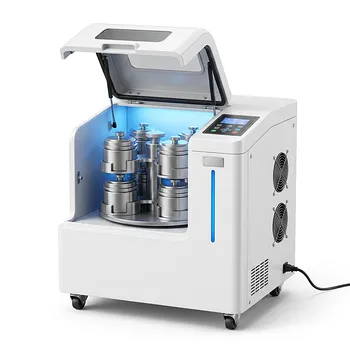
High Energy Omnidirectional Planetary Ball Mill 20L
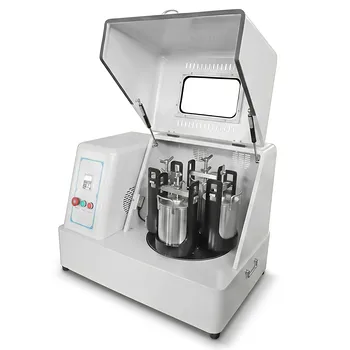
Vertical Square Planetary Ball Mill for Laboratory Sample Preparation and Nanoscale Grinding

8L Planetary Ball Mill for Laboratory Grinding and Sample Preparation
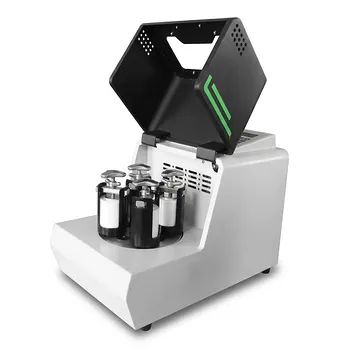
Miniature Planetary Ball Mill with Vacuum Grinding and High Efficiency for Laboratory Sample Preparation
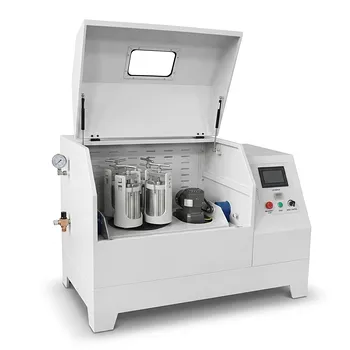
Vertical Production Planetary Ball Mill for High Throughput Powder Processing
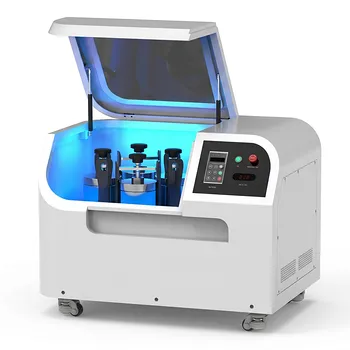
Planetary Ball Mill 12L
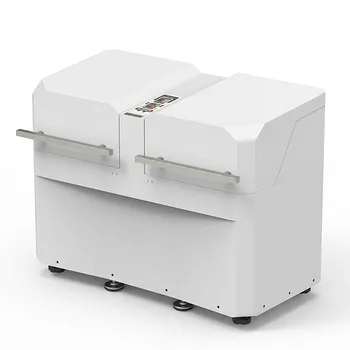
Dual Station Planetary Ball Mill 24L
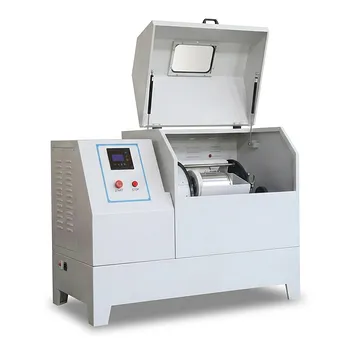
Heavy Duty Horizontal Planetary Ball Mill for Efficient Industrial Grinding and Sample Preparation

High Energy Hybrid Vibratory Ball Mill for Grinding Mixing and Cell Disruption

Multi-Platform Nanoscale High-Energy Vibratory Ball Mill

Ultra-Low Temperature Cryogenic High-Energy Vibratory Ball Mill
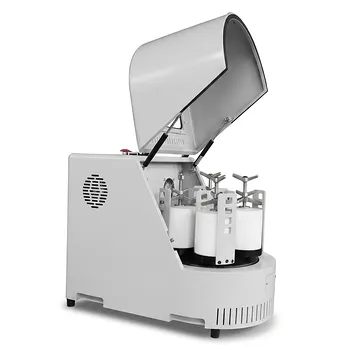
Vertical Semi Circular Planetary Ball Mill for Laboratory Precision Grinding

Nano High Energy Vibratory Ball Mill with Heating and Temperature Control
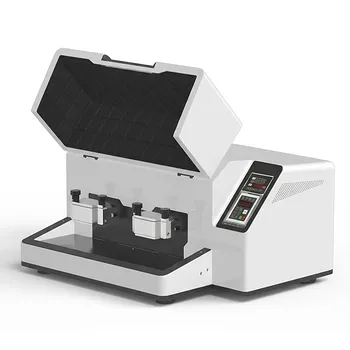
Nanoscale High-Energy Vibratory Ball Mill for Laboratory Sample Preparation, Mechanochemistry, and Mechanical Alloying