What is the primary function of an industrial Hot Press during CMC green body curing? Optimize Density & Integrity
Updated 4 months ago
The primary function of an industrial Hot Press during the green body curing of Ceramic Matrix Composites (CMCs) is the simultaneous application of precise thermal and mechanical loads to consolidate impregnated laminates into a cohesive, high-density "green body."
This dual-action process drives the chemical polymerization of the precursor resin while applying constant pressure to suppress the formation of internal pores caused by escaping volatiles. By tightly bonding fabric laminates and maintaining strict dimensional control, the hot press ensures the material achieves the structural integrity and geometric precision required for subsequent high-temperature processing.
Core Takeaway: The industrial Hot Press transforms loose precursor materials into a stable green body by balancing resin cross-linking with mechanical compaction. This critical stage establishes the initial density and fiber volume content (FVC) that determine the final composite's performance and reliability.
Achieving Structural Consolidation and Bonding
Driving Chemical Polymerization
The hot press provides a continuous, uniform thermal field that triggers and maintains the chemical cross-linking reaction of the resin matrix (such as phenolic or epoxy). This process ensures the resin transitions from a liquid slurry into a solid, stable matrix that locks the reinforcement fibers in place.
Maximizing Interlaminar Adhesion
By applying axial pressure, the equipment ensures that individual layers of impregnated fabric or prepregs are tightly bonded. This mechanical force reduces the thickness of resin-rich interlaminar zones, which are often the weakest points in a composite structure.
Enhancing Fiber-Matrix Infiltration
The combination of heat and pressure lowers the resin viscosity momentarily before curing, allowing it to fully infiltrate the carbon or ceramic fiber bundles. This ensures that the reinforcement phase is completely encapsulated, which is vital for efficient load transfer in the finished CMC.
Porosity Control and Density Management
Suppression of Volatile-Induced Voids
As resins cure, they often release gaseous volatiles; without external pressure, these gases expand to create internal pores. The hot press applies sufficient force to suppress these volatiles, forcing them out or keeping them dissolved until the matrix solidifies, thereby minimizing internal defects.
Establishing Initial Density Targets
Precise pressure control allows manufacturers to hit specific preset density targets (such as 0.5 or 0.8 g/cm³) during the green stage. Achieving a high-density foundation at this point is a prerequisite for successful densification during later stages like Melt Infiltration or Polymer Infiltration and Pyrolysis (PIP).
Optimizing Fiber Volume Content (FVC)
By squeezing out excess resin and air bubbles, the hot press increases the Fiber Volume Content. A higher FVC generally leads to superior mechanical properties, as the load-bearing fibers occupy a greater percentage of the material's volume.
Ensuring Geometric and Dimensional Integrity
Maintaining Precise External Dimensions
The hot press acts as a rigid mold environment that holds the composite to its intended geometric shape throughout the curing cycle. This minimizes spring-back or warping, ensuring the green body closely matches the final desired component dimensions.
Minimizing Sintering Deformation
A green body with uniform density and minimal internal voids is less likely to undergo uneven shrinkage during high-temperature carbonization or sintering. The precision of the hot press during curing effectively "pre-programs" the structural stability of the material for the rest of its manufacturing life.
Understanding the Trade-offs and Pitfalls
Pressure vs. Reinforcement Damage
While high pressure increases density, excessive force can crush or damage delicate reinforcements like ceramic whiskers or thin-walled fibers. Engineers must calibrate the pressure to be high enough for consolidation but low enough to preserve the integrity of the reinforcement phase.
Managing Thermal Gradients
In thick CMC sections, the outer layers may cure faster than the core, leading to internal stresses or "uncured" centers. Controlled heating ramps are essential to ensure the thermal field remains uniform, preventing material defects caused by uneven polymerization.
Applying This to Your Manufacturing Process
Making the Right Choice for Your Goal
- If your primary focus is Maximum Mechanical Strength: Prioritize high-precision pressure control to maximize Fiber Volume Content and minimize interlaminar resin-rich zones.
- If your primary focus is Complex Geometric Precision: Utilize a hot press with high-rigidity molds and synchronized temperature cycles to prevent warping during the resin transition phase.
- If your primary focus is Minimizing Post-Processing: Focus on volatile suppression through early-stage pressure application to ensure a dense, pore-free surface that requires less subsequent infiltration.
Properly executed hot pressing during the curing stage is the single most important factor in establishing the structural "DNA" of a high-performance Ceramic Matrix Composite.
Summary Table:
| Key Function | Action During Curing | Impact on CMC Green Body |
|---|---|---|
| Thermal Control | Triggers resin cross-linking | Transitions liquid precursor into a stable, solid matrix. |
| Mechanical Load | Compresses laminates | Maximizes interlaminar adhesion and reduces resin-rich zones. |
| Void Suppression | Applies axial pressure | Drives out volatiles to minimize porosity and internal defects. |
| Density Management | Compacts reinforcement | Establishes specific density targets and high fiber volume content. |
| Geometric Shaping | Rigid mold environment | Ensures dimensional precision and minimizes sintering warping. |
Elevate Your CMC Manufacturing with Precision Engineering
Establishing the perfect structural "DNA" for Ceramic Matrix Composites requires absolute control over temperature and pressure. KINTEK SOLUTION specializes in providing complete laboratory sample preparation and powder processing solutions tailored for material science innovators.
Whether you need advanced Hot Presses, Vacuum Hot Presses, or standard hydraulic presses for precise green body curing, our equipment is designed to maximize density and fiber volume content. Our extensive line also includes:
- Compaction Equipment: Cold/Warm Isostatic Presses (CIP/WIP) and XRF pellet presses.
- Size Reduction: Jaw/roll crushers and high-energy mills (planetary, jet, rotor).
- Processing Tools: Sieve shakers, liquid nitrogen grinders, and high-performance mixers.
Don't compromise on your material's structural integrity. Contact KINTEK SOLUTION today to find the ideal equipment for your laboratory or industrial production needs!
References
- Eric Eckstein, Paul M. Weaver. Thermally-Driven Morphing with High Temperature Composites. DOI: 10.2514/6.2016-1241
Mentioned Products
- 5 Ton Single Punch Tablet Press Laboratory Small Batch Production
- 6 Ton Variable Frequency Single Punch Tablet Press
- 6-Ton Small Single-Punch Tablet Press — Laboratory Powder & Granule Tableting Equipment / Tablet Forming Machine
- Manual Tablet Press with Dual Scale Pressure Gauge for Pharmaceutical Food Chemical Laboratory Sample Preparation
- Ordinary Type Rotary Tablet Press for Pharmaceutical Chemical Food Electronic Industries
People Also Ask
- What is the function of a laboratory press in assessing the hydrophobic performance of modified vermiculite fillers?
- What is the core function of a laboratory press in the forming of ceramic filter element green bodies? Maximize Density.
- What is the function of a laboratory press in Cr-Ti alloy evaluation? Quantify Fracture Stress & Strength
- Why is vacuum sealing and flexible packaging necessary for Aluminum Titanate powders during CIP? Ensure Peak Density
- Why is a laboratory hydraulic press required for FT-IR KBr pellets? Achieve Precise Sample Clarity for ZrC–SiC Analysis

Tech Team · PowderPreparation
Last updated on Jun 03, 2026
Related Products
5 Ton Single Punch Tablet Press Laboratory Small Batch Production
6 Ton Variable Frequency Single Punch Tablet Press
6-Ton Small Single-Punch Tablet Press — Laboratory Powder & Granule Tableting Equipment / Tablet Forming Machine
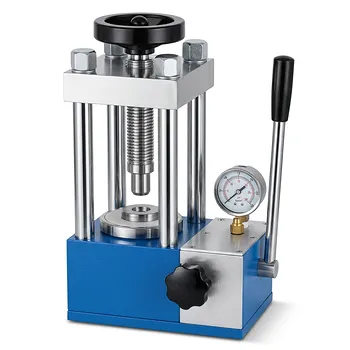
Manual Tablet Press with Dual Scale Pressure Gauge for Pharmaceutical Food Chemical Laboratory Sample Preparation
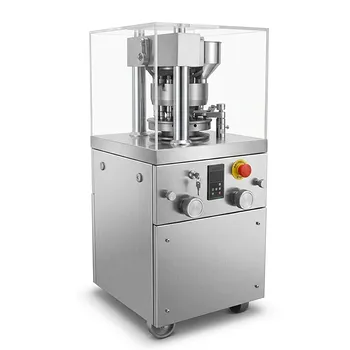
Ordinary Type Rotary Tablet Press for Pharmaceutical Chemical Food Electronic Industries
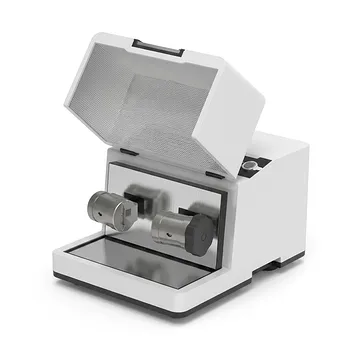
Heating Temperature Controlled High Energy Vibratory Ball Mill
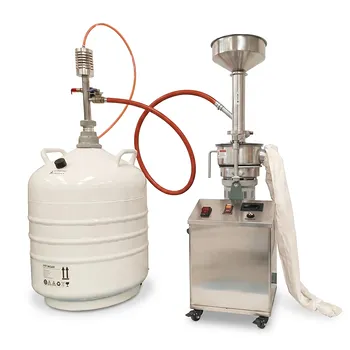
Laboratory Liquid Nitrogen Cryogenic Grinder Polymer Sample Preparation Pulverizer
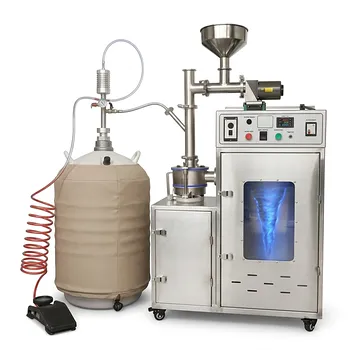
Small Liquid Nitrogen Cryogenic Grinder for Ultrafine Grinding of Heat-Sensitive Materials in Laboratories

Low Temperature Laboratory Knife Mill Cryogenic Sample Grinder Material Science Powder Processing
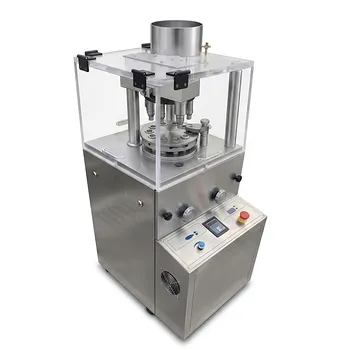
Enhanced 9 Punch Rotary Tablet Press for Powder Compaction
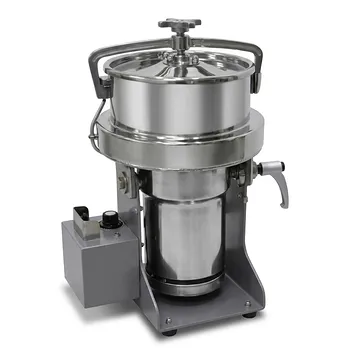
500g Capacity Water Cooled Low Temperature Grinder with Variable Speed and Safety Cover

Vertical Production Planetary Ball Mill for High Throughput Powder Processing

Laboratory Mortar Grinder for Sample Preparation and Cryogenic Powder Homogenization
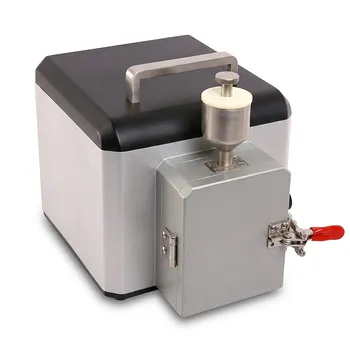
Portable Cutting Mill for Laboratory Sample Preparation and RoHS WEEE Compliance Testing
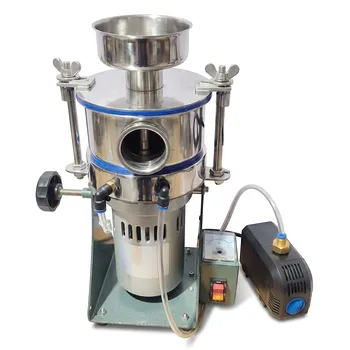
Water Cooled Airflow Ultra Fine Grinder for Low Temperature Material Processing
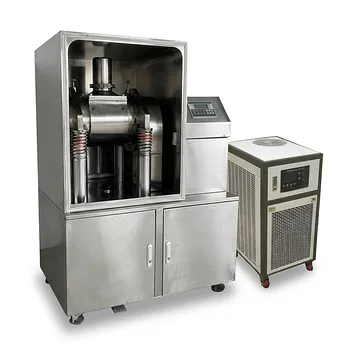
Water Cooled Cryogenic Ultra Fine Cell Wall Breaking Mill
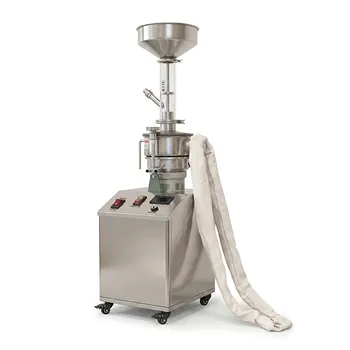
Small Liquid Nitrogen Cryogenic Grinder for Plastic and Heat-Sensitive Material Sample Preparation
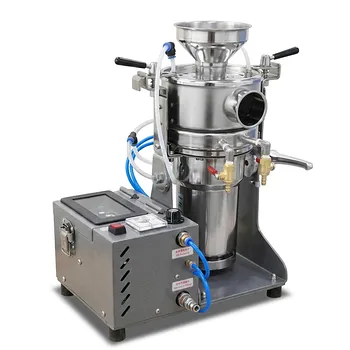
Water Cooled Pulse Jet Ultrafine Grinder
Versatile Industrial Crusher for Laboratory Crushing and Material Processing