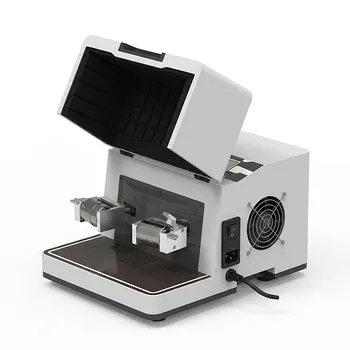
What is the role of a planetary ball mill in MCP powder preparation? Optimize Reactivity & 3D Printing Performance
Updated 5 months ago
The planetary ball mill serves as the definitive equipment for transforming sintered magnesium phosphate into a refined, reactive precursor. By utilizing high-energy impacts within a liquid medium, the mill reduces coarse materials to a precise micron-scale powder. This process ensures the uniform composition and high surface area necessary for producing high-performance 3D printing slurries.
The core role of a planetary ball mill is to achieve microscopic uniformity and high reactivity through controlled mechanical force. This refinement is essential for ensuring that Magnesium Calcium Phosphate (MCP) powders meet the strict particle size requirements of advanced manufacturing.
Mechanisms of Powder Refinement
High-Energy Impact and Attrition
The planetary ball mill operates through the simultaneous rotation and revolution of grinding jars, which creates intense centrifugal forces. These forces drive the grinding media to deliver high-energy impacts and shear stress against the sintered MCP blocks. This mechanical energy effectively breaks down the hard agglomerates formed during the sintering or calcination stages.
The Role of Wet Grinding
In MCP preparation, the milling is typically performed as a wet grinding process using an ethanol medium. The liquid medium acts as a coolant to prevent thermal degradation and helps to disperse particles evenly. This prevents the fine powders from re-clumping, ensuring a more consistent particle size distribution.
Achieving Atomic-Level Uniformity
Beyond simple size reduction, the high-speed rotation ensures that all components are distributed uniformly at a microscopic level. This thorough mixing is critical for magnesium-based materials to ensure that the calcium and phosphate phases are perfectly integrated. Such uniformity is a prerequisite for achieving stable chemical properties in the final product.
Impact on Material Performance
Optimization for 3D Printing
For applications involving 3D printing, the mill reduces particles to a scale that prevents nozzle clogging. A narrow particle size distribution allows for the creation of stable, high-solids-loading slurries. This ensures that the material flows predictably during the extrusion or deposition process.
Increasing Specific Surface Area
Refining the powder to a sub-micron scale significantly increases its specific surface area. A higher surface area provides more active sites for subsequent chemical reactions or hydration. In MCP materials, this heightened reactivity is vital for the strength and setting time of the resulting ceramic or cement.
Suspension Stability
The mechanical friction and impact help produce particles with morphology conducive to suspension stability. When the MCP powder is later mixed into a gel or slurry, these refined particles remain suspended longer. This stability is critical for processes like gel casting or 3D bioprinting where uniformity is paramount.
Understanding the Trade-offs
Media Contamination
The primary risk of high-energy milling is the introduction of impurities from the wear of grinding jars and balls. If the grinding media is not harder or more chemically inert than the MCP, small fragments can contaminate the batch. Using high-purity zirconia media is a common but more expensive solution to mitigate this risk.
Phase Transformation and Overheating
Excessive milling time or speed can generate significant heat, which may trigger unwanted phase changes in the magnesium phosphate. While mechanical force increases reactivity, over-processing can lead to the loss of specific crystalline structures. Operators must carefully balance milling duration with the need for material integrity.
How to Apply This to Your Project
When utilizing a planetary ball mill for MCP preparation, your strategy should align with your final application requirements.
- If your primary focus is 3D printing slurry stability: Prioritize achieving a sub-micron particle size through extended wet-milling to ensure the powder remains in suspension without clogging hardware.
- If your primary focus is maximizing chemical reactivity: Focus on maximizing the specific surface area by using high-speed settings, while monitoring temperature to prevent phase degradation.
- If your primary focus is material purity: Utilize high-purity grinding media and jars, such as those made from agate or stabilized zirconia, to minimize metallic or silica contamination.
By precisely controlling the mechanical energy of the planetary ball mill, you can tailor the physical and chemical properties of MCP powders to meet the most demanding technical specifications.
Summary Table:
| Key Mechanism | Function in MCP Preparation | Material Performance Benefit |
|---|---|---|
| High-Energy Impact | Breaks down hard sintered agglomerates | Prevents nozzle clogging in 3D printing |
| Wet Grinding (Ethanol) | Prevents thermal degradation & re-clumping | Ensures narrow particle size distribution |
| Microscopic Mixing | Integrates calcium and phosphate phases | Achieves stable chemical properties |
| Surface Area Scaling | Increases active chemical sites | Enhances material strength and setting time |
Elevate Your Material Research with Precision Powder Solutions
Achieving the perfect precursor for Magnesium Calcium Phosphate (MCP) requires more than just grinding—it requires controlled mechanical energy and high-purity processing. At our facility, we provide complete laboratory sample preparation solutions tailored for the demanding needs of material science.
From refining powders for 3D bioprinting to preparing advanced ceramic slurries, our expertise covers the entire processing workflow:
- Advanced Milling: Our high-performance planetary ball mills, jet mills, and cryogenic grinders achieve the sub-micron precision necessary for reactive precursors.
- Powder Handling: Ensure consistency with our vibratory sieve shakers and specialized powder or defoaming mixers.
- Superior Compaction: We manufacture a full spectrum of hydraulic presses, including Cold/Warm Isostatic Presses (CIP/WIP), vacuum hot presses, and XRF pellet presses for high-density material testing.
Ready to optimize your MCP powder refinement and achieve superior material integrity?
Contact our technical team today to find your solution!
References
- Peng Zhang, Kwi‐Dug Yun. Evaluation of the Characteristics of Digital Light Processing 3D-Printed Magnesium Calcium Phosphate for Bone Regeneration. DOI: 10.3390/jfb16040139
Mentioned Products
- Vertical Semi Circular Planetary Ball Mill for Laboratory Precision Grinding
- High Energy Planetary Ball Mill for Nano Scale Grinding and Mechanical Alloying
- Heavy Duty Horizontal Planetary Ball Mill for Efficient Industrial Grinding and Sample Preparation
- Vertical Production Planetary Ball Mill for High Throughput Powder Processing
- 360° Rotating Omnidirectional Laboratory Planetary Ball Mill for Homogeneous Ultra-Fine Grinding and Mixing
People Also Ask
- What role does a planetary ball mill play in the synthesis of Li6PS5Cl (LPSCl)? Unlock High Ionic Conductivity
- Why is a planetary ball mill essential for SiBCN-rGO wet-spinning? Achieve Superior Dispersion and Spinnability
- Why is an intermittent grinding process required for perovskites in a planetary ball mill? Ensure Stability & Purity
- Why is a planetary ball mill required for PET micronization? Ensure Accurate Chemical Analysis of Reprocessed PET
- How does mechanized planetary ball milling compare to manual agate grinding? Optimize sulfide standard material precision.

Tech Team · PowderPreparation
Last updated on May 14, 2026
Related Products
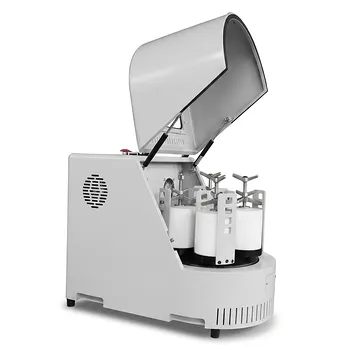
Vertical Semi Circular Planetary Ball Mill for Laboratory Precision Grinding

High Energy Planetary Ball Mill for Nano Scale Grinding and Mechanical Alloying

Heavy Duty Horizontal Planetary Ball Mill for Efficient Industrial Grinding and Sample Preparation

Vertical Production Planetary Ball Mill for High Throughput Powder Processing
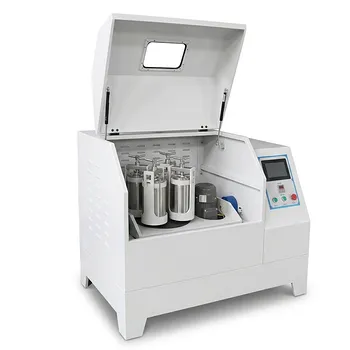
360° Rotating Omnidirectional Laboratory Planetary Ball Mill for Homogeneous Ultra-Fine Grinding and Mixing

Vertical Square Planetary Ball Mill for Laboratory Sample Preparation and Nanoscale Grinding

Miniature Planetary Ball Mill with Vacuum Grinding and High Efficiency for Laboratory Sample Preparation

High Energy Omnidirectional Planetary Ball Mill 16L
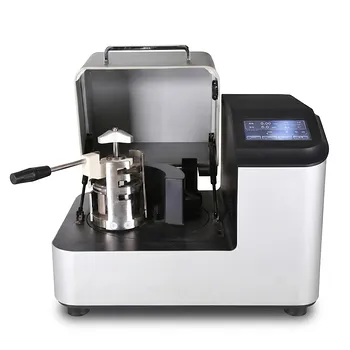
High Energy Laboratory Planetary Ball Mill for Nano Grinding and Material Science Sample Preparation
Planetary Ball Mill 12L
High Energy Planetary Ball Mill for Nano Scale Grinding and Colloidal Mixing in Material Science Research
Horizontal Light Duty Planetary Ball Mill for Laboratory Sample Preparation
High Energy Omnidirectional Planetary Ball Mill 20L
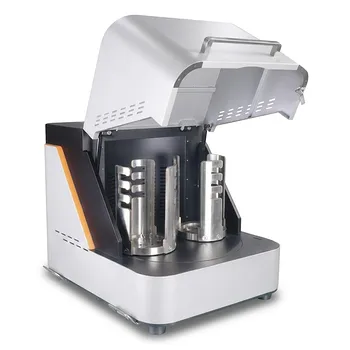
High Energy Laboratory Planetary Ball Mill for Nano Grinding and Colloidal Mixing of Hard and Brittle Materials
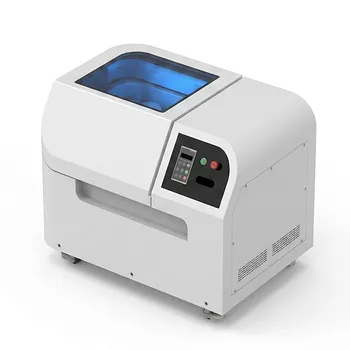
8L Planetary Ball Mill for Laboratory Grinding and Sample Preparation
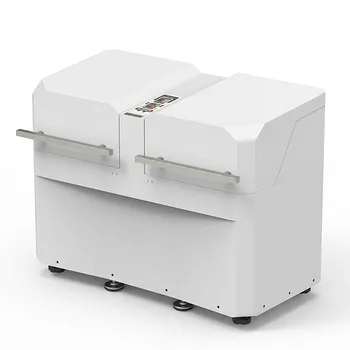
Dual Station Planetary Ball Mill 24L

Multi-Platform Nanoscale High-Energy Vibratory Ball Mill

Nano High Energy Vibratory Ball Mill for Laboratory Sample Preparation
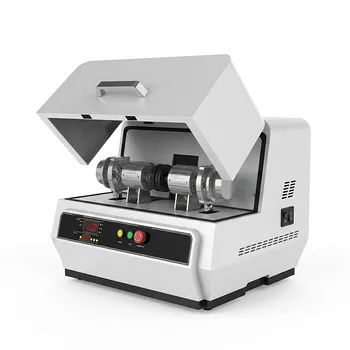
Dual Jar High Energy Vibratory Ball Mill