What is the primary function of a planetary ball mill in the refinement of Al-Cu-Fe catalyst powders? Sub-Micron Precision
Updated 5 months ago
The primary function of a planetary ball mill in the refinement of Al-Cu-Fe catalyst powders is the high-energy reduction of large quasicrystalline ingots into sub-micron particles.
By utilizing the combined forces of revolution and rotation, the mill generates intense impact and shear forces that crush the raw material. This process is essential for significantly increasing the specific surface area of the catalyst and introducing structural defects through mechanochemical effects, which are critical for enhancing performance in reactions like the reverse water-gas shift (RWGS).
The planetary ball mill acts as a high-energy processor that transforms bulk quasicrystalline ingots into reactive, sub-micron powders. It optimizes catalytic performance by maximizing active site exposure and inducing beneficial microscopic stress within the material structure.
Achieving Particle Refinement and Surface Optimization
The Mechanics of High-Energy Milling
The planetary ball mill operates by rotating grinding jars while they simultaneously revolve around a central axis. This dual-motion creates a complex force field where the grinding media deliver continuous high-energy impacts and intense shearing to the Al-Cu-Fe ingots.
Transitioning to the Sub-Micron Scale
The primary goal of this mechanical action is to break down the crystalline structure of the starting material. By refining the powder to a sub-micron scale, the process ensures that the resulting catalyst has the fine texture required for industrial chemical processes.
Maximizing Specific Surface Area
A critical outcome of this refinement is the dramatic increase in the powder's specific surface area. A larger surface area allows for the exposure of a much higher number of active sites, which directly correlates to the efficiency and speed of the catalytic reaction.
Enhancing Activity Through Mechanochemical Effects
Inducing Microscopic Structural Defects
Beyond simple size reduction, the high-energy environment of the mill triggers mechanochemical effects. These effects introduce microscopic stress and lattice defects into the Al-Cu-Fe powder that would not be present in traditionally ground materials.
Promoting Catalytic Reactivity
These structural irregularities are highly beneficial for specific applications like the reverse water-gas shift (RWGS). The internal stress and defects lower the energy barriers for reactions, making the catalyst more chemically active and effective.
Homogenization and Elemental Distribution
While the primary focus is on Al-Cu-Fe, the mill also ensures that any constituent components are uniformly distributed at the microscopic scale. This homogeneity prevents "dead zones" in the catalyst, ensuring consistent performance across the entire batch of material.
Understanding the Trade-offs
Risk of Material Contamination
The intense energy required for sub-micron refinement increases the risk of media wear, where small amounts of the grinding balls or jar lining can contaminate the powder. Careful selection of grinding materials is necessary to prevent unwanted impurities from poisoning the catalyst.
Heat Generation and Structural Change
High-speed milling generates significant thermal energy, which can lead to unwanted phase transitions or the "cold welding" of particles. In some cases, excessive heat may cause the powder to lose the specific quasicrystalline properties that make Al-Cu-Fe valuable as a catalyst.
Over-Processing and Agglomeration
While the goal is refinement, excessive milling time can lead to particle agglomeration, where fine powders begin to fuse back together. This reduces the effective surface area and requires a precise balance of milling duration and rotational speed to avoid diminishing returns.
How to Apply This to Your Project
Recommendations for Catalyst Development
- If your primary focus is maximizing catalytic activity: Prioritize high rotational speeds and longer milling times to induce the maximum amount of structural defects and surface area.
- If your primary focus is maintaining phase purity: Utilize lower speeds or intermittent milling cycles with cooling breaks to prevent thermal degradation of the quasicrystalline structure.
- If your primary focus is consistency for large-scale production: Establish strict ball-to-powder ratios and standardized milling durations to ensure a uniform sub-micron particle size distribution across batches.
By strategically leveraging the high-energy impact of a planetary ball mill, you can transform inert ingots into highly active, nanostructured catalysts tailored for complex chemical syntheses.
Summary Table:
| Feature/Process | Impact on Al-Cu-Fe Catalyst | Key Benefit |
|---|---|---|
| High-Energy Impact | Reduces large ingots to sub-micron particles | Dramatically increases specific surface area |
| Mechanochemical Effects | Induces lattice defects and microscopic stress | Lowers reaction energy barriers for higher activity |
| Dual-Motion Rotation | Ensures uniform elemental distribution | Eliminates "dead zones" for consistent performance |
| Controlled Milling | Optimizes particle size and morphology | Tailors catalyst for reactions like RWGS |
Elevate Your Catalyst Research with Precision Powder Processing
At [Insert Brand Name], we provide complete laboratory sample preparation solutions tailored for material science. Our expertise in powder processing and compaction equipment ensures that your Al-Cu-Fe catalysts reach their maximum potential in reactivity and consistency.
Our extensive product lines include:
- Advanced Milling: High-energy planetary ball mills, jet mills, and cryogenic grinders for sub-micron refinement.
- Size Reduction: Heavy-duty jaw and roll crushers for initial ingot processing.
- Classification & Mixing: Vibratory sieve shakers, air-jet sieves, and high-efficiency powder/defoaming mixers.
- Compaction Excellence: A full spectrum of hydraulic presses, including Cold/Warm Isostatic Presses (CIP/WIP), vacuum hot presses, and XRF pellet presses.
Whether you are focusing on maximizing active sites or maintaining quasicrystalline phase purity, our team is ready to support your laboratory's success. Contact us today to find the perfect solution for your project!
References
- Huixin Jin, Ryuji Tamura. Superior Performance and Catalytic Mechanism of an Icosahedral Quasicrystal Al‐Cu‐Fe in CO <sub>2</sub> Reduction to CO. DOI: 10.1002/cssc.202501424
Mentioned Products
- Vertical Semi Circular Planetary Ball Mill for Laboratory Precision Grinding
- High Energy Planetary Ball Mill for Nano Scale Grinding and Mechanical Alloying
- Heavy Duty Horizontal Planetary Ball Mill for Efficient Industrial Grinding and Sample Preparation
- Vertical Production Planetary Ball Mill for High Throughput Powder Processing
- 360° Rotating Omnidirectional Laboratory Planetary Ball Mill for Homogeneous Ultra-Fine Grinding and Mixing
People Also Ask
- What role does a planetary ball mill play in the synthesis of Li6PS5Cl (LPSCl)? Unlock High Ionic Conductivity
- Why is a planetary ball mill essential for SiBCN-rGO wet-spinning? Achieve Superior Dispersion and Spinnability
- Why is an intermittent grinding process required for perovskites in a planetary ball mill? Ensure Stability & Purity
- Why is a planetary ball mill required for PET micronization? Ensure Accurate Chemical Analysis of Reprocessed PET
- How does mechanized planetary ball milling compare to manual agate grinding? Optimize sulfide standard material precision.

Tech Team · PowderPreparation
Last updated on May 14, 2026
Related Products
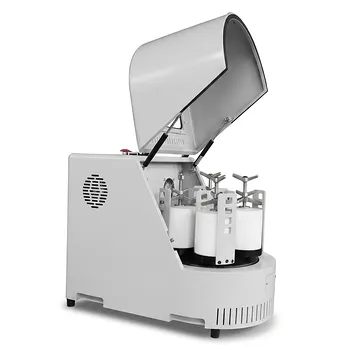
Vertical Semi Circular Planetary Ball Mill for Laboratory Precision Grinding

High Energy Planetary Ball Mill for Nano Scale Grinding and Mechanical Alloying
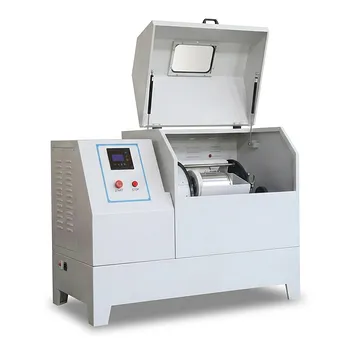
Heavy Duty Horizontal Planetary Ball Mill for Efficient Industrial Grinding and Sample Preparation

Vertical Production Planetary Ball Mill for High Throughput Powder Processing
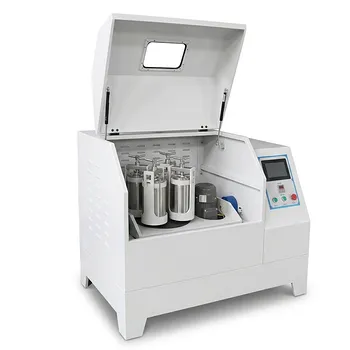
360° Rotating Omnidirectional Laboratory Planetary Ball Mill for Homogeneous Ultra-Fine Grinding and Mixing

Vertical Square Planetary Ball Mill for Laboratory Sample Preparation and Nanoscale Grinding

Miniature Planetary Ball Mill with Vacuum Grinding and High Efficiency for Laboratory Sample Preparation

High Energy Omnidirectional Planetary Ball Mill 16L

High Energy Laboratory Planetary Ball Mill for Nano Grinding and Material Science Sample Preparation
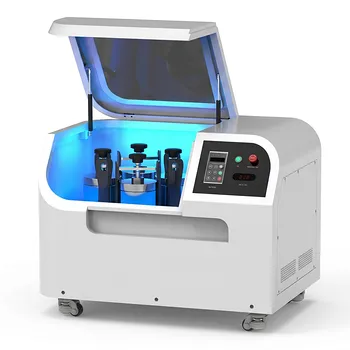
Planetary Ball Mill 12L
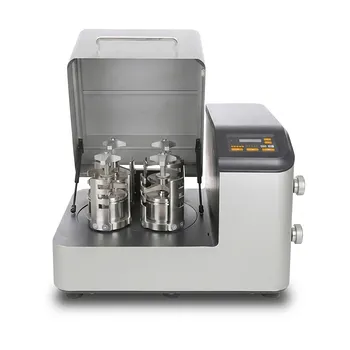
High Energy Planetary Ball Mill for Nano Scale Grinding and Colloidal Mixing in Material Science Research
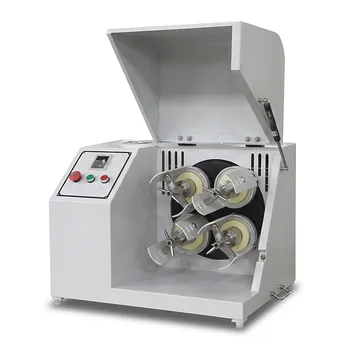
Horizontal Light Duty Planetary Ball Mill for Laboratory Sample Preparation

High Energy Omnidirectional Planetary Ball Mill 20L
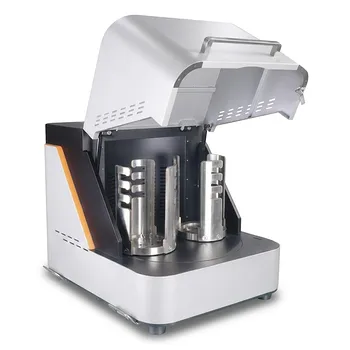
High Energy Laboratory Planetary Ball Mill for Nano Grinding and Colloidal Mixing of Hard and Brittle Materials

8L Planetary Ball Mill for Laboratory Grinding and Sample Preparation
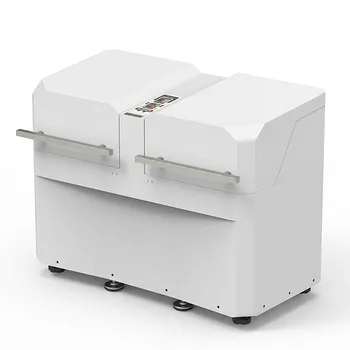
Dual Station Planetary Ball Mill 24L

Multi-Platform Nanoscale High-Energy Vibratory Ball Mill

Nano High Energy Vibratory Ball Mill for Laboratory Sample Preparation
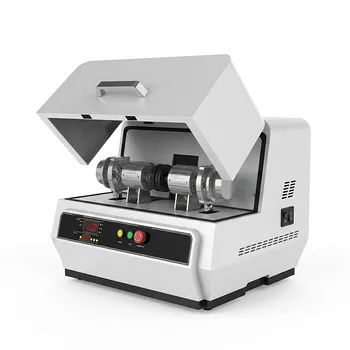
Dual Jar High Energy Vibratory Ball Mill