What is the function of a planetary ball mill in BST powder prep? Achieve Grain Refinement & High ZT Performance
Updated 3 months ago
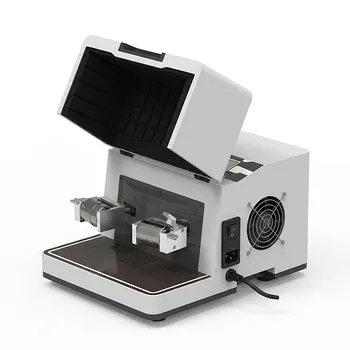
The primary function of a planetary ball mill in preparing Bismuth Antimony Telluride (BST) powders is the mechanical refinement of bulk ingots into fine, uniform particles. By utilizing high-speed rotation to generate intense impact and friction forces, the equipment reduces raw semiconductors to a precise size suitable for subsequent dispersion into composite inks. This process is the foundational step in transitioning from bulk material to the functional powders required for modern thermoelectric device fabrication.
A planetary ball mill acts as a high-energy reactor that achieves both physical size reduction and atomic-level homogenization. Beyond simple crushing, it facilitates mechanical alloying and grain refinement, which are essential for optimizing the electrical and thermal properties of the final BST material.
The Mechanics of Size Reduction and Dispersion
Generating High-Energy Impact Forces
The mill operates by rotating grinding jars on a "sun wheel" while they simultaneously rotate on their own axes. This dual-rotation generates significant centrifugal and impact forces that cause violent collisions between the grinding balls and the BST material.
Preparing Materials for Composite Inks
For BST to be useful in additive manufacturing or thick-film applications, it must be refined through dry grinding. This process reduces bulk ingots to an initial particle size that allows for uniform dispersion in organic carriers, ensuring the resulting inks are stable and printable.
Enhancing Thermoelectric Performance via Microstructure
Achieving Atomic-Level Homogeneity
High-energy milling facilitates mechanical alloying, where raw tellurium, bismuth, and antimony particles are cold-welded and fractured repeatedly. This cycle ensures an atomic-level mix, preventing the segregation of elements and ensuring a consistent chemical composition throughout the powder.
Grain Refinement and Phonon Scattering
The intense plastic deformation during milling refines the crystalline grains to the sub-micron or nanometer scale. These smaller grains create a high density of grain boundaries, which serve as phonon scattering sites that reduce lattice thermal conductivity and improve the material's overall thermoelectric figure of merit (ZT).
Increasing Reactivity and Surface Area
Refining BST powders significantly increases their specific surface area, which enhances the chemical reactivity of the material. This increased reactivity is vital for accelerating diffusion during subsequent sintering stages and ensuring the formation of a stable, high-performance crystalline phase.
Critical Considerations and Trade-offs
Managing Media Contamination
One of the primary risks of planetary ball milling is the potential for impurities to be introduced from the grinding jars or balls. As these components wear down under high-energy impact, trace amounts of material (such as zirconia or stainless steel) can contaminate the BST powder, potentially altering its sensitive electrical properties.
Thermal Management During Milling
The mechanical energy converted into heat during high-speed rotation can lead to unwanted oxidation or phase transitions in BST powders. To mitigate this, processors must carefully manage milling durations and may require cooling intervals or inert atmospheres to preserve the material's integrity.
Strategic Implementation for Your Goal
How to Apply This to Your Project
The specific parameters of your milling process—such as rotation speed, ball-to-powder ratio, and duration—should be dictated by your final application requirements.
- If your primary focus is ink stability and printability: Prioritize achieving a narrow particle size distribution to ensure smooth flow and prevent nozzle clogging during deposition.
- If your primary focus is maximizing thermoelectric efficiency: Focus on high-energy mechanical alloying to maximize grain refinement and enhance phonon scattering at the grain boundaries.
- If your primary focus is phase purity and stability: Utilize lower milling speeds and controlled atmospheres to suppress the formation of secondary phases and prevent contamination.
By mastering the mechanical forces within a planetary ball mill, you can transform raw bulk semiconductors into highly engineered powders that define the performance limits of thermoelectric systems.
Summary Table:
| Key Function | Mechanism | Benefit for BST Materials |
|---|---|---|
| Mechanical Refinement | High-energy impact & friction | Reduces bulk ingots to uniform, printable fine powders. |
| Mechanical Alloying | Atomic-level cold welding/fracture | Prevents elemental segregation for consistent composition. |
| Grain Refinement | Intense plastic deformation | Increases phonon scattering to improve thermoelectric ZT. |
| Surface Activation | Increased specific surface area | Enhances chemical reactivity for faster, stable sintering. |
Elevate Your Thermoelectric Material Research with Precision Engineering
Achieving the optimal microstructure for Bismuth Antimony Telluride (BST) requires more than just standard grinding—it requires controlled mechanical energy. At [Your Brand Name], we provide complete laboratory sample preparation solutions for material science, specializing in powder processing and compaction equipment.
Our extensive product line is designed to support your entire BST workflow:
- Refinement: Achieve nanometer-scale grain refinement with our advanced Planetary Ball Mills, jet mills, and disc mills.
- Preparation: Ensure particle uniformity with our vibratory sieve shakers and high-efficiency powder mixers.
- Consolidation: Transform powders into high-density pellets using our full spectrum of Hydraulic Presses, including Cold/Warm Isostatic Presses (CIP/WIP), Vacuum Hot Presses, and XRF pellet presses.
Whether you are focusing on ink stability for additive manufacturing or maximizing phonon scattering for higher ZT values, our experts are here to help you select the right tools for the job.
Ready to optimize your material performance? Contact our technical team today to find the perfect solution for your laboratory!
References
- Saeed Masoumi, Amir Pakdel. Flexible thermoelectric generators from spray-printed PEDOT:PSS/Bi<sub>0.5</sub>Sb<sub>1.5</sub>Te<sub>3</sub> composites. DOI: 10.1039/d4ra08450k
Mentioned Products
- Vertical Semi Circular Planetary Ball Mill for Laboratory Precision Grinding
- High Energy Planetary Ball Mill for Nano Scale Grinding and Mechanical Alloying
- Heavy Duty Horizontal Planetary Ball Mill for Efficient Industrial Grinding and Sample Preparation
- Vertical Production Planetary Ball Mill for High Throughput Powder Processing
- 360° Rotating Omnidirectional Laboratory Planetary Ball Mill for Homogeneous Ultra-Fine Grinding and Mixing
People Also Ask
- What role does a planetary ball mill play in the synthesis of Li6PS5Cl (LPSCl)? Unlock High Ionic Conductivity
- Why is a planetary ball mill essential for SiBCN-rGO wet-spinning? Achieve Superior Dispersion and Spinnability
- Why is an intermittent grinding process required for perovskites in a planetary ball mill? Ensure Stability & Purity
- Why is a planetary ball mill required for PET micronization? Ensure Accurate Chemical Analysis of Reprocessed PET
- How does mechanized planetary ball milling compare to manual agate grinding? Optimize sulfide standard material precision.

Tech Team · PowderPreparation
Last updated on Jun 03, 2026
Related Products
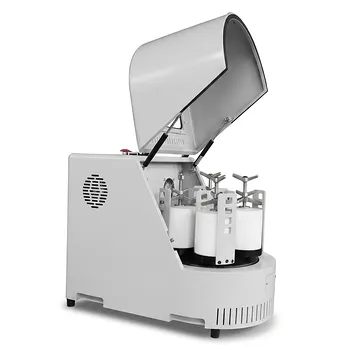
Vertical Semi Circular Planetary Ball Mill for Laboratory Precision Grinding
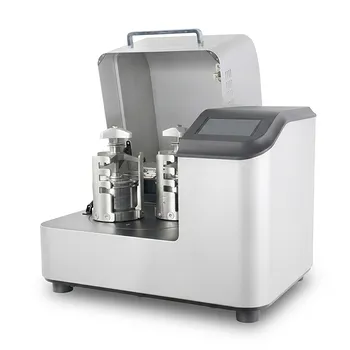
High Energy Planetary Ball Mill for Nano Scale Grinding and Mechanical Alloying
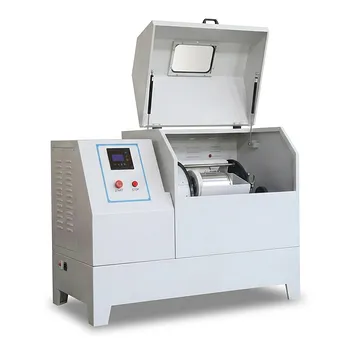
Heavy Duty Horizontal Planetary Ball Mill for Efficient Industrial Grinding and Sample Preparation

Vertical Production Planetary Ball Mill for High Throughput Powder Processing
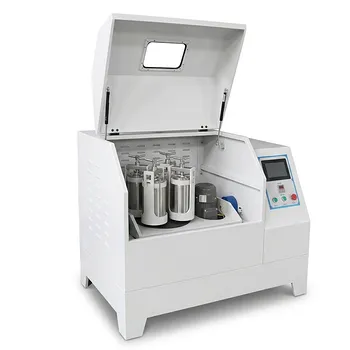
360° Rotating Omnidirectional Laboratory Planetary Ball Mill for Homogeneous Ultra-Fine Grinding and Mixing

Vertical Square Planetary Ball Mill for Laboratory Sample Preparation and Nanoscale Grinding

Miniature Planetary Ball Mill with Vacuum Grinding and High Efficiency for Laboratory Sample Preparation
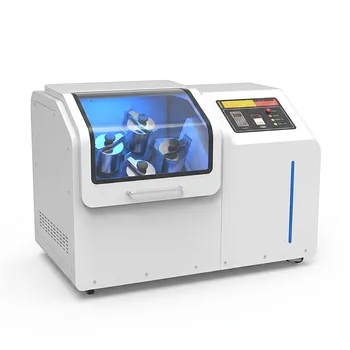
High Energy Omnidirectional Planetary Ball Mill 16L

High Energy Laboratory Planetary Ball Mill for Nano Grinding and Material Science Sample Preparation
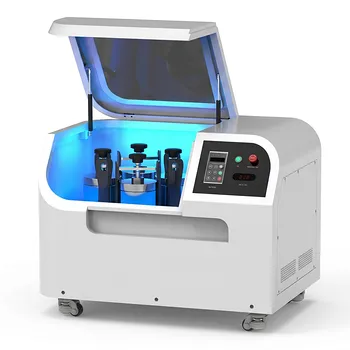
Planetary Ball Mill 12L
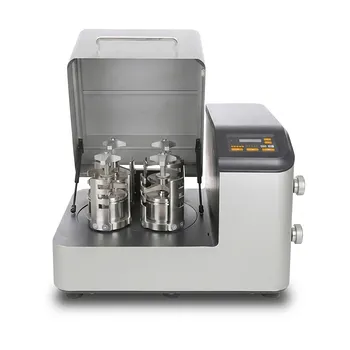
High Energy Planetary Ball Mill for Nano Scale Grinding and Colloidal Mixing in Material Science Research
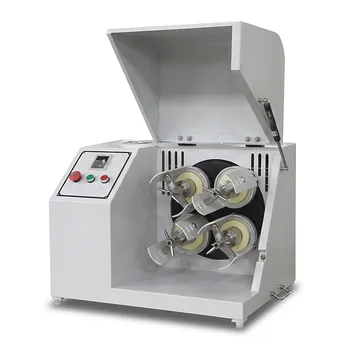
Horizontal Light Duty Planetary Ball Mill for Laboratory Sample Preparation
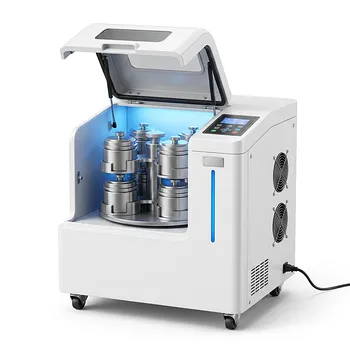
High Energy Omnidirectional Planetary Ball Mill 20L
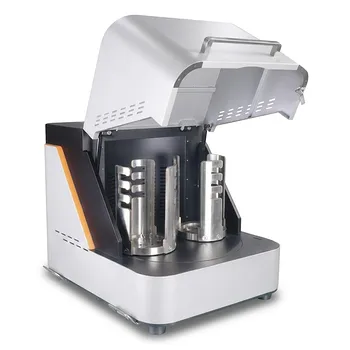
High Energy Laboratory Planetary Ball Mill for Nano Grinding and Colloidal Mixing of Hard and Brittle Materials
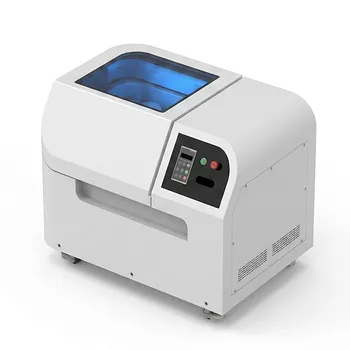
8L Planetary Ball Mill for Laboratory Grinding and Sample Preparation
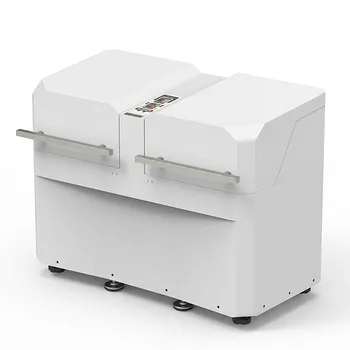
Dual Station Planetary Ball Mill 24L
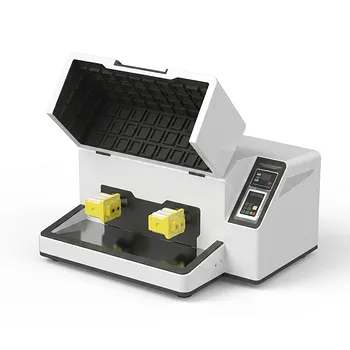
Multi-Platform Nanoscale High-Energy Vibratory Ball Mill

Nano High Energy Vibratory Ball Mill for Laboratory Sample Preparation
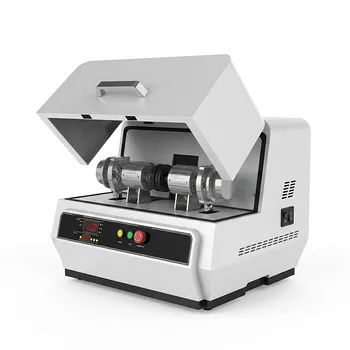
Dual Jar High Energy Vibratory Ball Mill