What is the primary function of a planetary ball mill in Nb-Cu composite prep? Master Mechanical Alloying & Refinement
Updated 5 months ago
The primary function of a planetary ball mill in the preparation of Nb-Cu metal composites is to facilitate mechanical alloying through high-energy impacts. This process achieves significant refinement of powder particles and high homogenization of the niobium (Nb) and copper (Cu) components. By reducing the average particle size and increasing the specific surface area, the mill enhances the chemical reactivity of the powders, creating an ideal microstructural foundation for subsequent sintering and densification.
The planetary ball mill serves as a high-energy processor that transforms raw Nb and Cu powders into a refined, homogeneous mixture. This mechanical alloying is essential for increasing powder reactivity and ensuring a uniform microstructure in the final composite.
Particle Refinement and Structural Transformation
Reducing Average Particle Size
The planetary ball mill utilizes high-frequency rotation to generate powerful impact and friction forces. These forces break down the initial niobium and copper powders, leading to a substantial reduction in average particle size.
Increasing Specific Surface Area and Reactivity
As particles are refined, their specific surface area increases significantly. This structural change is critical because it enhances the reactivity of the powders, which directly improves the efficiency of subsequent sintering and melting phases.
Establishing the Microstructural Foundation
By refining the particles at the powder processing stage, the mill ensures a superior microstructure. This preparation is a prerequisite for achieving high densification and structural integrity in the final Nb-Cu metal composite.
Component Homogenization and Distribution
Achieving Mechanical Alloying
The high-energy environment within the mill enables mechanical alloying, where the Nb and Cu powders are repeatedly fractured and cold-welded. This results in a degree of homogenization that is impossible to achieve through simple low-energy mixing.
Preventing Component Segregation
Niobium and copper possess different physical properties that can lead to segregation during processing. The multi-directional rotation and high-speed impacts of the planetary mill ensure that these components remain uniformly dispersed, preventing clusters or uneven distribution.
Breaking Down Agglomerates
Raw metal powders often form agglomerates that can compromise the performance of the final material. The shear forces generated by the ball mill effectively break these clusters, ensuring the reinforcing phase is evenly distributed throughout the matrix.
Understanding the Trade-offs
Morphological Alterations
While high-energy milling is effective for refinement, the intense mechanical energy can alter the original morphology of the powders. Spherical particles may become flattened or irregular, which can impact the fluidity of the powder during certain manufacturing processes like additive manufacturing.
Surface Defects and Micro-cracks
The high-speed collisions required for alloying can induce unwanted physical changes such as pits, satellite particles, and micro-cracks. These defects must be carefully managed, as they can influence the structural stability of the composite during the final consolidation.
Potential for Contamination
The high-energy friction between the grinding balls, the vial, and the powder increases the risk of media wear. This can introduce small amounts of impurities into the Nb-Cu mixture, potentially affecting the purity and performance of the resulting composite.
How to Apply This to Your Project
Making the Right Choice for Your Goal
- If your primary focus is maximizing densification: Prioritize longer milling times to maximize particle refinement and surface area, which enhances the driving force for sintering.
- If your primary focus is maintaining powder fluidity: Use moderate energy settings or shorter cycles to achieve homogenization without completely destroying the spherical morphology of the particles.
- If your primary focus is component stability: Ensure the mill is configured for high-frequency rotation to prevent segregation between the Nb and Cu phases due to their density differences.
By mastering the mechanical alloying process, you ensure that the raw powders are perfectly conditioned for a high-performance, structurally sound metal composite.
Summary Table:
| Key Function | Impact on Nb-Cu Powder | Strategic Benefit |
|---|---|---|
| Mechanical Alloying | Repeated fracturing and cold-welding | Achieves high-level homogenization |
| Particle Refinement | Reduction in size; increased surface area | Enhances chemical reactivity for sintering |
| De-agglomeration | Breakdown of raw powder clusters | Ensures uniform reinforcement distribution |
| High-Energy Impact | High-speed multi-directional rotation | Prevents component segregation |
Elevate Your Material Research with Expert Sample Prep Solutions
Achieving the perfect Nb-Cu metal composite requires precision at every stage of powder processing and compaction. At [Company Name], we provide complete laboratory sample preparation solutions tailored for material science.
Our extensive product line includes:
- Advanced Milling: High-energy planetary ball mills, jet mills, and cryogenic grinders for superior particle refinement.
- Precision Processing: Sieve shakers, powder mixers, and specialized de-foaming mixers.
- Compaction Excellence: A full spectrum of hydraulic presses, including Cold/Warm Isostatic Presses (CIP/WIP), vacuum hot presses, and XRF pellet presses.
Whether you are refining raw powders or densifying final composites, our equipment is designed to ensure maximum homogenization and structural integrity.
Ready to optimize your lab's performance? Contact our experts today to find the ideal solution for your specific application!
References
- Hugo Lima, Uílame Umbelino Gomes. Nb-Cu metallic composite: SPS preparation, microstructure and mechanical properties. DOI: 10.2298/sos250225020l
Mentioned Products
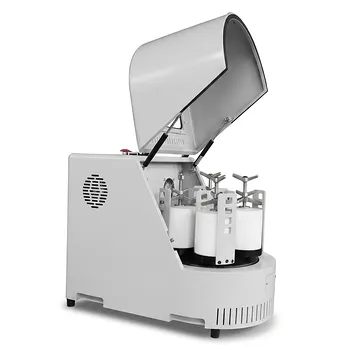
- Vertical Semi Circular Planetary Ball Mill for Laboratory Precision Grinding
- High Energy Planetary Ball Mill for Nano Scale Grinding and Mechanical Alloying
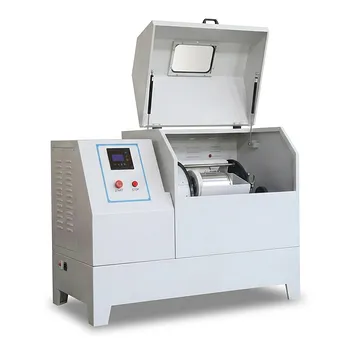
- Heavy Duty Horizontal Planetary Ball Mill for Efficient Industrial Grinding and Sample Preparation
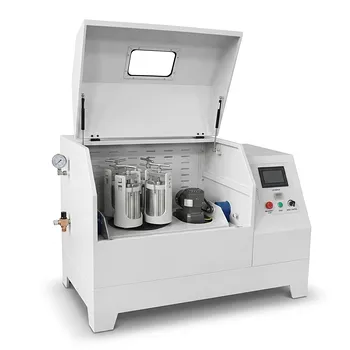
- Vertical Production Planetary Ball Mill for High Throughput Powder Processing
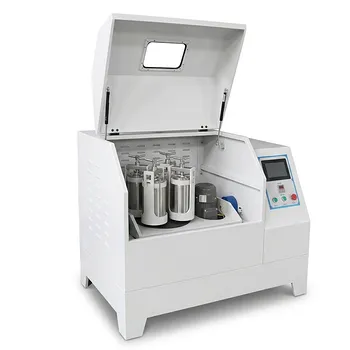
- 360° Rotating Omnidirectional Laboratory Planetary Ball Mill for Homogeneous Ultra-Fine Grinding and Mixing
People Also Ask
- What role does a planetary ball mill play in the synthesis of Li6PS5Cl (LPSCl)? Unlock High Ionic Conductivity
- Why is a planetary ball mill essential for SiBCN-rGO wet-spinning? Achieve Superior Dispersion and Spinnability
- Why is an intermittent grinding process required for perovskites in a planetary ball mill? Ensure Stability & Purity
- Why is a planetary ball mill required for PET micronization? Ensure Accurate Chemical Analysis of Reprocessed PET
- How does mechanized planetary ball milling compare to manual agate grinding? Optimize sulfide standard material precision.

Tech Team · PowderPreparation
Last updated on May 14, 2026
Related Products
Vertical Semi Circular Planetary Ball Mill for Laboratory Precision Grinding

High Energy Planetary Ball Mill for Nano Scale Grinding and Mechanical Alloying
Heavy Duty Horizontal Planetary Ball Mill for Efficient Industrial Grinding and Sample Preparation
Vertical Production Planetary Ball Mill for High Throughput Powder Processing
360° Rotating Omnidirectional Laboratory Planetary Ball Mill for Homogeneous Ultra-Fine Grinding and Mixing
Vertical Square Planetary Ball Mill for Laboratory Sample Preparation and Nanoscale Grinding

Miniature Planetary Ball Mill with Vacuum Grinding and High Efficiency for Laboratory Sample Preparation
High Energy Omnidirectional Planetary Ball Mill 16L

High Energy Laboratory Planetary Ball Mill for Nano Grinding and Material Science Sample Preparation
High Energy Planetary Ball Mill for Nano Scale Grinding and Colloidal Mixing in Material Science Research
Planetary Ball Mill 12L
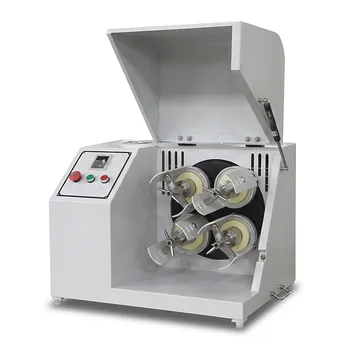
Horizontal Light Duty Planetary Ball Mill for Laboratory Sample Preparation
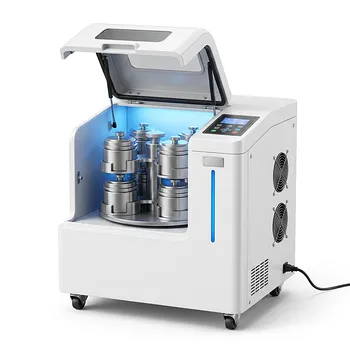
High Energy Omnidirectional Planetary Ball Mill 20L
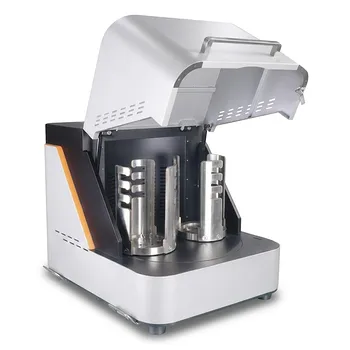
High Energy Laboratory Planetary Ball Mill for Nano Grinding and Colloidal Mixing of Hard and Brittle Materials

8L Planetary Ball Mill for Laboratory Grinding and Sample Preparation
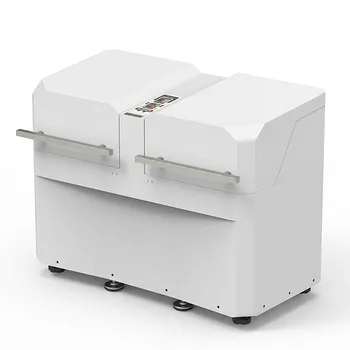
Dual Station Planetary Ball Mill 24L

Multi-Platform Nanoscale High-Energy Vibratory Ball Mill

Nano High Energy Vibratory Ball Mill for Laboratory Sample Preparation
Dual Jar High Energy Vibratory Ball Mill