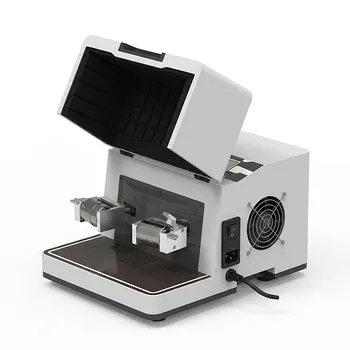
What is the primary function of a planetary ball mill in Al2O3/Ti homogenization? Achieve Microscopic Uniformity
Updated 4 months ago
The primary function of a planetary ball mill in the first-stage homogenization of alumina-titanium (Al2O3/Ti) composites is to ensure the uniform microscopic distribution of the metallic titanium phase within the ceramic alumina matrix. Through high-speed rotation and intense impact forces, the mill simultaneously refines the titanium particle size and increases its chemical reactivity. This process transforms raw powder mixtures into a highly active, homogeneous precursor ready for sintering.
The planetary ball mill acts as a high-energy mechanical processor that overcomes the natural tendency of fine powders to clump. It achieves a level of spatial homogeneity and surface activation that is impossible with low-energy mixing methods, directly dictating the final composite's structural integrity.
Achieving Microscopic Homogeneity
Uniform Phase Distribution
The planetary ball mill utilizes high-speed rotation to generate intense impact and shear forces. These forces are essential for ensuring that the metallic titanium phase is evenly dispersed throughout the alumina ceramic matrix. Without this high-energy mixing, the metallic phase would remain localized, leading to weak points in the finished composite.
Breaking Down Agglomerates
Fine powders like alumina naturally form clusters or agglomerates due to van der Waals forces. The mechanical energy of the ball mill effectively breaks these clusters apart. This ensures that every individual particle is available for mixing, preventing the formation of "dry" spots or inclusions in the material.
Particle Refinement and Chemical Activation
Reduction of Titanium Particle Size
During the milling process, the titanium powder undergoes significant particle size refinement. By reducing the initial size of the titanium, the mill increases the total surface area of the metallic phase. This refinement is critical for achieving a fine-grained microstructure in the final sintered product.
Enhancing Chemical Reactivity
The mechanical energy applied during milling doesn't just move particles; it activates their surfaces. By increasing the chemical reactivity of the titanium powder, the planetary ball mill facilitates the formation of necessary reaction products during the subsequent sintering stage. This leads to stronger interfacial bonding between the ceramic and metal phases.
Preparing Stable Suspensions
Prevention of Re-agglomeration
In wet milling applications, the mill ensures the uniform dispersion of ultra-fine Al2O3 and larger Ti powders within a liquid medium. The addition of dispersants combined with mechanical shearing prevents initial agglomeration. This results in a stable slurry that is ideal for downstream processes like slip casting.
Atom-Level Mixing Efficiency
The high-efficiency nature of planetary milling allows components to achieve near atom-level uniform mixing. This is particularly important when dealing with trace additives or stabilizers that must be distributed precisely to maintain crystal phase stability. A uniform mix at this stage ensures that the final ceramic body has consistent properties throughout its volume.
Understanding the Trade-offs
Thermal Management and Material Stress
The high-energy nature of planetary milling generates significant heat during operation. While this energy is necessary for activation, excessive heat can lead to unwanted oxidation of the titanium powder or degradation of organic additives. Processors must often balance milling speed and duration to prevent thermal damage to the raw materials.
Contamination Risks
Extended milling times increase the risk of media wear, where small amounts of the grinding balls or vial material leach into the composite. This can introduce impurities that alter the electrical or mechanical properties of the Al2O3/Ti composite. Selecting grinding media with high wear resistance and chemical compatibility is a necessary precaution.
How to Apply This to Your Project
Recommendations for Process Optimization
Choosing the right milling parameters depends on the specific requirements of your final composite material.
- If your primary focus is maximum phase uniformity: Prioritize longer milling durations at moderate speeds to ensure the titanium is fully integrated into the alumina matrix without excessive heat buildup.
- If your primary focus is high sintering activity: Use high-speed rotation to maximize particle refinement and surface activation, which creates a more reactive powder.
- If your primary focus is preparing a casting slurry: Use wet milling with optimized dispersant concentrations to maintain a stable, non-agglomerated suspension.
By mastering the mechanical energy of the planetary ball mill, you can precisely control the precursor state of your Al2O3/Ti composites to ensure superior performance.
Summary Table:
| Key Function | Mechanism | Impact on Composite |
|---|---|---|
| Phase Distribution | High-speed impact & shear forces | Ensures uniform metallic phase in ceramic matrix |
| De-agglomeration | High mechanical energy | Breaks van der Waals clusters for a pure mix |
| Particle Refinement | Continuous grinding | Increases surface area for fine-grained microstructure |
| Chemical Activation | Surface energy enhancement | Facilitates stronger interfacial bonding during sintering |
Elevate Your Material Research with Precision Sample Preparation
Achieving atom-level homogeneity in Al2O3/Ti composites requires equipment that balances power with precision. We provide complete laboratory sample preparation solutions tailored for material science, specializing in advanced powder processing and compaction.
Our extensive range of equipment is designed to optimize every stage of your workflow:
- Milling & Grinding: High-energy planetary ball mills, jet mills, rotor mills, and liquid nitrogen cryogenic grinders for superior refinement.
- Sizing & Mixing: Vibratory/air-jet sieve shakers, powder mixers, and high-efficiency defoaming mixers.
- Advanced Compaction: A full spectrum of hydraulic presses, including Cold/Warm Isostatic Presses (CIP/WIP), vacuum hot presses, and XRF pellet presses.
Whether you are focusing on maximum phase uniformity or high sintering activity, our solutions ensure your precursors are perfectly prepared for high-performance results.
Ready to optimize your powder processing? Contact our expert team today to find the perfect solution for your lab!
References
- Marcin Wachowski, Lucjan Śnieżek. Study on Manufacturing via Slip Casting and Properties of Alumina-Titanium Composite Enhanced by Thialite Phase. DOI: 10.3390/ma16010079
Mentioned Products
- Vertical Semi Circular Planetary Ball Mill for Laboratory Precision Grinding
- High Energy Planetary Ball Mill for Nano Scale Grinding and Mechanical Alloying
- Heavy Duty Horizontal Planetary Ball Mill for Efficient Industrial Grinding and Sample Preparation
- Vertical Production Planetary Ball Mill for High Throughput Powder Processing
- 360° Rotating Omnidirectional Laboratory Planetary Ball Mill for Homogeneous Ultra-Fine Grinding and Mixing
People Also Ask
- What role does a planetary ball mill play in the synthesis of Li6PS5Cl (LPSCl)? Unlock High Ionic Conductivity
- Why is a planetary ball mill essential for SiBCN-rGO wet-spinning? Achieve Superior Dispersion and Spinnability
- Why is an intermittent grinding process required for perovskites in a planetary ball mill? Ensure Stability & Purity
- Why is a planetary ball mill required for PET micronization? Ensure Accurate Chemical Analysis of Reprocessed PET
- How does mechanized planetary ball milling compare to manual agate grinding? Optimize sulfide standard material precision.

Tech Team · PowderPreparation
Last updated on Jun 03, 2026
Related Products
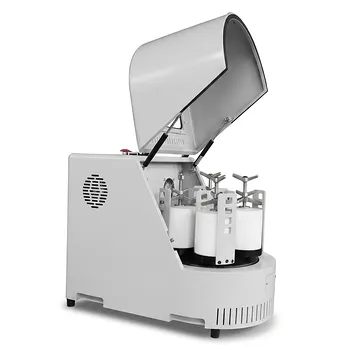
Vertical Semi Circular Planetary Ball Mill for Laboratory Precision Grinding

High Energy Planetary Ball Mill for Nano Scale Grinding and Mechanical Alloying
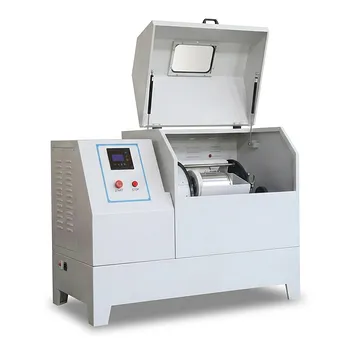
Heavy Duty Horizontal Planetary Ball Mill for Efficient Industrial Grinding and Sample Preparation

Vertical Production Planetary Ball Mill for High Throughput Powder Processing
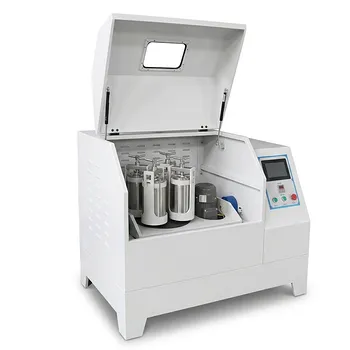
360° Rotating Omnidirectional Laboratory Planetary Ball Mill for Homogeneous Ultra-Fine Grinding and Mixing
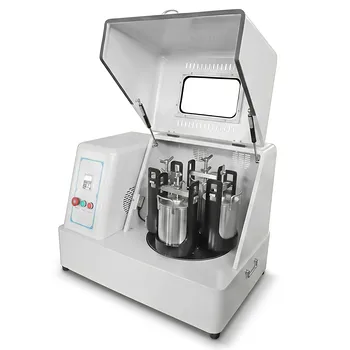
Vertical Square Planetary Ball Mill for Laboratory Sample Preparation and Nanoscale Grinding
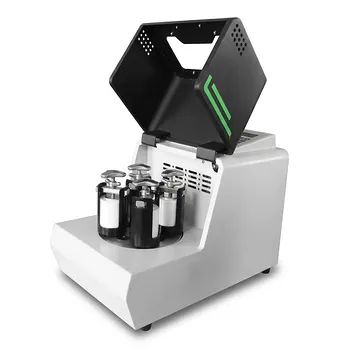
Miniature Planetary Ball Mill with Vacuum Grinding and High Efficiency for Laboratory Sample Preparation

High Energy Omnidirectional Planetary Ball Mill 16L
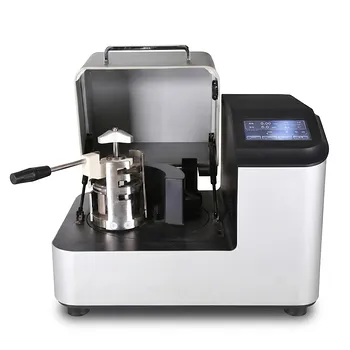
High Energy Laboratory Planetary Ball Mill for Nano Grinding and Material Science Sample Preparation
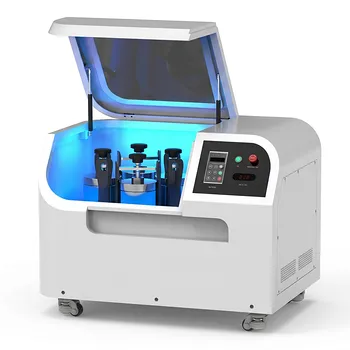
Planetary Ball Mill 12L
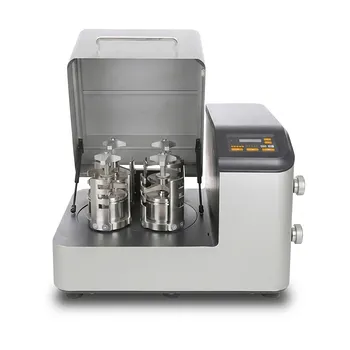
High Energy Planetary Ball Mill for Nano Scale Grinding and Colloidal Mixing in Material Science Research
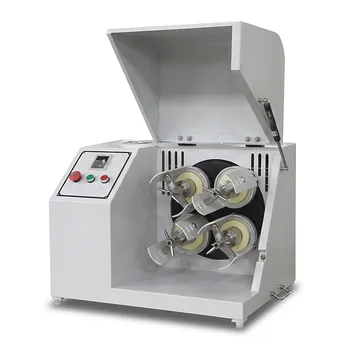
Horizontal Light Duty Planetary Ball Mill for Laboratory Sample Preparation
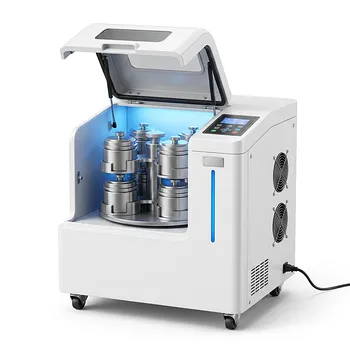
High Energy Omnidirectional Planetary Ball Mill 20L
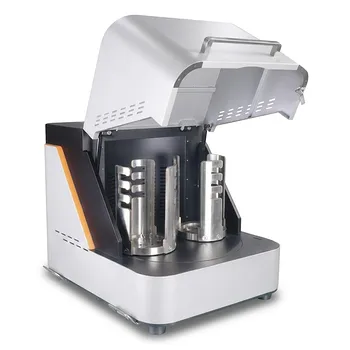
High Energy Laboratory Planetary Ball Mill for Nano Grinding and Colloidal Mixing of Hard and Brittle Materials
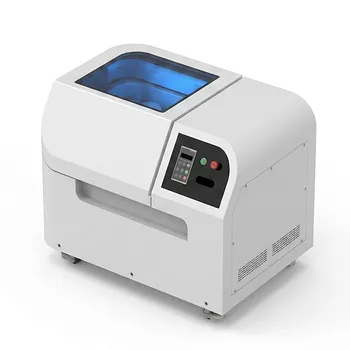
8L Planetary Ball Mill for Laboratory Grinding and Sample Preparation
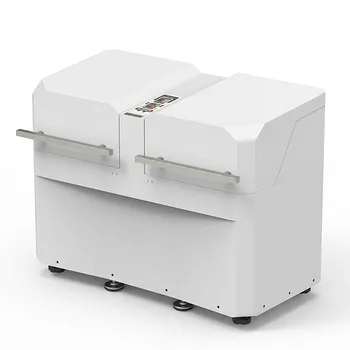
Dual Station Planetary Ball Mill 24L
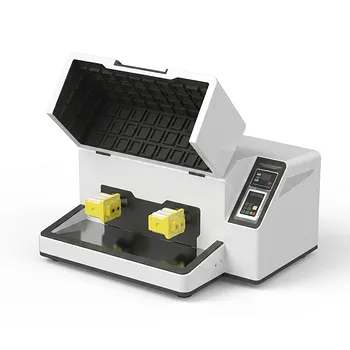
Multi-Platform Nanoscale High-Energy Vibratory Ball Mill
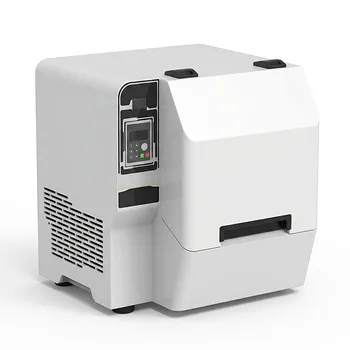
Nano High Energy Vibratory Ball Mill for Laboratory Sample Preparation
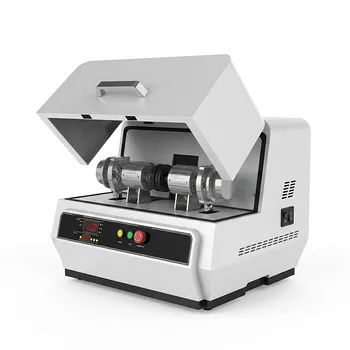
Dual Jar High Energy Vibratory Ball Mill