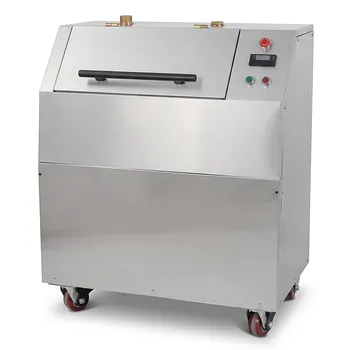
Why must a laboratory-grade vibratory sieve shaker be used for rosehip granules? Ensure Precise Particle Size Distribution
Updated 4 months ago
Ensuring the quality of rosehip granules requires a laboratory-grade vibratory sieve shaker to achieve precise particle size distribution (PSD) data. This specialized equipment utilizes high-frequency mechanical excitation and three-dimensional forces to provide a standardized, reproducible measurement that manual methods cannot replicate. The resulting data is critical for controlling flowability, ensuring consistent tablet weight, and optimizing the grinding process for medicinal or supplemental applications.
Central Takeaway: A vibratory sieve shaker is the essential tool for quantifying the physical characteristics of rosehip granules, providing the scientific data needed to guarantee dose uniformity and manufacturing efficiency.
The Mechanics of Precision Separation
High-Frequency Three-Dimensional Forces
Standard laboratory shakers generate three-dimensional mechanical forces that move the rosehip granules both vertically and horizontally across the sieve surface. This complex motion ensures that every particle has multiple opportunities to present its smallest dimension to the sieve mesh.
Without this high-frequency excitation, micro-particles can become trapped or "blind" the mesh, leading to inaccurate data. The mechanical vibration ensures that even fine powders pass through multiple layers of precision mesh efficiently.
Standardization and Repeatability
Using a mechanized shaker removes the human error associated with manual agitation. Technicians can precisely control the vibration amplitude and duration, ensuring that every test is performed under identical conditions.
This standardization allows for the creation of accurate particle size distribution curves, which are used to evaluate the uniformity and sorting degree of the granular material across different production batches.
Impact on Downstream Manufacturing
Optimizing Tablet Pressing and Filling
The particle size distribution of rosehip granules directly influences filling performance in a tablet press. Granules with an optimized size profile flow smoothly into the hopper and die cavities, preventing "bridging" or uneven flow.
By ensuring a consistent flow, manufacturers can guarantee the uniformity of single-dose medications. This prevents significant weight variations and ensures that every tablet contains the correct amount of active rosehip material.
Determining Grinding Kinetics
Analyzing PSD data provides the scientific foundation for optimizing grinding kinetics. Technicians use the results to determine the ideal processing time and energy input required to reach a specific fineness.
This analysis is vital for evaluating mineral or nutrient liberation, ensuring that the rosehip granules are ground sufficiently to release their beneficial properties without over-processing the material into unusable dust.
Understanding the Trade-offs
Sieve Shaking vs. Laser Diffraction
For millimeter-scale rosehip granules produced via wet granulation, traditional laser diffraction methods often have an insufficient measurement range. The vibratory sieve shaker remains the superior choice for these larger granules, providing an accurate mass-weighted distribution.
Accuracy vs. Equipment Cost
While a laboratory-grade shaker is a significant investment compared to manual sieves, the cost of batch failure due to weight variation or poor flowability is much higher. Precision shakers are necessary for regulatory compliance and high-volume production, though they require regular calibration of the test sieves.
How to Apply This to Your Process
Making the Right Choice for Your Goal
To get the most value from your particle size analysis, align your testing parameters with your specific production objectives:
- If your primary focus is dose uniformity: Use a full stack of sieves (e.g., 20 mesh to 70 mesh) to identify the "d50" or median particle size, ensuring the majority of your granules fall within the ideal range for your tablet press.
- If your primary focus is grinding efficiency: Analyze the cumulative weight percentage of the finest fractions to determine if you are over-milling and creating excess dust, which can hinder flowability.
- If your primary focus is quality control: Establish a standardized "amplitude and time" protocol on your shaker to ensure that PSD results are comparable across different shifts and production dates.
A laboratory-grade vibratory sieve shaker transforms granule analysis from a manual estimation into a precise, scientific process that secures the integrity of the final product.
Summary Table:
| Key Feature | Benefit for Rosehip Granules | Impact on Manufacturing |
|---|---|---|
| 3D Vibration Forces | Prevents mesh blinding and ensures fine particle separation | Accurate mass-weighted distribution data |
| Standardization | Eliminates human error and ensures repeatable test results | Consistent quality across production batches |
| Flow Optimization | Identifies ideal granule size for smooth tablet die filling | Guaranteed dose uniformity and weight control |
| Grinding Kinetics | Evaluates fineness to prevent over-milling and excess dust | Maximum nutrient liberation and efficiency |
Elevate Your Material Analysis with Professional Sample Prep Solutions
Achieving scientific precision in particle size analysis requires more than just a sieve—it requires the right technology. At [Brand Name], we specialize in providing complete laboratory sample preparation solutions for material science, focusing on high-performance powder processing and compaction equipment.
Our extensive product range is designed to meet the rigorous demands of your laboratory:
- Sieving & Mixing: High-precision vibratory and air-jet sieve shakers, powder mixers, and defoaming mixers.
- Milling & Grinding: From jaw crushers to advanced planetary ball mills, jet mills, and liquid nitrogen cryogenic grinders.
- Compaction Solutions: A full spectrum of hydraulic presses, including Cold/Warm Isostatic Presses (CIP/WIP), vacuum hot presses, and XRF pellet presses.
Whether you are optimizing rosehip granules for supplements or developing advanced industrial powders, our equipment ensures reliability and repeatability. Contact us today to discover how our expert solutions can streamline your laboratory workflow!
References
- Miroslava Špaglová, Peter Mikuš. Technological Processing of Dried Powdered Rosehips to Tablets Through Wet Granulation. DOI: 10.2478/afpuc-2023-0061
Mentioned Products
- Vibratory Sieve Shaker Electromagnetic 3D Motion Powder Particle Size Analyzer for Dry and Wet Sieving
- Laboratory Dry and Wet Three Dimensional Vibratory Sieve Shaker for Particle Analysis
- Dry Three Dimensional Vibratory Sieve Shaker
- Stainless Steel Laboratory Vibratory Test Sieve Shaker
- Heavy Duty Dry Three Dimensional Vibratory Sieve Shaker for Particle Separation
People Also Ask
- How does a vibratory sieve shaker contribute to optimizing the performance of activated carbon? Enhance Adsorption Precision
- Why is a laboratory vibratory sieve shaker necessary for processing magnesium-based borate precursor powders? Boost Activity
- Why use a vibratory sieve shaker to verify coarse aggregate grading in rubberized concrete? Ensure Structural Integrity
- What function do vibratory sieve shakers and standard test sieves serve in the preparation of adsorbents? Key Guide
- What role does a vibratory sieve shaker play in the particle size analysis of ground corn products? Enhance QC Precision

Tech Team · PowderPreparation
Last updated on Jun 03, 2026
Related Products
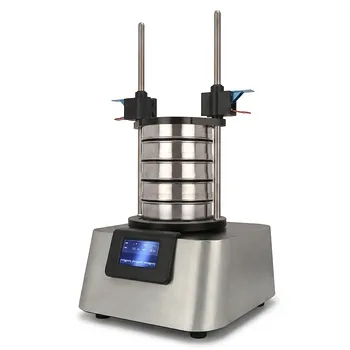
Vibratory Sieve Shaker Electromagnetic 3D Motion Powder Particle Size Analyzer for Dry and Wet Sieving
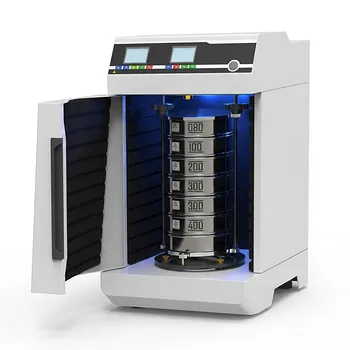
Laboratory Dry and Wet Three Dimensional Vibratory Sieve Shaker for Particle Analysis
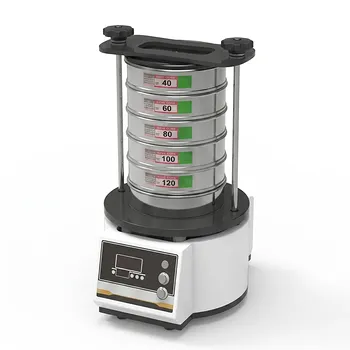
Dry Three Dimensional Vibratory Sieve Shaker
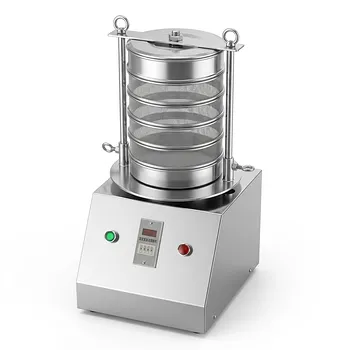
Stainless Steel Laboratory Vibratory Test Sieve Shaker
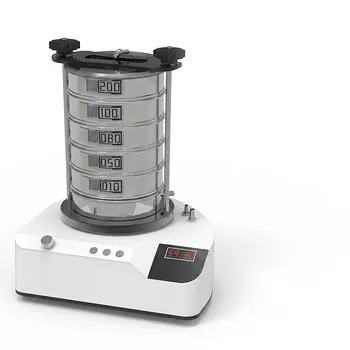
Heavy Duty Dry Three Dimensional Vibratory Sieve Shaker for Particle Separation
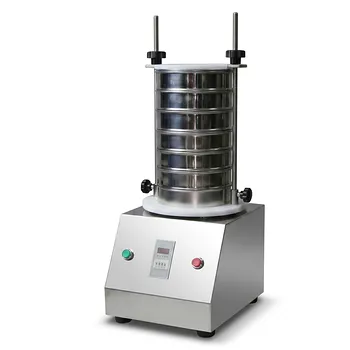
Small Laboratory Vibratory Sieve Shaker for Powder Gradation and Particle Size Analysis
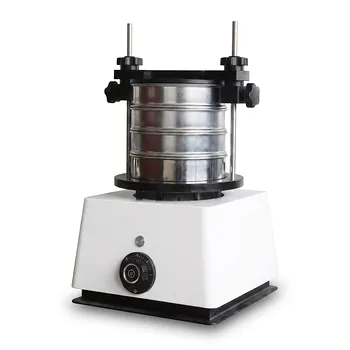
Small Laboratory Vibrating Sieve Shaker for Precise Particle Size Analysis
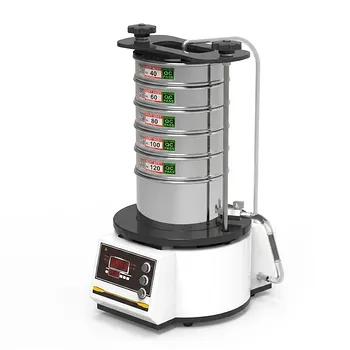
High Frequency Wet Three-Dimensional Vibrating Sieve Shaker for Dry and Wet Particle Size Analysis
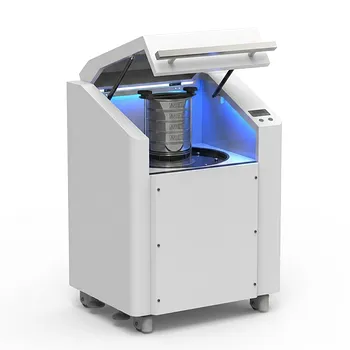
High Frequency Cabinet Type Three-Dimensional Rotary Vibrating Sieve Shaker for Dry Sieving and Particle Classification
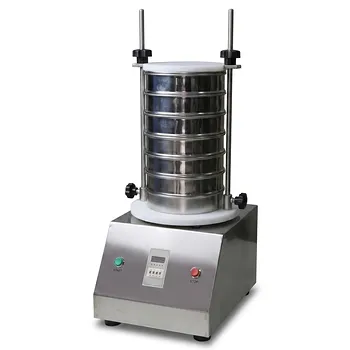
Laboratory Vibratory Test Sieve Shaker for Precision Particle Size Analysis and Powder Grading
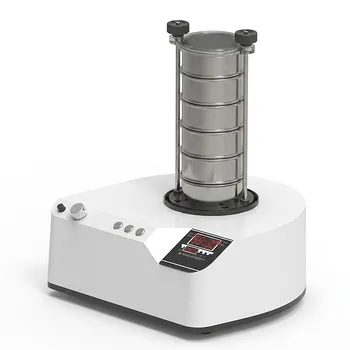
三维电磁微量振动筛分仪
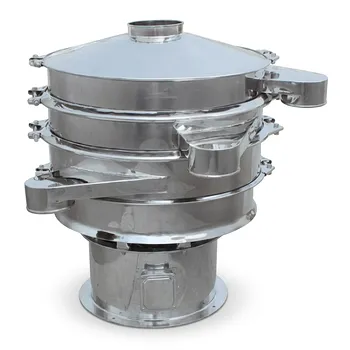
Stainless Steel Rotary Vibrating Sieve High Precision Circular Vibratory Separator Industrial Powder Grading Machine Multi Layer Sifting Equipment
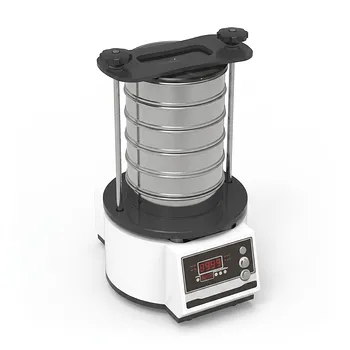
Tapping Oscillating Sieve Shaker for Dry and Wet Particle Size Analysis
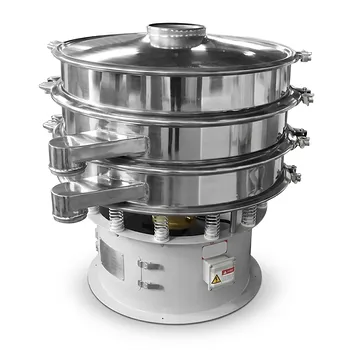
Three Dimensional Rotary Vibrating Sieve
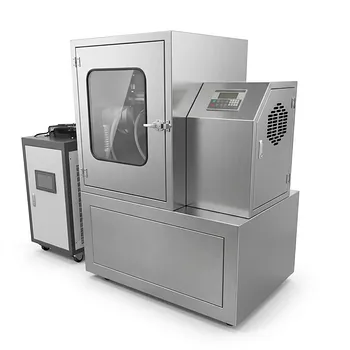
Vibratory Superfine Grinder for Ultra Fine Laboratory Powder Milling
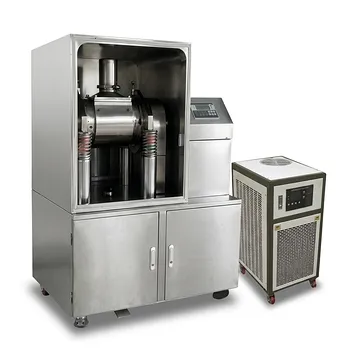
Small Vibrating Ultrafine Grinder for Traditional Chinese Medicine
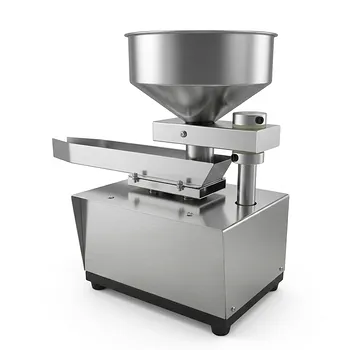
Automatic Vibrating Powder Feeder for Laboratory Material Processing Precision Vibratory Hopper Feeder for Granular and Powder Material Handling Industrial Grade Vibrating Tray Feeder for Consistent Material Sample Preparation